

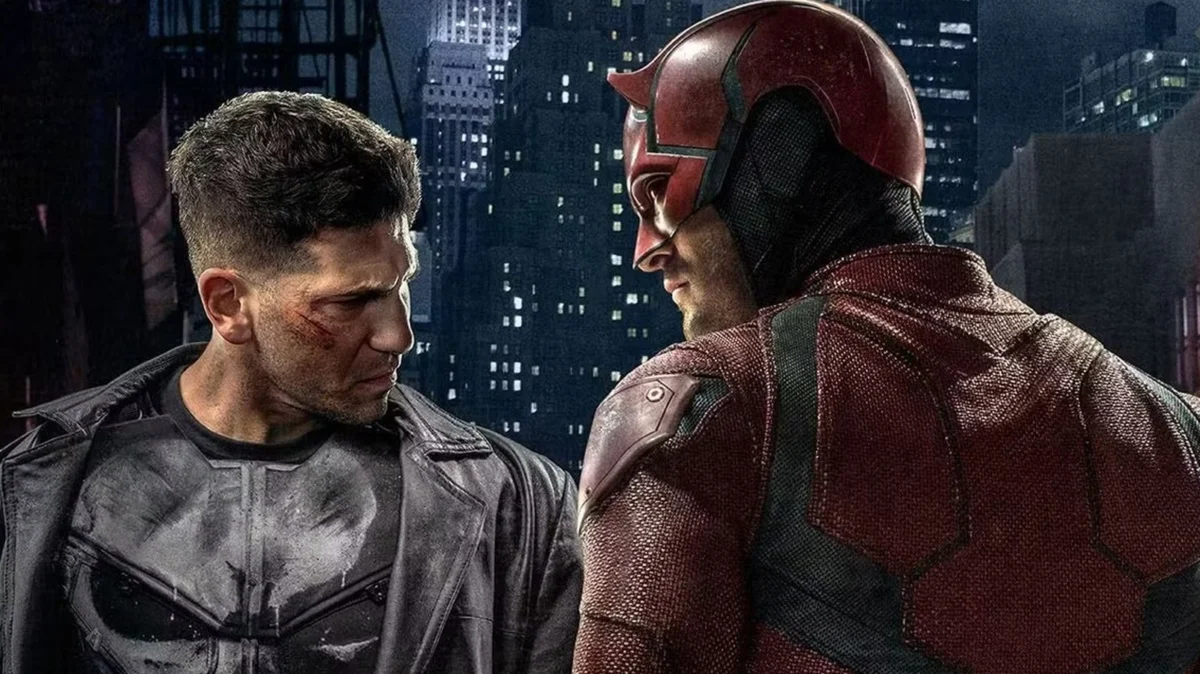
In the gritty, neon-soaked landscape of Hell’s Kitchen, few rivalries have proven as enduring or as philosophically significant as the one between Matt Murdock, the Man Without Fear, and Frank Castle, the Punisher. While modern audiences have become intimately familiar with the dynamic between Charlie Cox’s Daredevil and Jon Bernthal’s Punisher—a relationship defined by their visceral rooftop debates in the Netflix original series—this collision of ideologies finds its roots in the pages of Marvel Comics. Specifically, it began with a two-part story arc that serves as a cornerstone of modern comic book history: "Child’s Play" and "Good Guys Wear Red."
However, this legendary meeting was not merely a creative triumph; it was a battleground for editorial control, censorship, and the evolution of the comic book medium itself.
The Genesis of a Rivalry: From Spider-Man’s Shadow to Hell’s Kitchen
Frank Castle was not originally intended to be a foil for Daredevil. Created by the legendary writer Gerry Conway, along with artists John Romita Sr. and Ross Andru, the Punisher made his debut in The Amazing Spider-Man #129 (1974) as a misguided antagonist driven by tragedy. For nearly a decade, the Punisher occupied a niche within the Marvel Universe, appearing sporadically as a lethal alternative to the traditional hero archetype.
It was not until the early 1980s, when writer Frank Miller began his revolutionary run on Daredevil, that the Punisher found his true narrative home. Miller, who is credited with imbuing Matt Murdock with his signature Catholic guilt and moral complexity, recognized that the Punisher was the perfect mirror to hold up to the Man Without Fear. If Daredevil represented the struggle to maintain justice within the framework of the law, the Punisher represented the total abandonment of that law in favor of absolute, lethal retribution.
Chronology of a Controversial Publication
The history of the Punisher and Daredevil’s first official meeting—Daredevil #183 and #184—is steeped in editorial friction. The story, titled "Child’s Play," centers on a tragic incident involving a young girl named Mary Elizabeth O’Koren, who dies after a PCP overdose. Her brother, Billy, is left shattered and seeking vengeance against the drug dealers responsible, a path that inevitably draws the attention of the Punisher.
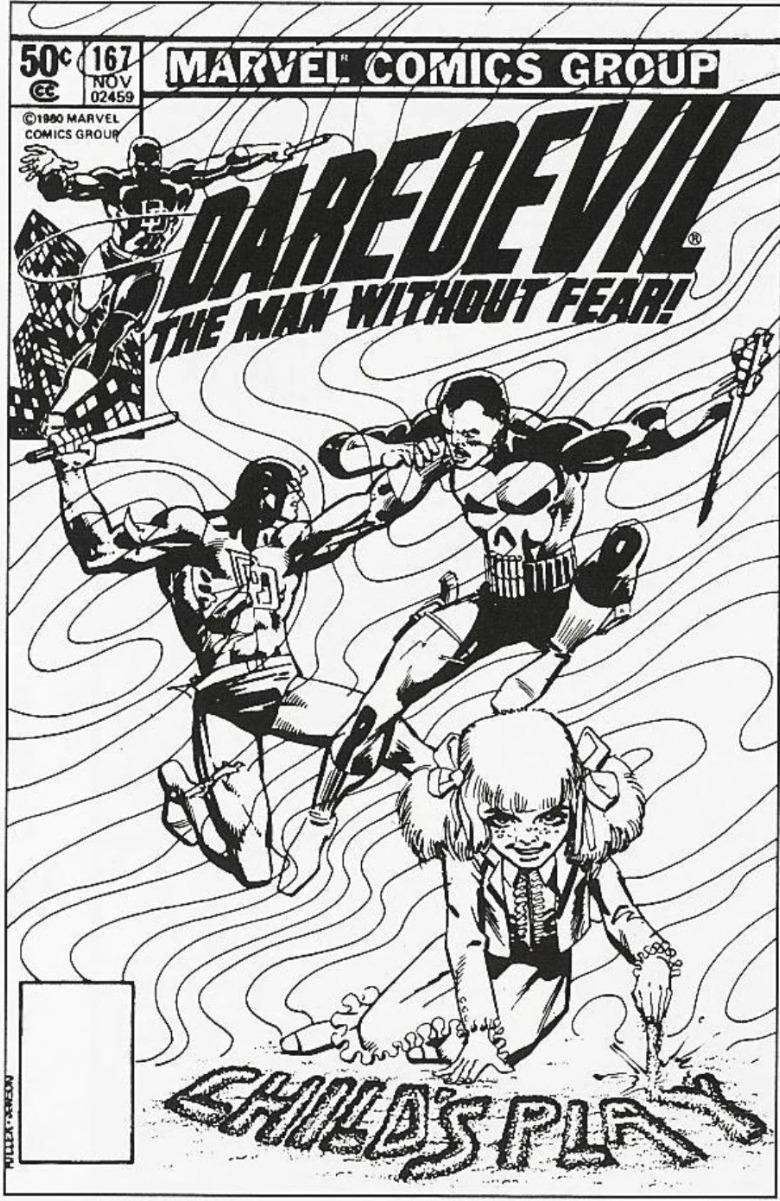
Originally, this arc was slated for publication in Daredevil #167 and #168. However, the production hit a wall: the Comics Code Authority (CCA).
The Shadow of the Comics Code Authority
The CCA was an industry-wide self-regulatory body established in 1954, following the moral panic stoked by Dr. Fredric Wertham’s Seduction of the Innocent. The Code effectively prohibited the depiction of illicit drugs, even when the context was one of condemnation.
Because "Child’s Play" centered entirely on the dangers of narcotics, the CCA refused to grant its seal of approval. This was a crisis for Marvel. At the time, an issue without the CCA stamp was considered a commercial death sentence, as major retailers and newsstands often refused to carry unapproved books.
The Editorial Tug-of-War
Marvel Editor-in-Chief Jim Shooter, known for his rigorous and often combative leadership style, initially considered publishing the issues without the seal, mirroring a precedent set by Stan Lee a decade earlier with The Amazing Spider-Man #96-98. In that instance, the government had requested a story about the dangers of drugs, and Marvel published it without the CCA stamp, effectively challenging the board’s relevance.
However, in the case of Daredevil, the corporate climate had shifted. Marvel President Jim Galton overruled the idea of publishing without the seal, and editor Denny O’Neil rejected the proposal to release the story as a standalone graphic novel. Consequently, the story was shelved.
Daredevil #167 was replaced with a fill-in issue by David Michelinie, and issue #168 became the historic debut of Frank Miller as both writer and artist, where he famously introduced Elektra. It wasn’t until issues #183 and #184 that the "Child’s Play" arc was finally published, albeit with significant edits to satisfy the board’s rigid standards.
Supporting Data: The Philosophical Divergence
The conflict between Daredevil and the Punisher is far more than a physical brawl; it is an interrogation of the American legal system.
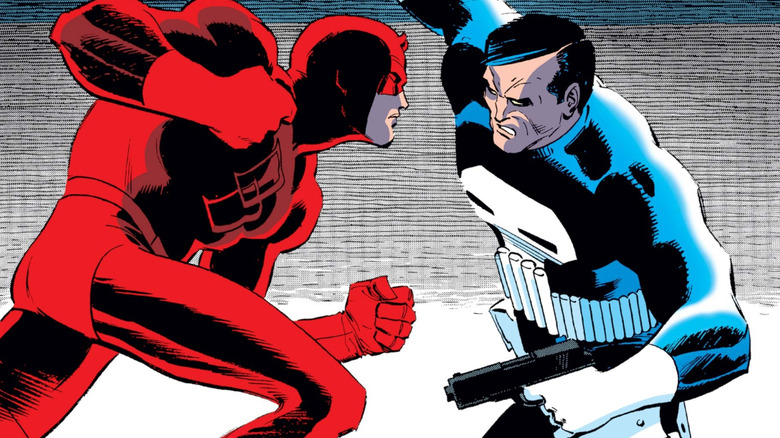
In Daredevil #183-184, the tension is palpable. Matt Murdock, a man who uses his enhanced senses as a "living lie detector," finds himself outmaneuvered by the complexities of the system he serves. In one notable sequence, Murdock is legally forced to defend a drug dealer who is responsible for the death of the girl in question. His senses are momentarily fooled by the man’s pacemaker, which masks the rhythmic heartbeat of a liar.
This failure of his "super-power" highlights the thematic core of the story:
- The Law as a Limitation: Daredevil believes in the integrity of the courtroom, yet the story acknowledges that the law is often blind, slow, or manipulated.
- The Vigilante as a Shortcut: The Punisher offers a brutal, efficient alternative. He does not seek justice; he seeks execution.
- The Corrosive Nature of Vengeance: The story asks whether the trauma inflicted by criminals creates a cycle of violence that corrupts the victims, as seen in the character of Billy O’Koren.
The writing in these issues is widely considered some of Miller’s best. He moved away from the "costumed villain" tropes of the silver age, opting instead for a noir-inspired realism. When Miller writes, "Darkness doesn’t descend on Hell’s Kitchen. It spews up from shadowed doorways," he is establishing a tone that would influence every iteration of the character for the next forty years, including the Netflix adaptation.
Implications for the Modern Marvel Universe
The publication of "Child’s Play" served as a turning point for Marvel Comics, proving that superheroes could handle "adult" themes like drug addiction, systemic failure, and the moral ambiguity of vigilantism.
The Legacy of the "New York’s Finest" Dynamic
The influence of this 1982 arc cannot be overstated when looking at the Marvel Cinematic Universe. When Frank Castle (Jon Bernthal) chained Matt Murdock (Charlie Cox) to a rooftop in the second season of Daredevil, he was essentially reenacting the core argument established by Miller four decades prior.
The comic asks a question that remains unresolved: If the law fails to protect the vulnerable, is the person who breaks the law to exact vengeance a hero or a monster? By refusing to provide a comforting resolution, Miller ensured that the Punisher would remain an eternal thorn in Daredevil’s side—a constant reminder of the thin line between justice and murder.
The Erosion of the Comics Code
The controversy surrounding these issues was one of many small fissures that eventually led to the collapse of the Comics Code Authority. By the early 2000s, publishers began abandoning the seal entirely, recognizing that the modern audience was capable of navigating complex, mature narratives without the need for a censorious board. The struggle that Daredevil #183 faced to reach the page was, in hindsight, a battle for the artistic freedom that defines the comic book medium today.
Conclusion
The first meeting of Daredevil and the Punisher was not just a crossover; it was a confrontation between two fundamentally different worldviews. While the Comics Code Authority attempted to bury the story beneath the weight of outdated moralism, the resilience of the narrative allowed it to persist, influence, and ultimately define the characters.
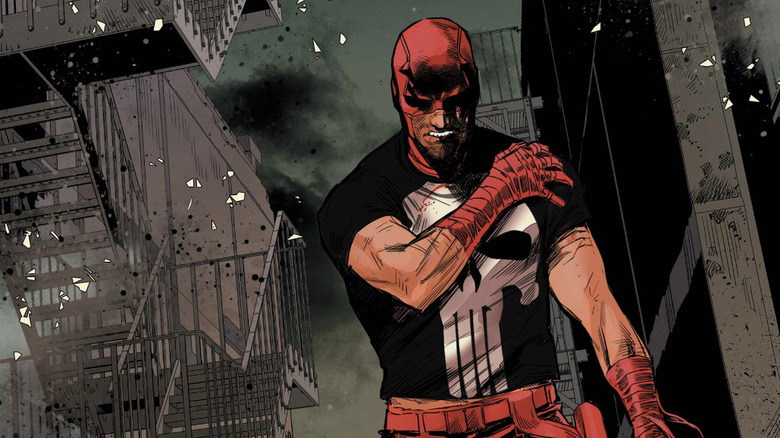
Through the lens of "Child’s Play," we see that Matt Murdock and Frank Castle are two sides of the same coin—both scarred by tragedy, both driven by an obsessive need to fix a broken world. Their rivalry persists because it is an honest reflection of our own societal debates: how do we define justice, and how far are we willing to go to achieve it? Even today, the echoes of their first rooftop debate resonate, proving that the most compelling stories aren’t always about defeating a villain, but about the struggle to maintain one’s soul in a city that seems determined to crush it.











No comments yet. Be the first to join the conversation!