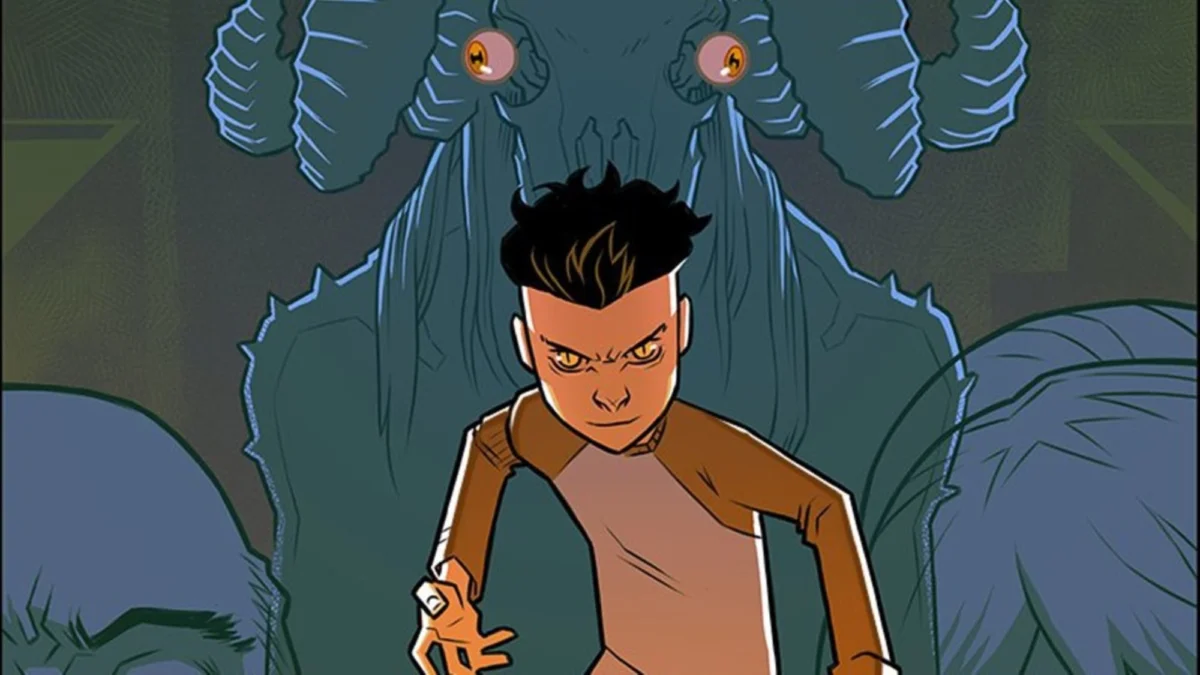
In an ambitious move to solidify the bridge between digital storytelling and high-budget cinema, Lezhin Entertainment officially announced a major film adaptation of the popular webtoon Happy Boy. The project, currently operating under the working title Concrete Utopia, has captured the industry’s attention not only for its gritty source material but for its formidable cast, which features some of the most recognizable names in South Korean cinema: Lee Byung-hun, Park Seo-joon, and Park Bo-young.
The Genesis of a Cinematic Event
The announcement, delivered by Lezhin Entertainment on August 5, 2020, confirmed that the production would be spearheaded by Lezhin Studios. The film aims to translate the psychological intensity of creator Kim Sung Nyung’s webtoon into a visceral, large-scale cinematic experience.
Lezhin Studios, a production powerhouse that emerged following its 2018 acquisition by Lezhin Entertainment, has been strategically positioning itself as a leader in adapting South Korean webtoons for the global market. By leveraging their massive user base—which currently exceeds 10 million readers worldwide—the studio intends to transform digital comic intellectual property (IP) into prestigious, internationally viable film and television content.

Plot and Narrative Scope
Happy Boy, the source material for Concrete Utopia, is a narrative split into two distinct, albeit thematically linked, stories. The original work explores the fragility of human nature under extreme duress.
The first narrative arc follows a group of high school students trapped within a school building following an unforeseen, catastrophic disaster. At the center of this struggle is Donghyun, a social outcast whose perspective serves as the reader’s anchor, highlighting the raw emotional and psychological friction that arises when survival becomes the only objective.
The film adaptation is slated to focus heavily on the second narrative arc, titled "Pleasant Neighbors." This segment delves deeper into the societal breakdown that occurs after the initial event. It asks a haunting question: How far will ordinary people go when their everyday lives are stripped away, and the social contract is rendered null and void? By focusing on the shifting power dynamics within a group of survivors, the film promises to be a tense, claustrophobic study of morality, greed, and the primal instinct to survive.

The Creative Team: A Proven Pedigree
The production has secured the visionary talents of director Uhm Tae-hwa to helm the project. Known for his work on The Hidden Time and The Fighting, Uhm has built a reputation for crafting narratives that balance emotional resonance with complex, high-stakes scenarios. His appointment suggests that Concrete Utopia will lean into the darker, more introspective elements of the original webtoon rather than relying solely on the spectacle of disaster.
The casting of Lee Byung-hun, Park Seo-joon, and Park Bo-young serves as a testament to the project’s scale. Lee Byung-hun, a veteran of both Korean and international cinema, brings a weight and gravitas to the production that is essential for a film centered on shifting power dynamics. Park Seo-joon, a global icon of Hallyu cinema, and Park Bo-young, celebrated for her versatility and emotional range, complete a trio that ensures significant domestic and international box office interest.
A Chronology of Strategic Development
The path to Concrete Utopia represents a wider trend in South Korean media, where webtoons have become the primary incubator for blockbuster development.

- 2018: Lezhin Entertainment acquires its production arm, Lezhin Studios, explicitly to monetize its vast library of webtoon content and compete with major streaming and studio entities.
- Late 2019 – Early 2020: Development begins on Concrete Utopia. The studio identifies Happy Boy as a flagship property due to its strong themes and potential for "event" cinema.
- August 5, 2020: Formal announcement of the cast (Lee Byung-hun, Park Seo-joon, Park Bo-young) and the working title.
- August 25, 2020: Public confirmation of pre-production status and distribution partnership with Lotte Entertainment.
- 2021: Commencement of principal photography.
Supporting Data: The Rise of Lezhin Studios
Lezhin Studios is not merely a production house; it is a vital component of a larger, aggressive strategy by Lezhin Entertainment to dominate the cross-media landscape. Before Concrete Utopia, the studio demonstrated its viability by producing the hit TVN dramas Method and Chomi’s Interest.
The studio’s pipeline is robust. Alongside Concrete Utopia, they are actively developing Method: A Second Attempt and the much-anticipated Netflix original series Hell. Furthermore, the company has confirmed that the popular webtoon D.P Dog’s Day is also in active development for a film adaptation. This consistent output of high-profile projects highlights a shift where the "Webtoon-to-Film" pipeline has become the most efficient way to mitigate risk and guarantee audience engagement in the South Korean entertainment industry.
Official Perspectives: Capturing Humanity in Extremity
In a rare comment regarding the adaptation, the original creator of Happy Boy, Kim Sung Nyung, expressed deep optimism regarding the transition to the screen. "I’m looking forward to seeing how the movie depicts the change people go through when placed in extreme situations and the themes of preserving one’s humanity in the process," Kim noted.

This statement highlights the central tension of the film. While audiences may be drawn to the disaster elements and the star power of the leads, the core of the film rests on the "humanity" aspect—the philosophical inquiry into whether empathy can survive when civilization collapses.
Industry Implications and Market Impact
The decision to adapt Happy Boy has several significant implications for the global film market:
1. The "Webtoon as Script" Model
South Korea is currently the world leader in utilizing digital comics as a primary source of intellectual property. Unlike traditional screenwriting, which often requires a lengthy development cycle from scratch, webtoons provide a fully realized storyboard, character arc, and a pre-existing fan base. Concrete Utopia is set to prove that even mature, dark, and psychologically complex webtoons can be scaled into prestige cinema.

2. Global Distribution and Streaming
With the involvement of production companies capable of servicing streaming giants like Netflix, the traditional boundaries between theatrical release and home media are blurring. Concrete Utopia represents the kind of "prestige genre" film that excels in both domestic theaters and on global streaming platforms, attracting viewers who are increasingly interested in the distinct tone and aesthetic of South Korean storytelling.
3. The Power of "All-Star" Casting
By grouping A-list stars like Lee Byung-hun with high-demand actors like Park Seo-joon and Park Bo-young, the production minimizes financial risk. In the post-2020 landscape, where the theatrical industry faced unprecedented challenges, the reliance on "bankable" stars combined with established, high-engagement IP is a calculated maneuver to ensure that Concrete Utopia becomes a cultural touchstone rather than just another genre entry.
Conclusion
Concrete Utopia stands as a pivotal moment for Lezhin Studios and the broader K-Webtoon industry. By successfully marrying a gritty, character-driven story with high-level production values and a top-tier cast, the project signals that the era of digital-native storytelling has fully matured.

As the industry looks toward the 2021 filming schedule and beyond, all eyes will be on how Director Uhm Tae-hwa manages the transition from the static panels of a webtoon to the kinetic, claustrophobic reality of a feature film. If successful, Concrete Utopia will not only redefine the career trajectories of its leads but will further entrench the webtoon as the single most important engine of innovation in modern Korean cinema. As the audience waits, the question remains: When the walls of society collapse, who will truly be left, and what will they have become?