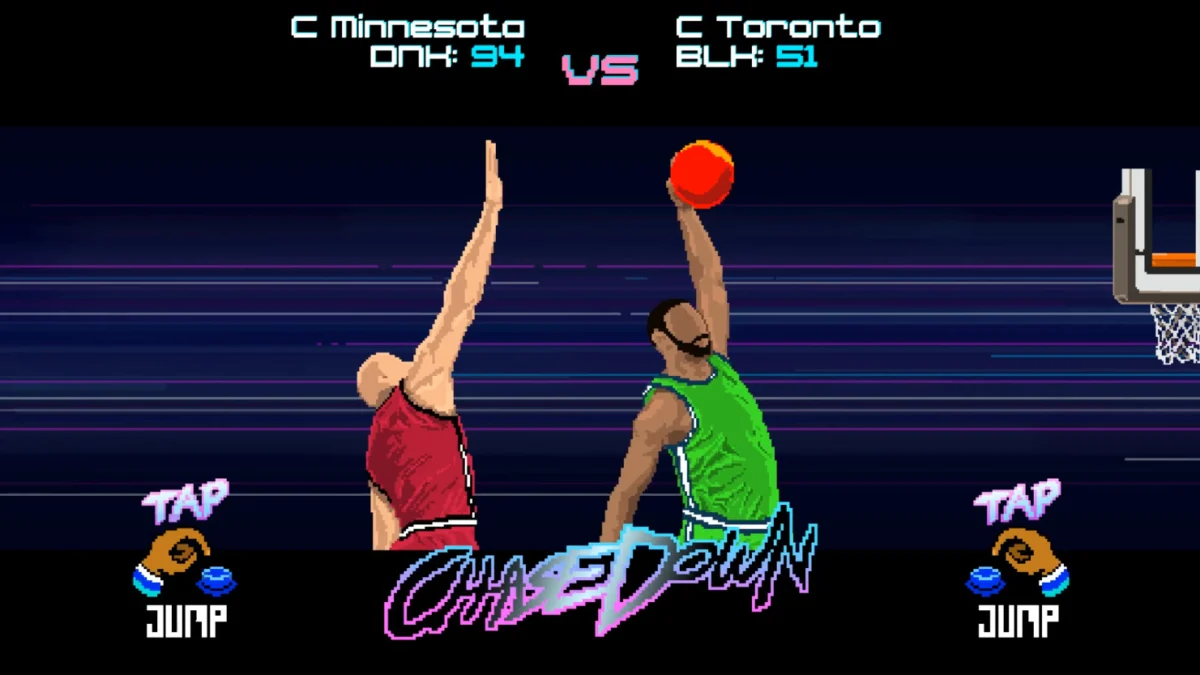
In an era dominated by hyper-realistic sports simulations that demand hundreds of hours of micro-management, scouting, and financial oversight, Basketball Classics arrives as a refreshing, albeit imperfect, departure from the status quo. Developed with a clear mandate to honor the golden age of 8-bit and 16-bit arcade sports titles, the game eschews the complexities of modern engines in favor of high-octane, intuitive gameplay. While it may not challenge the reigning titans of the genre in terms of sheer scale, it successfully captures the ephemeral "magic" that made classic arcade titles a staple of the 1990s gaming landscape.
The Evolution of Arcade Sports: A Chronological Context
To understand the appeal of Basketball Classics, one must first look at the trajectory of the sports genre. In the late 1980s and early 1990s, basketball games were defined by limitations. Titles like Arch Rivals, Tecmo NBA Basketball, and NBA Jam focused on fluidity and spectacle rather than tactical simulation. These games were built for social interaction—local multiplayer sessions in cramped living rooms where the sound of button-mashing was as integral to the experience as the buzzer-beater shot.
As technology advanced, the industry pivoted toward the "Simulation Era," where realistic physics, dynamic lighting, and deep RPG-like franchise modes became the industry standard. Basketball Classics represents a deliberate counter-movement. By stripping away the bloat of modern sports titles, the developers have created a vacuum that invites nostalgia. It acts as a time capsule, reminding players of a period when a game could be mastered in an afternoon, yet remain challenging enough to spark a lifelong rivalry between friends.
The Mechanics: More Than Just Button-Mashing
While the game utilizes a deceptively simple three-button control scheme, it would be a mistake to categorize Basketball Classics as a mindless experience. The development team has integrated a surprising depth of nuance beneath the surface-level simplicity.
The Nuance of Gameplay
At the core of the experience is a delicate balance between timing and positioning. While the arcade aesthetic suggests that a player can simply hold "Turbo" and drive to the hoop, the game punishes such reckless play. Success in Basketball Classics requires an understanding of:
- Shot Timing: Unlike modern games that rely on complex visual meters, this title forces players to develop a "feel" for the release point, rewarding muscle memory and rhythm.
- Defensive Positioning: Understanding how to cut off passing lanes and contest shots is vital. Players who ignore these defensive fundamentals will quickly find themselves outmatched by the AI.
- Play-Calling: The inclusion of basic, quick-access play-calling elevates the game above its peers. It forces the player to engage with the court layout, making the game feel like a legitimate competition rather than a randomized arcade brawl.
The visual presentation is equally intentional. The pixel art aesthetic is not merely a stylistic choice; it serves to reduce visual noise, allowing the player to focus entirely on the flow of the game. Animations are punchy and exaggerated, giving every successful dunk or swish a visceral sense of satisfaction that high-fidelity simulations often lack.

Supporting Data: A Deep Dive into Content
For a title that emphasizes quick, pick-up-and-play sessions, the sheer volume of content is surprising. The game features:
- Expansive Rosters: While the game lacks official NBA licensing, the roster is a love letter to basketball history. The players are clearly inspired by legendary figures from the sport’s most iconic eras, allowing players to build "dream teams" from different decades of the game.
- Varied Game Modes: The game includes standard exhibition matches, a season mode, and a story-driven experience. While these modes lack the granular customization of modern franchise sims, they provide a structured path for players to test their skills against progressively more difficult AI.
- Replay Value: The core loop—the satisfaction of executing a perfect pick-and-roll followed by a thunderous dunk—is inherently addictive. The game thrives on "one more match" syndrome.
The Limitations: Where Nostalgia Meets Reality
Despite its strengths, Basketball Classics is not without its shortcomings. In critiquing the title, one must address the areas where the "old-school" philosophy hinders the user experience.
The Lack of Connectivity
Perhaps the most glaring omission is the lack of robust online multiplayer. In 2026, a competitive sports game that relies exclusively on local couch co-op is a bold, perhaps even risky, decision. While the developers clearly intended to foster local competition, the absence of online matchmaking limits the player base significantly.
Shallow Depth and Inconsistency
Furthermore, the gameplay can, over time, feel repetitive. Because the mechanics are designed for simplicity, the gap between a novice and a veteran player can eventually become a chasm that the game’s systems cannot bridge. Some interactions—specifically regarding collision detection during defensive blocks and dunk attempts—can feel inconsistent, leading to moments of frustration where the outcome feels governed by a "dice roll" rather than player skill.
The Soundtrack and Progression
The audio design is functional but ultimately unremarkable. In a game designed for long sessions, a limited soundtrack becomes glaringly repetitive. Additionally, while the season and story modes provide a framework, they lack the "management" aspect that keeps players invested for months at a time. A more robust franchise mode, allowing for player development or team building, would have added a much-needed layer of long-term engagement.
Implications for the Sports Genre
Basketball Classics serves as an important case study for the sports gaming industry. It proves that there is a persistent, vocal audience for "arcade-first" sports titles. By prioritizing the "fun factor" over hyper-realism, the developers have carved out a niche that major publishers have largely abandoned.

The implication here is that the market is currently over-saturated with games that prioritize simulation at the cost of accessibility. There is a clear appetite for experiences that do not require a bachelor’s degree in basketball strategy or an endless grind of daily objectives. If Basketball Classics serves as a proof-of-concept, we may see a resurgence of mid-budget, arcade-style sports games that leverage the "pick-up-and-play" model to attract casual fans and veterans alike.
Final Assessment: A Worthy Contender
With a score of 7.0, Basketball Classics is firmly labeled as a title that most players will enjoy, provided they calibrate their expectations. It is not an attempt to replace the deep, data-driven simulators currently dominating the market; rather, it is a complementary piece of software meant for parties, quick sessions, and a trip down memory lane.
The game is at its best when played with a friend on the couch, the controller in hand, and the stakes high. It captures the spirit of the arcade era with precision and charm, and while its rough edges are visible, they do not detract from the fundamental joy of landing a buzzer-beater. For those who find the modern sports gaming landscape too bloated, too serious, or simply too complicated, Basketball Classics is a breath of fresh air—a reminder that sometimes, the best part of sports is just having fun.
About the Author: Marcus Orchard is a veteran gaming journalist and enthusiast. When he isn’t replaying the Final Fantasy series for the umpteenth time, he is deeply engaged in the worlds of tabletop gaming, anime, and comic books. He maintains that Chip Zdarsky is the greatest writer in modern comics.