

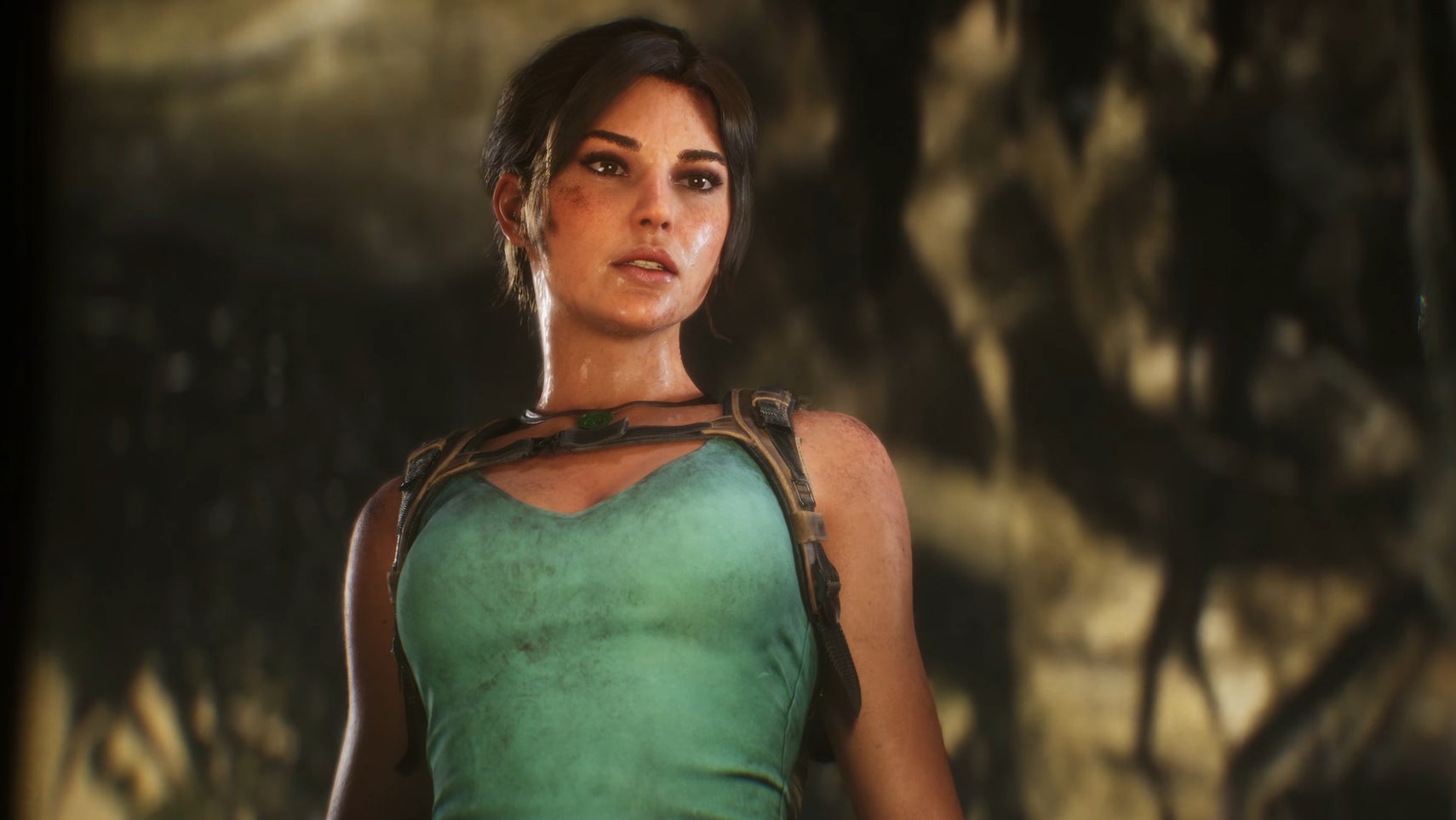
Los Angeles, CA – June 10, 2024 – Crystal Dynamics, the esteemed developer behind the iconic Tomb Raider franchise, has issued a comprehensive clarification regarding its use of artificial intelligence in the upcoming title, Tomb Raider: Legacy of Atlantis. The studio’s detailed explanation comes in response to significant online backlash that erupted after an AI disclosure appeared on the game’s Steam page, sparking a wider debate among the gaming community and industry professionals about the role of generative AI in creative development.
The clarification, provided to GamesIndustry.biz at Summer Game Fest in Los Angeles, aims to assuage fears that AI is being used to replace human artistry. Instead, the studio asserts that AI tools are employed strictly for early-stage iteration and concept visualization, serving as an accelerant for creativity rather than a substitute for human craftsmanship. All final in-game content, Crystal Dynamics emphasizes, remains meticulously human-crafted.
The Genesis of the Backlash: Steam Disclosure and Player Concerns
The controversy ignited shortly after the Steam page for Tomb Raider: Legacy of Atlantis went live, featuring a disclosure indicating the use of AI in the game’s development. While such disclosures are increasingly becoming standard practice, driven by Valve’s guidelines and a growing demand for transparency, the specific mention for a highly anticipated title from a major franchise immediately captured public attention and, for many, concern.
Initial Disclosure and Public Reaction
The disclosure itself, while technically compliant, was perceived by a segment of the gaming community as vague, leaving ample room for speculation. In an industry grappling with widespread layoffs and an ongoing debate about artistic integrity versus technological efficiency, any hint of AI integration in the creation of beloved intellectual properties can become a flashpoint. Players voiced anxieties ranging from the potential for AI-generated assets to compromise the game’s artistic vision and uniqueness, to the ethical implications of using AI trained on existing art without proper attribution or compensation for human artists.
The prevailing sentiment among many gamers is a deep-seated desire for authenticity and the preservation of human artistry in the games they cherish. The fear of "soulless" or derivative content, churned out by algorithms, runs high, especially given recent advancements in generative AI that can produce convincing, yet often unoriginal, imagery and text. This broader cultural anxiety, coupled with a general lack of understanding about the specific ways AI is being utilized, contributed significantly to the swift and intense negative reaction online. For many, the disclosure on Steam raised immediate red flags about job displacement for artists, writers, and designers, further fueling an already heated discourse within the creative industries.
Crystal Dynamics’ Official Stance and Detailed Explanation
In the wake of the initial online outcry, Crystal Dynamics quickly moved to clarify its position, first with Eurogamer and then in greater detail with GamesIndustry.biz. The studio’s messaging has consistently centered on the idea of AI as a supportive tool, enhancing human creativity rather than diminishing it.
Empowering Creativity, Not Replacing It
Crystal Dynamics had previously communicated to Eurogamer that AI tools are used "to help our teams iterate on ideas faster and more efficiently, while ensuring that all finished content in the final product is human-crafted." This initial statement set the stage for a more comprehensive explanation of their methodology, emphasizing their ultimate goal: "to empower the creativity and flexibility of our developers to deliver the highest-quality experiences for players everywhere."
At Summer Game Fest, Jeff Adams, the experience director for Tomb Raider: Legacy of Atlantis, elaborated further on this philosophy. Speaking to GamesIndustry.biz, Adams provided a concrete example of AI implementation in the crucial early stages of level development. He explained that generative AI is primarily utilized to visualize concepts and test the viability of in-game objects before significant human resources are committed.
"We might have the idea for an in-game object and we’re not sure whether we want to spend the dev time to build it," Adams stated. "We can use a generative AI tool to visualize it in the world and if it works, we’ll then move it to our traditional production pipeline."
This process underscores a deliberate two-stage approach. In the first stage, AI acts as a rapid prototyping tool, allowing designers to quickly mock up various ideas, test different aesthetics, and assess their potential impact within the game world. This rapid visualization capability can significantly reduce the time and cost associated with traditional concept art and 3D modeling for ideas that might ultimately be discarded. For instance, instead of an artist spending days or weeks creating multiple detailed concepts for a unique puzzle mechanism or an environmental landmark, an AI could generate numerous variations in a fraction of the time, providing a broad spectrum of possibilities for human designers to evaluate.
The critical second stage, as Adams meticulously outlined, involves the complete traditional production pipeline. "Our team will concept it, they will build it, making sure that all the finished content in the final game is human-created," he affirmed. This means that once an AI-generated concept is deemed promising, human artists, modelers, animators, and designers take over. They develop the chosen concept from scratch, applying their unique artistic sensibilities, technical skills, and creative judgment to craft the final, polished asset that will appear in the game. This distinction is vital: the AI provides a blueprint or an inspiration, but the actual construction and artistic refinement are entirely human endeavors.
From the studio’s perspective, this methodology offers substantial benefits. It allows developers to explore a wider range of creative options more efficiently, reduces the risk of investing significant development time in unviable ideas, and ultimately frees up human talent to focus on refining and elevating the chosen concepts to the highest possible quality. "We just want to make it as easy as possible for our devs to be able to make high quality experiences because that’s what the fans want," Adams concluded, reiterating the studio’s commitment to player satisfaction and the creative empowerment of its team.
The Broader Industry Landscape: AI’s Dual Role in Game Development
Crystal Dynamics’ situation is not an isolated incident but rather a microcosm of a much larger, ongoing debate within the game development industry and creative sectors worldwide. The emergence of sophisticated generative AI tools has created a powerful dichotomy: immense potential for efficiency and innovation on one hand, and profound ethical, artistic, and economic challenges on the other.
Generative AI: A Double-Edged Sword
Generative AI, capable of producing novel content such as images, text, and audio from simple prompts, has undeniably become a "hot topic." Its ability to rapidly prototype, generate placeholder assets, assist in world-building descriptions, and even facilitate early-stage game design concepts is appealing to studios looking to streamline workflows and reduce development costs. The allure of accelerating creative processes and unlocking new forms of iterative design is strong.
However, this technological promise is shadowed by significant anxieties. The backlash against AI in creative fields stems from several interconnected concerns:
- Artistic Integrity: Many fear that AI-generated content, even if refined by humans, lacks the inherent soul, originality, and unique perspective that only human artists can imbue. There’s a concern that over-reliance on AI could lead to homogenization or a "sameness" in artistic output.
- Copyright and Ethics of Training Data: A major point of contention revolves around the datasets used to train these generative AI models. If models are trained on vast quantities of copyrighted material without proper consent or compensation to the original creators, it raises serious legal and ethical questions about intellectual property rights and fair use. Artists worry that their life’s work is being appropriated to create tools that could ultimately devalue or replace their own contributions.
- Job Displacement: The most pressing fear for many creative professionals is the potential for widespread job losses. If AI can perform tasks traditionally done by junior artists, concept artists, writers, or even sound designers, it could shrink the job market and put immense pressure on wages. This concern is particularly acute in an industry that has recently seen significant layoffs, making the prospect of technological displacement even more alarming.
- Transparency and Trust: As evidenced by the Tomb Raider situation, a lack of transparency or clarity regarding AI use can quickly erode player trust. Consumers want to know that the products they purchase are the result of human ingenuity and effort, especially when investing in premium entertainment.
Statistical Insights: GDC Survey and Developer Sentiments
Despite the public controversy, the adoption of AI tools within the game development industry is growing. The annual Game Developers Conference (GDC) survey, a key indicator of industry trends, revealed that a significant portion of developers are already integrating AI into their workflows. The survey indicated that 36% of game developers were using AI in various capacities. This figure likely encompasses a broad spectrum of AI applications, from more traditional uses like pathfinding algorithms for NPCs and procedural generation of landscapes (which have been around for decades), to the newer, more contentious generative AI tools for art, writing, and design iteration.
This widespread adoption suggests that many studios see tangible benefits in AI, regardless of the public debate. It points to an industry quietly, or in some cases overtly, experimenting with and integrating these technologies to stay competitive and efficient.
Crucially, while developers are using AI, there is also a strong desire for clarity and ethical implementation. A separate survey carried out by GamesIndustry.biz earlier this year highlighted this sentiment, suggesting that an overwhelming majority of developers wanted robust AI disclosure on storefronts, even if it was only used for concepting purposes. This finding is highly significant. It indicates that developers themselves recognize the ethical complexities and the importance of transparency, not just for players but for maintaining professional standards and trust within the industry. This call for robust disclosure reflects a proactive stance from within the development community, acknowledging the need for clear guidelines to prevent misuse and foster responsible innovation. Developers understand that obfuscation can lead to a loss of trust from both consumers and fellow creators.
Chronology of Events: From Announcement to Clarification
The narrative surrounding Crystal Dynamics’ AI use in Tomb Raider: Legacy of Atlantis unfolded rapidly, highlighting the immediate and often passionate reactions elicited by discussions of AI in creative works.
- Late May/Early June 2024: The Steam page for Tomb Raider: Legacy of Atlantis goes live, including a disclosure indicating the use of AI in its development. The exact wording of the disclosure is brief, stating simply that AI tools were used.
- Early June 2024: Screenshots of the Steam page disclosure circulate rapidly across social media platforms, including X (formerly Twitter), Reddit, and gaming forums. This triggers an immediate and widespread negative reaction from segments of the gaming community, with users expressing concerns about job displacement, artistic integrity, and the quality of AI-generated content.
- Early June 2024: In response to the growing backlash, Crystal Dynamics provides an initial statement to Eurogamer. This statement offers a preliminary clarification, explaining that AI tools are used for "faster and more efficient iteration" and that "all finished content in the final product is human-crafted."
- June 7-10, 2024 (Summer Game Fest): As Tomb Raider: Legacy of Atlantis becomes playable for attendees at Summer Game Fest in Los Angeles, Crystal Dynamics seizes the opportunity to offer a more detailed explanation. Jeff Adams, the experience director, provides an in-depth interview to GamesIndustry.biz, outlining the specific use case of generative AI for early-stage concept visualization of in-game objects and reiterating the commitment to human-created final assets. This interview aims to provide the specific, actionable examples that the earlier, broader statement lacked.
- Ongoing: The clarification from Crystal Dynamics enters the broader industry discourse, serving as a case study for how developers are attempting to navigate the integration of AI while managing public perception and maintaining trust. The debate over AI in game development continues, with studios, players, and industry bodies grappling with the implications of this rapidly evolving technology.
Implications for the Future of Game Development and Player Trust
The incident surrounding Tomb Raider: Legacy of Atlantis and Crystal Dynamics’ subsequent clarification offers valuable insights into the complex future of game development, player expectations, and the evolving relationship between technology and creativity.
Navigating the Ethical Minefield
For game studios, the central challenge is how to harness the legitimate benefits of AI – such as increased efficiency, accelerated prototyping, and expanded creative exploration – without alienating their player base or compromising the perceived artistic integrity of their products. This necessitates walking a delicate tightrope, requiring not only responsible AI integration but also impeccable communication strategies. Studios must move beyond generic disclaimers and provide clear, specific explanations of how AI is being used, distinguishing between assistive tools and generative processes that might replace human creative input.
The risk of "AI washing" – where companies superficially adopt AI to appear innovative or cut costs, while potentially misrepresenting its true impact – is significant. Transparency, therefore, becomes paramount. Crystal Dynamics’ proactive approach in detailing its AI usage, moving beyond a simple disclosure to a granular explanation of its "human-crafted" final output, sets a precedent for how developers might address public scrutiny in the future.
The Evolving Definition of "Human-Crafted"
The term "human-crafted" itself is undergoing a subtle but significant redefinition in the age of AI. If an AI generates a concept, which a human then interprets, refines, and builds from scratch, is the final product entirely "human-crafted"? From a purely labor perspective, yes, the human hands and minds are performing the actual creation of the final asset. However, the genesis of the idea, or at least its initial visual form, might have an AI component.
This raises philosophical questions about creativity and authorship. Does AI act merely as an advanced brainstorming tool, no different from a mood board or a photograph, or does its ability to generate novel (albeit derivative) content imbue it with a form of co-authorship? The industry will need to grapple with these nuances, potentially establishing clearer definitions and perhaps even new categories of intellectual property or creative processes that acknowledge AI’s assistive role without diminishing human agency. The distinction between AI as a ‘tool’ versus AI as a ‘creator’ will remain a focal point of this debate.
Player Expectations and Industry Standards
Player expectations are undoubtedly evolving. As AI becomes more prevalent, consumers are likely to become more discerning about its use in the games they buy. They may demand greater transparency, and some segments of the audience might even develop preferences for games that explicitly state "no AI used in creative asset generation," similar to preferences for organic food or ethically sourced products.
This shift in consumer demand will necessitate the development of robust, industry-wide standards and best practices for AI integration and disclosure. Organizations like the ESA (Entertainment Software Association), IGDA (International Game Developers Association), or even new bodies focused specifically on AI ethics in entertainment, may need to establish guidelines. These guidelines could cover:
- Mandatory Disclosure Levels: Differentiating between AI used for back-end optimization (e.g., QA, network code), AI for assistive tools (e.g., smart autocomplete in coding, texture upscaling), and generative AI for concept art, asset creation, or narrative elements.
- Ethical Sourcing of Training Data: Ensuring that AI models are trained on ethically acquired data, with proper licensing and compensation for artists whose work forms the basis of these models.
- Transparency in Marketing: Moving beyond boilerplate disclosures to explain AI use in a way that is accessible and reassuring to the public.
Ultimately, the credibility of the game industry and the trust of its players will hinge on how scrupulously developers and publishers navigate this new technological landscape. The imperative is not to shun AI entirely, given its potential, but to integrate it thoughtfully, ethically, and transparently.
Conclusion: A Precedent for Transparency in a New Era
Crystal Dynamics’ experience with Tomb Raider: Legacy of Atlantis serves as a critical case study in the ongoing dialogue surrounding artificial intelligence in creative industries. The swift public reaction to the Steam disclosure underscored the deep-seated concerns among players about artistic integrity and the future of human craftsmanship. The studio’s subsequent, detailed clarification, emphasizing AI’s role as an iterative tool rather than a replacement for human creation, highlights the delicate balance developers must strike.
In an era where technological advancements are rapidly reshaping creative processes, transparency and clear communication are no longer optional but essential. Crystal Dynamics’ approach, by openly explaining how AI is being used and reaffirming its commitment to human-crafted final content, provides a blueprint for how other studios might engage with their communities.
The future of game development will undoubtedly involve further integration of AI. However, the enduring success of this integration will depend not just on technological prowess, but on the industry’s ability to foster trust, uphold ethical standards, and maintain a vibrant space for human creativity at its core. The conversation ignited by Tomb Raider: Legacy of Atlantis is a vital step towards defining these new frontiers, ensuring that innovation proceeds hand-in-hand with artistic integrity and player confidence.








