

In the ever-expanding universe of daily digital diversions, the New York Times has cemented its status as the premier architect of the modern puzzle enthusiast’s morning routine. From the viral sensation of Wordle to the lateral-thinking challenges of Connections, the paper’s games stable has become a cultural touchstone. Among these, Strands—the latest addition to the lineup—has carved out a unique niche, challenging players to find hidden thematic threads within a grid of letters.
On June 29, 2026, players were greeted with Game #848, a puzzle that struck a resonant chord with music theory enthusiasts and casual players alike. Featuring the theme "The mark of a good composer," this installment served as a reminder of how the NYT games team continues to bridge the gap between abstract wordplay and specialized knowledge.
The Anatomy of the Challenge: Game #848 Overview
For the uninitiated, Strands is a grid-based word search with a twist: every letter on the board must be used exactly once to form a series of thematic words. The goal is to clear the board while identifying the "Spangram"—a unique word or phrase that spans the entire grid from one side to the other, effectively summarizing the puzzle’s theme.
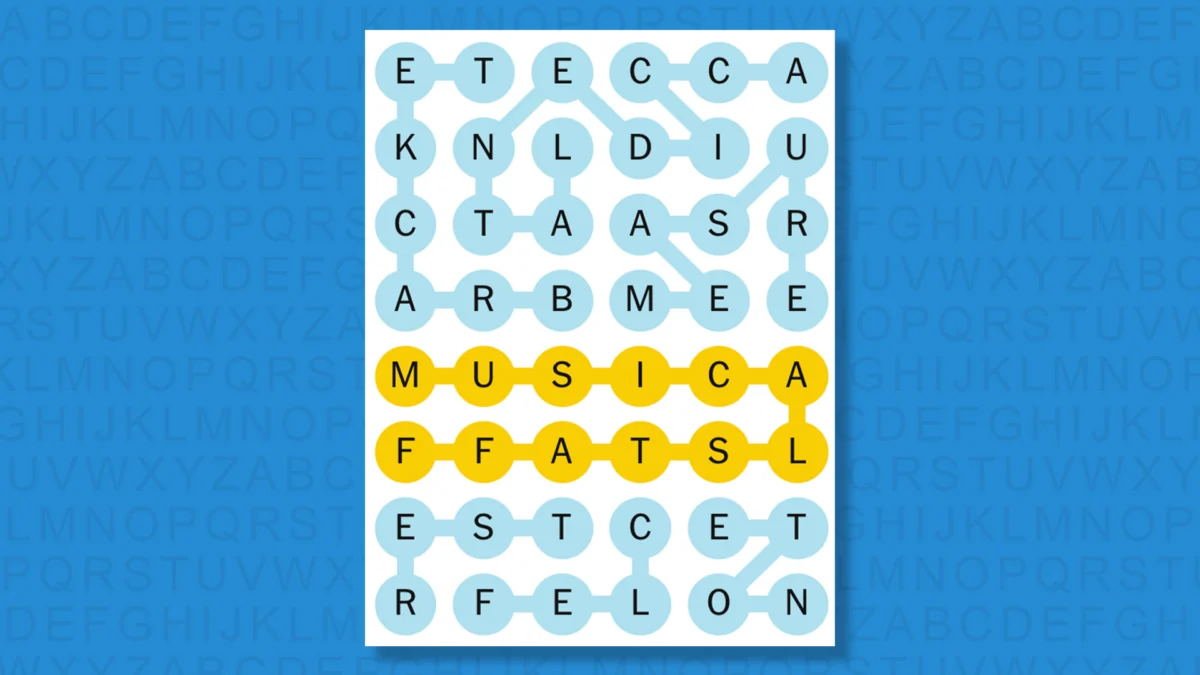
Game #848 presented a particularly cerebral challenge. With the prompt "The mark of a good composer," many players initially gravitated toward historical figures—Mozart, Bach, or Beethoven. However, the game quickly pivoted from the creators of music to the tools of the craft. The Spangram, "MUSICSTAFF," consisting of 12 letters, served as the structural backbone of the puzzle, touching the left side at the 5th row and anchoring on the right side at the 6th row.
Chronology of the Solve: From Confusion to Clarity
The experience of solving today’s puzzle was, for many, a journey through varying degrees of musical literacy. Upon the initial reveal of the theme, the ambiguity was palpable.
- The Initial Misdirection: Early attempts to solve the puzzle often led to "red herrings"—words related to instruments or famous classical composers. The complexity of the board design meant that these false starts were easily made.
- The Breakthrough: The discovery of the Spangram, "MUSICSTAFF," acted as the key that unlocked the remaining grid. Yet, even with the Spangram in hand, the thematic connection to the other hidden words remained elusive for those without a background in music theory.
- The Technical Hurdle: A point of contention for many players was the inclusion of the word "ACCIDENTAL." In musical terminology, an accidental is a note that is not a member of the scale or mode indicated by the most recently applied key signature. For the layperson, the word carries a common-language connotation that makes its presence on a musical board counter-intuitive. As one solver noted, it took several minutes of mental gymnastics to reconcile the dictionary definition of an "accident" with the precise, technical definition required by the game.
Supporting Data: Why Music Puzzles Resonate
The popularity of music-themed word games is no accident. Psychologists and game designers have long observed that music acts as a universal language, and puzzles that incorporate musical notation or terminology tap into a shared, albeit often latent, knowledge base.
Data from the New York Times Games platform suggests that thematic puzzles involving the arts—literature, film, and music—consistently see higher engagement rates than purely abstract vocabulary challenges. By incorporating terms like "Accidental," "Clef," or "Measure," the NYT is not merely testing word-finding speed; they are encouraging a form of "incidental learning," where players walk away having expanded their vocabulary.
Implications of the "Strands" Model
The success of Strands suggests a significant shift in how audiences interact with digital puzzles. Unlike Wordle, which is a finite, singular experience, Strands offers a "hint system" that is triggered by finding non-thematic words. This creates a tiered difficulty structure that accommodates both the expert linguist and the novice hobbyist.
The Role of the Spangram
The Spangram is the hallmark of the Strands design philosophy. By forcing the player to connect two sides of the board, the game designers introduce a physical constraint that dictates the logic of the entire grid. In Game #848, the 12-letter length of "MUSICSTAFF" required a specific pathing that challenged the spatial reasoning skills of the player, distinguishing it from traditional "find-a-word" games.
The Educational Value
Critics and fans alike have noted that the NYT’s games division has effectively become an educational tool. By focusing on niche topics—such as the technical components of sheet music—the games force players to engage with subjects they might otherwise overlook. For the casual player, "ACCIDENTAL" is no longer just a synonym for a mishap; it is now a part of their active lexicon, grounded in the context of musical notation.
Official Stance and Community Feedback
While the New York Times does not provide daily commentary on the specific design choices behind each puzzle, the community discourse on platforms like Reddit and social media highlights a general appreciation for the difficulty spikes.
"I didn’t realize that ‘accidental’ was a musical term until today," one user remarked in a fan forum. "It’s frustrating when you don’t know the terminology, but it’s immensely satisfying when the theme finally clicks."
This feedback loop is crucial for the longevity of the game. The developers balance the need for accessibility with the desire to provide a "brain teaser" that feels earned. The choice of a music-heavy theme for a Sunday/Monday transition period (depending on the time zone) reflects a strategic effort to engage users who might have more leisure time to contemplate the nuances of the grid.
A Look Ahead: The Evolution of Daily Puzzles
As we look toward the future of Strands and its sister games like Connections and Quordle, it is clear that the "daily ritual" economy is thriving. These games have become a primary method for digital users to disconnect from the pressures of work and news cycles.
The inclusion of more specialized, thematic content—like that found in Game #848—indicates that the New York Times is willing to push its audience. Rather than keeping the puzzles strictly within the realm of common conversational English, they are increasingly inviting players to explore the technical vocabulary of specific trades, arts, and sciences.
For those who struggled with the nuances of today’s puzzle, the takeaway is simple: the "mark of a good composer" isn’t just in the notes they choose, but in the structure they provide. Similarly, the mark of a good puzzle is one that leaves the player feeling slightly more informed than when they began.
Conclusion: Mastering the Grid
Whether you cleared the board in record time or found yourself stumped by the complexities of musical theory, Game #848 stands as a testament to the enduring appeal of the Strands format. By combining a 12-letter Spangram with the technical lexicon of the music world, the NYT provided a challenge that was as educational as it was entertaining.
As the midnight clock approaches and a new puzzle replaces the current one, players will once again descend into the grid. For now, the lesson of the day remains: always be prepared for the "accidentals" in life—or, at the very least, in your morning puzzle.
For those looking to keep their skills sharp, the daily rotation of these games ensures that there is always another challenge on the horizon. Whether it is the word-based deduction of Wordle or the thematic categorization of Connections, the New York Times has successfully turned the daily puzzle into an essential, intellectual heartbeat of the modern digital day.
If you are still searching for help with other games in the NYT suite, be sure to check our daily guides for Connections, Quordle, and the original viral sensation, Wordle. Each provides the necessary hints to help you keep your winning streak alive.











