Lina Irawan
In an era where personal technology intersects with clinical research, a groundbreaking study from the Harvard T.H. Chan School of Public Health has provided fresh, empirical insights into the physiological challenges of the menopause transition. By analyzing over 94,000 nights of sleep data captured via the Apple Watch, researchers have mapped the subtle yet significant shifts in rest patterns that accompany perimenopause, offering a data-driven look at a biological milestone that has historically been defined largely by anecdotal evidence.
The Intersection of Wearable Tech and Public Health
For the past several years, Apple has utilized the Apple Watch as a cornerstone of its commitment to large-scale longitudinal health studies. Through the Apple Research app, the company has facilitated data collection for ambitious initiatives like the Apple Women’s Health Study, the Apple Heart and Movement Study, and the Apple Hearing Study. These projects, which kicked off in 2019 in partnership with esteemed institutions such as Harvard, Brigham and Women’s Hospital, the American Heart Association, and the University of Michigan, have fundamentally changed how researchers collect data.
As of February 2025, these studies have scaled to include over 350,000 participants across the United States. This vast network allows researchers to move beyond small, laboratory-based cohorts and instead analyze health trends in real-world settings, providing a more accurate reflection of how health markers—such as sleep, heart rate, and mobility—fluctuate over long periods in the daily lives of diverse populations.

Chronology of the Study: From Data Collection to Insight
The Harvard study, titled "A Transition of Seasons: Sleep Patterns and Changes in Perimenopause," focused on 338 participants of the Apple Women’s Health Study. These participants, aged 25 to 59—with the majority falling in the 45 to 59 age bracket—provided 94,000 nights of objective, device-tracked sleep data.
The research team set out to answer a fundamental question: How exactly does the physiological shift toward menopause impact the quality and architecture of sleep? The study tracked participants over the critical 12-month window before and after their final logged menstrual period, establishing a clear timeline for evaluating sleep disturbances.
The chronology of the findings suggests a progressive degradation of sleep quality as individuals approach their final period. Specifically, the researchers identified a 18-month window leading up to menopause as a "high-risk" period for sleep disruption. Within this timeframe, 60% of the participants who provided consistent tracking data demonstrated a marked increase in "Wake After Sleep Onset" (WASO)—a clinical metric for measuring how long a person remains awake after having initially fallen asleep. On average, this specific cohort saw a 7% increase in WASO during this transition.
Supporting Data: The Quantitative Reality of Sleep Disruption
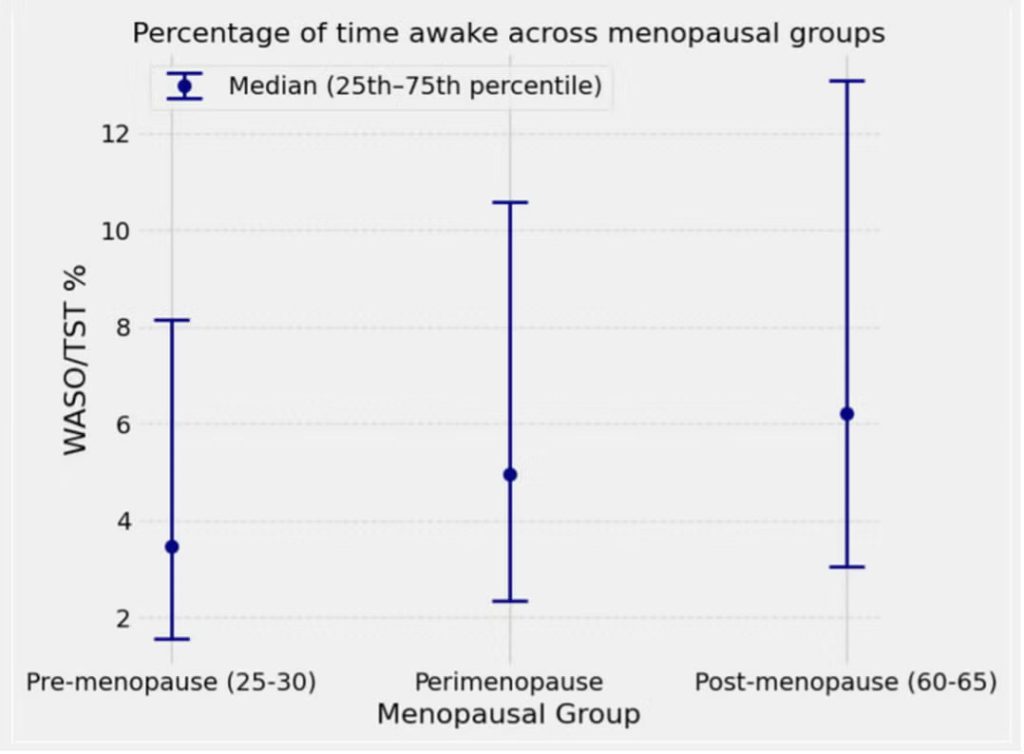
The data provided by the Apple Watch allowed researchers to move beyond subjective surveys and analyze objective sleep behavior. The findings were stark. In the 12 months surrounding the final menstrual period, participants spent significantly more time awake at night compared to their baseline measurements taken before the onset of perimenopausal symptoms.
Specifically, the study found that participants spent approximately 0.8% more of their total sleep time awake after menopause compared to the pre-menopausal period. While 0.8% may sound negligible to the layperson, in the context of sleep architecture, this represents a meaningful, measurable increase in nocturnal wakefulness that correlates with reports of fatigue and irritability.
However, the researchers were quick to emphasize the inherent variability in their findings. "Each person experiences perimenopause and menopause differently," the study notes. While the aggregate data points to a clear trend of increased wakefulness, the individual variance was profound. Some participants experienced dramatic spikes in nighttime awakenings, while others reported no significant change in their sleep patterns at all. This highlights the complex interplay of genetics, lifestyle, and hormonal sensitivity that dictates the menopause experience.
Beyond Sleep: The Symptom Cluster
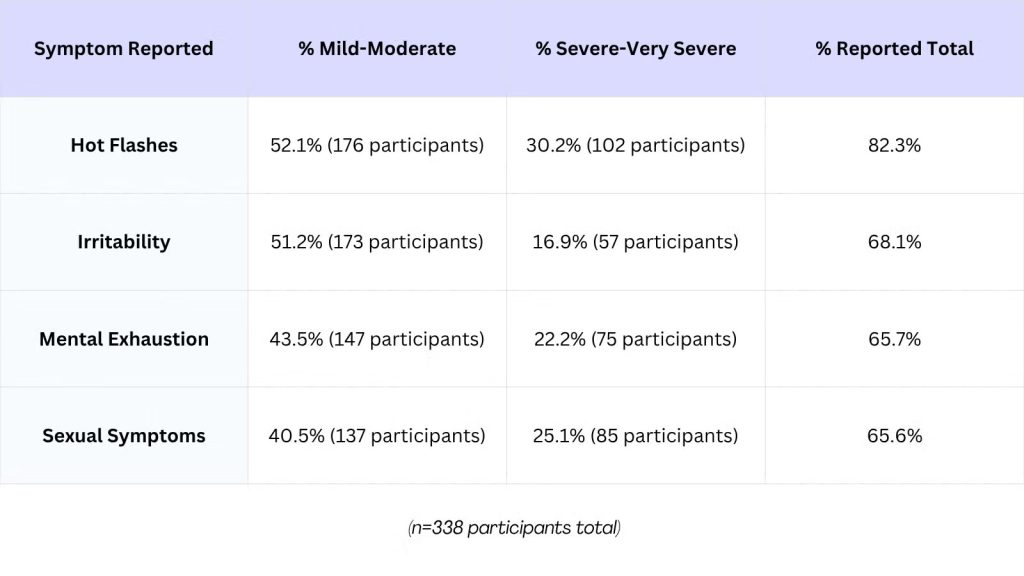
The study did not look at sleep in a vacuum. By cross-referencing sleep data with symptom journals kept by the participants, researchers were able to draw links between sleep quality and the broader spectrum of perimenopausal symptoms. The prevalence of reported symptoms among the cohort was significant:
- Hot Flashes: 82.3% of participants reported these thermal disturbances.
- Irritability: 68.1% of participants noted increased mood fluctuations.
- Mental Exhaustion: 65.7% reported feeling "brain fog" or severe fatigue.
- Sexual Symptoms: 65.6% reported changes in sexual health and comfort.
Perhaps most revealing was the correlation between sleep disruption and specific, severe menopause symptoms. The study identified that individuals experiencing the most fragmented sleep were those who also reported high levels of bladder issues, joint discomfort, heart palpitations, and symptoms of depression. This suggests a "symptom cluster" where sleep deprivation may both exacerbate and be exacerbated by these other physical and mental health challenges.
Implications for Future Research and Clinical Care
The implications of this study are twofold. First, it validates the utility of wearable technology as a primary tool for studying women’s health. By providing researchers with access to long-term, high-fidelity data, devices like the Apple Watch allow for the discovery of patterns that would be nearly impossible to detect in a traditional clinical office setting, where a patient might only be seen once or twice a year.
Second, the study provides a roadmap for clinicians treating patients in perimenopause. By recognizing the 18-month window leading up to menopause as a critical period for sleep hygiene, doctors can intervene earlier. The researchers suggest that recognizing these patterns is the first step toward effective management.
Recommendations for Better Sleep
While the study acknowledges that menopause is a natural life transition, it offers guidance for mitigating the impact of sleep disruptions:
- Temperature Regulation: Given the high prevalence of hot flashes, maintaining a cool bedroom environment is essential.
- Consistent Routine: Maintaining a strict sleep-wake schedule helps regulate the circadian rhythm, which may be sensitive to hormonal fluctuations.
- Symptom Management: Treating comorbid issues like bladder discomfort or joint pain early can prevent the "domino effect" of sleep loss.
- Mental Health Support: Because of the strong link between sleep and mood, addressing depressive symptoms or high irritability through cognitive behavioral therapy or other modalities can indirectly improve sleep duration.
Official Responses and The Path Forward
The publication of this study has been met with interest from the medical community, particularly those focusing on geriatric health and endocrinology. Experts note that this study acts as a "proof of concept" for how technology can bridge the gap between longitudinal patient data and medical science.

Apple’s continued investment in these studies, in collaboration with the Harvard T.H. Chan School of Public Health, signals a long-term strategy to define the role of wearable data in clinical diagnosis. As the dataset grows, the granularity of the findings will likely increase, potentially allowing for personalized health predictions based on an individual’s unique sleep and activity signatures.
For the participants of the Apple Women’s Health Study, the contribution is invaluable. By providing their data, they have helped illuminate a phase of life that has historically been under-researched. As the medical community continues to digest these 94,000 nights of data, the hope is that the "transition of seasons" that is menopause can be navigated with more clarity, more empathy, and more effective, data-backed solutions.
The full findings of the study, including detailed methodologies and extended data sets, remain available to the public via the Harvard T.H. Chan School of Public Health’s research portal, marking a significant step toward the democratization of health information and the advancement of women’s wellness.


 Asep Darmawan
 Basiran