

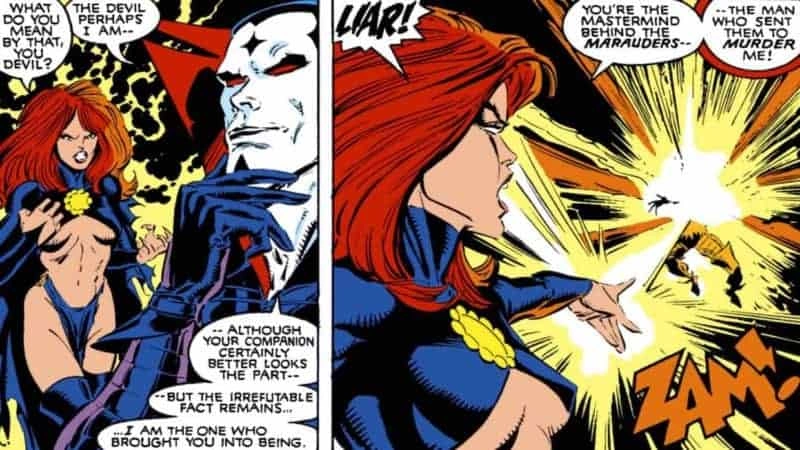
The landscape of the Marvel Universe’s mutant population is shifting at a breakneck pace. As the "Dawn of X" era matures, the interplay between contemporary titles and the foundational history of the X-Men has become more intricate than ever. In the latest installment of the S4GY podcast, hosts Marius, Ian, and Nolan reconvene to dissect the current trajectory of the X-books, bridging the gap between modern espionage and the iconic legacy of the 1989 Inferno event.
Main Facts: The Current State of Krakoa
The most recent wave of releases—specifically X-Men #6, Excalibur #7, and X-Force #7—serves as a pivotal turning point for the Krakoan age. The core conflict continues to revolve around the fragile autonomy of the mutant nation-state and the desperate, often morally ambiguous lengths to which its citizens will go to secure their future.
In this episode, the panel focuses heavily on the character arc of Mystique. X-Men #6 stands out as the definitive issue of the week, moving beyond mere world-building to offer a character-driven narrative that recontextualizes events from the seminal House of X/Powers of X series. The episode also navigates the setup phases of Excalibur and X-Force, which are currently pivoting toward new, high-stakes story arcs, as well as providing an extensive retrospective on the latter half of the Inferno trade paperback.
Chronology: A Roadmap of Recent Mutant Activity
To understand the current state of the X-Men, one must look at the recent sequence of events that have defined the post-resurrection status quo:
- The Orchis Infiltration: X-Men #6 reveals that Mystique’s involvement in the mission to destroy the Orchis Master Mold facility was far more complex than initially portrayed. Beyond the collective mutant objective, Mystique was operating under a personal mandate from Professor X and Magneto.
- The Seed of Espionage: During the assault on the sun-adjacent Orchis base, Mystique planted a seed of Krakoa. This act of botanical sabotage allowed her to create a permanent portal, transforming an enemy stronghold into a gateway for covert mutant operations.
- The Diplomatic Gambit: Mystique’s primary motivation remains the resurrection of her wife, Destiny (Irene Adler). Her loyalty to the Quiet Council is not born of altruism, but of a transactional desperation to see her partner restored to life.
- The Medieval Machinations: Excalibur #7 has successfully introduced Cullen Bloodstone, a villain with deep roots in the Marvel Universe, while simultaneously deepening the involvement of Exodus in Apocalypse’s ancient, esoteric schemes.
- The Domino Effect: X-Force #7 has transitioned into a "wait-and-see" phase, focusing on the lingering fallout from recent trauma and positioning Domino for future developments that promise to redefine her role within the team.
Supporting Data: Character Arcs and Narrative Interconnectivity
The S4GY panel emphasizes that the modern X-Men titles are heavily reliant on "long-game" storytelling. By analyzing the 1989 Inferno trade paperback, the hosts illustrate how Marvel is intentionally weaving classic narrative threads into the current Dawn of X tapestry.
Mystique: The Unreliable Protagonist
Mystique has arguably become the most compelling figure in the current X-line. Her duality—serving as a pawn for Xavier and Magneto while harboring a singular, obsessive goal—creates a palpable tension. The revelation that she acted as a sleeper agent during the events of House of X is a masterstroke in retroactive continuity, turning a heroic sacrifice into a clandestine mission.
The Return of Cullen Bloodstone
Ian’s analysis of Cullen Bloodstone in Excalibur #7 underscores the editorial decision to integrate more horror-adjacent and "weird" fantasy elements into the X-Men’s cosmic scope. Bloodstone’s reintroduction serves as a catalyst for the magical and supernatural threats that the Krakoan nation must now contend with, moving the conflict beyond simple anti-mutant sentiment and into the realm of ancient, existential terrors.
The Legacy of Inferno
The discussion surrounding the 1989 Inferno event is not merely nostalgic. With the upcoming publication of Hellions, the thematic links between the demonic chaos of the 80s and the current Krakoan experiments are becoming increasingly clear. The Inferno trade, collecting seminal issues of X-Factor, Uncanny X-Men, and New Mutants, provides the necessary context for the darker, more volatile elements currently being teased in the Dawn of X.

Official Responses and Editorial Direction
While Marvel editorial remains tight-lipped regarding the ultimate endgame for the Quiet Council, the pacing of the current books suggests a deliberate escalation. The inclusion of figures like Exodus—an Omega-level mutant with a fanatical devotion to mutant superiority—indicates that the internal politics of Krakoa are destined to reach a breaking point.
The hosts of S4GY highlight the effectiveness of this editorial approach: by dedicating specific issues to "setup" (as seen in X-Force #7), Marvel allows for a slower, more deliberate character-building process that pays off in explosive, high-impact issues like X-Men #6. This cyclical structure of buildup and payoff is currently the defining characteristic of the X-line.
Implications: Where the X-Men Go from Here
The implications of these developments are vast. If Mystique continues to be manipulated by the promise of Destiny’s return, the stability of Krakoa could be compromised from within. Her ability to manipulate portals and infiltrate enemy lines makes her both an invaluable asset and an uncontrollable liability.
Furthermore, the integration of characters like Exodus and the return of legacy villains like Cullen Bloodstone suggest that the X-Men are moving away from the "survival against humans" trope and toward a more complex "civilization building" narrative. As they grow in power, the threats they face—both magical and geopolitical—are growing in tandem.
The Road to Hellions
The most significant implication discussed by the panel is the impending launch of Hellions. By grounding the reader in the chaos of Inferno, the current books are priming the audience for a team that deals with the "unmanageable" elements of mutant society. The characters and events being highlighted now are clearly intended to form the backbone of the Hellions roster and its initial narrative arcs.
Final Thoughts
For readers looking to stay ahead of the curve, the message from the latest S4GY episode is clear: pay attention to the past. The current X-Men writers are not just telling new stories; they are building a bridge to the most iconic eras of X-Men history. Whether it is the espionage-heavy maneuvering of Mystique or the mystical threats arising in Excalibur, the Dawn of X is a living, breathing history lesson that demands the reader’s full attention.
As we look toward the next several months, the convergence of these plot lines—Mystique’s betrayal, the political maneuvering of the Quiet Council, and the looming shadow of Inferno—will undoubtedly lead to a confrontation that could threaten the very foundation of the mutant paradise. The S4GY podcast serves as an essential companion for those navigating these complex narrative waters, ensuring that no clue is missed and no historical reference goes unexamined.
To listen to the full discussion and hear the hosts’ detailed breakdown of the Inferno trade paperback, visit the ComicsVerse website or find the S4GY podcast on your preferred streaming platform.











No comments yet. Be the first to join the conversation!