Rifan Muazin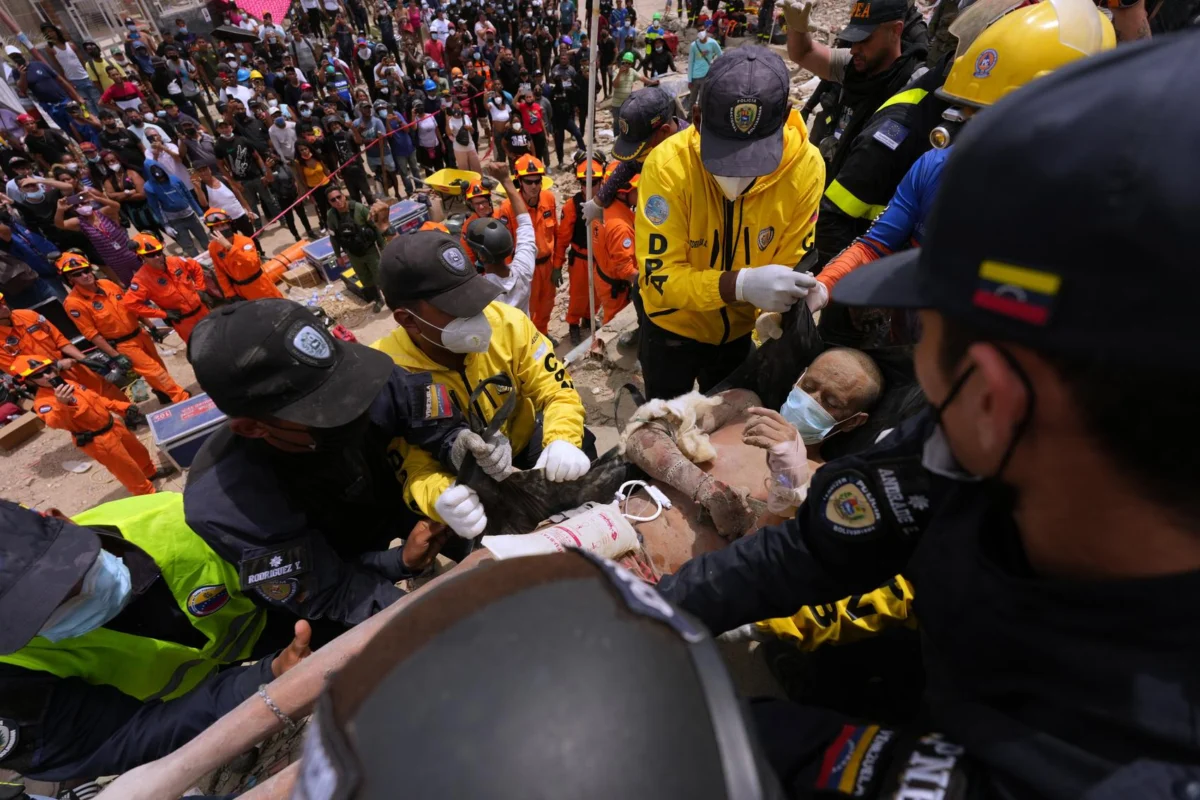
LA GUAIRA, Venezuela — Four days after a catastrophic double-seismic event shattered the northern coast of Venezuela, the window for survival is rapidly closing. International rescue teams and local volunteers are locked in a grim, high-stakes race against the clock, digging through the pulverised concrete and twisted rebar of what was once the vibrant state of La Guaira.
As of Sunday afternoon, the official death toll has reached 1,450, a figure that authorities fear will climb significantly as search operations penetrate the deepest layers of debris. While the international community has mobilized an unprecedented rescue effort, the disaster has exposed the profound fragility of a nation already buckling under years of political upheaval and economic collapse.
The Chronology of a Catastrophe
The ordeal began last Wednesday, when a powerful 7.2 magnitude earthquake struck the northern coast, followed shortly by a 7.5 magnitude tremor. The seismic "one-two punch" decimated local infrastructure, turning high-rise apartment complexes into mountains of rubble and severing vital transportation arteries.
By Friday, the initial assessments were already dire, but the situation deteriorated rapidly over the weekend. As of Sunday, authorities confirmed that more than 770 buildings had suffered total or partial collapse—a figure that has doubled in just 48 hours. Compounding the terror, the region remains seismically active; two aftershocks measuring 4.2 and 4.5 rattled the state on Sunday morning, triggering panic among survivors and threatening the structural integrity of remaining buildings.
For the first 72 hours—the "golden window" for search and rescue—the government response was widely criticized as sluggish and uncoordinated. In the vacuum left by state agencies, civilian-led rescue teams took the lead, often using nothing more than their bare hands and makeshift tools to locate survivors. It was only by Saturday that the arrival of more than 2,200 international rescue workers from the U.S., France, and other nations brought a semblance of professional organization to the recovery effort.
A Glimmer of Hope Amidst the Stench
The atmosphere in La Guaira is a volatile mix of grief, exhaustion, and fleeting joy. In the seaside city of Catia La Mar, the stench of decomposing remains has become an inescapable reality, forcing rescue crews and residents alike to don face masks. Yet, even as the likelihood of finding the living fades, the discovery of survivors continues to provide a desperate lifeline of hope.
On Sunday morning, crowds gathered in silence as crews from the U.S. and France orchestrated a delicate extraction, pulling a man and his son from the ruins of a collapsed structure. When the pair was finally moved to an ambulance on a black tarp, the silence broke into muted sobs and applause.
"It’s been incredibly hard work, but we’re going strong," said Jason Mercano, a civilian volunteer who has become a focal point of the local effort. Mercano, who spent the last few days in constant contact with trapped relatives via social media, represents the grit of a population refusing to abandon their own. "We’ve never given up hope," he added, his voice rasping from the pervasive dust.
Official Responses and Public Friction
The government’s handling of the crisis has become a flashpoint for social unrest. While state television broadcasts images of 14,000 military and police personnel patrolling La Guaira, many residents on the ground tell a different story. They report seeing little to no government assistance in the immediate aftermath of the quakes, fueling accusations of incompetence and neglect.
The government has effectively cordoned off the hardest-hit areas, requiring special permits for entry. While officials argue this is necessary to maintain order and facilitate heavy machinery movement, critics view it as a tactic to control the narrative and minimize the appearance of their own inability to provide basic aid.
This administrative bottleneck has forced citizens to rely on decentralized, digital solutions. With cell service erratic and government infrastructure failing, thousands have turned to non-governmental online databases to report missing family members. One such database has recorded over 50,000 missing-person reports, a staggering number that underscores the sheer scale of the displacement, even if many of those individuals are eventually found safe.
The Healthcare System: A Study in Resilience and Shortage
The medical system, already strained to the breaking point by a decade of economic decline, is currently under immense pressure. The Domingo Luciani Hospital in Caracas has become the epicenter of the trauma response. Dr. Leomery Pérez, an anesthesiologist at the facility, described the scene as one of constant triage.
"We have tons of patients, but thank God, people have responded by bringing us a great deal of supplies," Pérez said, noting that donations from private citizens have prevented a total collapse of medical services. To date, authorities report that over 3,100 people have been treated, many suffering from complex crush injuries that require specialized surgery and long-term rehabilitation.
Political Implications and Humanitarian Challenges
The earthquake presents the ultimate test for acting President Delcy Rodríguez. Having assumed power in January following the U.S.-led removal of Nicolás Maduro, Rodríguez is now tasked with navigating a disaster that would challenge a stable, prosperous government—let alone one that lacks international legitimacy and domestic trust.
The geopolitical landscape further complicates the response. With the U.S. playing a central role in the nation’s current political trajectory, the aid arriving from American teams is viewed through a complex lens of gratitude and political skepticism.
Ronal Rodríguez, a researcher at the Venezuelan Observatory at the University of Rosario in Bogotá, argues that the country is currently trapped in a "perfect storm."
"There is political interference by the United States, the operational incompetence of a government that has driven the country into a complex humanitarian crisis, and, all of a sudden, an earthquake in a place that lacks human capital and short-term resources to address the situation," he stated. "The state is simply not equipped to manage this on its own."
Looking Ahead: The Looming Crisis of Displacement
The humanitarian consequences of this event will be felt for years, not weeks. The International Organization for Migration (IOM) has estimated that as many as 6.8 million people could be affected by the destruction. Amy Pope, director general of the IOM, warned that the disaster will inevitably trigger a new wave of migration.
"It is already clear that displacement will increase, as people seek safety," Pope noted. With homes destroyed and local economies in ruins, the seismic impact of last Wednesday’s quakes will likely manifest in a long-term exodus of citizens, further hollowing out the country’s remaining human capital.
As the sun sets on the fourth day of the tragedy, the focus remains on the rubble. While international teams prepare for the difficult transition from search and rescue to recovery, the people of Venezuela are left to grapple with a new, terrifying reality: that their nation, already broken by politics, now bears the literal scars of the earth itself. The resilience of the Venezuelan people is being tested as never before, and the world is watching to see if the fragile recovery effort can hold together long enough to save those still waiting in the dark.
Associated Press journalists Andry Rincón, Fernando Vergara, and Matías Delacroix in La Guaira; Jorge Rueda in Caracas; Clara Preve in Buenos Aires; and Elliot Spagat in San Diego contributed to this report.
© Copyright 2026 The Associated Press. All rights reserved. This material may not be published, broadcast, rewritten or redistributed without permission.


 Neng Nana
 Asro
Asro