Azzam Bilal Chamdy
Fourteen years after the release of the seminal stealth-action title Dishonored, the architects behind the world of Dunwall are returning to the scene of the crime. Raphaël Colantonio, the co-creative director of the original game and founder of Arkane Studios, has embarked on a nostalgic, deep-dive streaming series. Joined by a rotating cast of original developers, Colantonio is methodically replaying Dishonored—a game he hasn’t touched since its 2012 launch—offering an unprecedented look into the design philosophies, abandoned mechanics, and the "happy accidents" that defined one of the most influential immersive sims in history.
The Architecture of Immersion: A Journey Through Dunwall
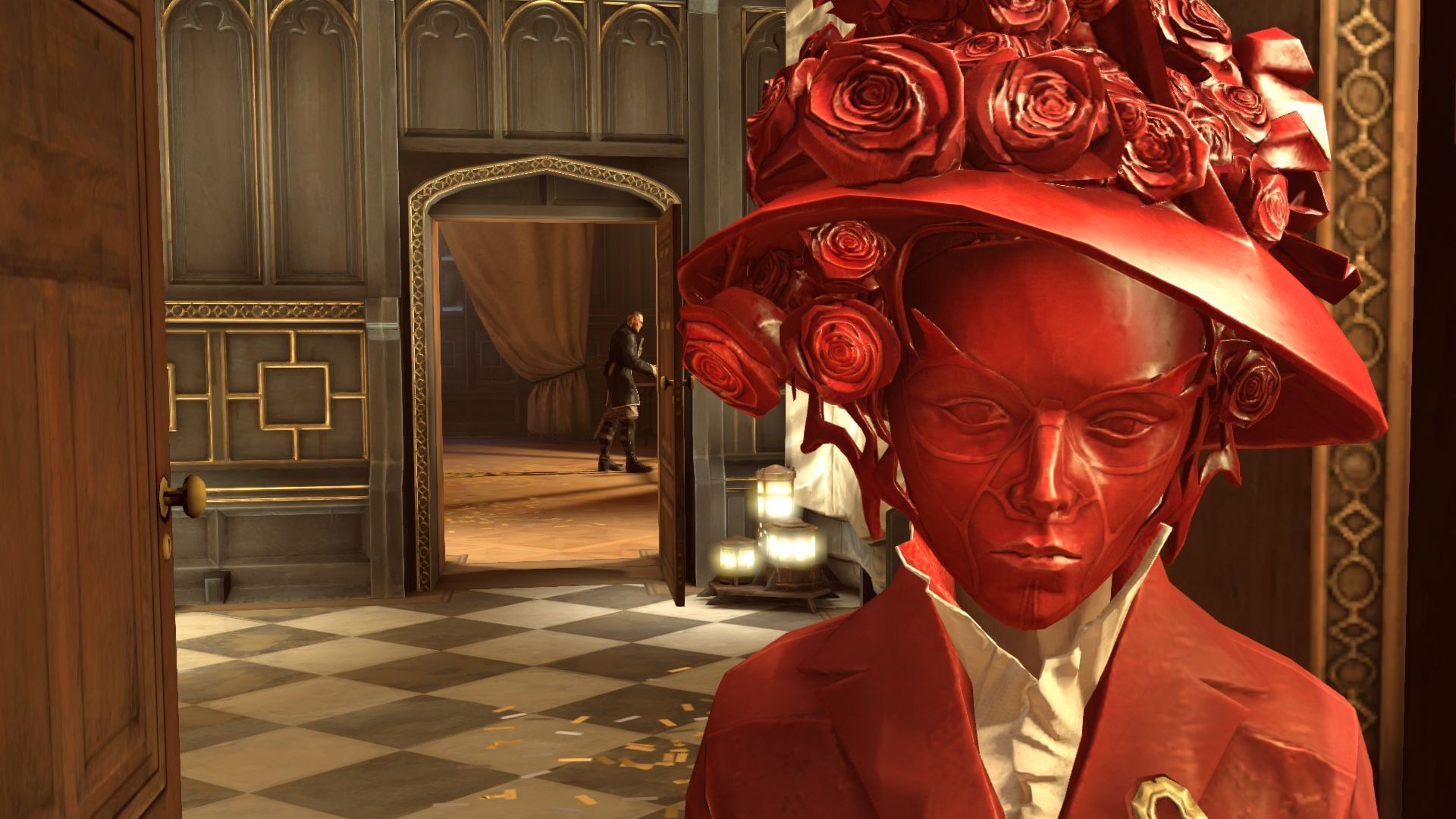
The recent installment of this retrospective series focused on arguably the most iconic mission in the game’s repertoire: "Lady Boyle’s Last Party." To dissect the level, Colantonio was joined by a powerhouse panel of original team members: co-creative director Harvey Smith, lead gameplay programmer Stevan Hird, and level designer Anthony Huso.
The stream served as more than just a walk down memory lane; it provided a technical and philosophical autopsy of how Arkane built its distinct brand of environmental storytelling. As the group navigated the opulent, high-stakes environment of the Boyle mansion, the conversation naturally drifted toward the technical limitations of the era and how those constraints paradoxically enhanced the player’s experience.
The Case for the Humble Loading Screen
One of the most striking segments of the discussion arose when the developers addressed the transition zones between the mansion’s exterior, the courtyard, and the interior. In the modern era of seamless, open-world gaming, loading screens are often viewed as archaic relics of hardware limitations. However, Smith offered a provocative counter-perspective.
"People think it’s an improvement that we got rid of loading screens," Smith remarked during the broadcast. "But honestly, I think a break between one area and the next—where you feel like, ‘OK, that is behind me, I’m in a new, pristine area’—provides a necessary mental reset. Beyond the psychological pacing, those loading screens allowed us to provide tips, world-building lore, and atmospheric art that grounded the player in the fiction of the setting. I actually have a soft spot for all that."
Colantonio echoed this sentiment, agreeing that the deliberate pacing of those transitions contributed to the "theatrical" nature of the mission structure. While modern design pushes for absolute fluidity, the Arkane veterans argued that the fragmentation of space—if handled with narrative intent—can actually serve as a structural anchor, reminding the player of the stakes involved as they shift from the urban rot of Dunwall into the curated elegance of a high-society masquerade.
Abandoned Visions: The Hand of the Outsider
Perhaps the most tantalizing revelation from the stream was the discussion of a discarded narrative and gameplay beat involving Corvo Attano’s iconic, Outsider-marked hand.
In the final game, the hand serves as the conduit for the player’s supernatural abilities, such as the signature "Blink" teleportation. However, the development team revealed that there was a period during production where the team experimented with a much more visceral concept: the potential for Corvo to be forcibly separated from his supernatural limb.
"I love the idea that your creepy, marked-by-the-Outsider hand—your undead hand—was something you had to either play through as for a while, or you had to go on a quest to retrieve it," Smith explained. The narrative implications were significant, suggesting a moment where the player would be stripped of their powers, forced to navigate the world as a mere mortal before reclaiming their dark gift.
While the idea was shelved, the team noted that "nothing is wasted" at Arkane. The concept of using a mummified, marked hand to grant power was eventually repurposed in Dishonored 2, where the connection to the Outsider is explored through physical relics. This revelation offers a rare glimpse into the "iterative recycling" that defines the studio’s workflow, where ideas that don’t fit one project often become the DNA of the next.
The Evolution of the Arkane Playstyle
The streaming series has also served as a humbling reminder of the complexity of the game’s systems. Colantonio, playing the game for the first time in over a decade, admitted to a "super sloppy" playstyle, characterized by "high chaos" and frequent, undignified exits from combat encounters.
For the developers, watching their own creation through the eyes of its creator—on a modern controller, rather than the mouse-and-keyboard setup standard during the game’s development—has highlighted the enduring difficulty of Dishonored. It is a game that demands patience and systemic mastery, yet allows for the chaotic, improvised failures that make the Dishonored experience feel uniquely personal to every player.
This series has also served to contextualize Arkane’s history, touching upon the studio’s "near-misses," such as their aborted pitch for Thief 4. These historical nuggets paint a picture of a studio that has long been obsessed with the "thief" archetype, refining its craft through years of prototyping and failed pitches before finally striking gold with the world of Dunwall.
Implications for the Future of Immersive Sims
As the stream concluded, the team reached the final act of the base game, leaving only a handful of missions remaining. However, fans of the series are already clamoring for the developers to tackle the Knife of Dunwall and Brigmore Witches expansions. These add-ons are widely regarded as the narrative high-water marks of the franchise, introducing the fan-favorite assassin Daud and deepening the lore surrounding the Outsider.
The significance of these streams extends beyond mere entertainment. They provide a vital record of the development process at a time when the "Immersive Sim" genre is facing an identity crisis. By discussing the merits of loading screens, the integration of mechanics into lore, and the willingness to iterate on wild concepts like the severed hand, Colantonio and his team are articulating the core values that made Dishonored a masterpiece.
Looking forward, the prospect of this core team reuniting for a deep-dive into Prey (2017) remains a tantalizing possibility. If these streams prove anything, it is that the "Arkane style" is not just a set of mechanics, but a philosophy of game design that favors player agency, world-building, and the courage to iterate on ideas until they are perfectly polished.
Conclusion: A Legacy Reaffirmed
The Dishonored retrospective serves as more than just a victory lap for a legendary studio; it is a masterclass in design humility. By showing the "sausage-making" process—the errors, the abandoned concepts, and the technical compromises—the developers have deepened the community’s appreciation for what was achieved.
In an industry that often obsesses over the "new," Arkane’s return to its roots is a powerful reminder that true innovation is rarely about inventing something entirely new. Instead, it is about the careful, deliberate crafting of systems that feel alive. As the developers continue their playthrough, one thing remains clear: even fourteen years later, the shadow of Dunwall still looms large, casting a long, fascinating silhouette over the landscape of modern gaming. Whether through the inclusion of the Knife of Dunwall expansions or potential future streams, fans can only hope that these conversations continue, ensuring that the history of one of gaming’s most unique worlds is preserved for future generations of developers and players alike.


 Asro
Asro
 Muslim