Ammar Sabilarrohman
By Scientific Correspondent
The rift between the leadership of the American Diabetes Association (ADA) and its most prominent scientific voices has widened into a full-scale institutional crisis. Following the controversial June 5th removal of five distinguished scientists from the ADA’s annual meeting in New Orleans, the organization is now facing accusations of premeditated censorship, institutional intimidation, and a fundamental betrayal of the scientific mission.
The incident, which saw world-renowned researchers physically escorted from a medical conference by police, was initially framed by the ADA as a standard enforcement of conduct policies. However, new disclosures—including a collection of unpublished op-eds and internal accounts posted to a preprint server—suggest that the ouster was not a spontaneous reaction to rule-breaking, but rather a calculated effort to suppress criticism of the current federal administration’s impact on scientific research.
The New Orleans Incident: A Chronology of Conflict
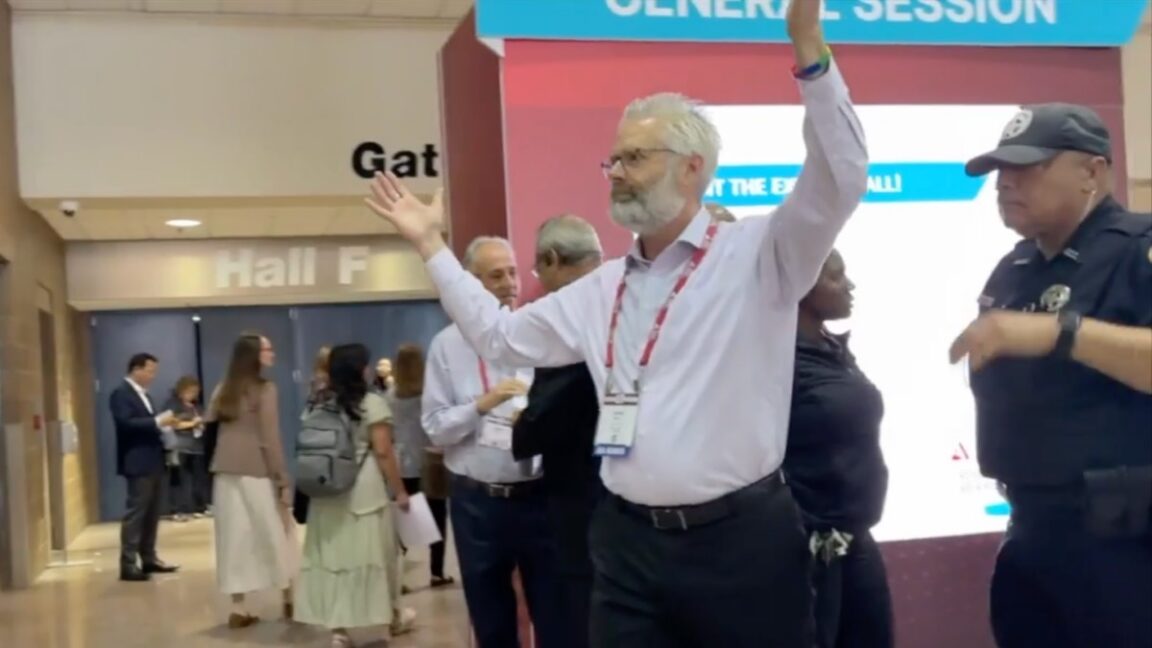
On June 5, 2026, the annual meeting of the American Diabetes Association—a pinnacle event for diabetes research and clinical practice—descended into chaos. Five leading scientists, including Dr. Steven Kahn, the editor-in-chief of Diabetes Care, were forcibly removed from the conference venue by local law enforcement.
The researchers were engaged in a quiet, peaceful distribution of an editorial piece titled "Misguided Brushes of a Pen Continue to Dismantle," which had been published in Diabetes Care earlier that April. The article provided a scathing critique of the Trump administration’s policies regarding the National Institutes of Health (NIH) and the broader scientific community.
Within minutes of beginning their distribution outside the keynote session, security personnel and Louisiana State Police converged on the group. Witnesses report that the scientists were stripped of their conference credentials and threatened with arrest should they attempt to return. The optics were catastrophic: top-tier medical experts being escorted out of their own professional society’s meeting as if they were a public disturbance.
The fallout was immediate. The removal prompted an outpouring of condemnation from across the scientific spectrum, leading to a series of resignations among ADA committee members and a viral "Shame on You" open letter that has since garnered over 7,500 signatures.
Supporting Data: The "Preprint" Protest
In an extraordinary move to circumvent what they describe as the ADA’s active suppression of discourse, the deputy editors of Diabetes Care, Elizabeth Selvin and Cheryl A.M. Anderson, have released an archive of documents via a preprint server. This collection includes the original editorial and seven additional opinion pieces that the ADA leadership allegedly refused to publish.
These documents offer a chilling window into the internal culture of the ADA. The authors allege that the organization has been moving toward a restrictive, corporate-governance model that prioritizes the avoidance of political friction over the professional autonomy of its own editorial boards.
Among the most damning revelations is the assertion that the ADA leadership was fully aware of the plan to distribute the editorial. According to the preprint, Dr. Desmond Schatz, a former ADA President, had proactively communicated with the Chief Scientific and Medical Officer, Dr. Rita Kalyani, to ensure the distribution would be orderly and non-disruptive. The lack of a constructive response from leadership, followed by the swift deployment of law enforcement, suggests to many observers that the event was a "premeditated ambush."
Official Responses and the "Nonpartisan" Defense
The ADA’s initial response to the incident was marked by shifting narratives. In the immediate aftermath, a spokesperson for the association told MedPage Today that the scientists had violated a "code of conduct" regarding the unauthorized distribution of materials.
As public pressure mounted, the organization pivoted to a legalistic argument, citing its status as a 501(c)(3) nonprofit. In a formal statement released on the Sunday following the event, the ADA claimed it was "maintaining a strictly nonpartisan environment" in compliance with federal regulations.
This justification has been widely criticized by tax experts and legal scholars, who note that 501(c)(3) status does not bar individual members or leaders from expressing political views in their personal capacity, nor does it preclude a professional society from engaging in policy advocacy—especially when that advocacy is directly tied to the scientific mission of the organization.
Eventually, ADA CEO Charles Henderson released a video apology, stating that the actions taken in New Orleans were "not reflective of who I am" and promising an independent review of the organization’s policies. However, the scientists involved claim that in the month since the video was released, no tangible progress has been made. There has been no formal apology to the individuals involved, no accountability for the staff members who ordered the police intervention, and no restoration of the editorial freedom they believe is critical to the journal’s integrity.
The Deeper Roots: A Pattern of Control?
The conflict, according to the newly released preprint, did not begin in June 2026. The deputy editors point to a 2025 conference session titled "How Do We Fix a Broken Health Care System?" as the moment the ADA’s internal climate began to shift.
During that planning process, ADA leadership reportedly pressured organizers to balance the session by inviting speakers with "opposing views" to those of a sitting Congresswoman, despite the session focusing on technical and clinical aspects of healthcare policy. When organizers could not find a suitable counter-speaker, the ADA allowed the session to proceed but refused to advertise it.

This pattern of "soft censorship"—where controversial or politically sensitive topics are marginalized or buried—seems to have reached a boiling point with the New Orleans incident. As Dr. John Buse, a key figure in the controversy, noted in his contribution to the preprint, "The ADA actions are not dissimilar in nature to the efforts of our federal government to quell protests—force against people exercising constitutional rights as an act of both retribution and a display of power."
Implications for Scientific Societies
The implications of this standoff extend far beyond the American Diabetes Association. Scientific societies exist at the intersection of professional advocacy and public policy. When these organizations prioritize risk aversion over the intellectual independence of their members, they risk losing the very authority that makes them relevant.
Mark Atkinson, the former chair of the Scientific Sessions Meeting Planning Committee, who resigned in protest, articulated the gravity of the situation in his own account. He described how his name was attached to a response letter he never agreed to, signaling a breakdown in the trust required to run such an organization. His resignation serves as a warning: when the leadership of a scientific body stops listening to the scientists it represents, the credibility of the entire enterprise is jeopardized.
As the ADA faces mounting pressure to release the findings of its "independent review," the scientific community remains in a state of high alert. The "New Orleans Five," as they have come to be known, are not merely seeking an apology; they are demanding a fundamental restructuring of the relationship between the ADA’s administration and its scientific editorial boards.
They argue that the ADA must choose: it can either act as a rigid, risk-averse corporate entity that fears its own members, or it can reclaim its role as a champion of evidence-based policy, even when that evidence creates political discomfort.
For now, the divide remains deep. The publication of the preprint is a clear signal that the scientists involved are no longer waiting for the ADA to grant them a seat at the table. Instead, they are taking their case directly to the public, setting the stage for what will likely be a long and difficult battle for the soul of one of the world’s most influential medical organizations.


 Muslim
 Ali Ikhwan