Suro Senen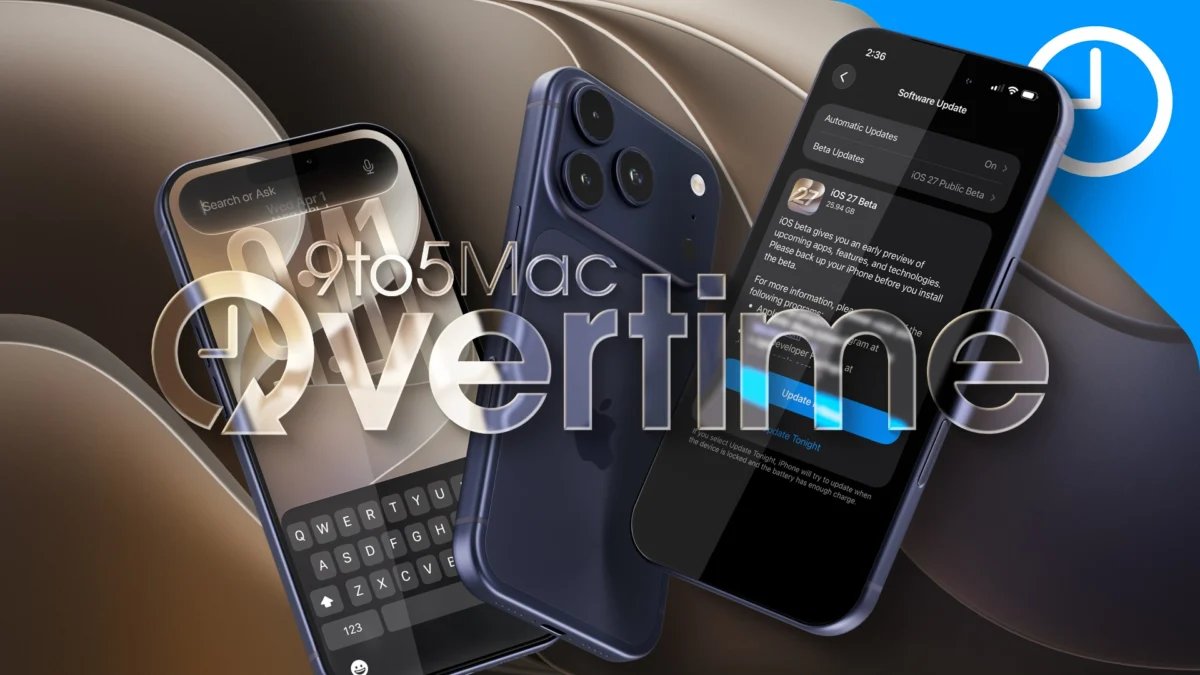
In the rapidly evolving world of consumer technology, few events command as much attention as the iterative updates to Apple’s mobile operating system. This week, the 9to5Mac Overtime podcast, hosted by industry veterans Jeff Benjamin and Fernando Silva, dove deep into the latest developments emerging from Cupertino. From the rollout of the iOS 27 Public Beta to the high-stakes legal and technological maneuvering between Apple and OpenAI, the discourse highlights a pivotal moment for iPhone users worldwide.
Main Facts: The State of the Apple Ecosystem
The primary focus of this week’s industry analysis centers on the iOS 27 Public Beta. As Apple transitions from developer-only testing to the broader public preview phase, millions of users are weighing the risks and rewards of upgrading their primary hardware.
The update, while granular in many respects, introduces over 200 refinements, ranging from UI adjustments to under-the-hood performance optimizations. However, the software discourse is inextricably linked to the broader "AI War." The discussion between Benjamin and Silva underscores a growing tension: as Apple attempts to modernize Siri, it faces direct competition from generative AI powerhouses like OpenAI.
Furthermore, the podcast highlights a significant shift in the retail landscape—specifically, the potential end of carrier-financed unlocked iPhones. This development suggests that the traditional model of subsidizing premium hardware through long-term carrier contracts is undergoing a structural transformation that could alter how consumers purchase their devices.
Chronology: From Beta Testing to Strategic Litigation
To understand the current climate, one must look at the timeline of events that brought us to this juncture:
- Early Development Phase: Apple initiated the internal testing of iOS 27, focusing on system stability and the integration of advanced machine learning frameworks.
- Developer Preview: The initial release to registered developers allowed for the identification of critical bugs and the refinement of new features, setting the stage for the current public rollout.
- The AI Escalation: As OpenAI’s ChatGPT gained massive market share, Apple was forced to accelerate its own AI strategy. This culminated in recent legal filings and public confrontations regarding the usage of data and proprietary technology.
- The Public Beta Rollout: The current phase represents the "stress test" period, where Apple gathers telemetry data from a wider variety of device configurations to ensure a smooth public launch later this year.
- Carrier Policy Shifts: Over the last several months, whispers within the retail sector indicate that major telecommunications providers are re-evaluating their financing structures, directly impacting the availability of unlocked handsets for early adopters.
Supporting Data: Why the Beta is a Double-Edged Sword
When discussing the iOS 27 Public Beta, the central question remains: Is it safe for your main device?

Data from the testing community suggests that while iOS 27 is remarkably stable for a beta release, "early adopter syndrome" carries inherent risks. The 200+ features included in this build span across accessibility, battery management, and custom interface elements. However, the trade-off is often found in third-party application compatibility. Many legacy apps have yet to be optimized for the new APIs introduced in iOS 27, leading to occasional crashes, increased thermal output, and rapid battery depletion.
Furthermore, the introduction of nine upcoming emojis serves as a barometer for Apple’s commitment to inclusive, universal communication standards. While seemingly trivial, the inclusion of these symbols often necessitates deep-level changes to the system’s character rendering engine, which can introduce edge-case bugs in messaging apps.
Official Responses and Industry Positioning
The conflict between Apple and OpenAI has drawn significant commentary from the tech establishment. Apple has long maintained that its "Privacy-First" approach is a competitive advantage, often critiquing the data-hungry nature of Large Language Models (LLMs).
In official statements and legal filings, Apple has argued that its intellectual property—specifically regarding how it trains its own proprietary AI models—is being encroached upon by third-party services. Conversely, OpenAI has maintained that their models are trained on publicly available information, framing their work as an evolution of search and utility rather than a theft of intellectual property.
Jeff Benjamin and Fernando Silva highlight that this is not merely a legal battle; it is a battle for the "intent" of the user. While Siri excels at local, on-device tasks, ChatGPT represents the frontier of contextual intelligence. Apple is currently walking a tightrope: trying to integrate more powerful AI without compromising the user privacy that has become the hallmark of the brand.
Implications: The Future of the "Unlocked" iPhone
One of the most profound observations made in the 9to5Mac analysis is the potential end of carrier-financed unlocked iPhones. For years, the North American market has relied on the "carrier lock" model, where a customer receives a discounted or financed device in exchange for a multi-year service commitment.

If this financing model ends, the financial burden of the premium iPhone experience shifts directly to the consumer. This could lead to:
- Slower Upgrade Cycles: If consumers are forced to pay full, unsubsidized prices for hardware, they may opt to keep their current iPhones for four or five years rather than the current two-year industry standard.
- The Rise of the Secondary Market: A decrease in new sales may inflate the prices of refurbished and used iPhones, as consumers seek more affordable entry points into the ecosystem.
- Increased Focus on Services: Apple will likely double down on AppleCare+, iCloud subscriptions, and Apple Music to offset potential dips in hardware sales, as the company shifts its financial focus from "device acquisition" to "ecosystem retention."
Expert Analysis: A Synthesis of the Modern Apple Experience
Jeff Benjamin, a lead voice in the 9to5Mac ecosystem, emphasizes that the current state of Apple’s software and hardware is a reflection of a company in transition. As the "Overtime" podcast notes, the user experience is becoming increasingly fragmented between those who embrace the bleeding-edge features of the Public Beta and those who prefer the rock-solid stability of the current stable release.
The inclusion of AI in the operating system is not merely an "add-on"; it is a foundational change to how users interact with their devices. Whether it is through smarter search functionality, better photo management, or more intuitive Siri responses, Apple is clearly attempting to bridge the gap between human intent and machine execution.
However, the cautionary tale provided by the hosts is clear: Proceed with caution. While the allure of testing the latest, greatest features is strong, the primary device should always be treated as a tool for reliability first. The transition to iOS 27 is an exciting journey, but it is one that requires patience and a healthy skepticism toward the promises of early-stage software.
Conclusion
The latest episode of 9to5Mac Overtime serves as a vital reminder that the tech landscape is not stagnant. Between the nuances of the iOS 27 Public Beta, the legal battles with OpenAI, and the shifting economic realities of the mobile carrier market, Apple is navigating a complex web of challenges.
For the average user, the takeaway is twofold: stay informed about the changes coming to your device, and understand that the convenience of modern technology often comes with a backdrop of intense corporate competition. As we look toward the final release of iOS 27, users should prepare for a more intelligent, more complex, and perhaps more expensive experience within the Apple ecosystem.

For those interested in the full technical breakdown, we encourage you to listen to the latest episode of Overtime via Apple Podcasts or visit the 9to5Mac YouTube channel for deep-dive tutorials and visual walkthroughs of the latest software updates.
References & Further Reading:
- 9to5Mac Overtime Podcast: Episode Archives.
- Apple Developer Documentation: iOS 27 Beta Release Notes.
- Industry Analysis: The Economic Impact of Carrier-Financed Mobile Hardware.
- Legal Review: Apple vs. OpenAI – Defining the Boundaries of AI Training Data.
FTC Disclaimer: This article contains affiliate links. 9to5Mac may earn a commission on products purchased through these links. This does not impact our editorial integrity or the objective nature of our reporting.


 Muslim
 Ali Ikhwan