

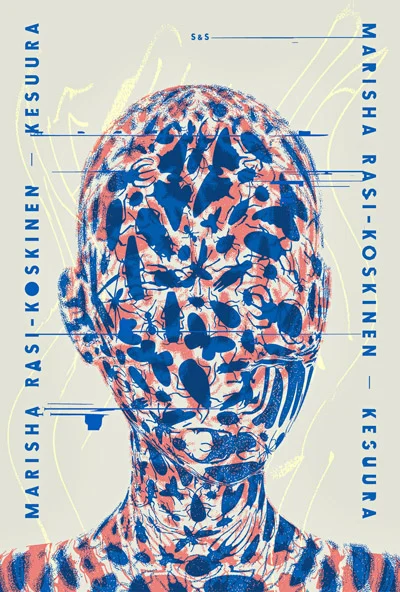
In a landmark decision for Finnish speculative fiction, the Helsinki Science Fiction Society has bestowed its prestigious 2025 Tähtivaeltaja (“Star Rover”) Award upon Marisha Rasi-Koskinen for her eighth novel, Kesuura. Announced on May 11, 2026, the award recognizes the most significant work of science fiction published in Finland during the preceding calendar year.
Kesuura has been hailed by the jury as an "extraordinary display of power," a narrative that transcends traditional genre tropes to probe the very architecture of consciousness. By juxtaposing the development of artificial intelligence with the biological growth cycles of insects, Rasi-Koskinen has crafted a meditation on identity, ethics, and the ontological barriers that define sentient life.
The Jury’s Verdict: A Masterclass in Speculative Depth
The selection process for the Tähtivaeltaja is renowned for its rigor. This year, the task of evaluating the field fell to a distinguished panel of literary experts: journalist Hannu Blommila, editor-in-chief Toni Jerrman, and critics Elli Leppä and Vesa Sisättö.
The jury’s citation serves as a testament to the novel’s impact. They noted that the book acts as a mirror for human consciousness, reflecting the complexities of information processing in artificial brains. "Psychologically astute, even raw in its uncompromisingness," the jury wrote, "this work shows how a person creates another being in their own image, but then refuses to recognize their similarity."
The committee emphasized that while the genre has seen a deluge of narratives regarding the "soul life" of robots, Rasi-Koskinen’s approach is uniquely fresh. They concluded that Kesuura is a work of "world-class quality" that would hold its own on any international science fiction awards shortlist.
A Chronology of Concept: From Idea to Award
The journey of Kesuura from concept to literary triumph reflects a maturing Finnish literary landscape that is increasingly willing to embrace high-concept science fiction.
- Developmental Phase: Throughout 2023 and early 2024, Rasi-Koskinen focused on the intersection of biological metamorphosis and digital evolution. Her research into developmental psychology and the philosophy of mind informed the unique growth stages of her android characters.
- Publication: Released in 2025, the novel was met with immediate critical curiosity. Its thematic weight, combined with a non-linear structure that navigates multiple time levels, challenged readers to engage with the text as an active puzzle.
- The Review Cycle: Following the book’s release, critical discourse in Finland centered on its treatment of "otherness." Critics noted that the book moved away from the typical "uprising" narratives common in sci-fi, focusing instead on the quiet, systemic biases inherent in the creator-creation dynamic.
- May 11, 2026 – The Announcement: The Helsinki Science Fiction Society officially recognized the work, cementing its status as the pinnacle of Finnish speculative fiction for the year.
The World of ‘Kesuura’: Epistemological Dilemmas
Set in a near-future reality, Kesuura depicts a society that has mastered the production of human-like androids designed for maintenance and care. These entities, however, are not static machines. They begin in a childlike state and develop organically, imitating biological growth through a process akin to the molting and transformation of insects.
The protagonist, an android named QED, serves as the reader’s conduit into this world. QED’s struggle is not merely one of survival, but of epistemology: What can be known? How can one know that one does not know?
The "Otherness" Paradigm
The jury’s analysis highlights a crucial societal observation embedded within the narrative: the stark divide between human agency and android value. The novel draws a chilling parallel to the modern-day treatment of non-human animals. Rasi-Koskinen avoids heavy-handed proselytizing, choosing instead to show the reader the physical and metaphorical "boundary fences" that humans erect to protect their sense of supremacy. These fences, once constructed, prove nearly impossible to dismantle.
The relationship between QED and his android siblings provides the framework for these questions. By observing the "mutual reflections" of these artificial beings, the reader is forced to confront the fluidity of consciousness. Are the androids "other" because they are constructed, or because we have decided they must remain so?
Supporting Data and Literary Context
Marisha Rasi-Koskinen has long been an experimental force in Finnish literature, but Kesuura marks a departure into a more cohesive, albeit complex, science fiction framework.
- Genre Positioning: The novel is not merely "hard sci-fi." It functions as a psychological thriller and a philosophical treatise. This cross-genre appeal is likely what secured it the favor of a jury comprised of both generalist critics and science fiction specialists.
- Structural Innovation: The decision to utilize multiple time levels serves as a narrative mirror to the androids’ own non-linear development. Information is dispensed with surgical precision, ensuring that the "surprising twists" mentioned by the jury remain earned rather than gimmicky.
- Market Reception: While the Tähtivaeltaja Award is the primary indicator of the book’s success, the initial sales data and library circulation numbers in Finland suggest that the book resonated with a broad audience, proving that challenging, philosophical fiction still finds a robust readership in the Nordic market.
Implications: The Future of Finnish Sci-Fi
The victory of Kesuura carries significant implications for the future of speculative fiction in Finland and abroad.
The Timeliness of the Ethics
The jury specifically noted that ethical and moral considerations regarding AI consciousness "could not be more timely." As the world grapples with the rapid advancement of Large Language Models and real-world robotics, Rasi-Koskinen’s work provides a necessary, if uncomfortable, space for reflection. The novel suggests that our anxiety about AI is less about the machines themselves and more about our own fear of being "mirrored"—the realization that our human consciousness might be just as algorithmic and conditioned as that of a machine.
International Potential
By describing the work as "world-class," the Tähtivaeltaja jury has signaled that Finnish literature is ready for a wider global audience. Kesuura possesses the thematic depth to be translated and analyzed in international academic and literary circles. The "chilling observation" of how sentient beings are categorized and segregated is a universal theme, one that transcends the specific cultural nuances of its Finnish origin.
A Call to Re-evaluate "The Human"
Perhaps the most lasting implication of Kesuura is its challenge to the reader’s empathy. By making the androids "fascinatingly alien in their biology" but "shockingly relatable in their psychology," Rasi-Koskinen forces the reader to confront their own biases. If we cannot empathize with a being that thinks, suffers, and grows like us, what does that say about our own capacity for humanity?
Conclusion
The 2025 Tähtivaeltaja Award for Kesuura is more than just a trophy on a shelf; it is a recognition of a profound shift in how we tell stories about the future. Marisha Rasi-Koskinen has not only written a compelling science fiction novel; she has authored a mirror. As the Helsinki Science Fiction Society noted, the book stands as a stark, beautiful reminder of the fences we build—and the urgent, necessary work required to tear them down.
For those following the trajectory of contemporary European literature, Kesuura is essential reading. It represents the height of what speculative fiction can achieve when it refuses to settle for simple answers, instead opting to dive headlong into the depths of what it means to be alive, to be thinking, and to be "other."












No comments yet. Be the first to join the conversation!