Nila Kartika Wati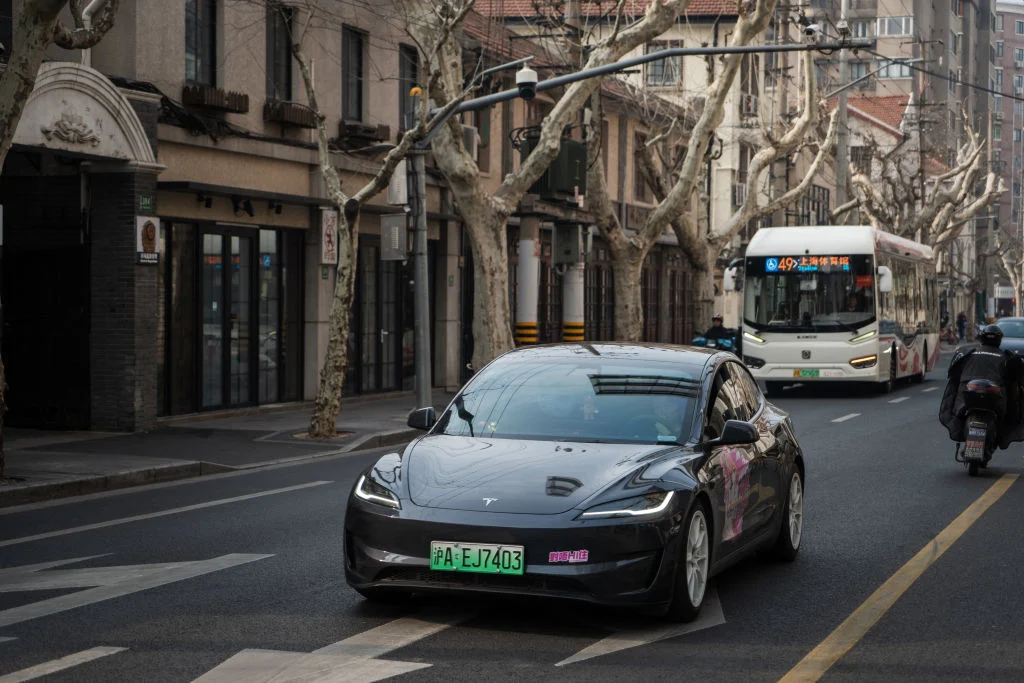
Introduction: A Tragedy Ignites a National Debate
A quiet Friday night in Katy, Texas, was shattered when a Tesla Model 3 veered off the road and plowed into a residential home, resulting in the tragic death of 76-year-old Martha Avila. The incident, which saw the vehicle smash into the structure with enough force to necessitate an emergency airlift for the victim, has ignited a firestorm of scrutiny regarding the safety and reliability of Tesla’s advanced driver-assistance systems.
While the immediate aftermath of the crash focused on the involvement of Tesla’s controversial "Autopilot" software, the narrative shifted rapidly by Monday. In a rare departure from its policy of public silence, the electric vehicle giant mounted a vigorous defense, utilizing high-ranking executives and its CEO to challenge reports that the vehicle’s automation was at fault. As federal regulators descend upon the scene to conduct an independent investigation, the incident stands as a flashpoint in the ongoing battle between technological innovation, human error, and corporate accountability.
Chronology of the Incident
The events leading to the tragedy are currently being reconstructed by local law enforcement and federal safety investigators.
Friday Night: A Tesla Model 3, operated by Michael Butler, left the roadway in a residential area of Katy, Texas. The vehicle careened into the home of Martha Avila. Emergency responders arrived at the scene to find the home severely damaged and the occupant critically injured. Avila was transported via helicopter to a nearby hospital, where she was later pronounced dead.
The Initial Claim: In the immediate wake of the accident, statements attributed to the driver, Michael Butler, suggested that the vehicle had been operating on "Autopilot" at the time of the collision. This detail was quickly picked up by news outlets, reigniting the long-standing, polarized debate over whether Tesla’s driver-assistance technology—specifically Autopilot and Full Self-Driving (Supervised)—is safe for use on public roads.
Monday Morning: The discourse reached a fever pitch as the National Highway Traffic Safety Administration (NHTSA) confirmed its involvement. Simultaneously, Tesla broke its self-imposed communications embargo to present a conflicting version of events.
Monday Afternoon: Executives at Tesla began publishing data-backed rebuttals on the social media platform X, directly contradicting the driver’s initial claims and shifting the blame toward human intervention.
The Technical Rebuttal: Tesla’s Data-Driven Defense
Tesla’s response to the allegations was swift and highly specific, aimed at neutralizing the narrative that their software was responsible for the high-speed collision.
Ashok Elluswamy’s Account
Ashok Elluswamy, Tesla’s Vice President of AI Software and a foundational member of the company’s Autopilot team since 2014, utilized X to provide a granular breakdown of the vehicle’s telemetry at the time of the crash. According to Elluswamy, the data logs reveal a scenario diametrically opposed to a software failure.
"In this case, the driver manually overrode self-driving by pressing the accelerator all the way to 100% of the accel pedal in this residential area," Elluswamy wrote. He further alleged that the vehicle reached speeds of 73 mph—a velocity significantly higher than what one would expect from an automated system navigating a neighborhood street—and noted that the accelerator remained depressed even after the impact occurred.
Elon Musk’s Amplification
Elon Musk, Tesla’s CEO, bolstered this defense shortly thereafter. Musk argued that the physical evidence of the crash was inconsistent with the behavior of Tesla’s Full Self-Driving (Supervised) system. "This makes no sense," Musk stated. "FSD drives slowly through neighborhood streets, and this was a high-speed crash!"
By emphasizing that the vehicle was traveling at 73 mph, Tesla is effectively arguing that the system’s safety protocols would have prevented such an outcome had the car been in control. The implication is clear: the human driver, not the software, was the primary agent of the collision.
Regulatory Scrutiny: The NHTSA’s Role
The incident has drawn the attention of the National Highway Traffic Safety Administration (NHTSA), which is now launching a formal special investigation. This move is not an isolated event but rather part of a larger, systemic effort by federal regulators to understand the role of advanced driver-assistance systems (ADAS) in roadway fatalities.
A Pattern of Probes
This crash marks the latest in more than 40 separate investigations launched by the NHTSA into Tesla crashes involving ADAS over the past several years. These probes are part of a broader regulatory push to determine if Tesla’s marketing and software design encourage drivers to over-rely on systems that still require constant human supervision.
The Role of Local Law Enforcement
The Harris County Sheriff’s Office is conducting its own criminal investigation. Authorities have confirmed they will present their findings to the local district attorney, who will determine whether criminal charges—such as vehicular manslaughter—are appropriate. The determination of whether the Autopilot system was active, deactivated, or malfunctioning will hinge on the forensic analysis of the vehicle’s "Black Box" or Event Data Recorder (EDR).
Implications for the Future of Autonomous Driving
The Katy, Texas crash serves as a grim case study for the challenges facing the transition to autonomous transport.
The Problem of "Automation Bias"
The central issue often cited by safety advocates is "automation bias"—the tendency for human drivers to become complacent or over-trusting when using driver-assistance technology. Despite Tesla’s rebranding of its "Autopilot" suite and its explicit warnings that the "Full Self-Driving (Supervised)" feature requires a driver to stay alert, the confusion persists.
Tesla discontinued its basic "Autopilot" product in certain jurisdictions following legal rulings, including in California, which deemed the terminology "misleading." However, the brand remains synonymous with automation, and the gap between consumer expectation and technological reality continues to be a source of litigation and tragedy.
The Need for Transparency
The incident highlights the necessity for standardized data reporting. Currently, when a high-profile crash involving a Tesla occurs, the public is often left with conflicting narratives: the driver’s account versus the manufacturer’s internal telemetry. Because Tesla dismantled its traditional PR department years ago, its primary mode of communication has become the social media feeds of its executives, which some critics argue lacks the objectivity required for such serious matters.
The Ethical and Legal Crossroads
As the investigation proceeds, the legal system will face a difficult question: to what extent is a manufacturer liable for a driver’s decision to override a system? Conversely, if the system is as safe as the company claims, why is it so easily overridden, and why are there not more robust "fail-safes" to prevent a driver from accelerating to 73 mph in a residential zone while a system is engaged?
Conclusion: A Long Road Ahead
The death of Martha Avila is a devastating reminder of the human cost involved in the race to automate our roads. While Tesla’s data points toward human error, the fact that a vehicle of that power and complexity was involved in such a high-speed, fatal collision in a residential area raises uncomfortable questions about vehicle design, driver education, and the limitations of current AI-driven safety protocols.
As the NHTSA and the Harris County District Attorney conduct their investigations, the automotive industry will be watching closely. The outcome of this case could set a precedent for how future crashes involving autonomous or semi-autonomous vehicles are litigated, and potentially force a fundamental shift in how companies like Tesla deploy their software. For now, a grieving family and a community are left waiting for answers, while the technological debate over the future of driving continues to accelerate at a pace that sometimes feels as dangerous as the crash itself.


 Muslim
 Evan Lee Salim