Sagoh
Sagoh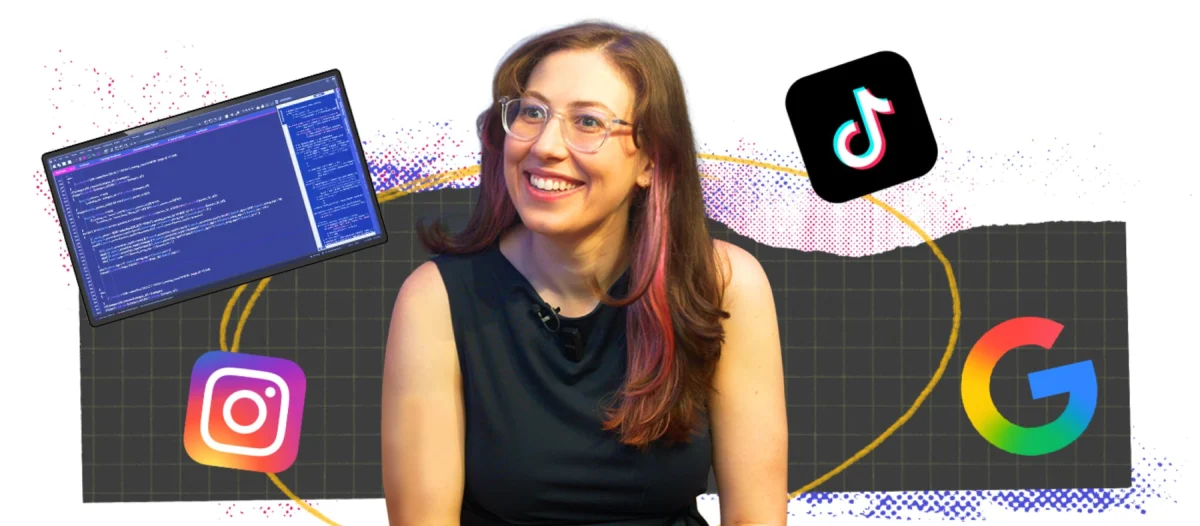
In the rapidly evolving landscape of the creator economy, the transition from corporate professional to full-time content creator is often romanticized as a sudden leap of faith. However, for the creator known as "Alberta Tech," the move was less of a jump and more of a carefully calibrated deployment. After six and a half years as a software engineer at Google—including a significant tenure building features for YouTube—Alberta has successfully pivoted to become a voice that deciphers the often-impenetrable world of Big Tech through the lens of comedy.
Her story is one of dual identities, a "Hannah Montana" existence that eventually culminated in a full-time career as a digital storyteller. In an exclusive interview, Alberta breaks down how her technical background became her greatest creative asset, her evolving relationship with generative AI, and the critical milestone every aspiring creator must hit before tendering their resignation.
The Accidental Pivot: From Pandemic Boredom to Tech Satire
Alberta’s journey into the creator space did not begin with a calculated business plan or a desire to exit the corporate world. It began, as it did for so many, in the quiet isolation of the COVID-19 pandemic.
"I was just bored at home," she recalls. "I wanted to be making jokes on TikTok because everybody I knew was scrolling there." Initially, her content was standard fare—observational humor about the mundane frustrations of living in a tiny New York City apartment. However, as she leaned into her professional background, the content shifted. She began creating sketches that tapped into the specific, often absurd frustrations of software developers.
What she discovered was a dormant audience. By riffing on the realities of corporate tech culture, she built a community of like-minded professionals who saw their own daily struggles reflected in her sketches. Her ability to translate complex technical jargon into accessible, relatable comedy served as a bridge between the niche world of coding and the broader internet public.
Chronology of a Career Transition
Alberta’s transition was a slow burn, characterized by a long period of balancing two demanding roles.

- 2020–2023: The Dual-Life Era. During her time at Google, Alberta maintained a strict boundary between her professional identity and her burgeoning online presence. She rarely disclosed her specific role to her audience, fearing professional repercussions.
- 2023–2025: The Refinement Phase. As her audience grew, the "side hustle" began to demand more production value and consistent output. The challenge shifted from creating content to maintaining a high-quality standard that could compete in a saturated market.
- Early 2026: The "Full-Time" Leap. After years of careful planning, Alberta decided to step away from her role at Google. She notes that the decision was met with surprise by her leadership, but she felt that to truly reach the next level of her creative potential, she had to commit fully.
The "Credential" Advantage: Why Trust is the New Currency
One of the most compelling aspects of Alberta’s rise is the trust she commands within her community. Over half of her audience consists of software engineers and developers—a demographic notorious for its skepticism toward "influencers" who lack technical literacy.
"To speak to that group of people, you need to have some kind of credential behind you," Alberta explains. "You need to know what you’re talking about."
This credibility is not just a branding tool; it is a tactical advantage. By grounding her comedy in technical reality, she creates an environment where the humor resonates more deeply. Even when she wasn’t explicitly discussing her job at Google, the way she framed her critiques of industry trends signaled to her audience that she was an insider. This "insider status" has become the bedrock of her brand, allowing her to tackle complex topics like generative AI without alienating her core base.
Decoding the AI Revolution: A Cautious Optimism
Perhaps the most significant element of Alberta’s content is her nuanced take on generative AI. While many creators have embraced AI as a shortcut for scriptwriting and production, Alberta remains a pragmatist.
"When generative AI first started becoming popular, I was so, so skeptical," she admits. She cites the "stochastic parrot" theory—the idea that LLMs are merely predicting the next plausible word rather than engaging in true creative thought. However, her perspective has evolved as the technology has matured.
The Utility vs. Creativity Divide
Alberta draws a sharp line between AI’s utility and its creative limitations:

- The Utility: She utilizes AI extensively for research. It serves as an investigative tool, helping her navigate complex rabbit holes and identifying connections she might otherwise miss.
- The Creativity: She remains largely unconvinced by AI-generated humor. Whenever she attempts to have a model "generate a funny script," the results fall flat. She argues that comedy requires a human touch—the ability to identify the "absurdity" in a way that an algorithm, which relies on consensus, cannot replicate.
The "Vibe Coding" Evolution
Addressing the internet buzzword "vibe coding," Alberta notes that the term has evolved from a pejorative—implying lazy, blind trust in AI-generated code—to a legitimate part of a developer’s workflow. "It’s not just blindly trusting that code," she explains. "It’s becoming part of basically every programmer’s workflow." She suggests that the industry is still searching for a better term—perhaps "agentic engineering"—to describe this new collaborative relationship between human and machine.
Implications: The Future of the Creator Economy
Alberta’s experiment with AI video generation—recreating a viral video using AI tools—yielded a fascinating result: the video performed just as well as the original. This, she argues, carries a profound implication for the future of the creator economy.
"The concept was the most important thing," she notes. "Video generation is getting really good. Scary good."
This creates a shifting landscape where the technical barrier to entry is lowering, potentially making it harder for creators to stand out. As AI-generated content becomes more indistinguishable from human-made content, the "human" factor—the unique perspective, the original voice, and the trust established over years—becomes the ultimate differentiator.
Expert Advice: The "Golden Rule" for Aspiring Creators
For those looking to follow in her footsteps, Alberta’s advice is both pragmatic and cautionary. She emphasizes that the allure of "quitting the day job" should never supersede the necessity of product-market fit.
"My advice to new creators is that, in a lot of cases, your audience doesn’t really care about you as a person," she warns. "You have to make them care."

She argues that success is predicated on providing consistent value or entertainment that hooks the audience. Her "Golden Rule" for those eyeing an exit from their corporate careers is simple: Don’t quit your job until you find that "thing."
By that, she means the unique value proposition—the specific intersection of skill, humor, and insight—that keeps an audience coming back. Once that anchor is established, the transition becomes a natural progression rather than a gamble.
Conclusion: The Professional Creator
Alberta Tech’s transition from a software engineer at Google to a full-time creator highlights a broader trend: the professionalization of the creator economy. She represents a new wave of creators who bring corporate discipline, technical rigor, and a critical eye to the digital landscape.
By refusing to compromise on quality and maintaining a grounded, skeptical approach to new technology, she has not only managed to sustain a career in a volatile industry but has also established a blueprint for how technical professionals can leverage their expertise to build, educate, and entertain. As the industry continues to grapple with the implications of AI and the saturation of digital content, voices like Alberta’s—those that are both technically literate and humanly resonant—will undoubtedly be the ones that define the next chapter of the internet.

 Azzam Bilal Chamdy