Asep Darmawan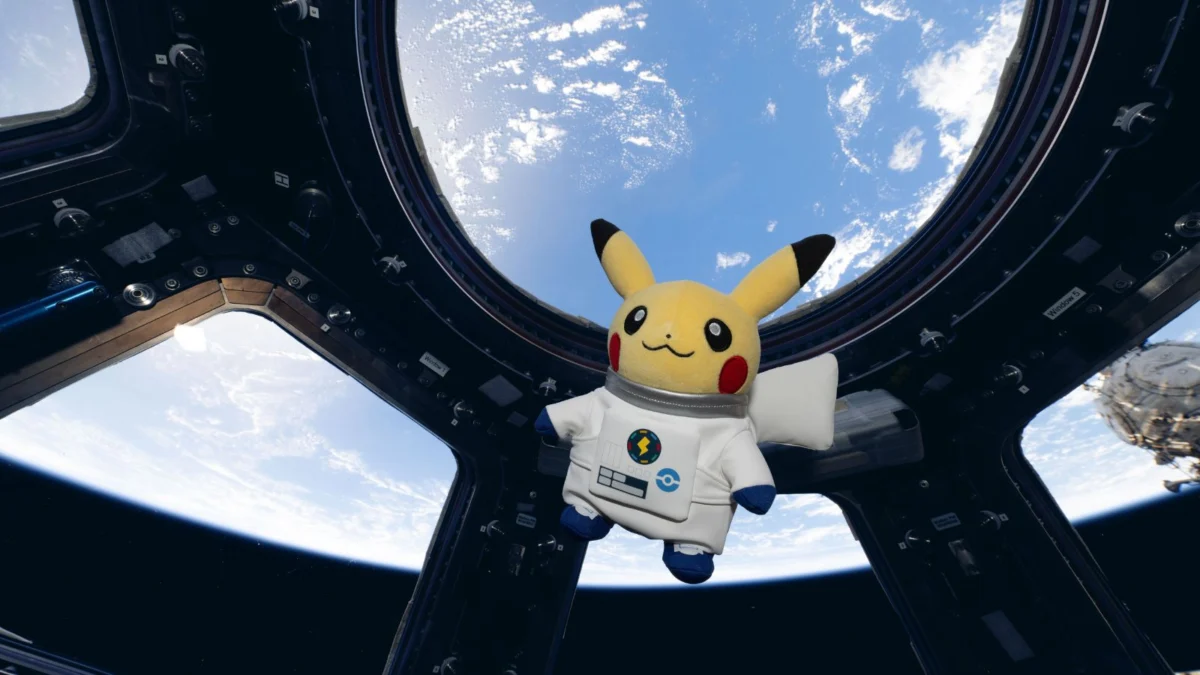
In a remarkable convergence of aerospace engineering and global pop culture, a journey that began in the vacuum of space has culminated in a sprawling, continent-wide exhibition. Earlier this year, a humble Pikachu plush toy became an unlikely astronaut, spending 67 days aboard the International Space Station (ISS). Today, that same plush—having completed approximately 1,040 orbits of our planet—serves as the flagship icon for a landmark partnership between the European Space Agency (ESA) and The Pokémon Company International.
This collaboration, timed strategically to coincide with World Space Week (October 4–10, 2026), aims to bridge the gap between complex scientific exploration and the hearts of millions of fans. By blending the wonder of space travel with the familiarity of one of the world’s most recognizable franchises, the ESA is attempting to inspire a new generation of scientists, engineers, and dreamers.
The Chronology of an Interstellar Journey
The mission was not merely a publicity stunt but a carefully coordinated logistical operation. The Pikachu plush accompanied ESA astronaut Sophie Adenot, who has been at the forefront of European space research.
- April 11, 2026: The Pikachu plush officially arrived at the International Space Station, marking the beginning of its tenure in microgravity.
- April 11 – June 17, 2026: During this 67-day window, the plush lived in the ISS, witnessing 16 sunrises and sunsets every 24 hours. Over the course of its stay, it completed approximately 1,040 orbits around the Earth, traveling at speeds of roughly 17,500 miles per hour.
- June 17, 2026: The mission concluded as the plush was safely returned to Earth, providing the ESA with a unique artifact to anchor their upcoming educational campaign.
- September 2026: The ESA and The Pokémon Company officially unveiled the partnership, showcasing imagery of Astronaut Pikachu at the European Astronaut Centre.
- October 4, 2026: The launch of the Europe-wide exhibition and the associated Pokémon GO in-game event, marking the official start of the outreach initiative.
Scientific Education Through a Cultural Lens
The core of this partnership is a traveling exhibition designed to demystify the ESA’s work. The exhibit, which debuts at various ESA Open Day events—including locations in Paris, Rome, Noordwijk, Darmstadt, Villanueva de la Cañada, and Harwell—is a masterclass in accessible science communication.
Visitors will find panels detailing the realities of European space missions, such as the challenges of life in microgravity, the physics of orbital mechanics, and the history of the ISS. These educational components are seamlessly integrated with Pokémon-themed displays, which use the franchise’s vast library of characters to explain scientific concepts. For instance, the electric abilities of Pikachu are used as a hook to discuss the energy generation required for space stations, while rock-type Pokémon are featured in panels discussing planetary geology.
Following the initial debut, the exhibition is scheduled to embark on a tour through major cultural hubs. Confirmed stops include the prestigious Science Museum in London, the Deutsches Museum in Nuremberg, and the renowned Lucca Comics and Games festival. The tour is slated to run through April 2027, ensuring that the message of space exploration reaches diverse demographics across the European continent.

Official Perspectives: The Vision for Outreach
The collaboration represents a shift in how major scientific organizations interact with the public. Historically, agencies like the ESA relied on traditional academic outreach. Today, the focus has shifted toward "soft power" partnerships that leverage existing cultural ecosystems.
"Inspiring future generations is a key part of the ESA’s mission," stated ESA Director General Josef Aschbacher during the project’s launch. "We are constantly looking for ways to communicate the importance of space research in a way that feels relevant and engaging. Through this collaboration with Pokémon, we are unlocking new ways for people across Europe to connect with space, bringing the wonders of the universe into the daily lives of fans and families alike."
The partnership is viewed as a win-win: The ESA gains an unprecedented platform to reach younger audiences, while The Pokémon Company reinforces its brand’s association with exploration and discovery. The presence of the actual space-flown Pikachu acts as a "totem" of sorts—a physical, tangible link between the digital world of the game and the physical reality of the ISS.
The Digital Frontier: Astronaut Pikachu in Pokémon GO
While the physical exhibition provides the educational backbone, the collaboration extends into the digital realm via the mobile phenomenon Pokémon GO. Starting October 4, 2026, and running through April 30, 2027, the game will feature a unique "Astronaut Pikachu" at participating museums.
Gameplay Mechanics and Engagement
Players visiting the Science Museum in London, Cité de l’espace in Toulouse, or Space Expo in Noordwijk (among other locations) will encounter Astronaut Pikachu in one-star raids. Defeating these raids offers Trainers the opportunity to catch the character, which comes with a special "Location Background" commemorating its status as a traveler of both space and Earth. In a nod to the rarity of space travel, players even have a slim chance of encountering a "Shiny" variant of this special Pikachu.
The "Space Week" Event
During the week of World Space Week (October 4–10), the game will experience an increased spawn rate for Pokémon that fit the celestial theme. Players can expect to encounter:

- Pikachu: The face of the collaboration.
- Clefairy & Starmie: Associated with the cosmos.
- Magnemite: Representing the technology of space flight.
- Lunatone & Solrock: The celestial bodies of the moon and sun.
- Elgyem & Blipbug: Representing the unknown of extraterrestrial life.
For seven ESA sites, the event will also feature unique gameplay, allowing trainers to engage with the theme even without the location-specific background souvenirs.
Implications for Future Public Engagement
This initiative is not the first time the Pokémon brand has touched the stars. In 2020, fans were gifted "Kibo’s Pikachu" in Pokémon Sword and Shield, a tribute to the Japanese Experiment Module "Kibo" on the ISS. However, the 2026 project represents a significant escalation in both scale and intent.
Normalizing Space Exploration
By embedding space-themed content into a mobile game played by millions, the ESA is normalizing the idea of space exploration as an active, ongoing reality rather than a dusty subject confined to textbooks. The success of this initiative could provide a blueprint for other scientific agencies. If the goal of modern science is to secure funding and public interest, it must first secure the public’s imagination.
Bridging the Knowledge Gap
The exhibition provides a structured pathway for learning. A child might be drawn to the exhibit to see the Astronaut Pikachu plush, but they are subsequently exposed to complex data about the European space sector. This "hook-and-ladder" approach—using popular media to pull in the audience, then providing educational rungs to climb—is a sophisticated strategy for STEM advocacy.
A Legacy of Collaboration
The tour’s duration, stretching into April 2027, signals that this is not a flash-in-the-pan marketing campaign, but a sustained educational effort. As the plush travels from the Science Museum in London to the halls of the Deutsches Museum, it will serve as a constant reminder that the boundaries between science and society are far more porous than they appear.
In an era where global challenges require scientific literacy and collaborative solutions, the image of a Pikachu plush floating in zero-gravity serves as a poignant, if lighthearted, symbol: that the future of humanity lies in the stars, and the next generation of astronauts is currently playing, learning, and dreaming right here on Earth.


 Reynand Wu
 Jia Lissa