Nana Muazin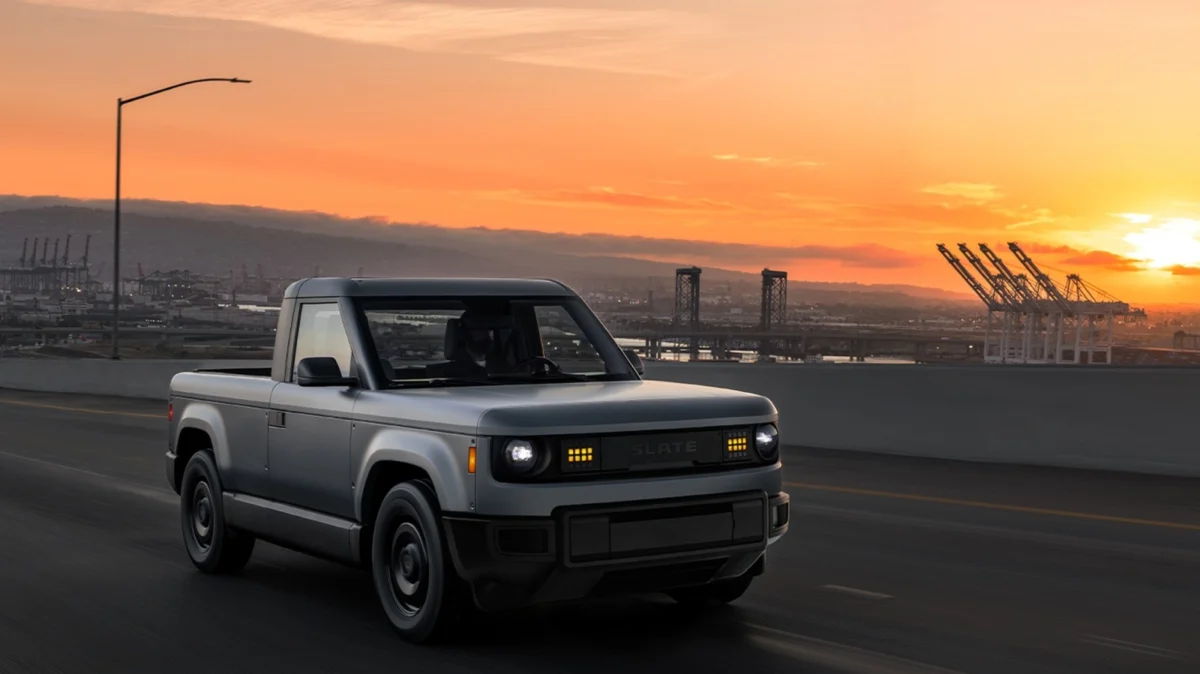
In an automotive landscape increasingly dominated by luxury tech-mobiles and oversized, six-figure electric behemoths, a Michigan-based startup is attempting to recalibrate the industry’s compass. Slate Auto, operating out of Warsaw, Indiana, is betting its future on a radical proposition: that the primary barrier to the electric vehicle (EV) revolution isn’t infrastructure or battery technology—it is price.
With a starting MSRP of just $24,950, Slate Auto has introduced the "Blank Slate," a modular, barebones electric pickup and SUV platform. By stripping away the high-end digital clutter and premium luxury appointments that have inflated the average price of a new vehicle to over $50,000, Slate is positioning itself as the "People’s EV." The question remains, however: in a market obsessed with range anxiety and feature-rich cockpits, is a stripped-back, utilitarian machine a legitimate contender or a niche experiment?
The Core Philosophy: Simplicity as Strategy
The Blank Slate is built on the ethos of functional minimalism. For the uninitiated, this means eschewing features that have become standard in modern vehicles—automatic windows, high-end sound systems, and complex infotainment arrays are absent by design.
Instead, the company offers a "kaleidoscope" of customization. With over 200 optional accessories and a wide array of vinyl-wrap exteriors, Slate is targeting the DIY enthusiast and the pragmatic commuter. The vehicle is designed to be a "blank canvas," allowing owners to dictate exactly what they need, rather than paying for features they might never use.
Technical Specifications at a Glance
While the interior may be sparse, the mechanical heart of the Blank Slate is surprisingly competent. The vehicle features a 135 kW rear-mounted motor, delivering 181 horsepower and 195 lb-ft of torque. In terms of utility, the truck offers a 2,000-pound towing capacity.
To put this into perspective, the performance profile is remarkably similar to the 2026 Ford Maverick. While the Blank Slate’s 8-second 0-60 mph time will not break any land-speed records, it positions the vehicle squarely in the "daily driver" category, offering performance parity with established combustion-engine hybrid workhorses at a significantly lower price point.
Chronology of the Slate Vision
The journey of Slate Auto represents a shift in how small-scale American manufacturers are approaching the EV transition.
- Initial Concept and Design (2022–2023): Slate Auto began its development cycle with a focus on supply chain efficiency. By utilizing off-the-shelf components and a modular chassis design, the engineering team aimed to reduce the "bill of materials" (BOM) cost significantly.
- The Unveiling (2024): The company officially unveiled its minimalist truck and SUV prototypes, garnering immediate attention for the sub-$25,000 price point. The media response was polarized, pitting traditional automotive reviewers against industry analysts who recognized the economic necessity of such a vehicle.
- The Manufacturing Milestone (Mid-2024): Slate finalized its production facility in Warsaw, Indiana. The decision to anchor production in the Midwest was a strategic move to leverage local manufacturing expertise and minimize logistics costs.
- Current Status (Late 2024): The company has opened its preorder books, requiring a $300 deposit to secure a spot in the early delivery queue. Shipments are slated to begin in the final months of this year.
Supporting Data: The Range vs. Utility Debate
The most contentious aspect of the Blank Slate is its 63 kWh battery pack, which provides an estimated range of 205 miles. In an era where competing electric trucks boast ranges of 300 to 450 miles, the Slate’s specifications appear modest. However, Slate’s leadership argues that these specs are a deliberate engineering choice.
The "Practicality" Calculus
Data from Consumer Affairs indicates that the average American driver travels approximately 37 miles per day. By intentionally limiting the battery size, Slate achieves two critical goals:
- Weight Reduction: A smaller battery reduces the total vehicle weight, which in turn improves efficiency and handling.
- Cost Mitigation: The battery remains the most expensive component of an EV. By scaling it to match the actual needs of the average commuter rather than the edge-case needs of a cross-country traveler, Slate keeps the vehicle affordable.
The company’s philosophy is explicit: "a shorter range is the price you pay for a smaller bill." For the daily commuter or the rural resident, 205 miles provides a buffer that covers the vast majority of weekly trips without requiring the massive cost premium of a long-range luxury EV.
Infrastructure: Understanding Charging Dynamics
Slate has designed its charging ecosystem to be as flexible as its hardware. Recognizing that charging infrastructure is the "make or break" factor for any EV, the company has ensured compatibility with the three standard tiers of charging:
- Level 3 (DC Fast Charging): In ideal conditions, the Blank Slate can regain 80% of its battery capacity in roughly 30 minutes, making it viable for occasional longer trips.
- Level 2 Charging: Utilizing a standard four-pronged appliance outlet, the vehicle reaches a full charge in approximately 5 hours. This is the "sweet spot" for overnight residential charging.
- Level 1 Charging: For those without specialized equipment, a standard household wall outlet can provide 20 to 50 miles of range overnight, sufficient for the average daily commute.
To further support its customers, Slate has formed a strategic partnership with Treehouse, a home charging installation firm. This removes the friction of finding qualified electricians, allowing buyers to bundle their charging infrastructure installation directly with their vehicle purchase.
Official Stance and Market Implications
Slate Auto is not just selling a car; they are selling a reframed narrative of the EV transition. By ignoring the "bigger is better" trend that has defined the American automotive market for decades, they are testing whether a segment of the population is truly ready to sacrifice luxury for utility and affordability.
The Institutional Challenge
The major automakers—Ford, GM, and Tesla—have largely focused on high-margin vehicles. This has created a "price vacuum" at the entry level. If Slate Auto succeeds, they could force a pivot in the industry. Should the Blank Slate see high adoption rates, it provides a blueprint for competitors to follow, potentially leading to a wave of affordable, modular EVs that are actually accessible to the working class.
However, the company faces significant hurdles. Scaling production in Indiana, managing the quality control of a modular assembly, and convincing a skeptical public that "barebones" does not mean "low quality" are monumental tasks.
Conclusion: A Gamble on the Pragmatic Driver
The Blank Slate is a mirror held up to the modern consumer. If you define a vehicle by its horsepower, its leather-stitched dashboards, and its ability to drive 400 miles on a single charge without stopping, the Slate will disappoint you. But if you define a vehicle as a tool for the daily grind—a way to get to work, haul supplies, and navigate the rural landscape without the burden of gas prices or a $60,000 loan—it may be exactly what the doctor ordered.
As we move toward the first deliveries, the automotive world is watching. If Slate succeeds, it won’t be because they built the fastest car or the most advanced computer on wheels. It will be because they were the first to understand that for the average American, the most important technology in a vehicle is the one that makes it affordable.
For those interested in joining this experiment, the configuration tool on the Slate website remains open. You can spend hours customizing your build, adding accessories that turn a barebones truck into a personalized utility vehicle. The question you’ll have to answer before you hit "submit" is simple: are you ready to embrace the minimalist future?


 Neng Nana
 Pevita Pearce