

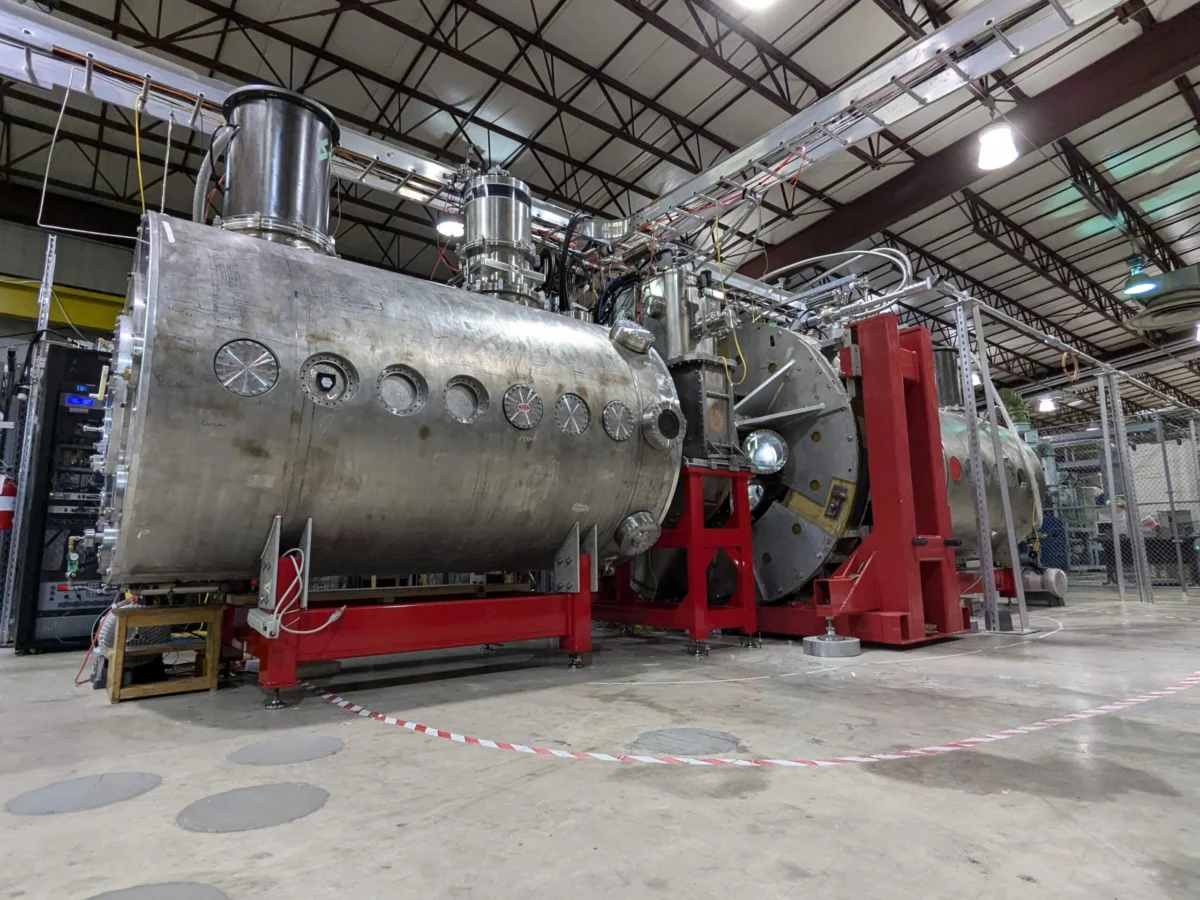
In an era where the global race for clean, infinite energy is dominated by coastal tech hubs and the sprawling campuses of national laboratories, one Wisconsin startup is charting a different course. Realta Fusion, a company born from the academic rigor of the University of Wisconsin-Madison, has officially announced that it will build its state-of-the-art research and development facility—aptly named "Forge"—on the site of the former Oscar Mayer factory in Madison.
The move marks a symbolic and industrial transformation. The historic site, once synonymous with American meat processing, will soon house the cutting-edge technology of the 21st century. For Realta Fusion CEO and co-founder Kieran Furlong, the irony is not lost. "From sausages to fusion," he told TechCrunch with a chuckle, signaling the dawn of a new industrial identity for the Badger State.
The Chronology of a Vision
The journey to the Oscar Mayer site was not a sudden decision, but the culmination of two years of meticulous site selection and political maneuvering.
- 2024: The fusion landscape in Wisconsin faced a moment of uncertainty when Type One Energy, another homegrown fusion pioneer, relocated its operations to Tennessee. This departure served as a catalyst, prompting local and state officials to reevaluate their support for the burgeoning clean-energy sector.
- April 2026: In a landmark move, the Wisconsin legislature passed—and the Governor signed—a bipartisan bill providing a significant sales tax exemption for the fusion industry. This legislation was a turning point, signaling to the industry that Wisconsin was open for business.
- June 2026: Realta Fusion achieved a monumental scientific milestone, successfully converting energy from a fusion reaction directly into electricity. This "apparent first" provided the technological validation needed to accelerate the company’s commercial ambitions.
- Late 2026: Following a comprehensive search for a location that could handle the immense power requirements of fusion research, Realta selected the historic Oscar Mayer facility.
- 2029: Realta Fusion is currently scheduled to ignite its first plasma at the Forge facility, marking the beginning of a critical testing phase for its commercial power plant design.
The Science and the Strategy
The allure of the Oscar Mayer site extends far beyond its historical footprint. The facility provides the massive electrical infrastructure necessary to sustain fusion experiments, a luxury many industrial sites cannot offer. Furthermore, its location serves as a strategic tether to the University of Wisconsin-Madison, an institution that consistently ranks among the top in the nation for plasma physics research.
By keeping operations in Madison, Realta gains a dual advantage: immediate access to a pipeline of elite physics graduates and proximity to a local ecosystem that is becoming increasingly comfortable with high-stakes energy innovation. The presence of other firms, such as the fusion company Shine in a nearby suburb, suggests that the region is quietly coalescing into a specialized hub for nuclear energy research.
Realta’s breakthrough in direct energy conversion is the linchpin of its business model. By bypassing the traditional, inefficient steam-cycle used in most power plants, the company hopes to shorten the timeline to a functional, grid-ready commercial power plant.
Financial Incentives and Economic Implications
The commitment to Wisconsin was secured through a robust package of state and municipal incentives totaling approximately $55 million. The composition of this package reflects a sophisticated public-private partnership:
- Sales Tax Exemption: The centerpiece of the incentive package, stemming from the April 2026 legislation, will save Realta an estimated $37.5 million.
- Enterprise Zone Tax Credits: The state has pledged $15 million in credits, tied to job creation and capital investment.
- Tax Increment Financing (TIF): The city of Madison has contributed $2.8 million in TIF, helping to offset the costs of repurposing the aging infrastructure of the old factory.
While other states arguably offered competitive financial packages, Furlong emphasizes that the "intangible" benefits of remaining in Wisconsin outweighed the raw math of other bids. "It’s also advantageous to be the state champion," Furlong noted. "We get the attention of people who matter, who can help us, who want to see Realta succeed and want to see Wisconsin be a major hub for fusion."
The Macro Context: Why Fusion, Why Now?
Realta’s expansion occurs against the backdrop of an unprecedented boom in the fusion sector. In 2026 alone, global fusion startups have raised over $1.5 billion in capital. This surge is driven by a stark reality: the global demand for electricity is skyrocketing.
The proliferation of AI-driven data centers, which require massive, consistent, and carbon-free power, has forced the tech industry to look beyond intermittent renewables like wind and solar. Fusion power, once considered a "thirty years away" fantasy, is increasingly viewed by investors as a necessary component of a decarbonized, high-growth economy.
Wisconsin’s decision to aggressively support the fusion industry is, in this light, a calculated bet on the future of global infrastructure. By positioning itself as a leader in fusion R&D, the state hopes to attract further investment, high-paying engineering jobs, and a new generation of scientific talent.
Official Responses and Political Bipartisanship
The success of the Realta deal is a rare example of legislative unity. In an era of intense political polarization, the path to passing the fusion-friendly tax laws was marked by bipartisan cooperation. Both Republican and Democratic lawmakers recognized that the transition to a high-tech energy economy required a stable regulatory and fiscal environment.
This unified front has provided the company with the confidence to invest heavily in the region. When a company knows it has the backing of both the governor and the state legislature, the risks associated with multi-year, capital-intensive projects like the Forge facility become significantly more manageable.
Future Outlook: The Road to 2029
The path between now and 2029 will be fraught with technical and logistical challenges. Turning a food-production facility into a world-class fusion laboratory requires immense civil engineering efforts. The team at Realta must ensure that the site can handle the electromagnetic stresses, cooling requirements, and radiation shielding necessary for their experiments.
However, the team remains undeterred. The "Forge" is not just a building; it is a statement of intent. By choosing to stay in the Midwest rather than flocking to the coasts, Realta is challenging the geographic orthodoxy of the tech industry.
As Furlong prepares to break ground, the broader implications remain clear: fusion is no longer just a laboratory curiosity. It is an industrial project, one that requires the same kind of physical infrastructure and state support that once built the factories of the 20th century. If Realta succeeds, the Oscar Mayer site will not only have transitioned from sausages to fusion—it will have provided a blueprint for how legacy industrial regions can revitalize themselves by anchoring the energy revolution of the future.
Disclaimer: This article is provided for informational purposes. When you purchase through links in our articles, we may earn a small commission. This doesn’t affect our editorial independence.











