

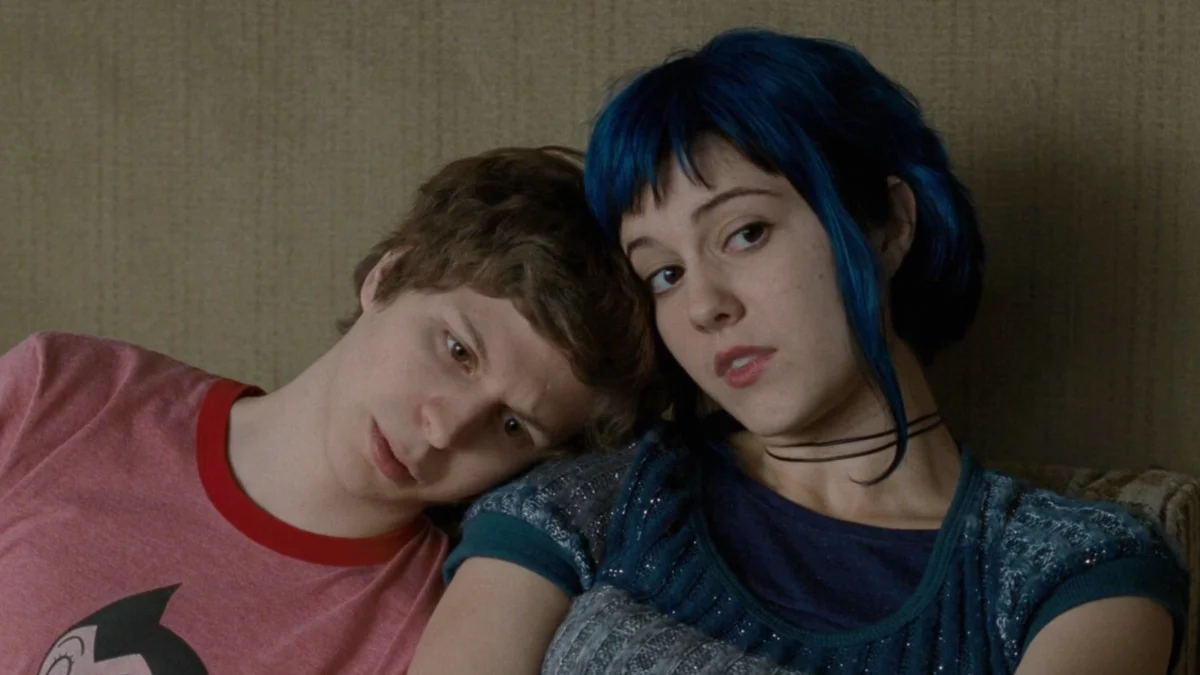
In the pantheon of 2010s cult cinema, few films resonate with the same frantic, stylistic kineticism as Edgar Wright’s Scott Pilgrim vs. the World. A visual love letter to the medium of the graphic novel and the golden age of 8-bit gaming, the film remains a definitive time capsule of a specific North American indie-culture moment. At its center stands Ramona Flowers, the elusive, neon-haired love interest portrayed by Mary Elizabeth Winstead. While Ramona is often dissected through the lens of early-2000s character archetypes, her casting is the result of an unlikely intersection between genre filmmaking and high-profile industry networking. It turns out that a minor role in a Quentin Tarantino project was the pivotal bridge that connected Winstead to the defining role of her career.
The Genesis: A Quentin Tarantino Connection
The path to Scott Pilgrim was not a direct audition process in the traditional sense, but rather a byproduct of the tight-knit nature of the mid-2000s Hollywood auteur circle. Quentin Tarantino, always a curator of talent, was deep in production on his 2007 grindhouse slasher Death Proof. Mary Elizabeth Winstead, then an emerging talent, secured a role in the film.
During the production cycle of Death Proof, the orbit of the project brought her into contact with Edgar Wright. According to an oral history conducted by Entertainment Weekly in 2020, the three creators—Wright, Tarantino, and Winstead—spent a significant amount of time in each other’s company. For Wright, who was then in the early stages of envisioning his adaptation of Bryan Lee O’Malley’s Scott Pilgrim comics, the proximity provided an opportunity to observe Winstead’s screen presence outside of the high-octane violence of the Tarantino set.
It was a classic case of serendipity. While Winstead’s role in Death Proof was relatively minor—a performance that didn’t necessarily afford her the sprawling, monologue-heavy screen time often associated with Tarantino’s "muses"—her impact on Wright was instantaneous. Wright saw in her a specific, enigmatic quality that he believed perfectly mirrored the source material’s depiction of Ramona.
Chronology of a Casting Breakthrough
To understand the significance of this casting, one must look at the timeline of both films. In 2007, Death Proof was released as one-half of the Grindhouse double feature. It was a stylistic homage to 1970s exploitation cinema, a genre that required actors to project intense cool, vulnerability, and resilience simultaneously.
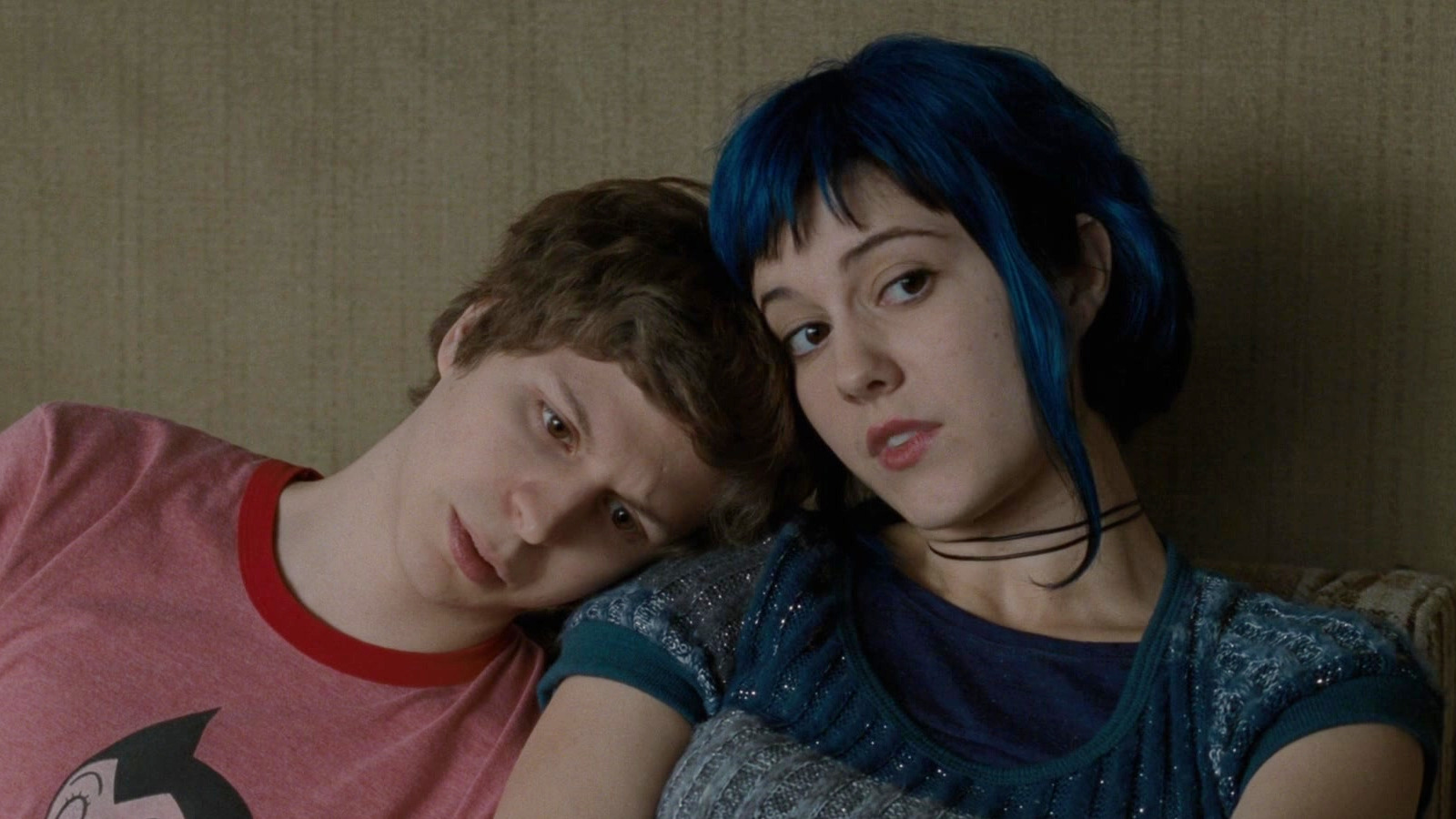
- 2007: Mary Elizabeth Winstead films Death Proof. During this time, she interacts with Edgar Wright, who is already developing the Scott Pilgrim property.
- 2008–2009: Pre-production for Scott Pilgrim vs. the World ramps up. Wright, having kept Winstead in mind since their Death Proof interactions, secures her for the role of Ramona Flowers.
- 2010: Scott Pilgrim vs. the World is released. While it faced stiff box office competition, it solidified its status as an instant cult classic.
- 2020: The cast reunites for an oral history, where the connection between the Death Proof set and the Scott Pilgrim casting is publicly solidified.
- 2023: Netflix releases the animated series Scott Pilgrim Takes Off, reuniting the original cast and providing a new, deeper context for the character of Ramona.
Analyzing the "Manic Pixie Dream Girl" Archetype
The character of Ramona Flowers has been the subject of extensive academic and cultural debate. In the late 2000s, the "Manic Pixie Dream Girl" (MPDG)—a term coined by film critic Nathan Rabin—was the dominant shorthand for female characters who existed solely to provide a catalyst for the male protagonist’s growth.
Ramona, on the surface, hits many of these markers: she is quirky, has ever-changing hair colors, and is pursued by a socially awkward, self-involved protagonist. However, Winstead’s performance offered a necessary subversion. As she noted in subsequent interviews, the character wasn’t "trying" to be a dream; she was simply trying to survive the baggage of her past.
"What I liked about Ramona is that she’s not asking for the attention, it just kind of follows her around," Winstead stated in the 2020 oral history. "She’s the reluctant femme fatale… it was cool to get to play what I guess people would see as this Manic Pixie Dream Girl, but, to me, that’s not what she was trying to be at all. She was just trying to figure herself out."
This nuance is exactly what Wright identified during their time on the Death Proof set. He needed an actor who could play the "dream" while keeping the "human" intact, and Winstead’s ability to project an effortless, almost guarded, coolness was the key.
Implications: The Evolution of Ramona Flowers
The legacy of this casting choice became even more apparent in 2023 with the release of Scott Pilgrim Takes Off. The animated series allowed for a meta-commentary on the original film. By shifting the narrative perspective to focus entirely on Ramona, the series deconstructed the very tropes that defined her in the 2010 movie.
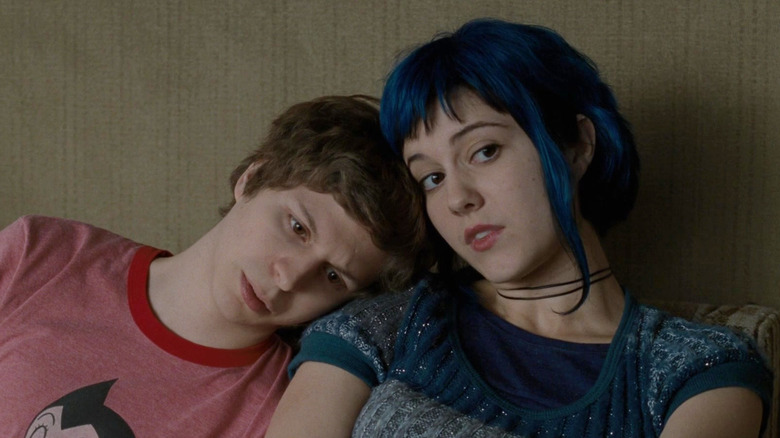
The decision to bring back the original cast, including Winstead, proved that the foundation laid by Wright’s casting choice remained strong over a decade later. The animated series retroactively validated the depth Winstead brought to the role in 2010. By 2023, audiences were ready to see Ramona not as a prize to be won, but as the protagonist of her own messy, complicated journey.
Industry Perspectives and Legacy
The interaction between Tarantino and Wright highlights a crucial aspect of Hollywood’s "Director-to-Director" pipeline. When high-level filmmakers share sets or social circles, the cross-pollination of talent often leads to iconic pairings that would not have occurred through standard casting calls.
For Winstead, Death Proof was a stepping stone, but Scott Pilgrim was the platform that allowed her to demonstrate her range as a lead. Had she not been on the set of that Tarantino film, it is entirely possible that the specific "look and feel" of Ramona Flowers would have been fundamentally different.
The success of Scott Pilgrim vs. the World is often attributed to its technical wizardry—the split-screens, the video game HUD elements, and the seamless transitions. Yet, without the emotional anchor provided by Winstead, the film would have lacked the heart required to sustain its high-concept premise.
Ultimately, the marriage of Tarantino’s grit and Wright’s pop-culture sensibilities created a perfect storm. It gave us a version of Ramona Flowers that has stood the test of time, evolving from a misunderstood archetype into a fully realized character who continues to resonate with new generations of viewers. The fact that this all began with a simple conversation between two of the most influential directors of the 21st century remains one of the most fascinating "what if" moments in modern film history.










