Sagoh
Sagoh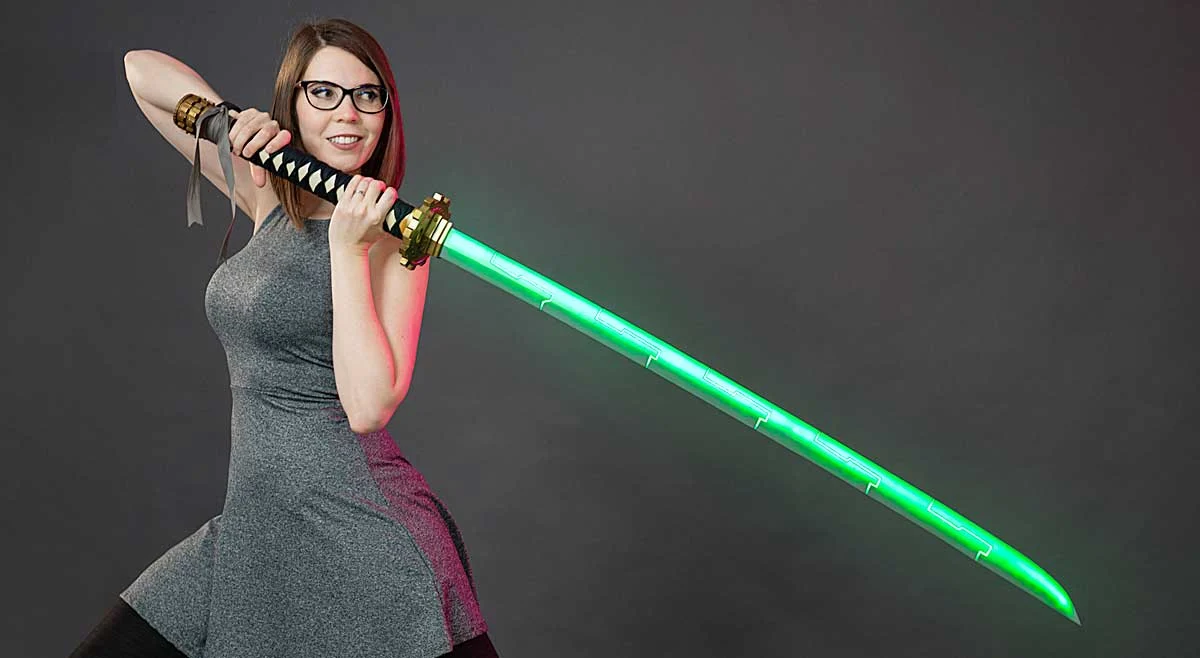
In the high-stakes world of professional prop-making, few names carry as much weight as Kamui Cosplay. Renowned for their meticulous attention to detail and ability to bridge the gap between digital assets and physical reality, the duo—comprising Svetlana and Benni—has once again pushed the boundaries of what is possible in the hobbyist sphere. Their latest endeavor, a fully functional, light-up, and sound-emitting replica of the Karakuri Katana from Electronic Arts’ monster-hunting title Wild Hearts, stands as a masterclass in modern engineering and artistic dedication.
This collaboration with EA serves as a testament to the evolving relationship between game developers and the cosplay community, illustrating how digital artifacts can be transformed into tangible, high-tech collectibles.
The Genesis of a Masterpiece: Main Facts and Concept
The Wild Hearts Karakuri Katana is not merely a sword; it is a centerpiece of the game’s aesthetic, characterized by complex geometry and an internal luminescence that signals its combat state. When Electronic Arts approached Kamui Cosplay to bring this weapon to life, the primary challenge was not just visual fidelity, but functional integration.
The project required a synthesis of three distinct disciplines: 3D modeling, advanced electronics integration, and high-performance material science. Unlike traditional foam-based props, this build demanded a structural integrity capable of housing an array of LED strips and audio components without compromising the sleek, dangerous silhouette of the blade. The result is a prop that captures the “special attack” animations of the game, complete with synchronized lighting and sound effects that mimic the in-game experience.
A Week in the Workshop: The Chronology of Construction
The transformation of the Karakuri Katana from a digital render to a physical prop was a whirlwind project, completed in just one week—a remarkably tight timeline for such a complex electronic build.
Days 1–2: Digital Architecture
The foundation of the project began in Blender. Benni, the technical lead of the duo, meticulously reconstructed the weapon from scratch. Because the prop needed to be printed, every component had to be optimized for structural integrity while leaving internal voids for wiring and battery housing. This stage required constant cross-referencing with Wild Hearts game assets to ensure the proportions were perfect.
Days 3–4: Additive Manufacturing
The team utilized a Creality CR-M4, a high-capacity ABS 3D printer, to realize the design. The choice of white ABS was strategic; it provides a neutral, semi-translucent base that diffuses LED light effectively, creating that signature "glowing" effect seen in the game. The sheer scale of the build necessitated a printer with a large build volume, allowing the team to print the blade segments with minimal seams.
Day 5: The Electronics Integration
Drawing inspiration from Adafruit’s extensive library of DIY lighting projects—specifically their "Lightsaber FeatherWing" tutorial—the team wired the electronics. This phase involved soldering micro-controllers and LED strips, ensuring that the lights could pulse and react, mimicking the "charge-up" sequences seen in Wild Hearts.
Days 6–7: Assembly and Finishing
The final two days were dedicated to sanding, painting, and the painstaking process of assembly. Each component was carefully fitted, ensuring that the battery compartment was accessible for charging while remaining hidden from view during photography and video demonstrations.
Supporting Data and Technical Specifications
The project serves as a practical guide for intermediate to advanced makers. The success of the build relies on several key technical choices:

- Material: ABS (Acrylonitrile Butadiene Styrene). Chosen for its durability and heat resistance, ABS is the gold standard for props that need to endure the rigors of conventions and photoshoots.
- Modeling Software: Blender. By creating a custom model rather than extracting game files, the team ensured the geometry was "manifold" (water-tight) and optimized for printing.
- Electronics: Inspired by Adafruit’s ecosystem, the prop features a custom lighting array that allows for color shifts and brightness modulation, essential for recreating the game’s high-fantasy aesthetic.
- Print Hardware: The Creality CR-M4, which features a large 17.71 x 17.71 x 18.5-inch build volume, was vital for printing long segments of the katana in single passes, reducing the need for structural glue joints that could fail under tension.
Official Perspectives: The Value of Community Collaboration
The collaboration between Kamui Cosplay and Electronic Arts highlights a growing trend in the gaming industry: the "official" sanctioning of fan-made content. By commissioning professional prop-makers to create authentic replicas, publishers like EA are not only promoting their titles but also fostering a deeper sense of immersion among the player base.
In a public statement regarding the project, the duo expressed their gratitude for the opportunity, noting that the project was a “dream build.” For Electronic Arts, the partnership serves as a high-quality marketing asset that transcends traditional trailer footage. When a player sees a real-world replica that functions exactly like the digital version, the line between the virtual and physical world blurs, creating a lasting impact that simple static images cannot achieve.
Broader Implications for the Maker Community
The release of the 3D print files for the LED Katana in the Kamui Cosplay shop marks a significant shift in how intellectual property is handled in the crafting world. Rather than hoarding the design, the creators have democratized the project, allowing fans of Wild Hearts to construct their own high-fidelity props.
1. The Rise of the "Prosumer" Maker
This project exemplifies the "prosumer" era of cosplay, where the barrier to entry for high-quality electronics and 3D printing is lower than ever. The success of this build encourages other makers to explore the intersection of coding and traditional crafting.
2. Education Through Documentation
Kamui Cosplay has consistently positioned themselves as educators, further evidenced by their 3D printing and modeling books. By documenting their workflow—from Blender modeling to the final assembly—they provide a roadmap for others to follow, effectively elevating the standard of the entire cosplay community.
3. Sustainability and DIY Culture
By providing the files for download, the team encourages a sustainable model of creation. Instead of purchasing mass-produced, low-quality plastic toys from overseas, fans are encouraged to source their own materials and engage in the learning process. This fosters a community where the value lies not just in the finished object, but in the knowledge gained during the creation process.
Conclusion: A New Standard for Prop Making
The Wild Hearts LED Karakuri Katana project is more than just a promotional tool; it is a benchmark for what is possible in modern prop making. By leveraging the power of 3D printing, open-source electronics, and a deep, passionate understanding of the source material, Kamui Cosplay has demonstrated that the most effective marketing is that which empowers the consumer to create.
For those inspired by this build, the path is clear. With the right tools, a bit of patience, and a willingness to dive into the technical side of prop making, anyone can turn their favorite digital weapons into real-world realities. As the technology continues to advance, we can only expect the quality of fan-made replicas to continue their ascent, further cementing the role of the maker in the ever-evolving ecosystem of global gaming culture.
Whether you are a seasoned 3D printing enthusiast or a newcomer looking for your first big project, the Karakuri Katana serves as both an inspiration and a challenge: to build, to light, and to bring the virtual world into our own.

 Siti Muinah
 Azzam Bilal Chamdy