

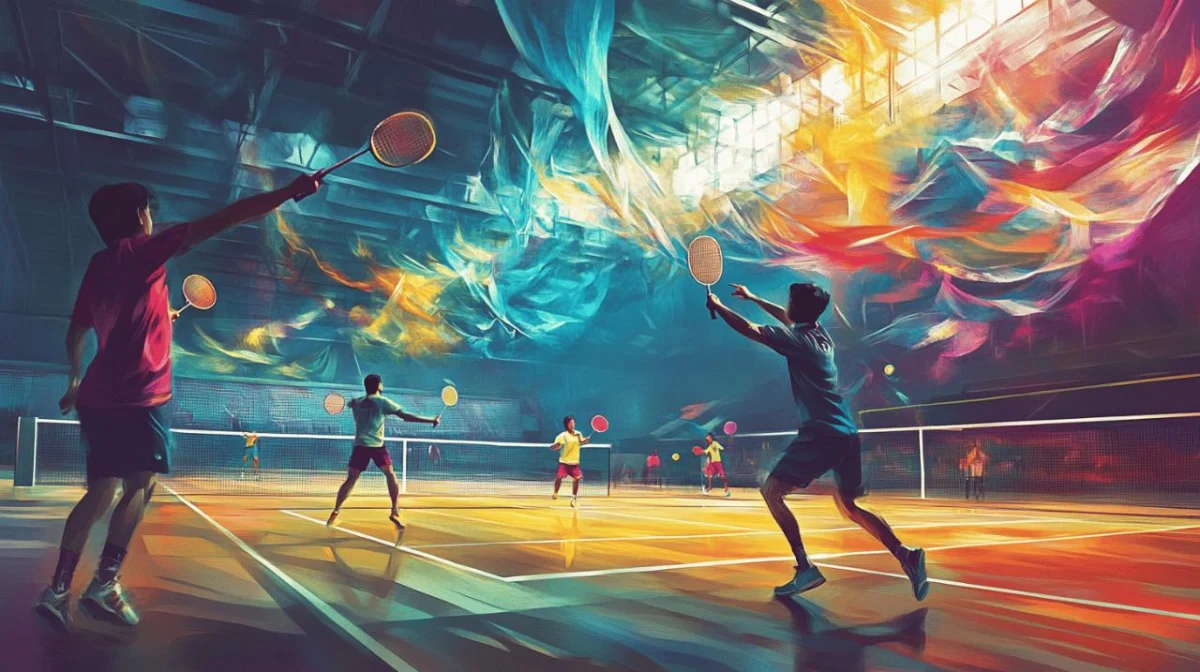
The intersection of professional sports and pop culture has long been a fertile ground for storytelling, but few synergies are as visually kinetic as the marriage of elite badminton and the Japanese manga industry. From the thunderous smashes at the Yonex All England to the emotional gravity of the Tokyo Olympic Games, the world’s fastest racket sport has been meticulously deconstructed and reimagined by mangakas. This cultural phenomenon does more than just depict a game; it serves as a sophisticated narrative bridge, translating the technical precision, psychological warfare, and physical limits of badminton into a language of ink, speed lines, and character-driven drama.
Main Facts: The Anatomy of a Sport-Manga Fusion
At its core, the fascination with badminton in manga is driven by the sport’s inherent theatricality. Unlike sports that rely on slow-building strategies, badminton is defined by explosive, split-second reactions. This translates perfectly to the manga medium, where the "impact frame"—the moment a racket connects with a shuttlecock—becomes a canvas for artistic expression.
The fusion is not merely aesthetic. Leading mangakas conduct extensive research, often consulting with current professional players to ensure that the biomechanics of a jump smash, a hairpin net shot, or a defensive dive are depicted with high-fidelity realism. This commitment to authenticity elevates these works from simple fan service to a legitimate celebration of athletic excellence. By blending the high-stakes reality of world-class tournaments with the serialized progression of a protagonist’s journey, creators turn a 21-point match into a multi-chapter odyssey of character development.
Chronology: A Trajectory of Inspiration
The evolution of badminton in manga has mirrored the sport’s rising global prestige.
- The Early Era: Initially, badminton appeared as a background sport in high school-themed manga, often used to highlight the camaraderie of school clubs.
- The Rise of Competitiveness: With the international dominance of Japanese athletes in the early 2010s, the focus shifted toward tournament-centric narratives. The Yonex All England Open became a frequent thematic backdrop, symbolizing the "Mecca" of the sport.
- The Olympic Turning Point: The Tokyo 2020 Games served as a catalyst, moving badminton from niche club settings to the grand, global stage. The emotional narratives surrounding the home-court advantage during these games provided a blueprint for recent manga arcs focusing on national pride and individual sacrifice.
- The Digital Transition: Today, we see the rise of webtoons and interactive media that allow for color-coded movement tracking and dynamic paneling, making the reading experience feel as fast-paced as a real-time televised match.
Supporting Data: Why Badminton Fits the Manga Archetype
To understand the popularity of this genre, one must look at the data regarding audience engagement. Surveys within the Japanese publishing industry suggest that sports manga readers look for three specific elements: Technical Mastery, The "Underdog" Narrative, and Rivalry.
Badminton is a sport of extremes. The shuttlecock can reach speeds exceeding 400 km/h, a fact that artists exploit to create "super-movements" that feel earned through rigorous training. In series focusing on tournaments like the Thomas Cup or the World Championships, authors use the high-pressure environment of team play to explore themes of leadership and pressure. Statistically, titles that focus on these professional circuits show a higher retention rate among readers, as the narrative stakes feel higher when tied to real-world, historic tournament structures.
Official Responses and Industry Perspective
Industry professionals and former athletes have noted the positive impact of this artistic trend. In interviews, retired badminton champions have expressed surprise and gratitude at how accurately their "signature moves" are rendered on the page.
"When I see a manga character execute a backhand clear using the exact footwork I spent years perfecting, it validates the discipline of our sport," remarked one former international competitor. From the perspective of publishers, the "sport-manga" genre has become a critical entry point for young readers. By dramatizing the grueling nature of tournament preparation, these series act as a soft-power engine, encouraging a new generation to pick up a racket. The synergy between the Japan Badminton Association and various creative studios has led to collaborative marketing campaigns, where manga-style illustrations are used to promote major events like the Japan Open.
The Crucible of Competition: Tournament Analysis
The Yonex All England: A Narrative Benchmark
The All England is frequently cited as the "Holy Grail" in manga. Because of its history, it is often portrayed as the final boss—the venue where the protagonist must prove their worth against the world’s elite. Mangakas use the cathedral-like atmosphere of the arena to build tension, contrasting the silence of a player’s focus with the deafening roar of the crowd.
Tokyo 2020: A Masterclass in Emotional Stakes
The Tokyo Olympic arc, explored in several recent series, captures the burden of expectation. Unlike generic tournaments, the Olympic setting allows for deep psychological dives. Authors spend chapters exploring the "pressure of the home crowd," translating the physical strain of the sport into the internal monologue of a player fighting for their country’s honor.
The Thomas Cup: Team Dynamics
The Thomas Cup is unique in its structure, emphasizing the team over the individual. This allows mangakas to explore the complexities of interpersonal relationships—the tension between teammates, the mentorship between veterans and rookies, and the collective grief or glory of a team result. These narratives are crucial for showing that even in a sport that looks like a duel, success is a collective endeavor.
Implications: The Future of the Genre
The integration of badminton into manga is not merely a passing trend; it represents a fundamental shift in how sports are consumed by the youth.
1. Educational Value through Entertainment:
The meticulous detail regarding string tension, racket weight, and tactical positioning acts as an informal educational tool. Readers walk away with a nuanced understanding of the game’s strategic complexity.
2. Technological Integration:
We are seeing the emergence of "multimedia manga," where QR codes in the margins of physical volumes link to actual game footage of the moves being described. This creates a seamless link between the fictional representation and the historical reality of the sport.
3. Global Reach:
As webtoons and digital platforms bridge the language gap, these manga stories are reaching audiences in Southeast Asia, Europe, and beyond. This has created a global community of fans who use these stories to better understand the professional circuit.
4. The "Legendary" Legacy:
By immortalizing real-world matches, manga creates a historical archive of the sport’s most iconic moments. Future generations may not be able to watch old broadcast tapes, but they will be able to read the "graphic novelized" version of a historic 2024 final, preserving the spirit and emotion of the game for posterity.
Conclusion
The fusion of badminton and manga is a testament to the power of artistic interpretation. By turning the sweat, grit, and strategy of the court into high-octane visual art, mangakas have given the sport a new layer of meaning. Whether through the high-pressure environment of the Thomas Cup or the personal growth showcased in Olympic-themed chapters, these works remind us that badminton is more than just a game—it is a human drama played out in the blink of an eye. As the lines between reality and fiction continue to blur, one thing remains certain: the shuttlecock will continue to fly, and the artists will be there to catch every heartbeat of the action.












No comments yet. Be the first to join the conversation!