Laily UPN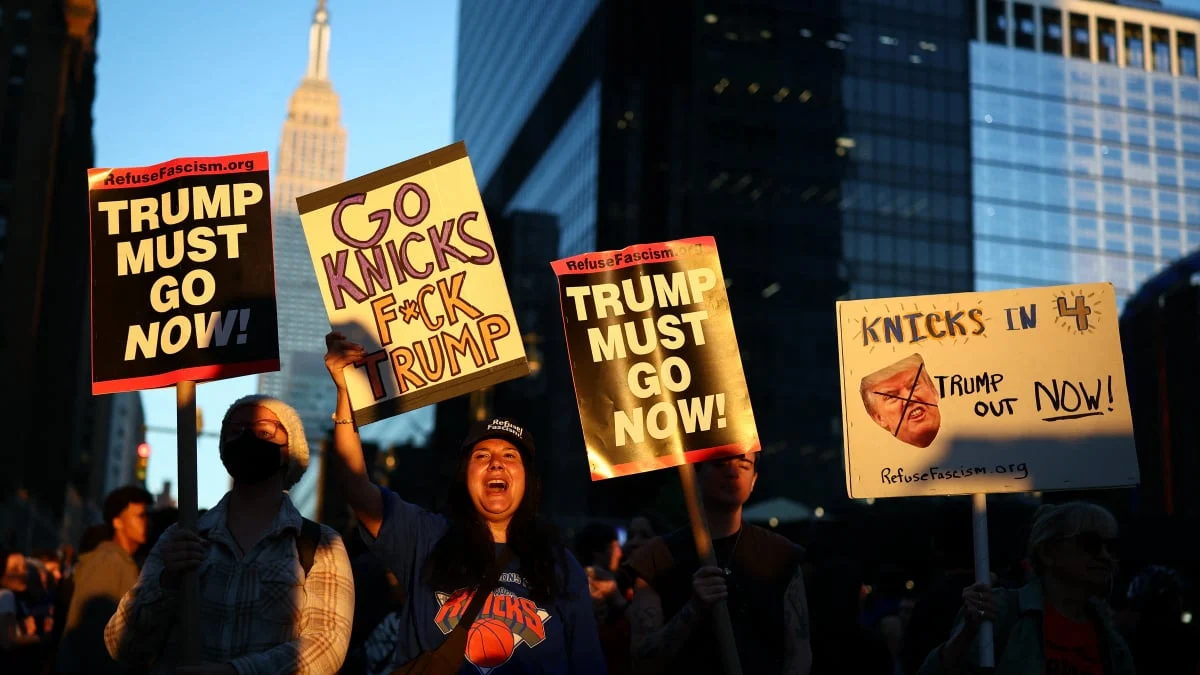
By Chase DiBenedetto
June 9, 2026
The atmosphere in New York City over the past week has been nothing short of electric. For the first time in 27 years, the New York Knicks have fought their way to the NBA Finals, transforming the five boroughs into a sprawling, orange-and-blue fever dream. From the South Bronx to Staten Island, the city has been blanketed in custom-airbrushed merchandise and makeshift shrines to the roster. Fans have been spotted dancing atop yellow cabs and turning subway cars into impromptu nightclubs, fueled by the sheer audacity of a championship run that many locals feared they might never see in their lifetimes.
However, that collective euphoria hit a sudden, icy wall on the night of Game 3. The intrusion of high-stakes national politics into the sanctity of Madison Square Garden (MSG) served as a jarring reminder that even the most sacred sports traditions are not immune to the polarization of the current era. As President Donald Trump arrived to take his place in a private box, the mood shifted from championship anticipation to a visceral, city-wide display of defiance.
The Chronology of a Controversial Visit
The tension began immediately following the Knicks’ victory in Game 2. When it was announced that President Trump would become the first sitting president to attend an NBA Finals game, the reaction was immediate. It was not the excitement usually reserved for a head-of-state appearance, but rather a wave of "city-wide concern" regarding the optics and the superstitious implications of his presence.
Pre-Game Friction
The logistics of a presidential visit are always complex, but the impact on the local community was felt acutely hours before tip-off. U.S. Secret Service personnel initiated a lockdown of the perimeter around Madison Square Garden, effectively barricading sidewalks and forcing the cancellation of a highly anticipated public watch party outside the arena.
The disruption did not go unnoticed by local leadership. Mayor Zohran Mamdani, who was physically present at the game, moved quickly to mitigate the fallout by coordinating a separate, secondary viewing event at Manhattan’s Bryant Park. This pivot was symbolic of the broader tension: the city was actively trying to preserve its communal spirit in the face of federal intervention.
The Viral Resistance
In the age of digital activism, the response was organized long before the President’s motorcade arrived. TikTok users and local organizers disseminated "how-to" guides on effectively booing the President, framing the act as a form of cultural protection. One viral video, captioned "How to ward off the curse coming for the Knicks in game 3," encapsulated the sentiment of a fan base that felt their team’s destiny was being threatened by a political figure.
The Arrival and The Anthem
As the national anthem began, the moment of truth arrived. As cameras panned to the presidential box, the acoustics of MSG—already deafeningly loud due to the Finals atmosphere—transformed into a singular, sustained roar of disapproval. The dissent was not confined to the arena; reports from the Bryant Park watch party confirmed that the chorus of boos rippled across the city, creating a synchronized moment of public protest that felt as much like a sports tradition as the game itself.
Supporting Data: The Intersection of Sports and Politics
The intersection of professional sports and politics has become increasingly fraught over the last decade, but the NBA has remained a unique flashpoint. President Trump has historically maintained a contentious relationship with the league, frequently criticizing its players for their advocacy on social justice issues and labeling the organization’s culture as "left-wing."
The "Curse" Narrative
While the idea of a "Presidential Curse" is rooted in superstition, the correlation between the visit and the game’s outcome provided fuel for the narrative. The Knicks, who had been riding a wave of momentum, ultimately suffered a devastating loss to the San Antonio Spurs. For many, the result was less about defensive lapses or poor shooting and more about the "bad energy" introduced by the presidential visit.

Public Sentiment Analysis
Social media sentiment during the event showed a stark divide. While supporters of the President praised his willingness to engage with the public in a "hostile" environment, the overwhelming majority of local discourse—both in the stadium and online—was characterized by a desire to reclaim the game from political interference. The incident highlights a growing trend in American culture: the "politicization of the arena," where fans are increasingly unwilling to separate their recreational spaces from their political realities.
Official Responses and the "Amazing" Defense
In the immediate aftermath of the game, the President’s team attempted to control the narrative. Speaking to reporters on the tarmac near Air Force One, President Trump offered a counter-intuitive assessment of the evening’s events.
"I mean, I thought it was amazing, actually," the President stated. "You mean when they had the camera on me? I thought it was very good. Yeah. It was certainly amazing. It was, I think, mostly cheers. It was loud and it was very enthusiastic."
When questioned about the clear, audible booing and the widespread reports of the crowd’s hostility, he remained dismissive, characterizing the NBA as an entity that "tends to be a little left-wing." By framing the experience as "great entertainment" despite the political friction, the President signaled a continuation of his strategy to lean into the polarization, essentially reframing the audience’s negative reaction as a testament to the "enthusiasm" of his own base or a general excitement surrounding his presence.
Implications: A New Era for Public Appearances?
The events at Madison Square Garden on June 9, 2026, carry significant implications for the future of presidential public appearances.
The Security-Accessibility Paradox
The cancellation of the watch party and the extensive security perimeter suggest that as the political climate grows more volatile, the cost of hosting a sitting president at a public sporting event may become prohibitive. When security measures disrupt local culture and threaten the economic livelihood of surrounding businesses, public officials face a choice between safety and public favor.
The Role of the Fanbase
This incident serves as a case study in modern collective action. The ability of fans to organize a "boo" through viral social media tutorials demonstrates that the power dynamic between politicians and the public has shifted. The crowd at the Garden was not just watching a game; they were participating in a choreographed act of political expression.
The Future of the "Knicks Curse"
Whether the Knicks can recover from this "cursed" Game 3 remains to be seen. However, the event has already secured its place in New York City lore. It is a story about a city that has spent 27 years waiting for a championship, only to find that the biggest obstacle to their celebration wasn’t the San Antonio Spurs—but a political spectacle that turned their home court into a battleground.
As the series progresses, the "Trump Effect" will likely remain a topic of conversation. If the Knicks ultimately fall short of the title, the memory of that Tuesday night at MSG will likely be cemented in the minds of New Yorkers as the moment the magic was broken. Conversely, if they manage to pull off the series win, it will be remembered as the moment the city proved that its spirit—and its voice—is louder than any political presence.
For now, the city waits, the jerseys remain on the street, and the debate over whether sports should remain a neutral ground continues to rage, echoing the very boos that defined a historic night in New York.

 Asro
Asro
 Rifan Muazin