FOR IMMEDIATE RELEASE
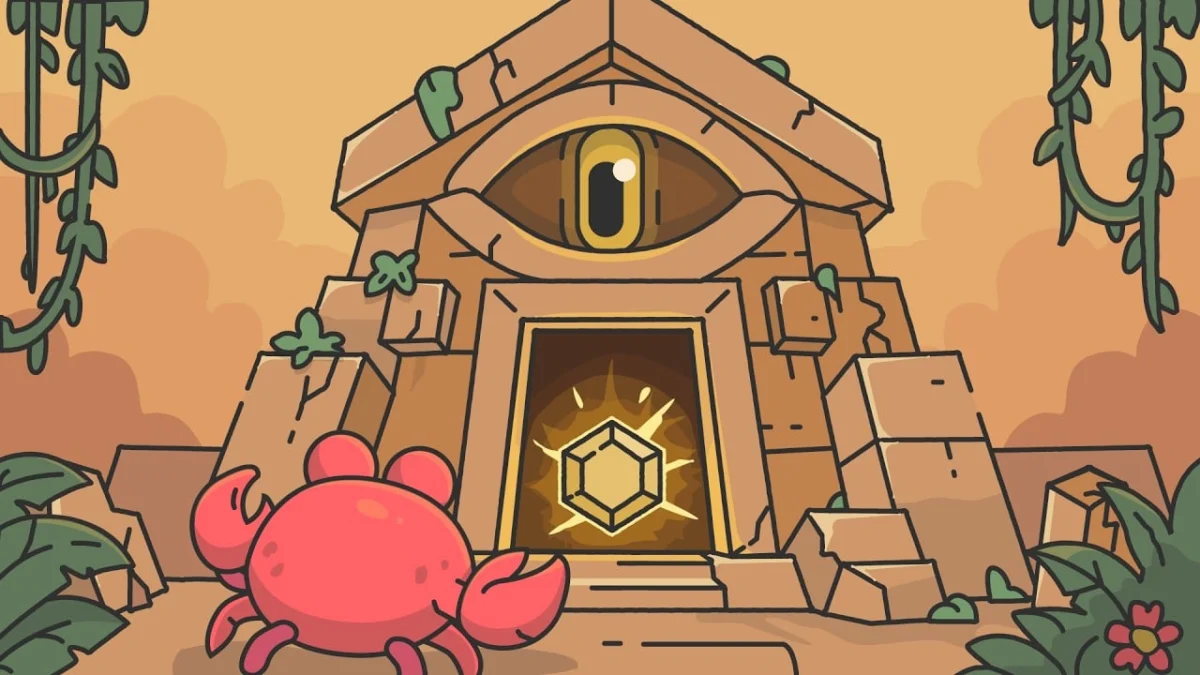
[City, State] – [Date] – The mobile gaming landscape has just welcomed a compelling new entrant, "Grabby Crab," a meticulously crafted path-planning puzzle adventure from the prolific solo developer, Tepes Ovidiu. This launch marks the culmination of a protracted development cycle, during which the intricate art of level design emerged as a significant, yet ultimately surmountable, challenge. Players are invited to embark on a cerebral journey, guiding a determined crustacean through treacherous ancient temples in pursuit of gleaming gemstones, all while navigating a dynamically collapsing environment.
The arrival of "Grabby Crab" on mobile platforms underscores Ovidiu’s continued commitment to delivering unique, thought-provoking gaming experiences. With a reputation built on titles that challenge perception and logic, such as "Almost Out of Mana," "Is This Yours?," and "Cessabit: a memory game," Ovidiu now steers into a design philosophy reminiscent of the critically acclaimed "Stephen’s Sausage Roll," promising a depth of puzzle mechanics that will undoubtedly captivate enthusiasts of the genre.
The Genesis of a Gem Thief: Tepes Ovidiu’s Journey to Grabby Crab
The path of an independent game developer is often fraught with both creative liberation and formidable obstacles. For Tepes Ovidiu, the journey to "Grabby Crab" was no exception, characterized by an extended development period that speaks volumes about the meticulous attention to detail and the iterative nature of crafting truly engaging puzzles. While the exact duration remains undisclosed, the developer’s acknowledgment of the "really long time" taken to finish the project highlights the profound commitment required to bring such a vision to fruition, particularly for a solo endeavor.
Ovidiu’s previous works offer a compelling chronology of a developer continually refining their craft and exploring diverse facets of the puzzle genre. "Almost Out of Mana," for instance, presented players with a strategic resource management challenge layered within a fantasy setting, demanding foresight and careful planning. "Is This Yours?" likely delved into object recognition or spatial reasoning, while "Cessabit: a memory game" clearly focused on cognitive skills, testing players’ recall and attention. These titles, each distinct in their mechanics, collectively demonstrate a penchant for games that engage the intellect rather than relying on rapid reflexes or gratuitous action.
The evolution evident in Ovidiu’s portfolio culminates in "Grabby Crab," which, by the developer’s own admission, leans into a "Stephen’s Sausage Roll kind of experience." This comparison is not made lightly within the puzzle game community. "Stephen’s Sausage Roll" is renowned for its deceptively simple premise that quickly escalates into extraordinarily complex, multi-layered puzzles requiring deep spatial reasoning and often non-obvious solutions. For "Grabby Crab" to evoke such a comparison immediately sets a high bar for its intellectual rigor and the sophistication of its puzzle design. It suggests a game where every move is consequential, where the solution might require lateral thinking, and where the "aha!" moment is earned through persistent logical deduction. This lineage positions "Grabby Crab" not just as another mobile game, but as a serious contender for the attention of dedicated puzzle aficionados.
Unraveling the Riddle of Grabby Crab: Core Mechanics and Evolving Challenges
At its heart, "Grabby Crab" introduces players to a protagonist whose singular, charmingly avaricious motivation drives the entire adventure: a determined little crab with an insatiable desire for sparkling gems. These coveted treasures are, unfortunately, nestled deep within the confines of cursed ancient temples, setting the stage for a series of intricate path-planning challenges. The player’s primary objective is clear: guide the crab through these perilous chambers, meticulously plot its route to the gemstone, and, crucially, secure an escape through an exit portal—all before the very path required for egress crumbles beneath its claws.
The Treacherous Temple Floors: A Dynamic Puzzle Canvas
The fundamental mechanic that elevates "Grabby Crab" beyond a simple maze game is the inherent unreliability of its environment. Every move the crab makes has a lasting impact on the game board, transforming the static grid into a dynamic puzzle canvas. The floor tiles are not merely decorative; they are integral components of the challenge:
- Cracking Tiles: Some tiles show immediate signs of fragility, indicating they can only withstand a limited number of traversals before becoming unusable. This forces players to consider not just where to go, but how many times they can step on a specific spot.
- Breaking Tiles: Others simply shatter upon a single use, creating irreversible gaps in the path. These require absolute precision in planning, as a misstep can permanently block access to a gem or, more critically, the escape route.
- Disappearing Tiles: A more insidious variant, these tiles might vanish entirely after being stepped on, often without warning, demanding a mental map of the board’s evolving state.
- Transforming Tiles: Perhaps the most complex of the tile types, these change their properties or even the rules of the puzzle upon activation. A tile might shift adjacent tiles, alter the crab’s movement capabilities, or even introduce new obstacles, fundamentally reshaping the player’s approach to the entire level.
This dynamic environment ensures that "Grabby Crab" is not a game of rote memorization or pattern recognition. Each level becomes a unique logical exercise, requiring players to visualize not only the optimal path but also the sequence of environmental degradation and transformation that will result from their actions.
A Test of Wit, Not Reflexes: The Philosophy of Thoughtful Planning
In a market saturated with games that prioritize speed and reaction time, "Grabby Crab" firmly plants itself in the camp of deliberate, cerebral challenges. There are no ticking timers, no pressure to execute moves with lightning speed. This design choice is deliberate, fostering an atmosphere conducive to thoughtful planning and logical deduction. Players are encouraged to take their time, analyze the grid, predict the consequences of each potential move, and meticulously craft their strategy. This focus on pure logic allows the intricate puzzle mechanics to shine, providing a deeply satisfying experience for those who relish overcoming complex intellectual hurdles. Hints are available for those who find themselves completely stumped, a welcome feature that ensures accessibility without compromising the game’s core difficulty.
Escalating Complexity and Strategic Depth: Guardians, Curses, and Relics
As players progress through the ancient temples, the challenges presented by "Grabby Crab" escalate in sophistication, introducing new elements that demand adaptive thinking and strategic foresight. The game masterfully layers mechanics, preventing monotony and ensuring a continuously fresh puzzling experience:
- Ancient Guardians: These enigmatic entities are not static obstacles but active participants in the puzzle. Guardians can mark specific tiles, making them impassable or triggering negative effects. They can block entire sections of the board, forcing players to find alternative routes, or even destroy parts of the path, creating new gaps and fundamentally altering the level’s geometry. Dealing with guardians often requires careful sequencing of moves, sometimes even luring them to specific locations to open up new possibilities.
- Gem Curses: True to the "cursed temple" theme, the very gems the crab seeks can introduce twists to the rules for individual levels. A gem curse might reverse movement controls, make certain tile types behave differently, or introduce a new win condition, forcing players to entirely rethink their learned strategies for that specific challenge.
- Relics: Providing a crucial layer of player agency, relics are special items that can be discovered or activated. These powerful tools allow players to restore destroyed paths, providing a second chance or enabling previously impossible routes. Other relics might allow players to reshape their escape route, granting flexibility in late-game scenarios where the original exit has become inaccessible. The strategic use of relics adds another dimension to the planning phase, as players must decide when and where to deploy these limited resources.
This intricate tapestry of environmental hazards, active adversaries, rule-bending curses, and player-empowering relics ensures that "Grabby Crab" maintains its intellectual grip throughout the entire adventure, continually challenging players to adapt, innovate, and think several steps ahead.
The Art of Puzzle Design: Tepes Ovidiu’s Craft
The developer’s candid admission that "level design" was one of the biggest challenges during "Grabby Crab"’s extended development cycle offers a profound insight into the meticulous craft behind the game. In path-planning puzzle games, level design is not merely about arranging elements; it is an art form that requires a delicate balance of creativity, logic, and psychological understanding.
Why Level Design is Paramount
For a game like "Grabby Crab," where every tile interaction can have cascading consequences, the design of each level is the absolute bedrock of the player experience. A poorly designed puzzle can be frustratingly opaque, impossible, or trivially easy, none of which serve the goal of intellectual engagement. Tepes Ovidiu’s challenge lay in creating levels that are:
- Solvable: Every puzzle must have at least one valid solution, often multiple, to avoid dead ends.
- Challenging: The solution should not be immediately obvious, requiring players to experiment, analyze, and deduce.
- Elegant: The best puzzles often have solutions that feel satisfyingly clever and efficient, even if they initially appear complex.
- Progressive: Difficulty must gradually increase, introducing new mechanics one by one and then combining them in increasingly complex ways, fostering a sense of mastery.
- Fair: While difficult, the rules must be consistent, and all necessary information (or the means to discover it) must be available to the player.
The iterative process involved in achieving these qualities is immense. It typically involves designing a level, testing it repeatedly (often by the designer themselves, then by external testers), identifying bottlenecks, simplifying or complicating elements, and then repeating the cycle until the desired balance is struck. This is particularly challenging for a solo developer, who must wear multiple hats and maintain objectivity about their own creations.
Drawing Parallels to Classic Puzzle Design Principles
"Grabby Crab"’s design philosophy echoes principles seen in classic puzzle games that have stood the test of time. Titles like "Sokoban," where players push crates to designated spots, or "Lode Runner," which combines platforming with strategic digging, thrive on limited actions within a confined space. These games teach players a "grammar" of interaction, then build increasingly complex "sentences" with that grammar.
Ovidiu’s approach with "Grabby Crab"—introducing various tile behaviors, guardians, curses, and relics—is a modern interpretation of this classic methodology. Each new element adds another layer to the game’s grammar, expanding the range of possible puzzles and demanding a deeper understanding of the system. The "Stephen’s Sausage Roll" comparison further solidifies this, as that game is celebrated for its ability to create profound challenges out of very simple core mechanics, relying heavily on spatial reasoning and the player’s ability to foresee the consequences of their actions several steps into the future.
The balance between introducing new mechanics and allowing players to master existing ones is critical. "Grabby Crab" appears to navigate this by gradually escalating complexity, ensuring that players are never overwhelmed but are constantly presented with fresh intellectual stimuli. This thoughtful design ensures that the satisfaction of solving a particularly tricky level is genuinely earned, reinforcing the player’s sense of accomplishment and driving continued engagement.
Navigating the Mobile Gaming Landscape: A Premium Proposition
In an era dominated by free-to-play (F2P) mobile games, often characterized by pervasive advertisements, intrusive tracking, and intricate monetization schemes, "Grabby Crab" stands as a refreshing anomaly. Tepes Ovidiu has consciously opted for a premium model, offering the game at a one-time purchase price of $2.99 on the Google Play Store. This decision is not merely a pricing strategy; it is a declaration of intent, signaling a commitment to an unadulterated, player-first experience.
A Stand Against Convention: The Value of Uninterrupted Play
The most significant implication of "Grabby Crab"’s premium pricing is the promise of an uninterrupted gaming experience. In a market where many developers leverage various tactics to maximize engagement and revenue, Ovidiu has chosen to strip away these distractions:
- No Ads: Players will not encounter disruptive banner ads, interstitial videos, or forced advertisements that break the flow of gameplay. This is particularly crucial for a puzzle game, where concentration is paramount.
- No Tracking: Concerns about data privacy are increasingly prevalent. By eschewing tracking mechanisms, "Grabby Crab" respects player privacy, offering a transparent and secure gaming environment.
- No Free-to-Play Systems: There are no energy meters, cooldown timers, loot boxes, or pay-to-win mechanics. The entire game is available from the moment of purchase, ensuring that progress is determined solely by skill and intellect, not by monetary investment or artificial gating.
- Offline Play: Once purchased and downloaded, "Grabby Crab" can be enjoyed offline, anytime, anywhere. This convenience is a significant advantage for commuters, travelers, or anyone seeking entertainment without relying on a constant internet connection.
This "premium purity" positions "Grabby Crab" as a direct counter-narrative to the prevailing F2P model. It appeals to a discerning segment of the mobile gaming audience—those who value quality over cost, experience over monetization, and privacy over convenience.
The Niche for Premium Mobile Games and Supporting Indie Developers
While F2P games command the lion’s share of the mobile market, a vibrant niche for premium titles persists. This audience is often comprised of players who appreciate:
- High-Quality, Curated Content: Premium games often signal a higher standard of development and design, as the developer’s revenue is directly tied to the initial perceived value of the product.
- Fair Monetization: A single purchase ensures access to the entire experience, fostering a sense of fairness and respect for the player’s time and money.
- Focused Experiences: Without the need to constantly re-engage players for monetization, premium games can focus on delivering a cohesive, complete narrative or puzzle experience.
For solo developers like Tepes Ovidiu, the premium model is also a vital mechanism for sustainability. Each $2.99 purchase directly supports the creator, allowing them to dedicate their time and talent to future projects without compromising their artistic vision for commercial pressures often associated with F2P models. It represents a direct exchange of value: a well-crafted, ad-free, distraction-free game for a modest, one-time investment. This direct support is crucial for fostering innovation and diversity within the indie game development scene.
Beyond the Glinting Gem: Broader Implications
The launch of "Grabby Crab" carries implications that extend beyond its immediate gameplay, touching upon the enduring appeal of puzzles, the vital role of indie development, and the potential future trajectory of mobile gaming.
The Enduring Appeal of Puzzles
"Grabby Crab" is a testament to the timeless allure of puzzle games. In an increasingly complex world, the satisfaction derived from solving a well-designed puzzle offers a unique form of intellectual gratification. It taps into fundamental human desires for order, understanding, and mastery. The "aha!" moment, when a seemingly insurmountable challenge finally yields to logical deduction, is a powerful psychological reward. Games like "Grabby Crab," which prioritize mental engagement over sensory overload, cater to this innate human curiosity and problem-solving drive, ensuring their continued relevance across generations of gamers.
Indie Development’s Vital Role
Tepes Ovidiu’s journey with "Grabby Crab" is a prime example of the critical role independent developers play in the gaming ecosystem. Free from the constraints of large publishers, indie creators often push boundaries, experiment with novel mechanics, and cater to niche audiences that might be overlooked by mainstream studios. Their passion projects often become havens for creativity and innovation, injecting fresh ideas and diverse experiences into the market. "Grabby Crab" showcases how a solo developer, through dedication and a clear vision, can produce a polished, deep, and commercially viable title that stands proudly alongside productions from much larger teams.
The Future of Mobile Gaming: A Resurgence for Premium Titles?
While the F2P model remains dominant, the consistent release of high-quality premium titles like "Grabby Crab" suggests a potential slow but steady resurgence for this model on mobile platforms. As players become more fatigued by aggressive monetization, intrusive ads, and the constant pressure to spend, the appeal of a complete, uninterrupted experience for a one-time fee grows. Developers who prioritize player experience and respect their audience’s intelligence may find a loyal following in this space. "Grabby Crab" is not just a game; it’s a statement about the kind of mobile gaming experience many players are increasingly yearning for—one that values quality, integrity, and pure, unadulterated puzzling joy.
Final Verdict: Will You Join the Grabby Crab’s Quest?
"Grabby Crab" emerges as a compelling proposition for anyone seeking a deep, rewarding, and thoughtfully designed puzzle adventure on mobile. From its charmingly avaricious protagonist to its dynamically evolving levels and sophisticated mechanics, the game promises hours of cerebral engagement. Tepes Ovidiu’s dedication to crafting an experience free from the common pitfalls of mobile monetization further enhances its appeal, offering a premium experience at an accessible price point.
If the challenge of guiding a determined little crab through collapsing temples, outsmarting guardians, and deciphering gem curses sounds like your kind of adventure, then "Grabby Crab" is undoubtedly worth investigating. The official trailer (embedded above) provides a tantalizing glimpse into the game’s captivating world and intricate gameplay.
Comment below and let us know if you decide to dive into the world of "Grabby Crab"! Or, for more mobile gaming news, be sure to check out our next scoop on CookieRun: Crumble’s Pre-Registration on Android.