

Introduction: A New Chapter in Trilateral Defense Cooperation
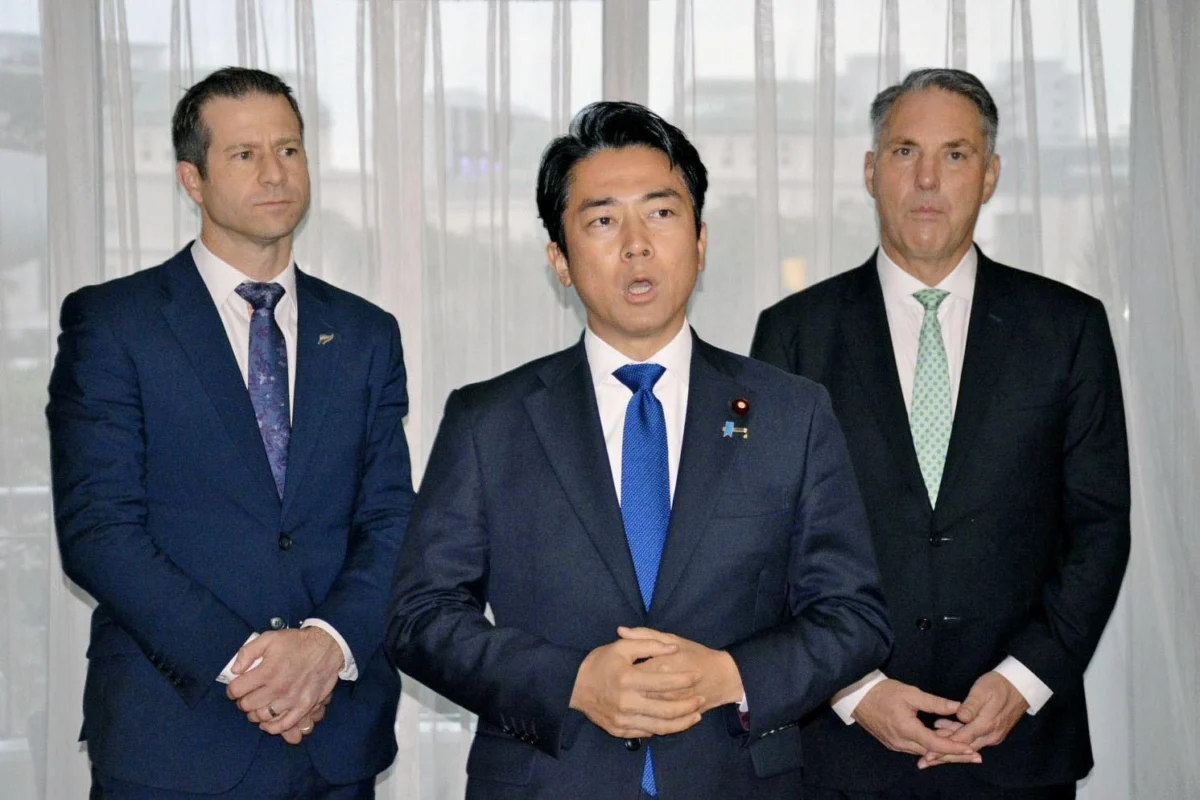
On the sidelines of the prestigious Shangri-La Dialogue in Singapore—Asia’s premier security summit—a significant shift in the Pacific security architecture unfolded. Japanese Defense Minister Shinjiro Koizumi, meeting with his counterparts from New Zealand and Australia, formally pitched the potential export of Japan’s cutting-edge Mogami-class frigates to the New Zealand government.
This high-level trilateral engagement, the first of its kind between the three nations, signals more than just a commercial arms deal; it represents a deepening strategic alignment in the Indo-Pacific. As China continues to expand its military footprint and exert greater maritime assertiveness across regional waters, Tokyo, Canberra, and Wellington are increasingly looking toward unified hardware, shared operational doctrines, and tighter defense integration to maintain a "free and open Indo-Pacific."
The Core Proposition: The Mogami-Class Advantage
The Mogami-class frigate, often referred to as the "FFM" (Frigate, Multi-mission), is a cornerstone of Japan’s modern Maritime Self-Defense Force (MSDF). These vessels are renowned for their high degree of automation, stealth capabilities, and modular design, which allow for rapid upgrades in response to evolving technological threats.
During the meeting, Minister Koizumi emphasized that the selection of the Mogami vessel by New Zealand would provide more than just hardware; it would create a technological synergy. Because Australia has already moved to adopt a design based on the Mogami class for its own next-generation frigate program, a New Zealand acquisition would effectively standardize the naval capabilities of the three nations.
"I told them that if New Zealand were to select our vessel, it would not only deepen defense cooperation between Japan and New Zealand but could also improve interoperability and operational compatibility among the three countries," Koizumi stated. For military planners, this is the "Holy Grail" of coalition warfare: the ability for ships to share data links, ammunition, and maintenance protocols seamlessly across international boundaries.
Chronology of Developments
The path to this trilateral discussion was paved by several years of shifting Japanese security policy and regional necessity:
- 2016: Then-Prime Minister Shinzo Abe introduces the "Free and Open Indo-Pacific" (FOIP) initiative, emphasizing the rule of law as the bedrock of regional stability.
- April 2024: Japan enacts a historic revision to its "Three Principles on the Transfer of Defense Equipment and Technology." These reforms significantly eased restrictions on exporting lethal weaponry, provided the recipient nation has formal agreements on classified information protection.
- May 2024: New Zealand’s Minister of Defence, Chris Penk, takes office, inheriting a legacy of aging naval assets in need of replacement.
- June 2024 (Shangri-La Dialogue): The inaugural trilateral defense meeting occurs. Koizumi and Penk hold a separate bilateral session to discuss the Mogami bid, as New Zealand formally includes the Japanese vessel as a candidate to replace its aging fleet.
- Future Horizon (Late 2027): The expected timeline for the New Zealand government to finalize its decision on the frigate acquisition.
Supporting Data: Why New Zealand Needs an Upgrade
New Zealand’s current naval fleet is approaching the end of its operational lifecycle. The maintenance of aging vessels is costly, and their combat efficacy in a modern high-intensity conflict is limited by outdated sensor suites and weapon systems.
New Zealand is currently evaluating several options, including the United Kingdom’s Type 31 frigate. However, the Japanese pitch carries the unique weight of "regional interoperability." As Minister Penk noted, "Anything that New Zealand can do to work alongside these nations, we will firmly take that opportunity."
For the Japanese government, the math is straightforward. By exporting these vessels, Japan not only strengthens its domestic defense industrial base but also reinforces the security of its supply chains and regional partners. The Mogami-class offers:
- Reduced Manning: Due to advanced automation, these ships require a smaller crew, addressing the manpower shortages faced by many modern navies.
- Stealth Characteristics: Designed to minimize radar cross-sections, the vessel is highly survivable in contested environments.
- Modular Payload: The capability to swap mission modules ensures the ship remains relevant for decades to come.
Official Responses and Diplomatic Nuance
The tone of the trilateral meeting was one of urgent, measured cooperation. Minister Koizumi’s comments were calculated to frame the export not as an aggressive expansion of Japanese arms sales, but as a stabilizing contribution to regional peace. "The purpose of Japan’s defense equipment transfers is to strengthen deterrence in the Indo-Pacific and prevent new conflicts from breaking out," he told reporters.
Minister Penk, representing a nation that has historically maintained a more independent foreign policy, was careful to frame the cooperation as "crucial for the future of this region." The collaboration is clearly viewed by Wellington as a way to enhance its relevance in Pacific security architecture without necessarily pivoting away from its traditional commitments to the Five Eyes intelligence alliance or its ANZUS-rooted history with Australia.
Australia’s Defense Minister, Richard Marles, acted as a silent but powerful proponent of the trilateral vision. Having already committed to the Mogami design for Australia’s own fleet, Canberra is the primary beneficiary of a scenario where its closest maritime neighbors are operating "sister" ships.
Implications for the Indo-Pacific
The push to export the Mogami class carries profound geopolitical implications that extend far beyond the hulls of the ships themselves.
1. Countering Maritime Assertiveness
The primary driver of this cooperation is the rapid military modernization of the People’s Liberation Army (PLA) Navy. China’s "gray zone" tactics—involving coast guard vessels and maritime militia—have forced regional nations to reassess their own naval capabilities. A unified front among Japan, Australia, and New Zealand sends a clear signal that the status quo in the South China Sea and beyond will be defended.
2. The Normalization of Japan as a Security Provider
For decades, Japan’s post-war constitution and subsequent self-imposed limitations effectively kept the country out of the global arms trade. The April 2024 revisions to export rules are a watershed moment. Japan is no longer just a "security consumer" protected by the U.S. alliance; it is becoming a "security provider" that exports high-end, sophisticated platforms to like-minded democratic partners.
3. Interoperability as Deterrence
Strategic deterrence is not just about the size of a fleet; it is about the ability to coordinate across national lines. If a Japanese-built ship can plug into an Australian or New Zealand data network, the combined effectiveness of the three navies is multiplied. This "plug-and-play" capability complicates the calculus for any potential adversary, who must now account for a coordinated response from three distinct naval powers rather than a single nation.
The Road Ahead: 2027 and Beyond
While the initial talks are promising, the road to a final contract is complex. New Zealand’s procurement process will involve rigorous technical assessments, cost-benefit analyses, and significant domestic political scrutiny. The competition with the British Type 31 is real, and the decision will ultimately rest on whether New Zealand prioritizes legacy institutional ties with London or the immediate tactical benefits of a trilateral naval partnership with Tokyo and Canberra.
As Minister Koizumi noted, the early stage of these discussions is a positive indicator. By beginning the conversation now, three years ahead of the final selection deadline, the parties have allowed enough time for technology transfers, training agreements, and deeper defense policy alignment to be ironed out.
Ultimately, the potential sale of the Mogami-class frigates is a bellwether for the future of the Indo-Pacific. It marks the transition of Japan into a more proactive security leader and reflects a growing consensus among regional powers that the best way to ensure peace is through the deliberate, coordinated, and standardized strengthening of democratic naval capabilities.
As the world watches the shifting tides of the Pacific, the partnership between Japan, New Zealand, and Australia stands as a testament to the enduring importance of alliances in an era of renewed geopolitical competition. Whether or not the Mogami becomes the vessel of choice for the Kiwi navy, the trilateral dialogue initiated in Singapore has already succeeded in drawing these three nations into a tighter, more cohesive strategic orbit.












No comments yet. Be the first to join the conversation!