For years, the marketing industry has been trapped in a paradoxical relationship with social media. While executives intuitively understand that social platforms are where modern commerce lives, breathing, and evolves, they remain plagued by the "measurement gap." If defining the business value of social media were a cut-and-dry science, every CMO would have mastered it by now. Instead, we are left with a landscape where 80% of marketing leaders are aggressively reallocating funds from traditional channels to social, yet fewer than half claim to be "experts" at measuring the returns on those investments.
The struggle to quantify impact isn’t just a technical hurdle; it is a fundamental misalignment between the speed of social media and the rigidity of legacy corporate frameworks.
The State of Social: Facts and Friction
According to The 2025 Impact of Social Media Marketing Report, a profound disconnect exists between perception and execution. While over two-thirds of marketing leaders are confident that social media is a primary driver of brand awareness, they are significantly less certain about how to attribute customer acquisition, loyalty, and bottom-line revenue to these channels.
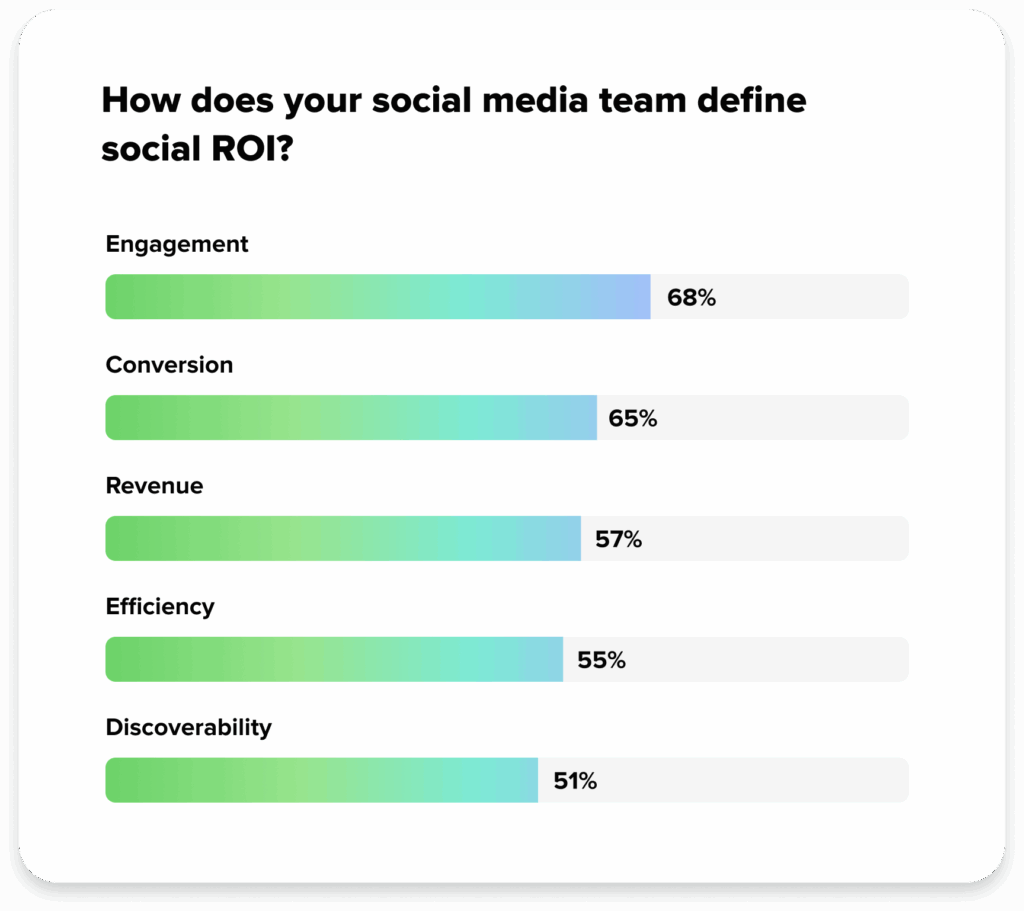
The data reveals that leaders primarily lean on engagement (68%) and conversion (65%) metrics to define ROI. However, only 57% attempt to tie social performance directly to revenue. This creates a "gray area" where marketing teams are forced to justify massive budget shifts using metrics that don’t always speak the language of the C-suite.
Chronology of a Shift
The evolution of social media measurement has occurred in three distinct phases:
- The "Vibe" Era (Early 2010s): Success was measured purely by vanity metrics—likes, shares, and followers. The focus was on sentiment and brand visibility.
- The Attribution Struggle (2015–2022): As social platforms became sophisticated advertising machines, marketers attempted to force social into traditional sales funnel models. This led to the "square peg in a round hole" frustration that many still feel today.
- The Intelligence Era (2025–Present): We are currently in a transition period where social media is being recognized not just as a communication channel, but as a critical source of social intelligence that informs product development, R&D, and corporate strategy.
The B2B vs. B2C Divide: A Case Study in Measurement
To understand how these philosophies are changing, we spoke with Carmen Vicente, Social Media Manager at Gorgias, a leading conversational AI platform for ecommerce brands. Vicente, who transitioned from the B2C sector to B2B, notes a stark difference in how social value is quantified.

"In B2C, much of my reporting was engagement-focused, leaned into emotional storytelling, and was based on ‘vibes’," Vicente explains. "In B2B, data is king. If you can’t tie your efforts to revenue, you’re going to struggle with contextualizing your impact organization-wide."
Vicente argues that the "moving target" nature of social ROI is actually a strength, not a weakness. "Social media isn’t static. If the way you measure it is, you have a problem. At Gorgias, ROI is an ongoing conversation. We’ve developed processes that are project-based, tying social deliverables to broader business objectives. To successfully measure social, you have to mirror the speed at which it moves."
The Untapped Power of Social Intelligence
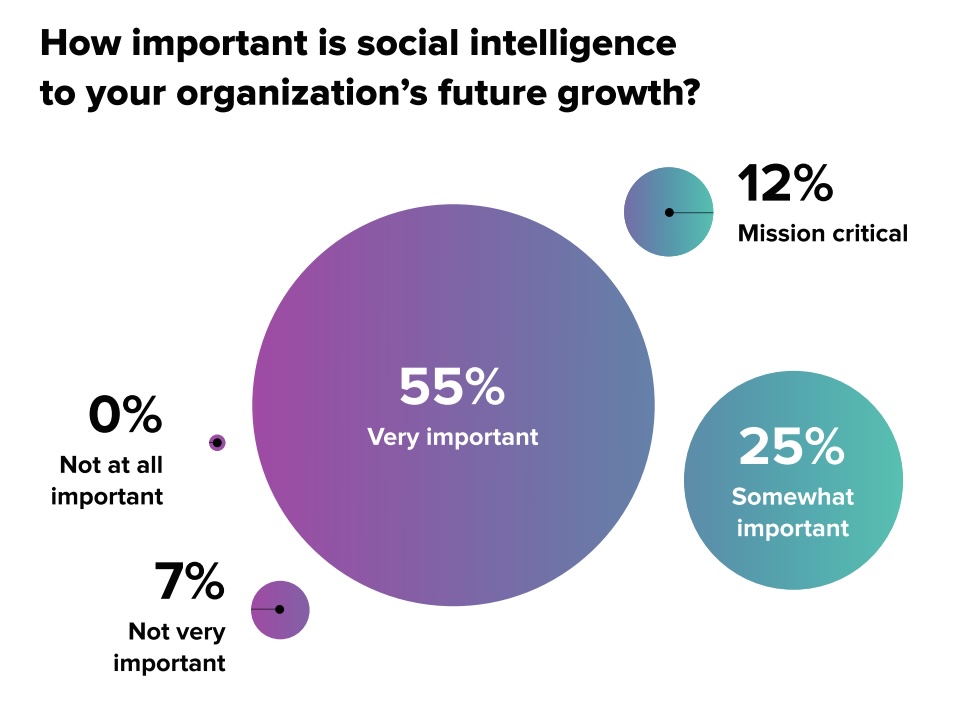
While most marketers acknowledge the importance of social data, there is a massive gap in operationalizing that information. The 2026 Social Intelligence Report highlights that 67% of marketers view social intelligence as "mission-critical" for long-term success. Yet, only 15% of marketers look at real-time social intelligence dashboards, and a mere 18% review these insights on a quarterly basis.
This represents a missed opportunity. When a customer complaint on social media leads to a product fix, the business value is immediate and measurable—yet this insight rarely makes it out of the marketing department. Organizations that fail to share these insights across cross-functional teams (like product, R&D, and customer experience) are essentially flying blind in a volatile market.
The Structural Barriers to Success
Why does this data gap persist? The obstacles are deeply embedded in modern corporate infrastructure.
1. The Technology Chasm
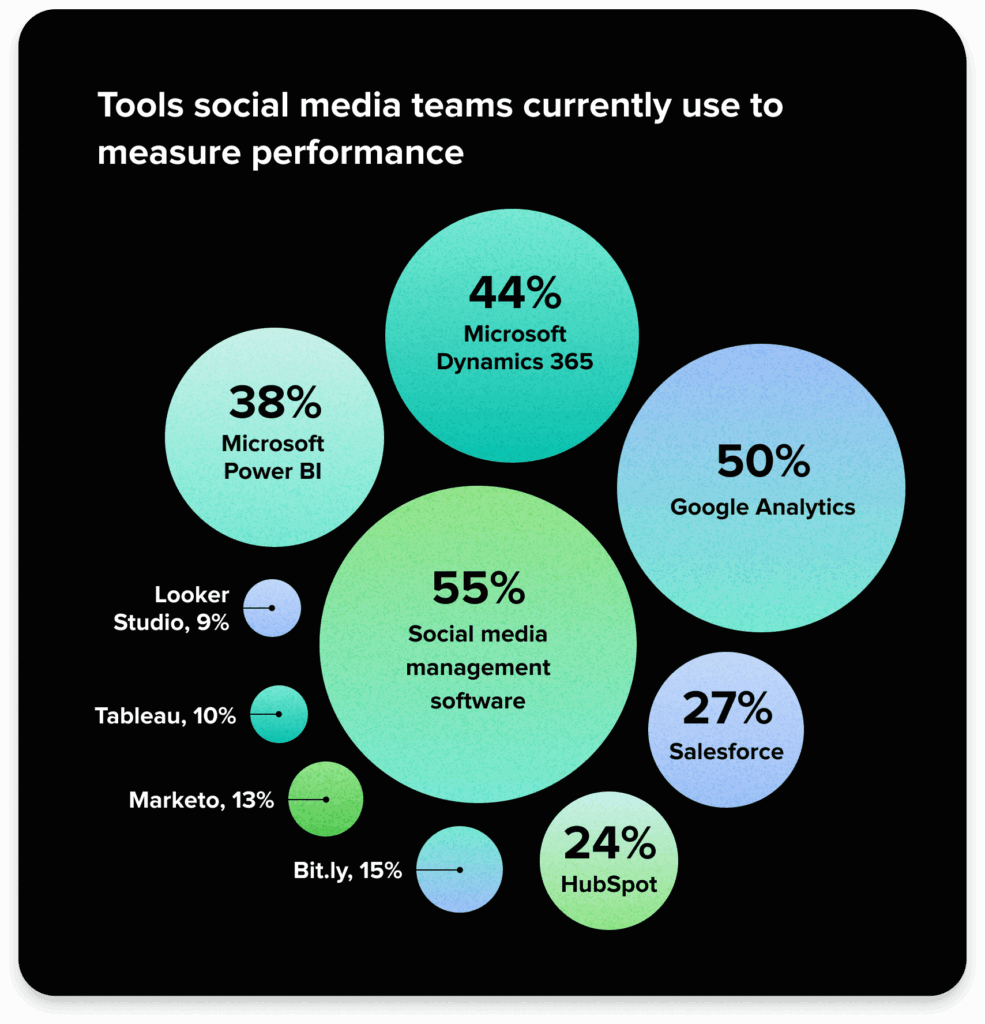
The most cited reason for the failure to measure ROI is the incompatibility between social media management tools and the broader MarTech stack. Over 50% of marketing leaders report that their social tools do not "talk" to their CRM systems. This lack of integration forces teams to manually reconcile data, creating delays and inaccuracies that make it nearly impossible to trace a customer journey from a social post to a final purchase.
2. Outdated Philosophies
The "social as a communications channel" mindset is the largest barrier to strategic growth. When leadership views social merely as a place to post press releases or product updates, they fail to leverage it as a research and development tool. "I’m always trying to cram our social successes into frameworks that have existed in SaaS for a long time," says Vicente. "It feels like trying to push a square peg into a round hole."
3. The "More is Better" Fallacy
A dangerous myth persists in the C-suite: that increasing volume will automatically increase impact. The 2025 Impact of Social Media Marketing Report found that 71% of Marketing Directors believe teams should increase publishing frequency to drive value. However, most social media managers disagree. They argue that time spent on volume is time taken away from deep-dive analysis and strategic planning.
Implications for Future Strategy: Doing Less with More Intent
The path forward involves a radical shift in how we approach the social function. Instead of chasing vanity metrics or infinite publishing volume, organizations must embrace three key pillars of maturity:

Pillar I: The Beta Test Framework
Rather than committing to massive, unproven programs, teams should utilize a "beta test" mindset. Vicente’s experience with employee advocacy is a perfect example. By testing content on personal LinkedIn profiles versus the brand page, she proved a hypothesis that personal accounts drove higher engagement. That data-backed experiment paved the way for a company-wide program that generated over 1 million impressions in a single quarter.
Pillar II: Data Storytelling
Social media professionals have spent years honing their ability to tell stories for their audiences; they must now pivot that skill inward. "Outside of marketing, I’m guilty of downplaying social’s importance because I want to make it seem fun," Vicente admits. "We need to leverage our storytelling capabilities to explain our impact to colleagues in finance, product, and leadership in terms they care about."
Pillar III: Cross-Functional Democratization
Social intelligence must be democratized. If the R&D team doesn’t know what users are complaining about on X (formerly Twitter), or if the sales team isn’t using insights gathered from LinkedIn conversations, the organization is failing to leverage its most valuable asset. The goal is to move from "marketing-only" usage of social data to a model where every department views social as a primary source of customer truth.
Conclusion: The New Definition of ROI
Defining the business value of social media is no longer about finding a single, static equation. It is about building a flexible framework that reflects the nuance of the current market.
True ROI in the modern era is found in the ability to adapt. It is found in the integration of social data into the CRM; it is found in the courage to perform small experiments; and it is found in the ability of social teams to act as the "eyes and ears" of the entire organization. By moving away from outdated, linear models and toward a fluid, intelligence-driven strategy, companies can finally unlock the full potential of their social presence, turning ephemeral likes and comments into long-term competitive advantage.
Frequently Asked Questions (FAQs)
Q: How does social media actually drive revenue?
A: It drives revenue by shortening the path to acquisition through social commerce, increasing lifetime value through community-led loyalty, and—most importantly—providing real-time intelligence that informs product development. By identifying what customers love or hate before they even reach a support ticket, businesses can make agile changes that protect their bottom line.
Q: If there is no formula, how do I report social ROI to my CEO?
A: Focus on "Outcome-Based Reporting." Move away from metrics like "impressions" and toward metrics that matter to the business, such as "Cost per Lead (CPL) via social," "Customer feedback sentiment score," or "Impact of social-driven R&D changes." Tie your social projects to specific company KPIs for the quarter.
Q: What is the most effective way to start fixing my social measurement?
A: Start with your tech stack. Conduct an audit to see if your social management platform shares data with your CRM. If it doesn’t, that is your first priority. Second, launch one small "social intelligence experiment" to prove the value of the data you already have to a non-marketing department. Success in one department often leads to the executive support needed to scale your efforts.