Rifan Muazin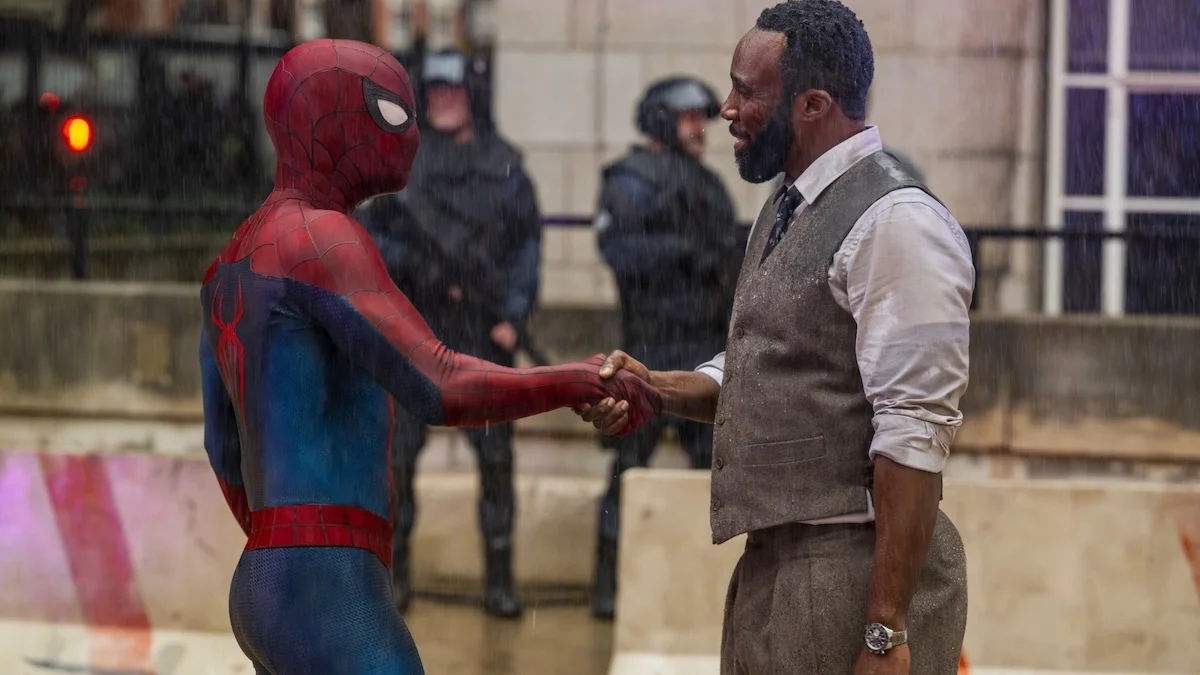
By Editorial Staff
June 18, 2026
The Marvel Cinematic Universe (MCU) is no stranger to fan speculation, but the latest trailer for Spider-Man: Brand New Day has ignited a level of fervor not seen since the multiversal crossover of No Way Home. With the July 31, 2026, release date fast approaching, the footage has provided the clearest indication yet that the X-Men—or at least their foundational members—are poised to make their long-awaited debut in the main MCU timeline. Central to this speculation is the mysterious appearance of Sadie Sink, whose character’s power set and aesthetic have led many to conclude that the telepathic powerhouse Jean Grey is finally joining the fray.
The State of Peter Parker: A Hero in Isolation
To understand the stakes of Brand New Day, one must first look at the precarious position of its protagonist. Following the cataclysmic events of Spider-Man: No Way Home, Peter Parker (Tom Holland) exists in a state of profound metaphysical and social exile. With his identity purged from the collective memory of humanity, Peter has lost the vital support systems of Aunt May, Ned Leeds, and MJ.
The trailer highlights a Peter who is physically and mentally strained, hinting at a biological "mutation" occurring within him—a narrative thread that dovetails with comic book arcs such as The Other. Alongside this internal struggle, Peter faces a gauntlet of external threats, including the return of Mac Gargan, better known as the Scorpion, played by Michael Mando. The trailer confirms Mando’s return, now fully realized in his iconic, armored mantle. Compounding the chaos, the Wall-Crawler is seen battling Hand ninjas, suggesting that the film will delve into the darker, more mystical underbelly of the Marvel Universe.
Chronology of the Mutation: From Comics to Cinema
The introduction of mutant-adjacent themes in Brand New Day follows a calculated, decade-long expansion of the MCU. For years, Disney’s acquisition of 20th Century Fox’s assets left fans wondering how Marvel Studios would integrate the X-Men without disrupting the established continuity.
If the character played by Sadie Sink is indeed Jean Grey, her appearance represents a significant divergence from the 1963 debut in Uncanny X-Men #1. In those original Stan Lee and Jack Kirby issues, Jean’s abilities were strictly telekinetic. It wasn’t until 1968’s X-Men #43 that her telepathic nature was fully codified. Later retcons, notably those by Chris Claremont, suggested that Charles Xavier had suppressed her telepathic potential to protect her from the trauma of her own power.
The Brand New Day trailer shows Sink’s character performing feats that mirror both eras of Jean’s development: telekinetic vehicle manipulation and a more aggressive form of mind-control that resembles body-hopping. This hybrid power set suggests that the MCU may be bypassing the slow-burn evolution of the character in favor of a version already grappling with immense, volatile psionic energy.
Supporting Evidence: The "Metzger" Connection
The most compelling piece of evidence regarding the film’s X-Men integration lies in a subtle, blink-and-you-miss-it detail. Subtitles in the trailer identify the organization tracking Sink’s character as being under the command of a man named "Metzger," played by Severance actor Tramell Tillman.
In Marvel lore, William Metzger was an anti-mutant activist introduced in 1999’s X-Men: Children of the Atom #1. A political figure whose career was built on the marginalization of mutants, Metzger’s inclusion is unlikely to be a mere "Easter egg." If the film features an anti-mutant politician, it confirms that the socio-political framework of the X-Men—the struggle for mutant rights—is being established as a primary pillar of this new phase of the MCU.
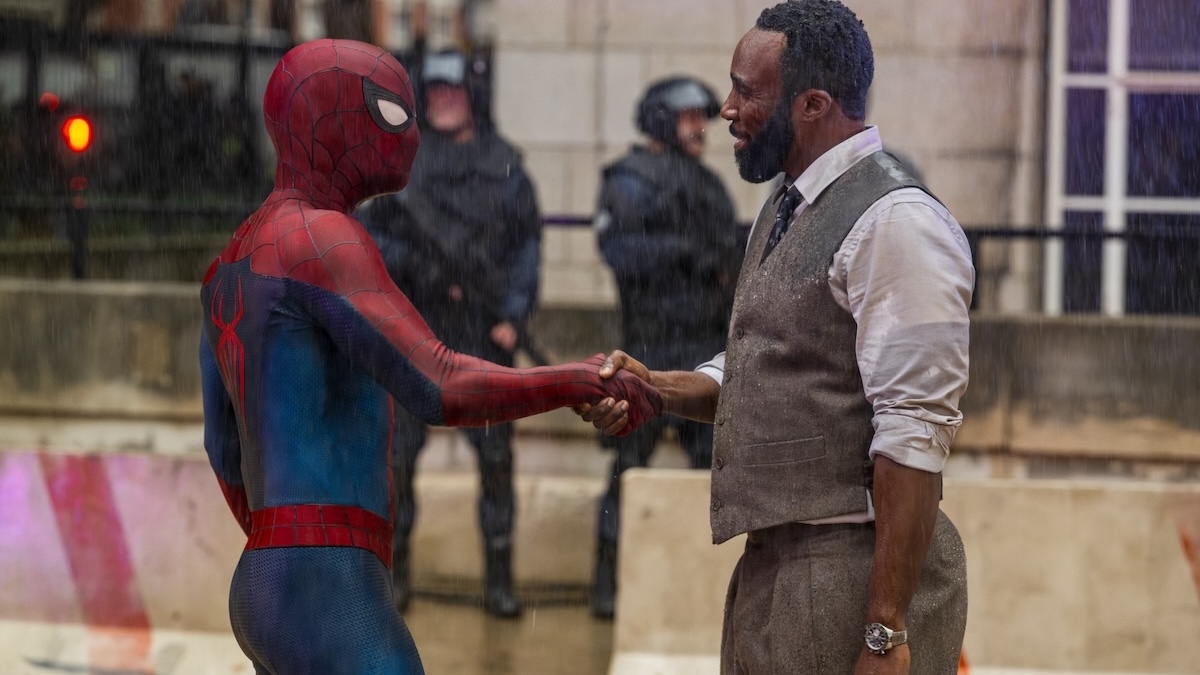
Furthermore, the involvement of the Department of Damage Control (DODC) provides a clear narrative conflict. Having previously antagonized Ms. Marvel and Spider-Man, the DODC’s pursuit of Sink’s character suggests she is being viewed through the lens of a "threat" to public safety. Conversely, the trailer depicts Frank Castle (The Punisher) acting in her defense. Castle, a character governed by a rigid, if brutal, moral code, would only align himself with a target if he perceived them as innocent or unjustly persecuted. This alignment serves as a strong indicator that Sink’s character is not a villain, but a misunderstood figure in need of sanctuary.
Alternative Theories: Is it the Spider-Queen?
Despite the overwhelming visual cues pointing to Jean Grey—specifically the red hair, the green-and-yellow color scheme, and the telepathic prowess—some skeptics argue that Marvel Studios is playing a game of misdirection.
Two other candidates from the The Other comic arc have been proposed: the Spider-Queen and Shathra. The Spider-Queen, a villain who commands a drone-like army, fits the "technological threat" mold often seen in Spider-Man films. Shathra, an inter-dimensional entity that preys on those with spider-powers, would also align with the film’s mystical and body-horror elements. However, neither character holds the cultural weight or the specific X-Men narrative scaffolding provided by the "Metzger" character and the themes of mutant discrimination.
The Implications for the MCU
The integration of mutants into the Spider-Man franchise is a strategic masterstroke. By utilizing a Spider-Man film as a gateway for the X-Men, Marvel Studios effectively bridges the gap between the grounded, street-level heroics of Peter Parker and the cosmic, evolutionary scale of the mutants.
1. The Death of the "Secret Identity"
The film’s focus on the loss of Peter’s identity mirrors the struggle of mutants who are forced to hide their gifts. This thematic resonance suggests that the MCU is preparing for a world where "super-powered" individuals are no longer a novelty, but a polarizing political issue.
2. A New World Order for Heroes
If the X-Men are to be introduced, they must coexist with the remnants of the Avengers. The presence of a government organization like the DODC actively hunting gifted individuals implies that the post-Endgame world has become significantly less hospitable to superheroes.
3. The Xavier Factor
If Sadie Sink’s character is indeed Jean Grey, the question remains: where is Professor Charles Xavier? If she is already operating outside of a formal school, it implies that the X-Men are currently fractured, or that Xavier is operating from the shadows. The "jerk" interpretation of Xavier—a man who manipulates his students for their own "protection"—is a popular modern reading of the character that would fit perfectly into the cynical, high-stakes tone of the current MCU.
Final Verdict
As we approach the release of Spider-Man: Brand New Day, the evidence points toward a seismic shift in the Marvel landscape. The combination of telepathic power, the inclusion of anti-mutant political figures, and the support of a character as uncompromising as the Punisher creates a narrative arc that is impossible to ignore. Whether or not Sadie Sink is explicitly named "Jean Grey" in the final cut, the Brand New Day trailer has confirmed that the age of the mutants has officially begun.
Fans should prepare for a film that does more than just tell a Spider-Man story; it appears to be the foundation upon which the next decade of the Marvel Cinematic Universe will be built.
Spider-Man: Brand New Day hits theaters nationwide on July 31, 2026. Stay tuned to Den of Geek for further analysis as more information becomes available.


 Nana Muazin
 Nana
Nana