Lina Hope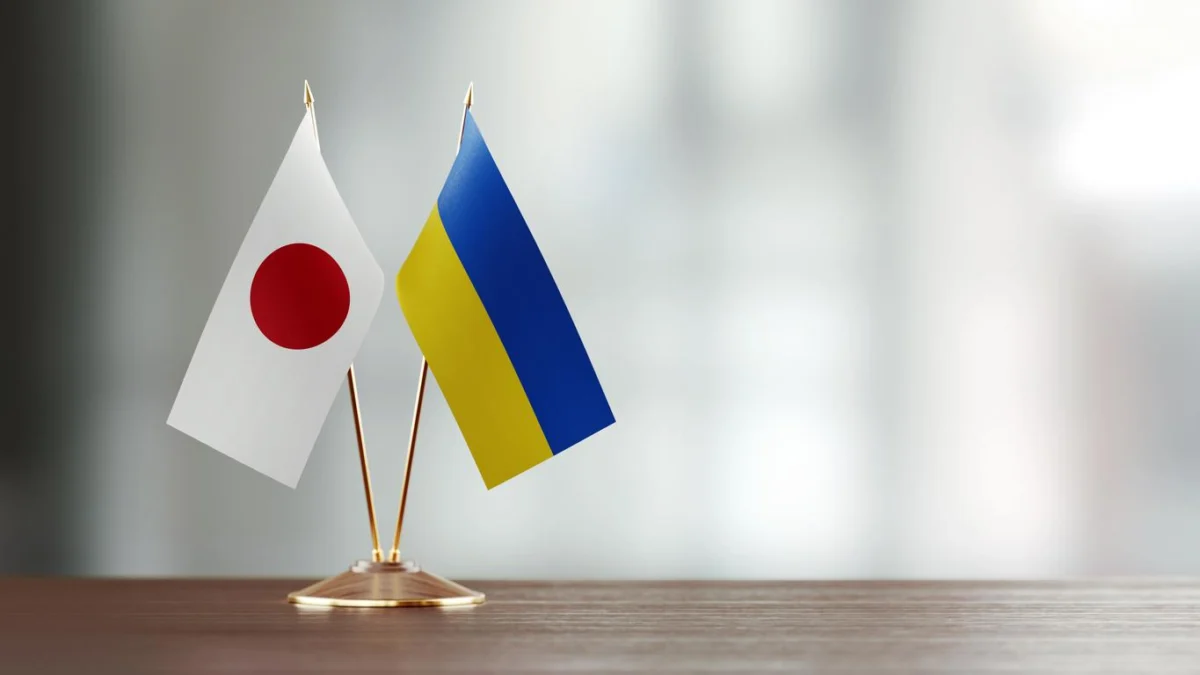
KYIV — In a significant diplomatic maneuver signaling Tokyo’s enduring commitment to the sovereignty and long-term stability of Ukraine, senior Japanese government officials arrived in Kyiv this week to formalize a robust framework for private-sector cooperation. The mission, led by representatives from the Ministry of Foreign Affairs and the Ministry of Economy, Trade and Industry (METI), marks a pivotal shift from emergency humanitarian aid toward structured, sustainable industrial reconstruction.
This high-level visit—the first of its kind under the administration of Prime Minister Sanae Takaichi—underscores Japan’s role as a cornerstone of the international coalition supporting Ukraine against the ongoing Russian invasion. By signing a formal action plan, both nations have laid the groundwork for Japanese corporate investment in the sectors that will define Ukraine’s future: energy infrastructure, technological manufacturing, and agricultural modernization.
The Core Agreement: Fostering Private-Sector Synergy
The primary objective of the Tuesday summit was the ratification of an "Action Plan for the Promotion of Private-Sector Cooperation." This document serves as a roadmap for Japanese firms seeking to navigate the risks and opportunities of the Ukrainian market.
For Tokyo, the involvement of the private sector is not merely an economic decision but a strategic necessity. By integrating Japanese technology and capital into the Ukrainian economy, Tokyo aims to provide the foundational support required to transform Ukraine from a war-ravaged territory into a resilient European industrial hub.
The discussions were held between Ayano Kunimitsu, Senior Vice Foreign Minister, and Kenji Yamada, Senior Vice Minister of Economy, Trade and Industry, and their Ukrainian counterparts, including Deputy Prime Minister Taras Kachka, Foreign Minister Andrii Sybiha, and Economy Minister Oleksii Sobolev.
The agreement focuses on three key pillars:
- Energy Infrastructure: Leveraging Japanese expertise in power grid stability and renewable energy to repair and harden Ukraine’s damaged electrical infrastructure.
- Technological Transfer: Establishing joint ventures in robotics, digital governance, and cyber-security.
- Agricultural Resiliency: Providing Japanese advanced agricultural machinery and soil-treatment technologies to ensure Ukraine remains the "breadbasket of the world" despite land contamination issues caused by the conflict.
Chronology of Diplomatic Engagement: A Timeline of Support
The relationship between Tokyo and Kyiv has evolved rapidly since the full-scale invasion of Ukraine in February 2022. Understanding this progression is essential to grasping the significance of the current mission.
- February 2022: Japan aligns with G7 partners to impose unprecedented sanctions on the Russian Federation, marking a departure from its historical diplomatic caution.
- March 2023: Prime Minister Fumio Kishida makes a surprise visit to Kyiv, cementing the bilateral security and economic partnership.
- November 2024: Then-Foreign Minister Takeshi Iwaya travels to Ukraine, reinforcing the continuity of Japanese policy amidst regional instability.
- January 2025 (Current): The administration of Prime Minister Sanae Takaichi dispatches the first mission of political appointees to Kyiv, signaling that despite changes in the Japanese cabinet, the policy of supporting Ukraine is not only static but accelerating.
This trajectory illustrates a deliberate move from symbolic political support to deep, granular economic integration. The current visit acts as the bridge between high-level political pledges and ground-level project implementation.
Supporting Data: Japan’s Economic Footprint in the Conflict Zone
While Japan’s contributions have traditionally been framed as humanitarian, the shift toward "industrial reconstruction" is backed by significant fiscal planning. Since 2022, Japan has committed over $12 billion in total assistance to Ukraine, covering budgetary support, emergency power supply equipment, and the clearing of landmines.
However, the new action plan aims to unlock private capital that dwarfs government grants. Japan’s Trade Insurance (NEXI) is expected to play a critical role, providing guarantees to Japanese companies willing to operate in Ukraine. This reduces the "country risk" for Japanese manufacturers, allowing them to invest in production facilities that are vital for the reconstruction of the housing sector and heavy machinery.
Furthermore, Japan’s expertise in "Build Back Better" strategies—honed through decades of disaster management and post-earthquake recovery—is being actively transferred to Ukrainian urban planners. This methodology ensures that as Ukraine reconstructs, it does so with energy-efficient, earthquake-resistant, and technologically advanced infrastructure, effectively "leapfrogging" the development cycle of the last thirty years.
Official Responses: Aligning Interests in the Face of Adversity
The rhetoric emanating from the Kyiv meetings was marked by a blend of gratitude and forward-looking pragmatism.
Deputy Prime Minister Taras Kachka emphasized the strategic necessity of this partnership, noting that Ukraine is looking for partners who provide more than just capital. "We are seeking a partnership of quality and innovation," Kachka stated during the portion of the talks open to the media. "Japan represents the pinnacle of industrial reliability. By integrating Japanese firms into our recovery, we are building a foundation that is not just restored, but modernized for the 21st century."
On the Japanese side, Senior Vice Foreign Minister Ayano Kunimitsu was firm in her messaging. Beyond the economic agenda, she reiterated Japan’s unwavering commitment to the international rules-based order. "Japan remains steadfast in its commitment to maintaining rigorous sanctions on the Russian Federation," Kunimitsu remarked. "The economic reconstruction of Ukraine is inseparable from the restoration of international law. We will continue to isolate those who seek to redraw borders by force."
This reaffirmation of sanctions is particularly notable. By linking economic reconstruction to the maintenance of the sanctions regime, Japan is sending a clear signal to the Kremlin that the international community is prepared for a long-term economic decoupling.
Strategic Implications: Why This Matters
The implications of this visit extend far beyond the bilateral relationship. For the international community, Japan’s increased involvement in Ukraine serves three primary purposes:
1. The G7 Anchor
Japan, as a key member of the G7 and the only Asian member of that body, serves as the vital link between Western support and Indo-Pacific security. By demonstrating that Japan is willing to invest heavily in the European theater, Tokyo is highlighting the interconnectedness of security in the Atlantic and the Pacific.
2. Economic Diversification
For Ukraine, the partnership with Japan provides a vital alternative to heavy reliance on European and American markets. Japanese investment brings in different supply chain management practices and technological standards, which will help Ukraine align more closely with global markets.
3. A Model for "Private-Sector Reconstruction"
Most post-war reconstruction efforts rely heavily on state-to-state loans or international aid. By creating a framework that incentivizes private sector involvement, Japan and Ukraine are creating a model that could be applied to other conflict-affected zones. The goal is to move Ukraine from a "recipient of aid" to an "attractive destination for investment" as quickly as possible.
Challenges Ahead: Navigating the Security Landscape
Despite the optimism surrounding the action plan, the challenges remain immense. The security situation in Ukraine remains volatile, and the risk of further infrastructure destruction by Russian missile and drone strikes presents a daunting obstacle for any private company.
Insurance remains the "missing link." Japanese firms have expressed concern over the viability of long-term investments without comprehensive war-risk insurance. The action plan addresses this by proposing a collaborative mechanism between the Japanese government, the World Bank’s Multilateral Investment Guarantee Agency (MIGA), and the Ukrainian government to provide a "security umbrella" for capital expenditure.
Additionally, the transition to a post-war economy requires significant legislative reform within Ukraine to combat corruption and ensure transparency. The Japanese delegation emphasized that their private sector requires a "predictable legal environment," a point the Ukrainian officials acknowledged as a primary goal for their ongoing reform agenda.
Conclusion: The Path Forward
The visit by Kunimitsu and Yamada to Kyiv represents a maturing of the Japan-Ukraine relationship. It is no longer just about sympathy for a nation under attack; it is about a calculated, long-term strategic alignment.
As the war enters a new phase, the ability of Ukraine to maintain its industrial capacity will determine its long-term viability. By committing its technological and industrial might to this effort, Japan is making a clear declaration: the reconstruction of Ukraine is a global priority that demands not just the generosity of nations, but the ingenuity of their industries.
As the delegations departed Kyiv, the consensus was clear—the action plan is not merely a document, but a commitment to a shared future. In the face of aggression, Japan and Ukraine are proving that the strongest response is to build, to innovate, and to secure the economic future of a free, democratic, and prosperous Ukraine.


 Neng Nana
 Asro
Asro