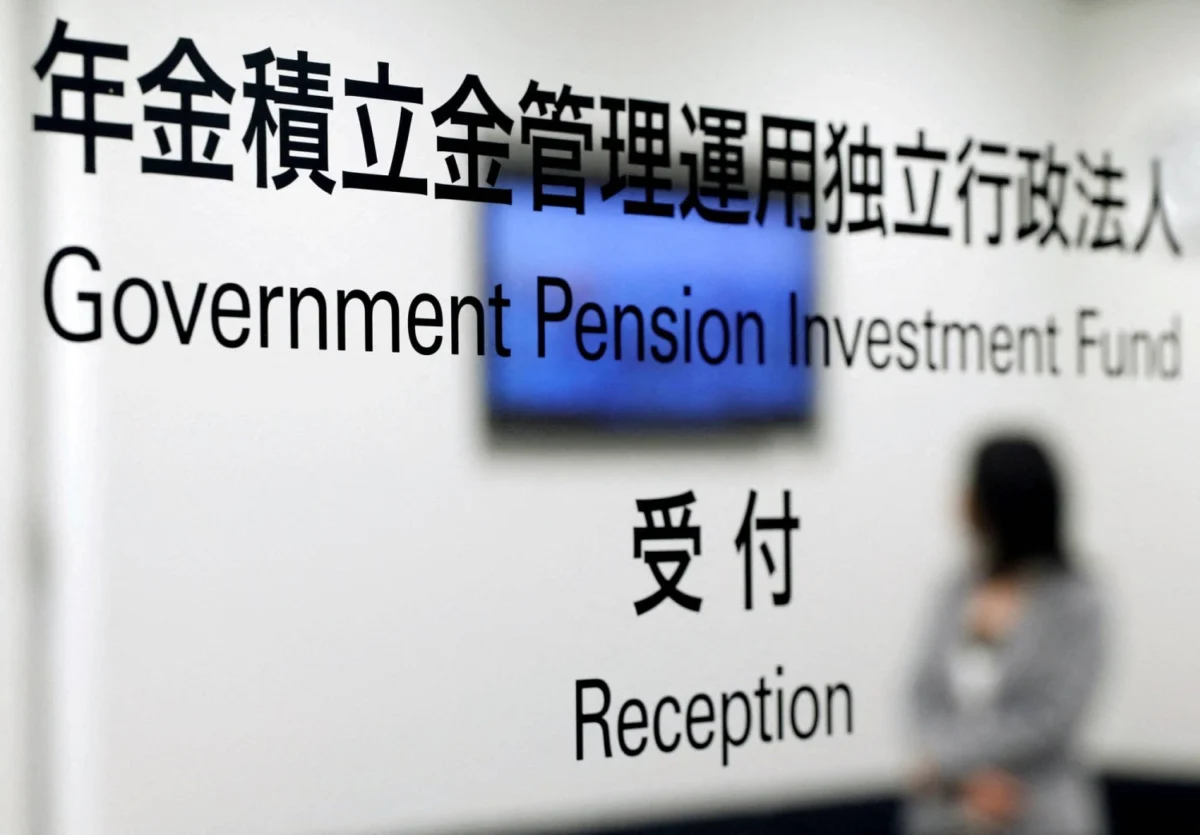
TOKYO/HONG KONG — In a move that has sent tremors through the global financial services industry, the Japanese government has signaled a fundamental shift in its investment philosophy. Finance Minister Satsuki Katayama announced on Friday that the administration intends to steer the nation’s colossal state pension funds—specifically the Government Pension Investment Fund (GPIF)—toward a “substantial” increase in domestic asset allocation.
This policy pivot, aimed at revitalizing the Japanese economy and strengthening local capital markets, threatens to upend the business models of international asset managers who have long relied on the management fees generated by Japan’s massive offshore exposure.
The Core Mandate: Reshoring Capital
The Government Pension Investment Fund (GPIF) currently holds approximately $1.8 trillion in assets, making it the largest pension fund on the planet. For years, the fund has pursued a strategy of aggressive international diversification to hedge against Japan’s domestic demographic decline and low-growth environment.
However, Finance Minister Katayama’s recent remarks indicate that the government is reconsidering this strategy. By prioritizing domestic investments, Tokyo aims to stimulate local corporate growth, provide a tailwind for the Tokyo Stock Exchange, and ensure that the wealth generated by the Japanese public is more directly linked to the nation’s industrial and technological future.
Chronology of the Shift
The transition toward this new policy has not happened in a vacuum; it is the culmination of several years of internal deliberation and economic signaling within the Japanese cabinet.
- 2023–2024: Mounting concerns regarding the yen’s volatility and the necessity of "Abenomics" style structural reforms prompted the Ministry of Finance to review the GPIF’s asset allocation model.
- Early 2025: Internal committees began evaluating the risk-adjusted returns of foreign-denominated assets versus domestic equities, noting that the cost of hedging against currency fluctuations had eroded the net gains for the pension fund.
- July 2026 (The Announcement): Finance Minister Satsuki Katayama officially confirmed the government’s intent to "substantially" increase domestic holdings, marking a clear departure from the fund’s previous international-heavy mandate.
- Post-Announcement (Late 2026): Global markets reacted with volatility, as analysts began calculating the potential multi-billion-dollar outflow from foreign indices and into Japanese assets.
Supporting Data: The Scale of the Disruption
The sheer magnitude of the GPIF’s reach means that even a minor percentage shift in asset allocation will have a seismic impact on global liquidity.
The Offshore Exposure
Currently, the GPIF holds roughly $930 billion in offshore exposure. This portfolio is largely managed by a roster of prestigious international financial institutions, including State Street, Legal & General, BlackRock, and Vanguard. These firms have earned tens of millions of dollars in management fees annually by overseeing these vast sums.
The Domestic Gap
To increase domestic investment, the GPIF would likely look to increase its stake in the Nikkei 225 and TOPIX indices. Financial analysts estimate that a shift of just 5% of the total portfolio toward domestic assets would represent an inflow of roughly $90 billion into the Japanese market. This would effectively act as a massive, government-led stimulus package, potentially driving corporate valuations to record highs.
Fee Structures and Revenue Hits
For global asset managers, the news is grim. Many of these firms operate on thin margins for institutional mandates. If a significant portion of the $930 billion is repatriated, these firms stand to lose not just the principal investment, but the recurring, high-margin management fees that have supported their global operations for decades.
Official Responses and Stakeholder Sentiment
The announcement has triggered a wave of responses from both political leaders and financial titans.

Government Stance
Minister Katayama emphasized that the decision is rooted in "national interest." In a follow-up statement, a representative from the Ministry of Finance noted that the state pension fund should not merely be a profit-maximizing entity, but a "strategic engine" for the Japanese economy. The government argues that by anchoring more capital within Japan, the country can foster greater innovation and provide a more stable retirement foundation for its aging population.
The View from Global Managers
While major firms have remained publicly cautious, private sentiment is reportedly one of alarm. Sources within the asset management industry indicate that firms like State Street and Legal & General are already engaging in high-level talks with Japanese regulators. Their objective is to negotiate a "phased transition" to prevent market shocks and to determine whether there are ways to retain some of the management mandates through domestic subsidiaries.
Institutional Investors
Domestic institutional investors in Japan have largely welcomed the news. Many have long argued that the GPIF’s heavy reliance on foreign assets was a missed opportunity to support domestic recovery. "The capital has been flowing outward for too long," said a Tokyo-based portfolio manager. "Bringing this money home provides a necessary floor for our markets."
Implications: A New Era for Global Finance
1. The Impact on Currency Markets
A significant repatriation of funds into Japanese Yen could lead to substantial upward pressure on the currency. While this is beneficial for Japanese consumers facing high import costs, it poses a challenge for Japan’s export-oriented manufacturing sector, which has benefited from a weaker yen for several years.
2. Market Liquidity and Valuations
If the GPIF becomes a more aggressive buyer of domestic stocks, the resulting surge in demand could inflate valuations. This might create a "bubble" scenario, where stock prices detach from fundamental corporate performance. Regulatory bodies in Japan are already preparing to increase oversight to prevent market manipulation or excessive volatility.
3. The Future of Global Asset Management
The "Japan Pivot" could signal a broader trend of economic nationalism in investment management. Other nations with large sovereign wealth funds may look to Tokyo’s model as a blueprint for keeping capital at home. If this trend gains momentum, global asset managers may find themselves facing a more fragmented and protectionist landscape, forcing them to pivot their own strategies toward local, rather than global, service models.
4. Risk and Diversification Concerns
Critics of the government’s plan, including some prominent economists, have warned that moving away from global diversification exposes the pension fund to greater "home bias" risk. If the Japanese economy faces a sudden downturn, the pension fund would no longer have the benefit of uncorrelated foreign assets to buffer the losses. The success of this policy will depend heavily on the government’s ability to ensure that the domestic market can absorb these funds without sacrificing the fund’s long-term solvency.
Conclusion: The Road Ahead
As Japan moves forward with this strategic redirection, the world will be watching closely. The move represents a bold attempt by a major economy to reclaim control over its capital in an era of global uncertainty. For the asset managers who have thrived on the globalization of Japanese capital, the landscape has fundamentally changed. The coming months will be defined by negotiations, market recalibrations, and a tense waiting game to see if Tokyo’s bet on itself will pay off in the long run.
For the average Japanese citizen, the policy is presented as a promise of security and growth. For the global financial markets, it is a reminder that even in an interconnected world, national priorities can still exert a gravitational pull that is impossible to ignore.