

Learning a new language is rarely a linear path; it is a cumulative journey of understanding how nuance, structure, and context coalesce to form meaning. For students of the Japanese language, the challenge often lies in moving beyond rote memorization of vocabulary and into the realm of grammatical application. A new educational resource, the Biographies of Great Japanese Figures digital bundle, aims to bridge this gap by anchoring complex linguistic concepts within the compelling historical narratives of Japan’s most influential individuals.
The Intersection of Biography and Linguistics
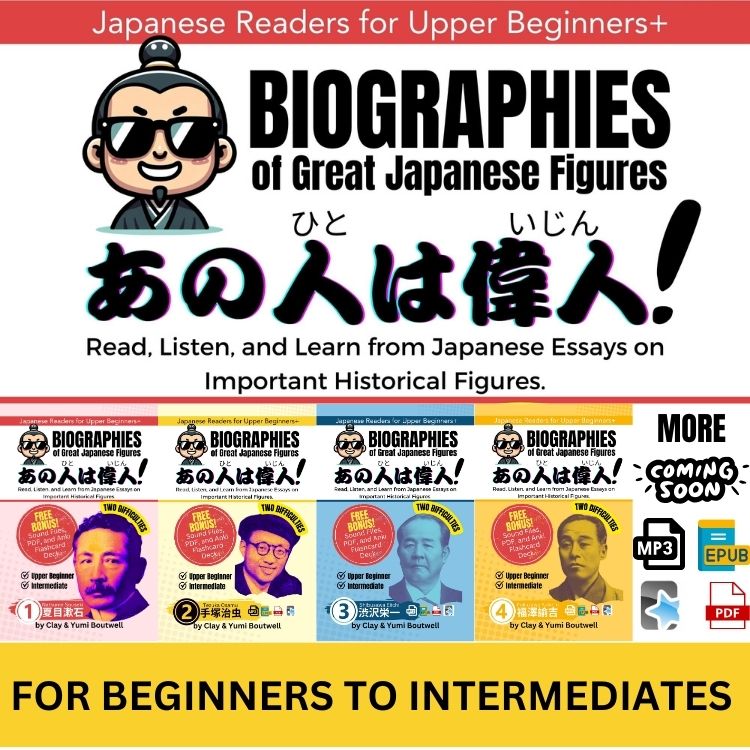
The Biographies of Great Japanese Figures series is not merely a collection of history lessons; it is a meticulously crafted pedagogical tool. By focusing on the lives of luminaries like Osamu Tezuka—the visionary often referred to as the "Godfather of Manga"—the series provides a dual-tiered reading experience. Each biography is presented in two distinct versions: one tailored for beginners (utilizing JLPT N5 and N4 grammar) and a second version composed in natural, nuanced Japanese for intermediate learners.
This approach is rooted in the "scaffolded learning" theory. By engaging with a simple narrative first, students build the necessary cognitive confidence to tackle the intermediate version. The developers emphasize that beginners who rigorously study the accompanying vocabulary lists and grammatical breakdowns will find themselves naturally prepared to transition toward more advanced comprehension.
Chronology of Learning: Building Linguistic Foundations
The pedagogical structure of these materials follows a logical progression designed to build proficiency over time. The curriculum is divided into specific grammatical focuses, ensuring that learners are not overwhelmed by disparate rules. Instead, they are presented with "Grammar Lessons" that are extracted directly from the text of the biographies, allowing for immediate contextual reinforcement.
Core Grammatical Structures Explored
One of the central features of this educational bundle is its granular breakdown of essential Japanese particles and verb conjugations.
1. Expressing Evolution: The 〜ようになる Construction
The series highlights the construction Verb [plain form] + ようになる. This structure is fundamental for expressing change over time, typically resulting from persistent effort, practice, or adaptation. It translates to "to become able to" or "to come to be in a state where one can." By seeing this used in the context of a historical figure’s career development, learners can better grasp how the language frames personal growth and the mastery of skills.

2. Defining the Subject: The が Particle
Perhaps no element of Japanese grammar is as frequently misunderstood by English speakers as the particle が. The Biographies series provides a clear, concise guide to its function as a subject marker. While English speakers often conflate the "topic" with the "subject," this resource clarifies that が identifies the specific agent performing an action or the entity in a specific state. Through example sentences—such as those describing a character’s preferences—students learn to isolate the subject within a clause, a critical skill for parsing complex, compound sentences.
3. Continuity: The -masu Stem + 続ける
For learners looking to describe ongoing actions, the series offers a breakdown of the compound verb 〜続ける (to continue). By utilizing the -masu stem of a verb (such as "to work" or "to study") and appending 続ける, students can articulate the concept of persistence. This is particularly relevant when reading about the lifelong dedication of figures like Tezuka, whose creative output spanned decades.
4. Defining Means: The で Particle
The series also demystifies the particle で, which is used to indicate the means or method by which an action is performed. By analyzing sentences that describe how media was broadcast "on television" (テレビで), students learn to identify the instrument or location that facilitates an action.
Supporting Data: Why Contextual Learning Works
Linguistic research has long suggested that "incidental vocabulary acquisition"—learning words and grammar while reading for interest—is significantly more effective than isolated study. The Biographies of Great Japanese Figures bundle leverages this by providing:
- Comprehensive Vocabulary Lists: Before each essay, learners are provided with the lexical tools necessary to understand the text, removing the friction of constant dictionary searching.
- Detailed Grammatical Breakdowns: These segments act as a map for the student, explaining not just what a sentence says, but why it is structured that way.
- The Dual-Level Strategy: By providing two versions of the same biography, the material accounts for the "Zone of Proximal Development," ensuring the material is challenging enough to promote growth but accessible enough to prevent frustration.
Expert and Educator Perspectives
Educational linguists have praised the inclusion of cultural context in language learning materials. According to experts in the field of Second Language Acquisition (SLA), cultural literacy is inseparable from linguistic competence. When a student learns the grammar of "persistence" while reading about a historical figure who displayed that exact trait, the neural connections formed are stronger.
The Biographies series effectively turns the study of grammar into a biographical experience. By humanizing the subjects, the text invites students to read because they want to learn about the history, which in turn facilitates the acquisition of the language.
Implications for Future Study
The success of this pedagogical approach suggests a shift in how educational resources for Japanese are being developed. The move away from dry, repetitive drills toward narrative-based learning is a significant development for self-taught students and classroom settings alike.
For the intermediate learner, the benefit is clear: the ability to engage with native-level texts requires a firm grasp of the nuance that particles like が and で provide. By mastering these within the context of high-quality biographies, students are not just learning to pass the JLPT; they are learning to navigate the depth and beauty of the Japanese language.
Conclusion: A New Standard for Language Acquisition
The Biographies of Great Japanese Figures digital bundle represents a thoughtful integration of history and linguistics. By providing a structured, scaffolded, and context-rich environment, it empowers learners to move beyond the basics and into a deeper understanding of how Japanese is truly used.
For anyone serious about mastering Japanese, the path forward is clear: immerse yourself in the language, engage with the culture, and utilize resources that treat grammar not as a set of rules to be memorized, but as a bridge to understanding the lives and legacies of those who shaped Japan. As students continue to work through these volumes, they will find that their ability to read, comprehend, and appreciate the Japanese language grows in tandem with their knowledge of the great figures who defined the nation’s history.
Quick Reference: Grammatical Summary
| Grammar Point | Function | Usage Example |
|---|---|---|
| 〜ようになる | Change over time | Expressing newly acquired skills or habits. |
| が (Particle) | Subject marker | Marking the specific agent of a clause. |
| 〜続ける | Continuous action | Describing persistent or ongoing efforts. |
| で (Particle) | Method/Means | Indicating the tool or medium of an action. |
For those interested in furthering their studies, the "Biographies of Great Japanese Figures" bundle is currently available as a digital download, offering an expansive library of stories designed to facilitate long-term linguistic retention.











