Asro
Asro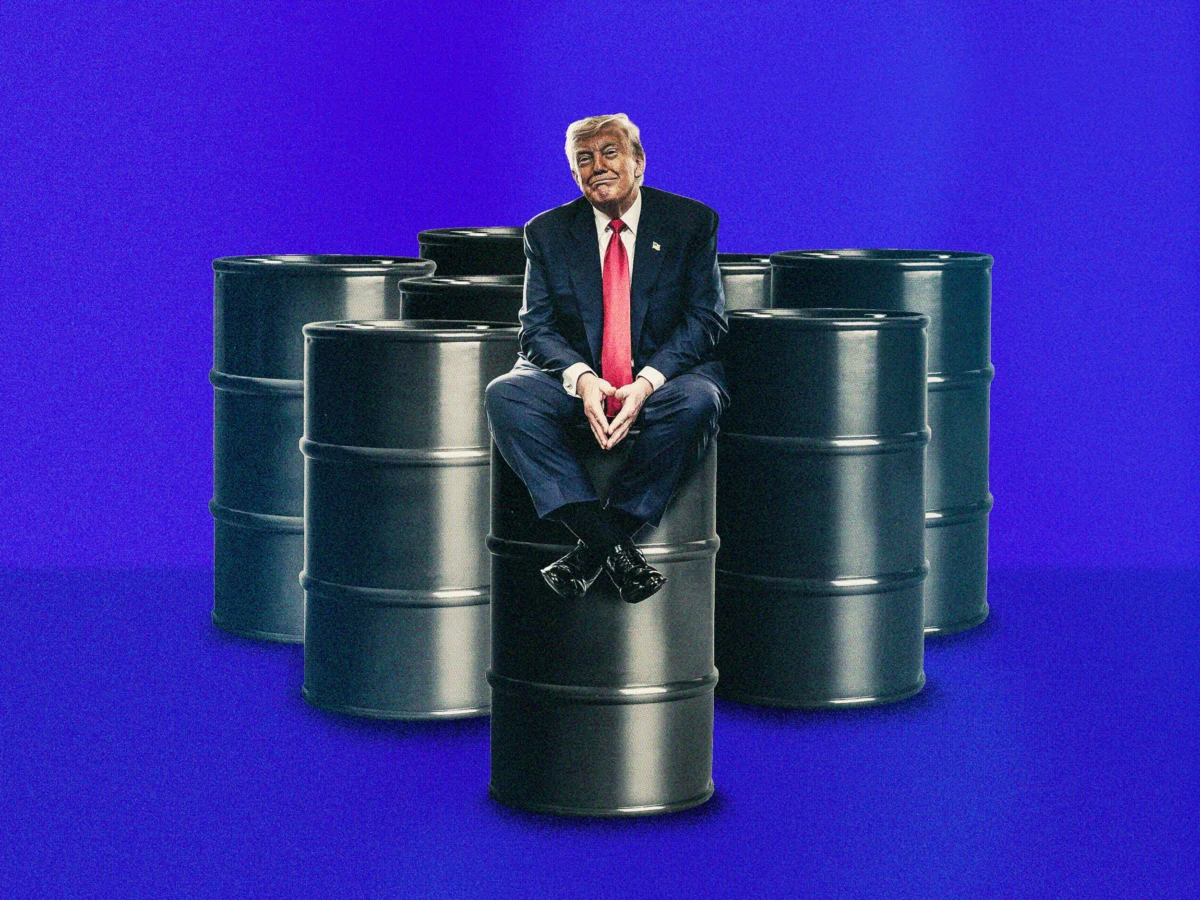
For over three months, the world’s most critical maritime energy chokepoint—the Strait of Hormuz—has been effectively paralyzed. While political rhetoric regarding the movement of oil through this blockade has intensified, the global energy industry finds itself grappling with a far more unsettling reality: nobody, from satellite analysts to government intelligence agencies, can quantify with absolute certainty how much crude is actually reaching the global market.
Last week, President Donald Trump claimed that a clandestine U.S. operation had successfully moved 100 million barrels of oil through the blocked strait. While the administration points to this as a strategic success, the figure has sparked intense debate among industry experts who are struggling to reconcile official claims with the reality of a "dark trade" that has emerged in the shadows of the conflict.
The Architecture of the "Dark Trade"
The difficulty in monitoring energy flows stems from what industry insiders call the "dark trade." As traditional shipping lanes have become restricted, vessels have increasingly adopted covert tactics to bypass scrutiny. This includes running without their Automatic Identification System (AIS) transponders, sailing under the cover of darkness, and hugging the Omani coastline to avoid detection. In some instances, these tankers are reported to be operating under naval escort, creating a murky environment where transparency is the first casualty of war.
"No one has experienced this kind of disruption," says Matt Stanley, head of market engagement at Kpler, a leading commodity intelligence and ship-tracking firm. The cat-and-mouse game between clandestine tankers and intelligence agencies has made it nearly impossible to maintain an accurate ledger of global supply.
However, forensic analysis of crude grades provides some insight. Oil is not a uniform commodity; different grades can only originate from specific geological fields. Analysts have tracked the movement of Upper Zakum crude—which cannot be exported through alternative pipelines—appearing in markets where it shouldn’t logically exist if the blockade were total. These sightings confirm that the blockade is porous, though the scale of these shipments remains a point of intense contention.
Chronology of a Crisis: From Stability to Stasis
The current impasse represents a rupture in the global energy order that began in early 2026. The trajectory of the crisis can be broken down into three distinct phases:
Phase I: The Immediate Shock (Early 2026)
Following the onset of hostilities, the Strait of Hormuz, which historically handled approximately 20 million barrels per day (bpd), saw a rapid decline in traffic. By mid-March, the International Energy Agency (IEA) reported that global oil supply had plummeted by 10.1 million barrels per day, with OPEC+ production suffering a catastrophic 9.4 million bpd reduction.
Phase II: The Adaptation (April – June 2026)
As the blockade tightened, the industry pivoted toward emergency reserves and alternative routes. China, the world’s largest oil importer, significantly drew down its massive strategic reserves, which stood at approximately 1.3 billion barrels. While China’s demand in December 2025 was 12.5 million bpd, this dropped to roughly 7 million bpd by the summer of 2026, showcasing a massive, forced demand-side correction.
Phase III: The Current Stasis (July 2026 – Present)
We are now in a period where "buffer stocks" are being exhausted. Analysts warn that the global market has moved past the initial shock and is now entering a phase of "operationally critical" inventory levels. With major consuming nations having already deployed their stockpiles to dampen price volatility, the margin for error has vanished.
Supporting Data: By the Numbers
The severity of the disruption is reflected in data provided by the World Trade Organization (WTO) and energy watchdogs:
- The Chokepoint Collapse: There has been a 95% reduction in crude oil shipments from Arabian Gulf ports and a 99% reduction in Liquefied Natural Gas (LNG) carrier traffic.
- The Price Paradox: Despite being described by the IEA as the "largest supply disruption in the history of the global oil market," Brent crude has traded at approximately $87.55 per barrel—surprisingly low compared to pre-conflict spikes. This stability is attributed almost entirely to the rapid release of strategic reserves by the U.S., Brazil, and Canada, alongside a drastic, forced reduction in Chinese consumption.
- Production Damage: According to IEA Executive Director Fatih Birol, over 80 energy facilities—including refineries, pipelines, and export terminals—have sustained significant damage.
Official Responses and Expert Consensus
The consensus among energy analysts is that the market’s response has been remarkably robust, but it is reaching its logical limit. Iman Nasseri, managing director for the Middle East at FGE NexantECA, notes that the market successfully cut non-essential demand to survive the initial outage. However, he warns that "we doubt they [the nations holding reserves] will continue to do that."
The political stakes are equally high. The U.S., currently acting as a "swing producer" for the global market, faces a ticking clock. As winter approaches, the U.S. government will be forced to prioritize domestic heating needs over global market stabilization. This potential pivot in U.S. policy is the primary source of anxiety for international markets currently banking on a resolution by mid-August.
The Long Road to Recovery
Even if the Strait of Hormuz were to reopen tomorrow, the damage to energy infrastructure suggests a long, painful recovery. S&P Global CERA estimates that fields shut down for two months require anywhere from 10 weeks to seven months to return to full production capacity.
The physical toll is perhaps the most sobering statistic. With more than 80 major energy facilities compromised, full restoration of the global supply chain is not a matter of weeks, but years. The UAE’s national oil company has issued a grim projection: full, pre-conflict flows through the Strait of Hormuz may not resume until 2027.
Implications: The New Energy Reality
The current situation highlights a dangerous vulnerability in the global economy. The transition from a "just-in-time" supply model to a "just-in-case" model has exposed the lack of redundancy in global energy infrastructure.
- The End of Cheap Oil: The reliance on strategic reserves has masked the true cost of the conflict. Once those reserves reach critical lows, the market will likely see a rapid, potentially volatile price adjustment that will ripple through every sector of the global economy.
- Infrastructure as a Target: The war has fundamentally changed the risk profile for energy assets. With over 80 facilities damaged, the "targetability" of oil infrastructure will likely lead to higher insurance premiums and lower investment in the region for years to come.
- Geopolitical Realignment: The fact that China, the U.S., and other major powers have been forced to collaborate to manage supply indicates a rare, fragile alignment of interests. However, as the deadline for domestic winter fuel requirements nears, this cooperation is likely to fray.
As we look toward the final quarter of 2026, the global oil market stands at a precipice. The "100 million barrels" mentioned by the President, while significant in a vacuum, remains a "drop in the ocean" when compared to the 600 million barrels that would typically move through the Strait in a single month of pre-conflict trade. The world is currently operating on a diet of reserves and ingenuity, but as the buffers run dry, the true cost of the blockade is only just beginning to surface.


 Rifan Muazin
 Nila Kartika Wati