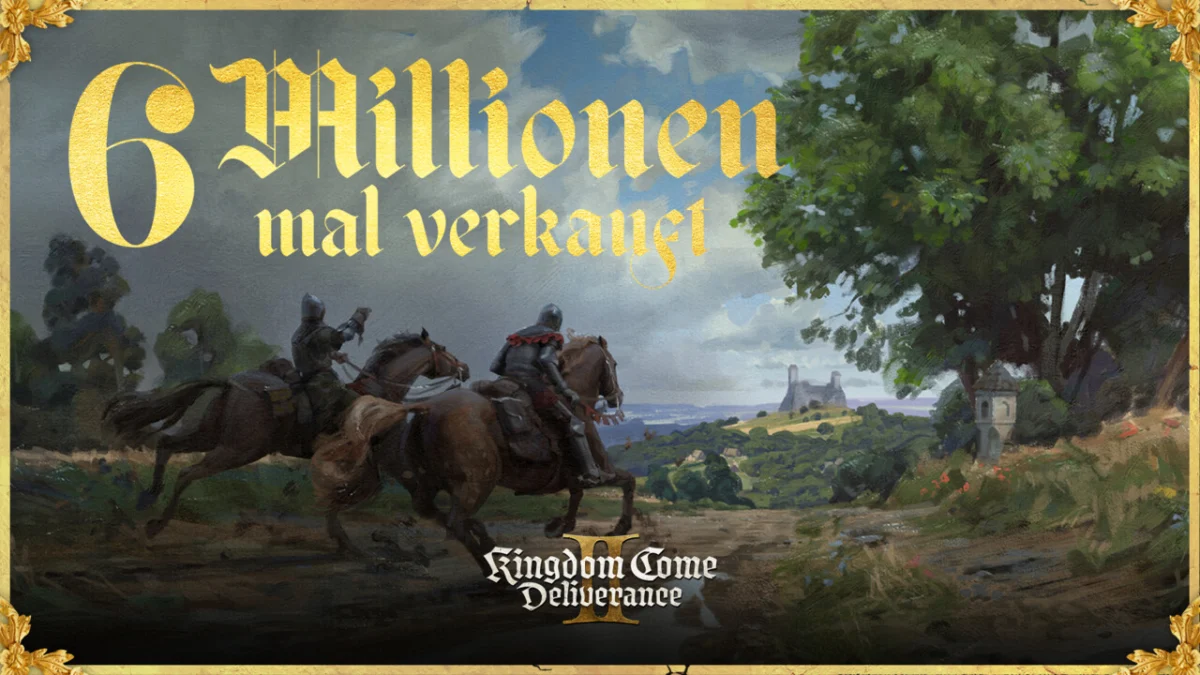
In a significant triumph for historical realism in gaming, Warhorse Studios and publisher Deep Silver have officially announced that Kingdom Come: Deliverance II has surpassed six million units sold worldwide. This milestone, reached just four months after the studio celebrated the five-million-copy threshold in February 2025, solidifies the title’s position as a powerhouse in the modern role-playing game (RPG) landscape.
For a franchise that eschews the traditional tropes of high fantasy—opting instead for a grueling, authentic recreation of 15th-century Bohemia—this achievement is nothing short of extraordinary. It proves that there is a massive, dedicated audience for "grounded" storytelling, where the stakes are measured in social standing, political intrigue, and personal survival rather than magic spells and dragons.
The Chronology of Success: A Rapid Ascent
The trajectory of Kingdom Come: Deliverance II has been characterized by consistent, steady growth. When the sequel launched, it faced the daunting task of living up to the cult-classic status of its 2018 predecessor. The original Kingdom Come: Deliverance took a slower, more organic path to success, eventually accumulating over ten million lifetime sales over the course of eight years.
By contrast, the sequel has demonstrated a significantly more aggressive market penetration. Reaching five million copies within its first year was widely considered a success, but the addition of another million sales in just four months suggests that the game has successfully transitioned from a "niche enthusiast title" to a broader mainstream hit. This momentum has been bolstered by favorable word-of-mouth, critical acclaim for its technical improvements over the original, and targeted promotional efforts, including the recent Steam Summer Sale, which has introduced the franchise to a new wave of players.
Supporting Data: Contextualizing the Numbers
To understand the gravity of this achievement, one must view it through the lens of the broader gaming industry. While Kingdom Come: Deliverance II does not reach the gargantuan heights of industry behemoths like The Witcher 3: Wild Hunt (which boasts over 65 million copies sold) or the record-shattering Baldur’s Gate 3 (at 20 million), its performance is arguably more impressive when considering its design philosophy.
Comparison Table: Select RPG Performance
| Title | Estimated Sales | Primary Theme |
|---|---|---|
| The Witcher 3 | 65M+ | High Fantasy |
| Baldur’s Gate 3 | 20M+ | High Fantasy/D&D |
| Kingdom Come: Deliverance | 10M+ (8 years) | Historical Realism |
| Kingdom Come: Deliverance II | 6M+ (16 months) | Historical Realism |
The comparison highlights a critical shift in market demand. Players are increasingly gravitating toward "simulation-heavy" experiences that offer a sense of place and historical immersion. Kingdom Come: Deliverance II serves as a benchmark for the "Double-A to Triple-A" transition, proving that a studio can maintain its uncompromising vision—such as the game’s notoriously difficult combat and lack of "hand-holding" mechanics—without sacrificing commercial viability.
The Anatomy of the Game: Why Players Are Hooked
The sequel continues the journey of Henry of Skalitz, a blacksmith’s son thrust into the chaotic political landscape of the Holy Roman Empire. The narrative success of the game lies in its refusal to simplify the life of a medieval commoner.
Unlike most RPGs, where the protagonist quickly ascends to "chosen one" status, Kingdom Come: Deliverance II keeps the player grounded. Henry remains a character defined by his flaws, his limitations, and his surroundings. The environment is not a mere backdrop; it is a character in itself. The game’s focus on the "uncomfortable" aspects of history—the hunger, the social stratification, the slow pace of travel, and the weight of moral choices—creates an immersion that few fantasy games can replicate.
By expanding the scale of the map and refining the combat systems, Warhorse Studios managed to deliver a "bigger" experience while retaining the "soul" that made the original a fan favorite. It is this balance of scale and austerity that has driven its sustained sales performance.
Official Responses and Strategic Implications
While Warhorse Studios and the Embracer Group (the parent company) have kept specific financial data private, the tone of the announcement is one of immense satisfaction. The success of this title is a vindication of the studio’s long-term strategy.
In a recent press statement, representatives from Plaion—the parent label for Deep Silver—noted that the global resonance of the game highlights the power of "authentic, narrative-driven historical fiction." This success has profound implications for the studio’s future.
Future Projects on the Horizon
The financial stability provided by these six million sales provides Warhorse Studios with the necessary runway to execute its ambitious roadmap. The studio has already confirmed that it is working on two major fronts:
- The Future of the Franchise: With the success of the second installment, further entries in the Kingdom Come series are essentially guaranteed. The studio is currently in the early stages of planning how to evolve the world and mechanics for a potential third entry.
- The "Middle-earth" Project: Perhaps the most intriguing development is the studio’s involvement in an upcoming Open-World RPG set within the Lord of the Rings universe. This project marks a significant departure for the team, as they pivot from the gritty realism of 15th-century Bohemia to the high-fantasy lore of J.R.R. Tolkien.
Industry analysts suggest that the success of KCD II will grant Warhorse a higher level of creative autonomy in their Lord of the Rings project, likely allowing them to inject their signature "realism-first" approach into a fantasy setting.
Market Dynamics: The Impact of the Steam Summer Sale
It is impossible to ignore the role of digital storefronts in this milestone. The recent Steam Summer Sale served as a strategic accelerant. By offering both the original game and the sequel at significant discounts, the publishers effectively created an "entry point" for newcomers.
For many players, the sale was the final nudge needed to commit to a game known for its steep learning curve. By bundling the historical prestige of the first game with the technical polish of the second, the studio effectively managed to capture a segment of the market that had been "on the fence." The fact that the game reached this milestone in July, amidst a flurry of competing summer releases, speaks volumes about the enduring brand loyalty surrounding the Kingdom Come series.
Conclusion: A Blueprint for Future RPGs
The story of Kingdom Come: Deliverance II is a reminder that the gaming industry is not a monolith. While mega-blockbusters define the headlines, titles that cater to specific, dedicated communities—and refuse to compromise on their core mechanics—can achieve massive, sustainable success.
As Warhorse Studios moves forward, the pressure will be on them to maintain this quality. With six million players currently exploring the valleys and villages of Bohemia, the studio has cemented its place as a leader in the RPG genre. Whether they are refining their historical simulation or applying their unique design philosophy to the world of Middle-earth, the industry will be watching.
For now, the team at Warhorse can celebrate a rare feat: creating a sequel that not only expands on the original in every way but also proves that history, when told with authenticity and care, is just as compelling as any dragon-filled fantasy. The 6-million-copy mark is not just a sales figure; it is a mandate from the gaming public for more, high-quality, uncompromising experiences.