Asep Darmawan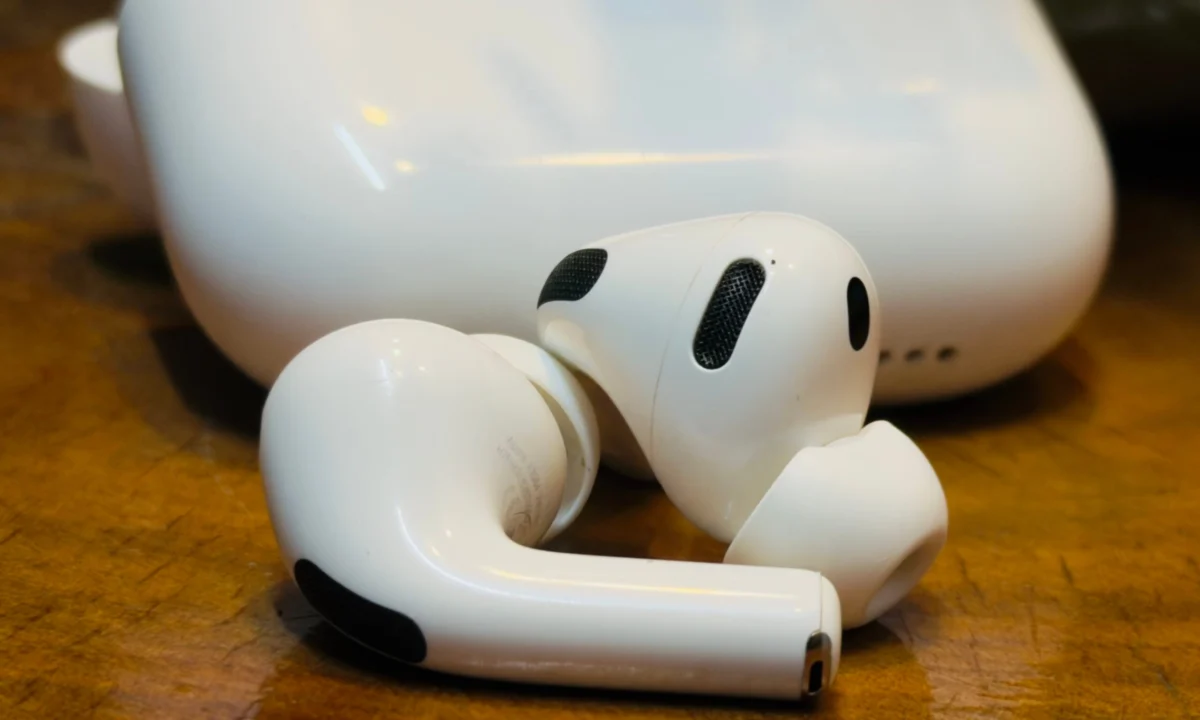
The landscape of personal technology is on the precipice of a seismic shift. For over a decade, the smartphone has served as the undisputed sun of the consumer tech solar system, with all other devices—watches, tablets, and earbuds—orbiting as peripheral satellites. However, fresh reports from industry insiders, including Bloomberg’s Mark Gurman, suggest that Apple is preparing to dismantle this hierarchy. By 2027, the Cupertino giant is expected to usher in an era where "wearable intelligence" replaces the handheld screen as our primary interface with the digital world.
At the heart of this transition are two seemingly innocuous categories: AirPods and smart glasses. Far from being simple audio or eyewear accessories, these devices are slated to become the primary sensors for Apple Intelligence, acting as a persistent, camera-equipped bridge between the physical world and the vast computational power of AI.
The Core Facts: A New Hardware Paradigm
The fundamental shift Apple is pursuing is one of "ambient computing." Currently, Apple Intelligence is largely reactive; it resides within the confines of an iPhone or Mac, waiting for a user to initiate a prompt. The 2027 hardware roadmap aims to make this intelligence proactive and observational.

According to recent disclosures, Apple is actively developing camera-equipped iterations of its iconic AirPods. While the idea of a camera on an earbud might strike the average consumer as unconventional, the intent is not to record high-definition cinematography. Instead, these integrated sensors will serve as "eyes" for the system, allowing Siri to "see" what the user is looking at.
Simultaneously, the development of Apple’s long-rumored smart glasses has accelerated. Unlike the Vision Pro, which is a specialized spatial computing headset designed for immersive experiences, the upcoming smart glasses are being engineered for all-day wearability. By combining optical advancements with the visual data processing capabilities of Apple Intelligence, these devices aim to deliver information overlays directly into the user’s field of vision, effectively turning the world into a searchable, interactive interface.
Chronology of the Shift: The Road to 2027
To understand why this transition is occurring now, one must look at the timeline of Apple’s recent architectural evolution:

- 2023–2024 (The Foundation): Apple lays the groundwork by introducing spatial computing with the Vision Pro. While the hardware is bulky and expensive, it serves as the essential testing ground for hand-tracking, eye-tracking, and spatial mapping software (visionOS).
- 2025 (The AI Integration): Apple Intelligence is rolled out across the existing ecosystem, teaching users to interact with AI-driven summaries, image generation, and context-aware notifications. The "Siri 2.0" framework begins to learn user behavior patterns.
- 2026 (Refinement): Engineering teams shift focus from software to miniaturization. The challenge shifts from "how do we make AI smart?" to "how do we shrink the camera and battery modules to fit into an earbud or a lightweight frame?"
- 2027 (The Launch): The anticipated release of the camera-equipped AirPods and the debut of the Apple smart glasses. This marks the transition from "mobile computing" to "ambient intelligence," where the hardware becomes invisible while the AI becomes omnipresent.
Supporting Data: Why Cameras Are the Missing Link
The move to integrate cameras into wearables is supported by a growing realization within the tech industry: AI is only as good as the context it possesses. Currently, LLMs (Large Language Models) are constrained by the text or voice inputs provided by the user. If a user asks, "How do I fix this leak in my sink?" the model has to rely on the user’s ability to describe the problem accurately.
With camera-equipped wearables, the AI gains "visual grounding." By seeing what the user sees, the model can identify the specific make and model of the faucet, assess the severity of the leak, and project a repair guide directly onto the user’s view via smart glasses or provide real-time audio instructions through the AirPods.
Data from the current wearables market indicates that consumers are increasingly comfortable with "smart" features that reduce friction. The success of Meta’s Ray-Ban collaboration proves that there is a significant appetite for discreet, camera-capable eyewear. Apple’s strategy, however, appears to be focused on a deeper integration with their existing ecosystem. By utilizing their proprietary Silicon chips—specifically the H-series and S-series—Apple aims to ensure that this visual data is processed locally, maintaining the privacy standards that have become a hallmark of the brand.

Official Responses and Industry Stance
Apple has historically remained tight-lipped regarding future product releases, adhering to a culture of secrecy that maintains the "Apple Event" surprise factor. However, internal corporate communications and supply chain movements have provided a consistent narrative. CEO Tim Cook has frequently alluded to "the power of AI to augment human capabilities," emphasizing that technology should be an extension of the individual rather than a distraction.
Competitors have not been idle. Google continues to refine its "Project Astra" vision, while the aforementioned Ray-Ban Meta glasses have already set a baseline for user expectations. Industry analysts suggest that Apple’s entry into this space will be the "validation event" that moves smart glasses from a niche hobbyist category to a mass-market essential.
Implications: The Death of the "Antisocial" Wearable
The transition to a camera-integrated wearable ecosystem carries profound social and philosophical implications. Critics have long argued that wearables, particularly earbuds, contribute to the atomization of society, allowing individuals to retreat into private bubbles. However, as these devices become smarter, the dynamic may flip.

If your AirPods are constantly analyzing your surroundings to provide helpful, real-time context, they may become a tool for better engagement with the world rather than an escape from it. Imagine a world where, upon meeting a professional contact, your glasses provide a gentle, silent reminder of their name and the last topic you discussed. The "cyborg" of the near future may not look like a sci-fi character with glowing implants; they will look like a person who is simply "optimized"—someone who is never lost, never forgets a detail, and is always informed.
However, this future also brings significant privacy concerns. If every user is wearing a camera that is constantly scanning the environment, the norms regarding public recording will have to be completely rewritten. Apple is expected to implement robust physical indicators, such as a tally light or a distinct visual signal, to indicate when the devices are capturing data. But the psychological adjustment for the public will be substantial.
The Future of Public Life
As we look toward 2027, it is clear that the "Apple Intelligence" era is not just about a better chatbot; it is about the fundamental transformation of human perception. By offloading the burden of observation and memory to a wearable device, Apple intends to free up the human mind for higher-level decision-making.

The question remains: are we ready for a world where our devices see everything we see? The convenience of instant, context-aware assistance is a compelling promise, but it necessitates a new social contract. As we move closer to this horizon, the debate will likely shift from whether the technology works to whether it is beneficial.
For now, the roadmap is set. The era of the handheld screen is reaching its twilight, and the age of the wearable, watchful, and deeply intelligent device is just beginning to dawn. By 2027, the most important device you own might not be the one in your pocket—it will be the one on your ears or resting on the bridge of your nose, silently helping you navigate a world that is becoming more complex by the day.

 Raul Delapena Setiawan