

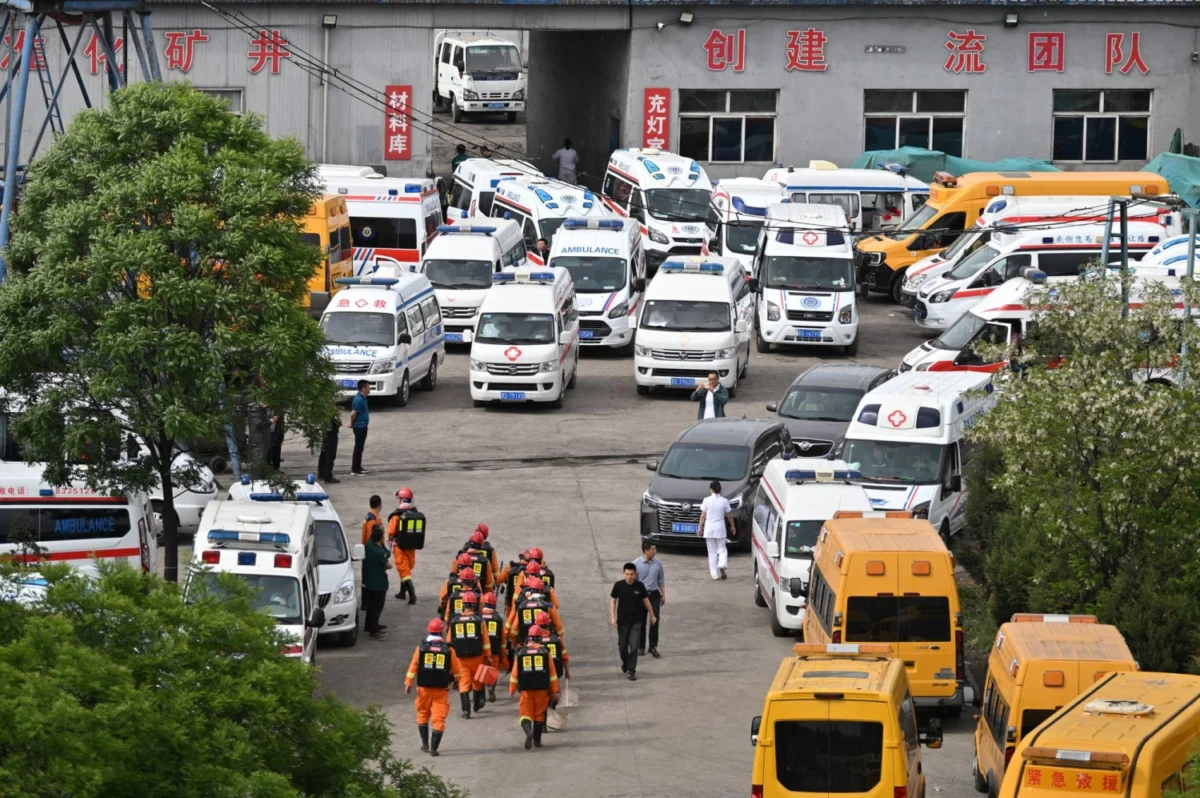
QINYUAN, China — The rugged landscape of Shanxi province, the industrial heartbeat of China’s coal-dependent economy, has become the site of the nation’s most devastating mining catastrophe in recent years. A catastrophic gas explosion at the privately owned Liushenyu coal mine late Friday night has claimed the lives of at least 82 workers, according to local authorities.
The disaster, which occurred as miners were navigating the subterranean depths of the Qinyuan county facility, has sent shockwaves through the central government in Beijing, triggering a massive mobilization of search-and-rescue teams and reigniting a fierce national debate over the human toll of maintaining economic stability during a period of global geopolitical volatility.
The Anatomy of the Disaster: Main Facts
The Liushenyu mine, a mid-sized operation situated in the heart of China’s primary coal-producing region, specializes in the extraction of coking coal—a critical raw material for steel manufacturing. Unlike thermal coal, which feeds the nation’s massive power grid, coking coal is the lifeblood of the industrial sector.
Preliminary investigations suggest that a massive methane gas accumulation—a perennial danger in deep-shaft mining—triggered the explosion on Friday evening. The resulting blast tore through the underground tunnels, trapping dozens of miners. Despite the frantic efforts of rescue crews who worked through the weekend, the casualty toll has reached 82, with officials warning that the final count could rise as recovery efforts continue in unstable, debris-filled tunnels.
A Timeline of the Tragedy: From Normalcy to Catastrophe
The sequence of events surrounding the Liushenyu disaster underscores the sudden and violent nature of mining hazards:
- Friday, Late Afternoon: The night shift commenced at the Liushenyu mine. Safety protocols were, according to initial reports, being followed; however, the complex geological conditions of the Shanxi region present constant risks of sudden gas outbursts.
- Friday, Approximately 11:00 PM: An intense tremor was felt near the mine shaft, followed by the sound of a subterranean detonation. Communication with the lower galleries was severed immediately.
- Saturday, Early Hours: Emergency response teams were dispatched from across the province. The local government declared a level-one emergency response, mobilizing medical teams and specialized underground rescue units.
- Saturday, Mid-Day: Images from the scene, released via official channels, showed rescuers covered in soot, navigating the perimeter of the mine as families gathered nearby, hoping for news of survivors.
- Sunday: The confirmed death toll climbed steadily as search teams penetrated the most severely damaged sectors of the mine. Government officials ordered an immediate cessation of operations at the facility pending a full safety audit.
The Economic Context: The "Iran War" Effect
To understand why the Liushenyu disaster is being viewed as more than just a localized accident, one must look at the broader economic pressures currently facing the People’s Republic.
China’s massive coal production has served as a critical buffer against the global economic tremors triggered by the ongoing conflict in Iran. As global energy prices fluctuated and supply chains faced disruption, Beijing leaned heavily on its domestic coal sector to insulate its economy. By ramping up extraction to unprecedented levels, China ensured that its factories kept running and its power grids remained stable, even as the global energy market entered a state of flux.
The Liushenyu mine, while modest in size compared to the massive state-run conglomerates, represents the front line of this "production-at-all-costs" mandate. Experts note that when pressure on mining companies to meet quotas increases, the temptation to overlook stringent safety protocols—such as advanced gas monitoring and ventilation upgrades—becomes a significant systemic risk.
Official Responses and Accountability
The scale of the response to the Liushenyu blast has been disproportionate to the mine’s relatively small output, signaling that the central government is acutely aware of the potential for this tragedy to incite public unrest.
High-ranking officials from the Ministry of Emergency Management have been dispatched to Qinyuan county to oversee the investigation. A formal directive has been issued, ordering all mines in the Shanxi region to undergo immediate, rigorous safety inspections.

"The safety of our miners is paramount," a government spokesperson stated in a brief press conference. "We will conduct an exhaustive investigation to determine if safety standards were compromised. Those found responsible for negligence will face the full weight of the law."
However, observers note that these promises of reform are a recurring pattern in the wake of mining disasters. While the state frequently cracks down on safety violations following a tragedy, the structural pressure to maintain high coal output often leads to a gradual loosening of oversight as memories of the disaster fade.
Implications: A Looming Energy Crisis?
The Liushenyu explosion raises uncomfortable questions about the sustainability of China’s coal-heavy economic model. The tragedy has effectively highlighted the "hidden cost" of the country’s energy strategy.
1. The Human Cost of Efficiency
For the families of the 82 miners, the macroeconomic benefits of the coal industry are abstract compared to the visceral reality of their loss. The incident has reignited public discourse on social media platforms, with citizens questioning why workers are still facing 19th-century hazards in a country that prides itself on being a global technological leader.
2. Regulatory Stagnation
Despite years of modernization efforts, China’s mining sector remains dangerously fragmented. While state-owned giants have invested heavily in automation and remote-sensing technology, smaller, privately owned operations like Liushenyu often rely on older methods, making them more susceptible to human error and mechanical failure.
3. The Geopolitical Dilemma
The central government now faces a difficult balancing act. If it enforces overly strict safety regulations, it risks choking coal production, which could lead to energy shortages and industrial slowdowns—a outcome that would be catastrophic given the current international environment. If it maintains the status quo, it risks further, equally deadly accidents that undermine public confidence in the state’s ability to protect its workforce.
Moving Forward: The Path to Reform
As the nation mourns the victims of the Liushenyu mine, the focus will inevitably shift toward how such a disaster can be prevented in the future. Experts suggest that the answer lies in three key areas:
- Technological Integration: Moving toward autonomous mining systems, where human presence in high-risk zones is minimized or eliminated entirely.
- Transparent Oversight: Empowering independent safety auditors to act without fear of local economic or political reprisal.
- Strategic Diversification: Accelerating the transition to renewable energy sources, not just to meet climate goals, but to decrease the existential reliance on coal-based energy.
The Liushenyu disaster serves as a sobering reminder that economic growth and energy security are often bought with the lives of those at the bottom of the industrial hierarchy. As the rescue teams finish their work and the investigators begin theirs, the people of Qinyuan—and indeed, all of China—are left to contemplate whether the drive for stability is worth the cost of such tragedy.
The blast at Liushenyu is not merely a local mining accident; it is a symptom of a larger, more complex struggle to balance the demands of a global superpower with the fundamental rights and safety of its workers. Whether this event marks a turning point in China’s industrial safety record remains to be seen, but for the families in Shanxi, the answer comes far too late.












No comments yet. Be the first to join the conversation!