

For any student embarking on the journey of learning Japanese, the linguistic landscape is defined by three distinct writing systems: Hiragana, Katakana, and Kanji. While Hiragana serves as the phonetic foundation for native Japanese words and grammatical particles, Katakana—the second of the two kana syllabaries—is an essential tool for navigating the modern Japanese experience. Primarily used for loanwords from foreign languages, scientific terminology, onomatopoeia, and emphasis, Katakana is the key to reading menus, signs, and international branding in Japan.

This guide provides a structured deep dive into the Katakana system, offering a pedagogical roadmap for students who have already established a baseline in Hiragana. By mastering these 46 foundational characters and their specialized modifiers, learners can unlock a vast lexicon of borrowed vocabulary, effectively bridging the gap between their native language and Japanese.
The Foundations of Katakana: Why It Matters
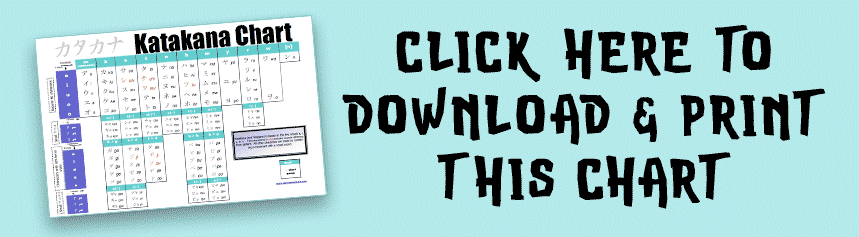
Katakana is often described as the "angular" sibling of Hiragana. While the two systems share the same phonetic values, their usage and aesthetic differ significantly. Katakana characters are characterized by short, straight lines and sharp corners, providing a stark visual contrast to the flowing, cursive nature of Hiragana.

Experts in Japanese pedagogy strongly recommend that students approach Katakana immediately after securing their knowledge of Hiragana. The reason is twofold: first, the similarity in sounds between the two systems helps to reinforce phonetic memory. Second, learning them in quick succession prevents the cognitive "forgetting" that often occurs when a student waits too long to transition to a new script. While there are subtle differences in stroke order and visual design, the systematic nature of the Katakana chart—organized by vowel columns and consonant rows—mirrors the logical structure of Hiragana, making it an accessible, albeit rigorous, challenge for the dedicated learner.
A Chronology of Learning: Systematic Mastery
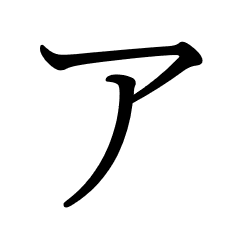
To effectively internalize the Katakana script, learners must avoid rote memorization and instead adopt a systematic, character-by-character approach. The writing system is logically organized into a grid.
The Vowel and Consonant Framework
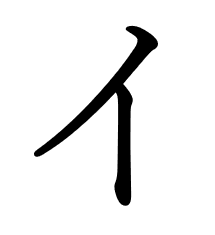
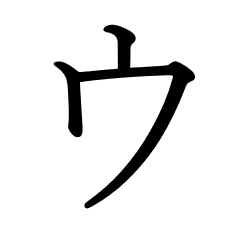
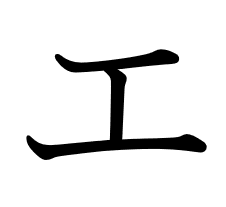
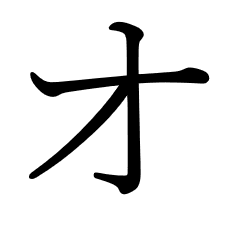
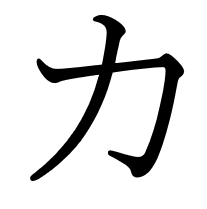
The grid begins with the pure vowels: A, I, U, E, and O. These serve as the anchor for the subsequent rows. The rows that follow are structured by consonant progression: the K-row (Ka, Ki, Ku, Ke, Ko), the S-row (Sa, Shi, Su, Se, So), and so forth.

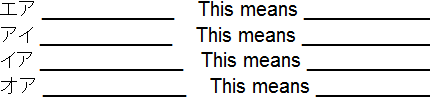
- The A-Column: Mastering A, I, U, E, and O is the first milestone. Each character requires specific attention to stroke order, which is vital for developing the fluid, legible handwriting characteristic of native speakers.
- The K-Row and S-Row: As you progress to the K and S rows, you will encounter the first phonetic irregularities. For instance, the S-row does not follow a strict "Si" pattern; instead, it utilizes "Shi." Recognizing these anomalies early is essential for proper pronunciation.
- Navigating the T and N Rows: The T-row introduces the "Tsu" character, a staple of Japanese phonetics and a notorious hurdle for beginners. By associating these characters with common words—such as "tsunami"—learners can create mnemonic anchors that simplify the transition from theory to usage.
Supporting Data: Understanding Modifiers and Phonetic Shifts
Beyond the core 46 characters, the Katakana system utilizes specific diacritics to expand its phonetic range. These modifications are not optional; they are critical for accurate communication.
The Ten-Ten and the Maru
The most common modification is the ten-ten ("), a double-quote symbol placed to the upper right of a character. This diacritic serves to "harden" the consonant sound. For example, adding a ten-ten to the K-row shifts the sounds from K to G (Ka becomes Ga, Ki becomes Gi, etc.). This rule applies consistently to the K, S, T, and H rows, effectively doubling the number of sounds a learner can produce.

The maru (°) is a smaller, more specialized diacritic, taking the form of a tiny circle. This is exclusively applied to the H-row, transforming the soft H-sound into a sharp P-sound (Ha becomes Pa, Hi becomes Pi, and so on). Understanding the distinction between these two markers is a rite of passage for every student of the Japanese language.
Combining Sounds with Small Ya, Yu, and Yo
One of the most powerful aspects of the Katakana system is the use of small-sized characters—YA, YU, and YO—to create blended sounds. When a small Ya, Yu, or Yo is placed after a character ending in the "i" vowel (like Ki or Shi), the sound undergoes a contraction. For example, Ki + small Ya becomes "Kya." This mechanism allows for the transcription of complex foreign words that do not exist in the native Japanese phonology, such as "computer" (konpyūta) or "party" (pāti).

Official Perspectives: The Role of Mnemonic Devices
The pedagogical consensus on learning these scripts emphasizes the use of mnemonics—memory aids that link the visual shape of a character to an image or story. Because Katakana is often used for foreign words, many learners find that visualizing the character as part of a physical object helps to "lock" the shape in their long-term memory.
For example, the character for "Ni" (二) is identical in appearance to the Kanji for the number two. By leveraging this overlap, learners can save time and reduce cognitive load. The "The Japanese Page" curriculum, a standard in the industry, emphasizes that while rote practice is necessary, connecting these shapes to familiar concepts is the fastest route to fluency.

Implications for Language Acquisition
What does it mean to be "Katakana-proficient"? It signifies that a learner has moved beyond the basic survival phrases of Japanese and is beginning to interact with the language as it exists in the wild.
Reading Beyond the Classroom
Once a student can read Katakana, the entire Japanese urban environment becomes readable. Foreign loanwords (Gairaigo) make up a significant portion of daily Japanese conversation. By reading a menu, a student can identify "kōhī" (coffee), "chokorēto" (chocolate), or "sandoitchi" (sandwich). This ability provides a sense of agency, allowing the learner to navigate environments independently.

The Bridge to Advanced Studies
Furthermore, the transition to Katakana prepares the student for the complexities of Kanji. Because Kanji are often accompanied by Katakana (or Hiragana) to indicate pronunciation, the ability to read the kana scripts is the prerequisite for all further study. Without a firm grasp of Katakana, the learner remains tethered to Romaji—the Romanized alphabet—which ultimately stunts long-term phonetic and structural development.
Conclusion: The Path Forward
Learning Katakana is not merely an academic exercise; it is an act of cultural immersion. While the process of learning 46 new characters, their modifiers, and their combinations may seem daunting, it is a manageable task when approached with the structured, incremental discipline outlined in this guide.
For those seeking to accelerate their progress, external resources—such as digital flashcards, dedicated practice quizzes, and beginner-level reading bundles—can provide the necessary reinforcement. As you move forward, remember that every character you master is a new lens through which to view Japanese culture. Whether you are ordering a meal in Tokyo or decoding a scientific text, your command of Katakana will serve as a constant, reliable companion in your journey toward Japanese fluency.

Stay consistent, practice your stroke orders, and engage with the language daily. Before long, what once appeared as a collection of disjointed, angular symbols will become a fluid, intuitive, and indispensable part of your linguistic toolkit. Congratulations on taking this critical step; your journey into the heart of the Japanese language is only just beginning.











