In an era defined by hyper-optimized morning routines, the relentless pursuit of "hustle culture," and the digital pressure to turn every hobby into a monetized side-hustle, one TikTok creator has captured the internet’s attention by doing something refreshingly—and perhaps defiantly—useless.
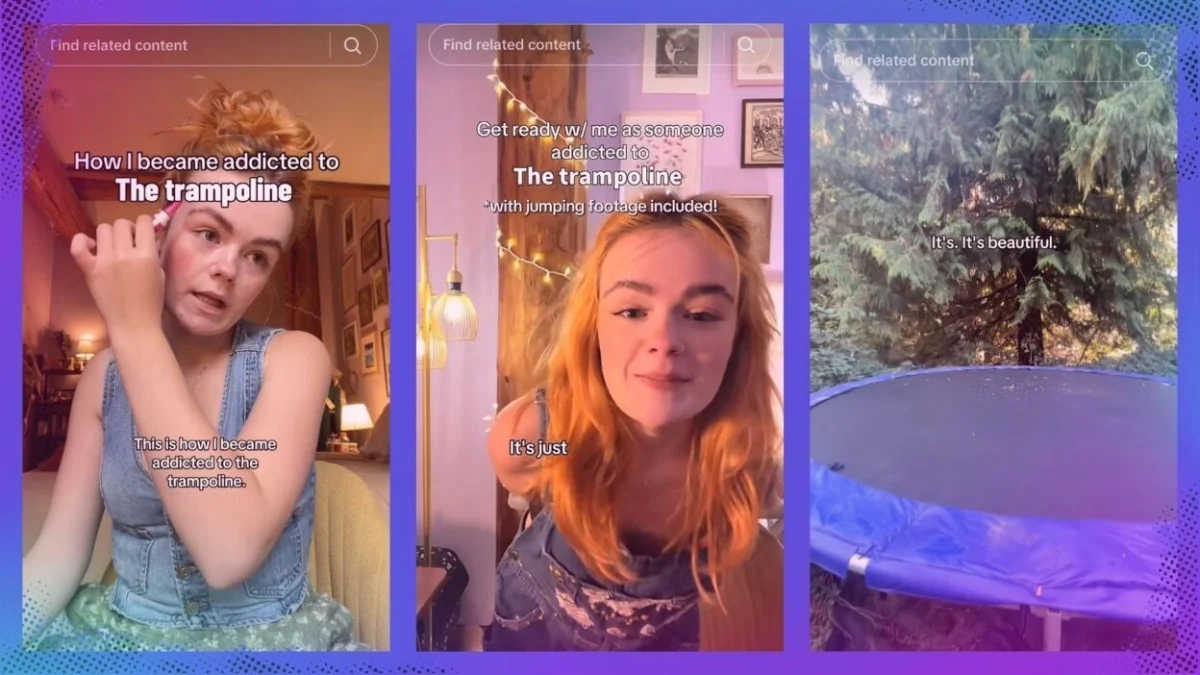
TikTok user @whatifimjustagirl has gone viral for a ritual that sounds like something out of a whimsical novel: for the past seven years, she has spent nearly every night jumping on a backyard trampoline, typically between the hours of midnight and 3:00 a.m. While the world sleeps, she is under the stars, bouncing in silence. It is a commitment that has sparked widespread curiosity, online speculation, and a broader conversation about what it truly means to find happiness in the modern age.
The Ritual: A Midnight Escape
For most, a trampoline is a piece of backyard equipment relegated to the realm of childhood memories or occasional summer barbecues. For this creator, however, it is a nightly sanctuary. Her routine is consistent and unfussy: she prepares by choosing comfortable attire—often leggings and a flannel for the chill of the late-night air—and dons a pair of headphones to soundtrack her rhythmic movement.
This is not a fitness regimen aimed at caloric burn or a sleep-deprivation experiment. It is, by her own account, a pure, unadulterated act of joy. In a recent video that served as a window into her world, she noted, "I look forward to it every single day." This seven-year streak suggests a level of dedication that usually accompanies professional athletes or career-focused individuals, yet her motivation remains remarkably grounded in simple human pleasure.
The Psychology of Repetitive Movement
The sight of a lone figure jumping in the dead of night has inevitably drawn a spectrum of reactions from the digital public. When videos of her nocturnal routine first began to circulate, the comment sections were flooded with inquiries, armchair diagnoses, and genuine wonder.
Addressing the Speculation
As the videos grew in popularity, the creator felt compelled to address the frequent, often unsolicited, speculation regarding her mental health. Specifically, many viewers questioned whether her behavior was a manifestation of autism.

"I just wanted to comment on the mental health aspect of it because I have a lot of people assume I have autism, and I do not," she stated in a follow-up video. She was candid about her experience with Obsessive-Compulsive Disorder (OCD), acknowledging that it may play a role in the intensity of her attachment to the trampoline. However, she was quick to draw a boundary between her diagnosis and her hobby.
"Yes, is my obsession with the trampoline a little extreme? Yes. Does my OCD play a factor in that? Yes, but that’s not why I jump," she clarified. "I don’t think there needs to be a diagnosis for it."
Her response highlights a growing trend in social media culture: the tendency to pathologize any behavior that deviates from the "norm." By rejecting the need for a clinical explanation, the creator is asserting her right to inhabit her own space and time in a way that feels authentic to her, regardless of whether it fits into a neat, diagnostic box.
The "Joy-Only" Hobby Movement
In a landscape where wellness is often commodified—think expensive green juices, $200 yoga mats, and high-tech sleep trackers—the @whatifimjustagirl phenomenon serves as a counter-narrative. There is no sponsorship deal here, no "five-step guide to better energy," and no attempt to leverage the trampoline for viral growth or brand partnership.
The appeal of her content lies in its radical lack of productivity. In a society that demands we maximize every waking hour, her decision to spend two hours in the middle of the night doing something that produces no "output" is, in its own way, a revolutionary act.
Why We Are Captivated
Psychologists have long noted the benefits of "flow states"—those moments where one becomes completely immersed in an activity. Jumping, with its repetitive, rhythmic nature, can induce a meditative state. It allows for the release of physical energy and the quieting of the mind, which is likely why it provides such a potent sense of relief for the creator.

For her viewers, the fascination likely stems from a collective yearning for simplicity. We are constantly told that we need to "level up" our lives. We are encouraged to read books to become more intellectual, exercise to become more fit, and meditate to become more mindful. This creator offers a different model: doing something simply because it makes you feel good.
Examining the Daily Routine: A Chronology of Seven Years
The consistency of her seven-year streak is the most startling aspect of the story. Seven years spans significant life changes, yet the trampoline remained a constant.
- Year 1-2: Initial discovery of the routine as a way to process stress.
- Year 3-5: The routine cements itself as a non-negotiable part of her identity, regardless of weather or fatigue.
- Year 6-7: The transition from a private habit to a public-facing digital narrative, where she shares her perspective with a global audience.
While she acknowledges that her neighbors might find the late-night activity unusual, the commitment to the act remains unbroken. It is a testament to the power of habit. Many of us struggle to maintain a gym routine for more than a month, yet she has found a way to sustain a daily practice for nearly a decade.
The Implication for Modern Well-being
The viral nature of this story forces us to look in the mirror. Why are we so obsessed with the "why"? Why do we feel the need to justify her nightly jumps with a diagnosis?
Perhaps it is because we have forgotten how to enjoy things for their own sake. When we see someone doing something that brings them happiness—and that happiness doesn’t come from a pill, a program, or a product—it challenges our own internal narratives about what we "should" be doing with our time.
The Death of the "Productivity Hack"
We live in an age of "productivity aesthetics," where the goal is to make every aspect of life look like an optimized, high-performance machine. The creator’s trampoline routine is the antithesis of this. It is messy, it is dark, it is inconvenient, and it is entirely hers.

By refusing to turn her trampoline time into a wellness brand, she is preserving the sanctity of her joy. There is a lesson here for the rest of us: we don’t need to optimize our hobbies to make them worthwhile. We don’t need to track them, share them, or turn them into revenue streams. Sometimes, the most meaningful thing we can do is simply exist in a space that makes us feel human.
Conclusion: Finding Your Own Trampoline
While it is unlikely that the masses will begin flocking to their backyards at 2:00 a.m. to start jumping, the takeaway remains clear. We are all searching for a release valve in a world that is increasingly loud, demanding, and digital.
Whether it is jumping on a trampoline, staring at the stars, or simply sitting in silence with a cup of tea, the secret to happiness might not be found in the latest app or the most expensive retreat. It might be found in the mundane, the repetitive, and the personal.
As the digital world continues to dissect her life, the creator remains, night after night, bouncing under the dark sky. She has found her rhythm, and in doing so, she has reminded millions of people that joy doesn’t need a justification—it just needs a little bit of space and the courage to be yourself when no one else is watching.