

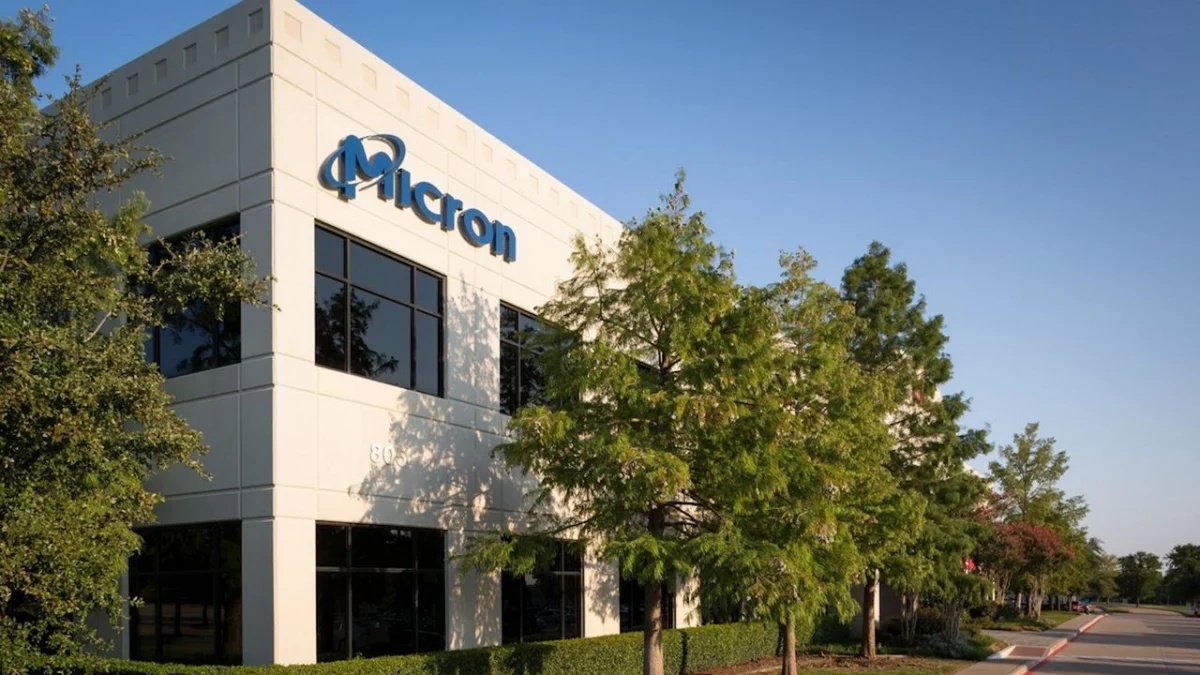
In a significant move to secure the domestic semiconductor supply chain, Micron Technology has officially commenced the production of its 1α (1-alpha) DRAM node at its manufacturing facility in Manassas, Virginia. This development marks a critical milestone for the company and the broader U.S. semiconductor industry, as it brings advanced, DDR4-compatible process technology to American soil for the first time.
Supported by a $275 million infusion from the CHIPS and Science Act, this expansion represents a capital investment exceeding $2 billion. The move is designed to address an escalating crisis in the memory market: the impending shortage of legacy DRAM technology as the industry pivots aggressively toward artificial intelligence (AI) and next-generation memory standards.
The Strategic Importance of the Manassas Fab
Micron stands as the only domestic manufacturer of memory products in the United States. The Manassas facility occupies a specialized niche within the company’s global portfolio; rather than chasing the high-volume, commodity-driven consumer electronics market, the site focuses on long-lifecycle customers.
The sectors served by the Virginia plant—automotive, aerospace, defense, industrial networking, and medical devices—require components that offer extreme reliability and availability for years, or even decades, after their initial release. As major global DRAM manufacturers shift their focus to DDR5, LPDDR5X, and High Bandwidth Memory (HBM) to satisfy the insatiable demand from AI data center operators, industries with long product cycles have found themselves increasingly vulnerable to supply chain volatility. By quadrupling the DDR4 wafer output at the Manassas site, Micron is effectively creating a "fortress" of supply for critical infrastructure.
A Chronology of the Shift
The transition toward current memory standards has been swift and unforgiving for legacy systems. The timeline of this shift highlights the urgency behind Micron’s recent expansion:
- Late 2020: Micron successfully achieves volume production of its 1α process node in Taiwan. This technology, utilizing DUV (Deep Ultraviolet) lithography, provided a 40% increase in bit density over the previous 1z node, setting a new benchmark for sub-15nm cell dimensions.
- 2023: As hyperscalers and data center operators accelerate their transition to AI-centric hardware, DRAM producers begin reallocating fab capacity. The focus shifts heavily to DDR5 and HBM, leading to a tightening of DDR4 availability.
- Late 2023: Recognizing the inevitable phase-out of legacy technology, Micron issues formal end-of-life (EOL) notices for mainstream DDR4 and LPDDR4 products, signaling that the era of consumer-focused DDR4 production is coming to a close.
- 2024: Market analysts begin raising alarms. S&P Global Mobility projects that automotive DRAM contract prices could surge between 70% and 100% by 2026 as supplies dwindle.
- Mid-2024: Micron finalizes its $275 million CHIPS Act grant.
- Late 2024: Micron officially begins domestic 1α production in Manassas, positioning the facility to support industries that will still rely on DDR4 well into the next decade.
Supporting Data: The Looming Supply Crunch
The necessity of the Manassas expansion is rooted in hard data. While the consumer market has largely moved on to DDR5, the automotive and industrial sectors remain tethered to older, battle-tested standards.
Industry reports indicate that DDR4 inventory buffers for these critical sectors have collapsed. Previously, companies maintained inventory levels sufficient for over 31 weeks of production. Recent figures show this has plummeted to a precarious six to eight weeks. This volatility is not merely a logistical headache; it poses an existential threat to production lines for vehicles, industrial robots, and aerospace systems, which cannot easily be redesigned to accommodate new memory architectures without years of re-qualification.
By localizing 1α production, Micron is ensuring that it can decouple these specialized industries from the boom-and-bust cycles of the consumer memory market. The 1α node serves as a "sweet spot"—it is sufficiently advanced to be efficient and high-yielding, yet it does not require the ultra-expensive EUV (Extreme Ultraviolet) lithography tools that are currently prioritized for the latest HBM and DDR5 products.
Official Perspectives and Corporate Strategy
Micron’s management has framed the Manassas initiative as a foundational pillar of its broader $200 billion U.S. investment roadmap. The company’s strategy is two-fold: maintain legacy stability while simultaneously building a future-proofed "megafab" infrastructure.
"Onshoring 1α technology is not just about manufacturing a specific chip; it is about ensuring that the United States remains capable of supporting its own critical infrastructure," a spokesperson for the company noted.
Beyond the technical output, the expansion is a significant economic engine for the region. The Manassas site is expected to support over 3,100 direct manufacturing and community jobs. When aggregated with the ongoing developments at the company’s new manufacturing complex in Clay, New York, and the upcoming production at its new Idaho facility, Micron anticipates the creation of approximately 90,000 direct and indirect jobs across the U.S. economy.
Implications for the Future
The decision to bring 1α production to Virginia carries profound implications for the semiconductor landscape:
1. Decoupling from Global AI Demand
By creating a dedicated line for DDR4 and LPDDR4 that does not compete with AI-focused products, Micron protects its long-lifecycle customers from the "AI tax." In the current market, HBM and DDR5 command higher margins, which often leads manufacturers to prioritize those products at the expense of legacy components. This new domestic line effectively removes the opportunity cost, ensuring supply stability for the automotive and defense sectors regardless of the demand for AI chips.
2. A Blueprint for Future Advanced Packaging
Micron has indicated that the Manassas site is a prototype for its future ambitions. Once the DRAM wafer capacity is stabilized, the company intends to integrate HBM advanced packaging capabilities into the Virginia facility. This would create a full-stack, end-to-end memory manufacturing capability in the U.S., significantly reducing reliance on international assembly and testing facilities.
3. Strengthening National Security
The defense and aerospace sectors rely heavily on the integrity of the hardware supply chain. By keeping the manufacturing of these critical memory components within U.S. borders, the federal government mitigates the risk of supply chain disruption caused by geopolitical instability or international logistical bottlenecks.
4. Economic Multiplier Effects
The massive investment in New York, Idaho, and Virginia signals a long-term commitment to the American semiconductor ecosystem. With the Clay, New York facility slated to produce a significant portion of the company’s overall DRAM output by the 2040s, and the Idaho fab coming online in 2027, the industry is entering an era of unprecedented domestic production.
Conclusion
Micron’s successful launch of 1α production in Manassas is more than a mere operational update; it is a tactical pivot that reinforces the stability of the American industrial base. While the world’s attention remains fixed on the rapid evolution of AI and the race for faster memory, Micron’s quiet, disciplined focus on legacy stability serves as a necessary anchor for the economy.
As the industry faces a projected shortage of older-generation DRAM, the "Made in America" label at the Manassas facility offers a lifeline to the automotive and industrial sectors. Through a combination of government support, strategic investment in DUV lithography, and a forward-thinking labor strategy, Micron is proving that the future of technology relies not only on the newest breakthroughs but also on the continued reliability of the systems that define our current modern infrastructure.










No comments yet. Be the first to join the conversation!