

FOR IMMEDIATE RELEASE
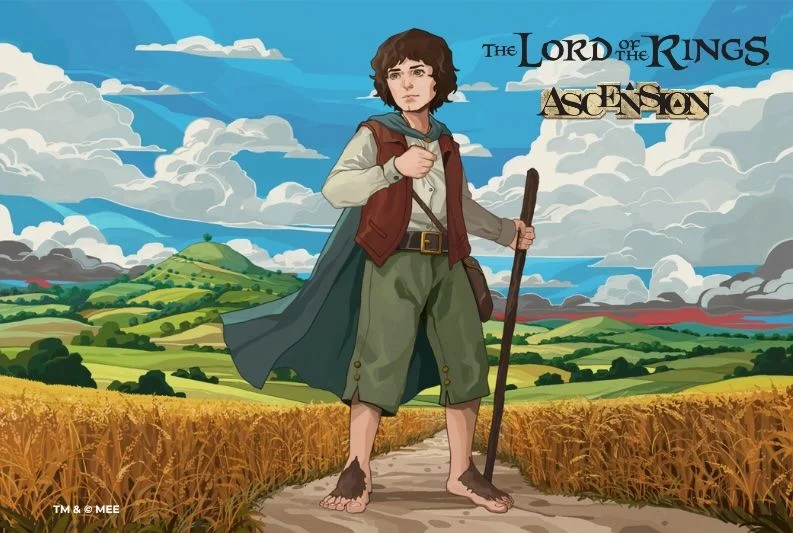
SAN FRANCISCO, CA – June 3, 2026 – Following a growing trend of beloved fantasy franchises crossing over into the tabletop gaming world, Stoneblade Entertainment, the acclaimed studio behind the popular deckbuilding game Ascension, has announced a monumental new venture: The Lord of the Rings: Ascension. This highly anticipated adaptation will translate the epic sagas of J.R.R. Tolkien’s Middle-earth into the strategic card game format, with a crowdfunding campaign slated to launch on Gamefound in July.
The announcement comes from Justin Gary, a former professional Magic: The Gathering player and the visionary creator of Ascension. For over a decade, Ascension has captivated players with its intuitive mechanics and rich fantasy world of Vigil. Now, Gary and his team are poised to offer their unique spin on one of literature’s most enduring fantasy universes, joining the ranks of other major titles, including Magic: The Gathering itself, in exploring the rich tapestry of Tolkien’s world.
This ambitious project promises to deliver a deeply thematic experience, allowing players to recruit iconic heroes, confront formidable monsters, and navigate the perilous path of corruption that defines the struggle against Sauron. The game will be released as a trilogy, with each set corresponding to one of Tolkien’s seminal books, offering both standalone playability and the option to combine them for an expansive Middle-earth adventure.
From Pro Player to Pioneering Designer: Justin Gary’s Vision
Justin Gary’s journey in the world of card games is a testament to his enduring passion and strategic prowess. Before founding Stoneblade Entertainment and designing Ascension, Gary carved out a distinguished career as a professional Magic: The Gathering player. His deep understanding of game design, competitive balance, and player engagement, honed at the highest levels of competitive Magic, laid the foundation for Ascension‘s success.
A Decade of Ascension
Launched in 2011, Ascension quickly distinguished itself in the burgeoning deckbuilding genre. Unlike some of its contemporaries, Ascension offered a faster, more accessible gameplay loop while retaining strategic depth. Players start with a small deck and continuously acquire new cards – heroes, constructs, and monsters – from a central "center row" to enhance their deck, defeat more powerful foes, and ultimately accumulate honor points. Over the past fifteen years, Stoneblade Entertainment has released an impressive seventeen sets for the original Ascension universe of Vigil, demonstrating the game’s flexibility and the team’s commitment to continuous innovation. Each expansion introduced new mechanics, factions, and narrative elements, keeping the player base engaged and expanding the game’s strategic possibilities.
The Genesis of a Middle-earth Adaptation
The idea of bringing The Lord of the Rings to Ascension was not a sudden decision but a carefully considered evolution, deeply rooted in Gary’s long-standing admiration for Tolkien’s work. In fact, Gary revealed that he began experimenting with a Lord of the Rings-themed version of Ascension even before officially securing the licensing rights. This proactive approach underscores the organic fit he perceived between Ascension‘s mechanics and Tolkien’s narrative.
The base Ascension game features four distinct factions: Lifebound, Enlightened, Void, and Mechana. Gary intuitively mapped these to the primary races of Middle-earth: the nature-aligned Lifebound became the Elves, the wise Enlightened transformed into the Hobbits, the versatile Void faction embraced the Humans, and the industrious Mechana found its perfect analogue in the Dwarves. This initial conceptualization proved that the core systems of Ascension could seamlessly adapt to the rich lore of Middle-earth, paving the way for a truly immersive experience.
Securing the Coveted License
Obtaining the official license for The Lord of the Rings is a significant achievement for Stoneblade Entertainment. The Tolkien estate is famously protective of its intellectual property, and securing the rights signifies a recognition of Ascension‘s quality and Stoneblade’s capability to honor the source material. This license allows the development team unparalleled access to the characters, creatures, locations, and narrative arcs that have captivated generations. For fans, it ensures authenticity and a faithful representation of Middle-earth, moving beyond mere thematic inspiration to a fully sanctioned and integrated experience. The crowdfunding campaign on Gamefound, set for July, will be the first opportunity for fans to directly support and secure their copies of this ambitious project.
Weaving the Tapestry of Middle-earth into Gameplay
The Lord of the Rings: Ascension isn’t merely a reskin; it’s a meticulous re-imagining of Ascension‘s established mechanics through the lens of Tolkien’s masterpiece. Stoneblade Entertainment has taken great care to integrate core themes of fellowship, corruption, and temptation directly into the gameplay, ensuring that every card and every decision resonates with the epic struggle for Middle-earth.
Core Gameplay and Thematic Factions
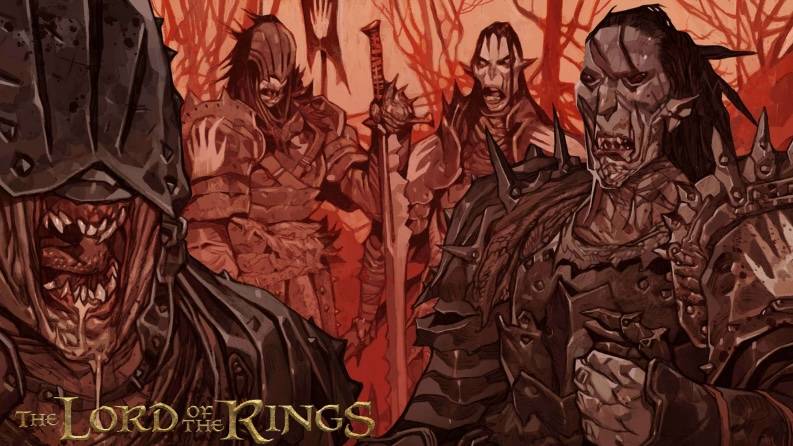
At its heart, The Lord of the Rings: Ascension retains the familiar deckbuilding loop. Players will compete (or cooperate) to acquire powerful heroes and constructs from the shared center row and defeat menacing monsters that appear there. The adaptation of Ascension‘s four factions into the races of Middle-earth provides an immediate thematic connection. Players will recruit Elven archers, stout Dwarven warriors, cunning Hobbits, and valiant Human knights, each contributing unique abilities to their growing deck. The monsters, too, are drawn directly from Tolkien’s lore, with Orcs, Goblins, Trolls, and more formidable foes like Uruk-hai emerging from the shadows to challenge the players.
One classic Ascension mechanic making a thematic return is the concept of defeating certain monsters to earn a "trophy." In The Lord of the Rings: Ascension, this mechanic is cleverly recontextualized to evoke the friendly rivalry and competitive spirit between characters like Legolas and Gimli. Defeating a formidable foe might not only grant honor points but also a special trophy card, reflecting a boast-worthy deed in the grand tradition of Middle-earth heroes. This adds a layer of narrative flavor to a tried-and-true gameplay element.
The Shadow of Corruption and the Lure of Temptation
Central to Tolkien’s narrative is the corrupting influence of the One Ring and the ever-present threat of Sauron’s power. The Lord of the Rings: Ascension introduces innovative mechanics to embody these profound themes:

- The Corruption Score: Players will accumulate a "corruption score" throughout the game. This score increases whenever the dreaded "Eye of Sauron" card appears in the center row, casting its malevolent gaze upon the players. At the end of the game, players will lose honor points based on their accumulated corruption, creating a constant tension between power and purity.
- The Temptation Mechanic: Complementing the corruption score is the "Temptation" mechanic. Certain cards and effects will offer players immediate, powerful benefits – perhaps drawing additional cards, gaining extra resources, or performing impactful actions. However, these benefits often come at a cost: increasing one’s corruption. This creates compelling moral dilemmas, forcing players to weigh short-term gains against the long-term risk of succumbing to the Shadow. This mechanic masterfully mirrors the struggles faced by many characters in the books, who are tempted by power or despair.
Gary elaborated on this design philosophy, stating, "We try to make the characters really come alive based on that. Boromir is a a great fighter, but when he reaches nine corruption, you have the option to banish him to defeat all the monsters in the center row. We want to create really cool moments that feel like what happens in the books." This example perfectly illustrates how thematic narrative choices are translated into impactful gameplay decisions, allowing players to experience the moral complexities of Middle-earth firsthand.
The Fellowship Rises: Co-operative Mode
Beyond competitive play, The Lord of the Rings: Ascension will feature a robust co-operative mode, allowing up to four players to unite against the forces of Sauron. In this mode, players will control different members of the Fellowship, working together to achieve specific objectives before they succumb to too much corruption. This mode promises to deliver a truly immersive experience of teamwork and shared struggle, echoing the core themes of companionship and mutual support that define Tolkien’s epic. Players will need to coordinate their actions, manage their corruption, and strategically deploy their heroes to overcome Sauron’s deck, which acts as an automated antagonist.
A Trilogy of Adventures
True to the epic scope of the source material, Ascension: Lord of the Rings will consist of three distinct sets, each corresponding to one of Tolkien’s books: The Fellowship of the Ring, The Two Towers, and The Return of the King. These sets can be played independently, offering complete experiences on their own, or combined to create a grand, overarching campaign. This modular design allows players to tailor their Middle-earth adventures to their preferences, similar to how Stoneblade successfully integrated multiple expansions in their Shards of Infinity: Saga Collection. This approach not only provides extensive replayability but also ensures that the narrative progression of Tolkien’s trilogy is respected and integrated into the game’s structure.
"Fans of Ascension will recognize some of these core mechanics that we’re bringing back," Gary affirmed, "but every one of them is presented in a new way to make it really feel like The Lord of the Rings and present both new gameplay and story moments that we’re really excited about." This commitment to both innovation and familiarity is a hallmark of Stoneblade’s design philosophy.
The Developer’s Perspective: Justin Gary on Competition and Connection
In an increasingly crowded market for licensed intellectual properties, particularly in tabletop gaming, The Lord of the Rings: Ascension enters a landscape where Magic: The Gathering has already made significant inroads with its own Tales of Middle-earth sets. However, Justin Gary views this not as competition, but as a synergistic opportunity.
A Shared Love for Middle-earth
Gary’s perspective is rooted in his own origins. "When I first made Ascension it was primarily something for me and my friends to play between rounds at a Magic tournament, because it really appeals to Magic players," he reflected. This historical context highlights the natural overlap between the player bases of both games. Gary believes that the more Magic players are exposed to and excited by Lord of the Rings content, the more likely they are to seek out other quality adaptations.

"I think the more Magic players are excited about Lord of the Rings content, the more likely they are to try Ascension: The Lord of the Rings," Gary stated. This outlook positions Ascension as a complementary experience rather than a direct competitor. Fans of fantasy and deckbuilding, already immersed in Middle-earth through Magic, may find Ascension‘s distinct gameplay, thematic depth, and different strategic challenges to be a welcome addition to their collection.
Value Proposition and Accessibility
Another key differentiator Gary points to is the economic accessibility of Ascension. While Magic: The Gathering often involves ongoing investment in booster packs, singles, and multiple product lines, Ascension typically offers a complete, self-contained experience within a single box or expansion. "A $50 price point for as much as you want to play is a drop in the bucket compared to what they’re going to spend on a Magic set," Gary noted, underscoring Ascension‘s value proposition. This fixed-price model makes The Lord of the Rings: Ascension an attractive option for players seeking a rich Middle-earth experience without the continuous financial commitment often associated with collectible card games.
Future Horizons: The Hobbit and Beyond
Stoneblade Entertainment’s ambitions in Middle-earth extend beyond the core trilogy. The company has also secured the rights to adapt The Hobbit, opening the door for future expansions and narrative explorations within Tolkien’s earlier work. This parallels Magic: The Gathering‘s own plans for a Hobbit-themed set, further indicating a shared recognition of the enduring appeal and untapped potential within these beloved stories. The potential for Ascension to delve into the adventures of Bilbo Baggins and the journey to the Lonely Mountain offers exciting prospects for fans and hints at a long-term commitment to the Middle-earth universe.
Implications and the Future of Licensed Tabletop Gaming
The launch of The Lord of the Rings: Ascension carries significant implications for Stoneblade Entertainment, the Ascension brand, and the broader tabletop gaming industry. It reflects a major trend in how beloved intellectual properties are being leveraged to reach new audiences and deepen engagement with existing fan bases.
The Power of Licensed IPs
The past decade has seen an explosion of licensed intellectual properties in tabletop gaming. From popular video games to blockbuster movies and classic literary works, publishers are increasingly recognizing the power of a well-known brand to attract players. The Lord of the Rings, with its global recognition and dedicated fanbase, stands as one of the most potent IPs in this landscape. Its successful integration into Magic: The Gathering demonstrated the immense appetite for quality adaptations, and Ascension‘s foray further solidifies this trend. For Stoneblade Entertainment, this represents a strategic move to significantly expand Ascension‘s reach beyond its existing core audience, tapping into the vast community of Tolkien enthusiasts.
Energizing the Ascension Community and Attracting New Players

For existing Ascension fans, The Lord of the Rings set offers a fresh, thematic twist on familiar mechanics. The integration of corruption, temptation, and a co-operative mode provides novel gameplay experiences that will undoubtedly excite veterans. More importantly, the iconic Lord of the Rings branding serves as a powerful magnet for new players who might be unfamiliar with Ascension but are drawn in by the allure of Middle-earth. This could lead to a substantial influx of new players, invigorating the Ascension community and ensuring the longevity of the game system.
Crowdfunding as a Strategic Launchpad
The decision to launch The Lord of the Rings: Ascension via Gamefound in July is a well-calculated strategic move. Crowdfunding platforms have become indispensable tools for tabletop game publishers, offering several key advantages:
- Community Engagement: It fosters direct engagement with the fanbase, allowing backers to feel a sense of ownership and involvement in the project’s success.
- Gauge Demand: Crowdfunding campaigns provide invaluable data on market demand, helping publishers accurately forecast production numbers and avoid overproduction or understocking.
- Direct Funding: It provides immediate capital for production, reducing financial risk and often enabling the inclusion of higher-quality components and stretch goals.
- Exclusive Offerings: The planned special collector’s edition with premium components and boxes designed to resemble books on a shelf is a classic crowdfunding incentive, appealing to dedicated fans and collectors. These exclusive items create a sense of urgency and reward early adopters.
Anticipated Delivery and Long-Term Vision
The projected delivery timeline of early 2028 for backers and retailers reflects the intricate process of game development, production, and logistics, especially for a licensed product of this scale. This timeline allows Stoneblade Entertainment ample opportunity to refine the gameplay, perfect the artwork, and ensure the highest quality components.
Looking ahead, The Lord of the Rings: Ascension could mark a pivotal moment for Stoneblade Entertainment. Success with this licensed property may encourage the company to explore further collaborations with other major IPs, diversifying their portfolio and establishing themselves as a premier developer of thematic tabletop adaptations. The ability to seamlessly blend established game mechanics with rich narrative universes positions Stoneblade for continued growth and innovation in the competitive tabletop gaming market.
As the crowdfunding campaign approaches, the anticipation among both Ascension veterans and Lord of the Rings aficionados is palpable. Justin Gary’s vision promises to deliver a deckbuilding experience that is not only strategically rewarding but also deeply resonant with the timeless magic of Middle-earth, offering players a new way to embark on their own epic journey.











No comments yet. Be the first to join the conversation!