Raul Delapena Setiawan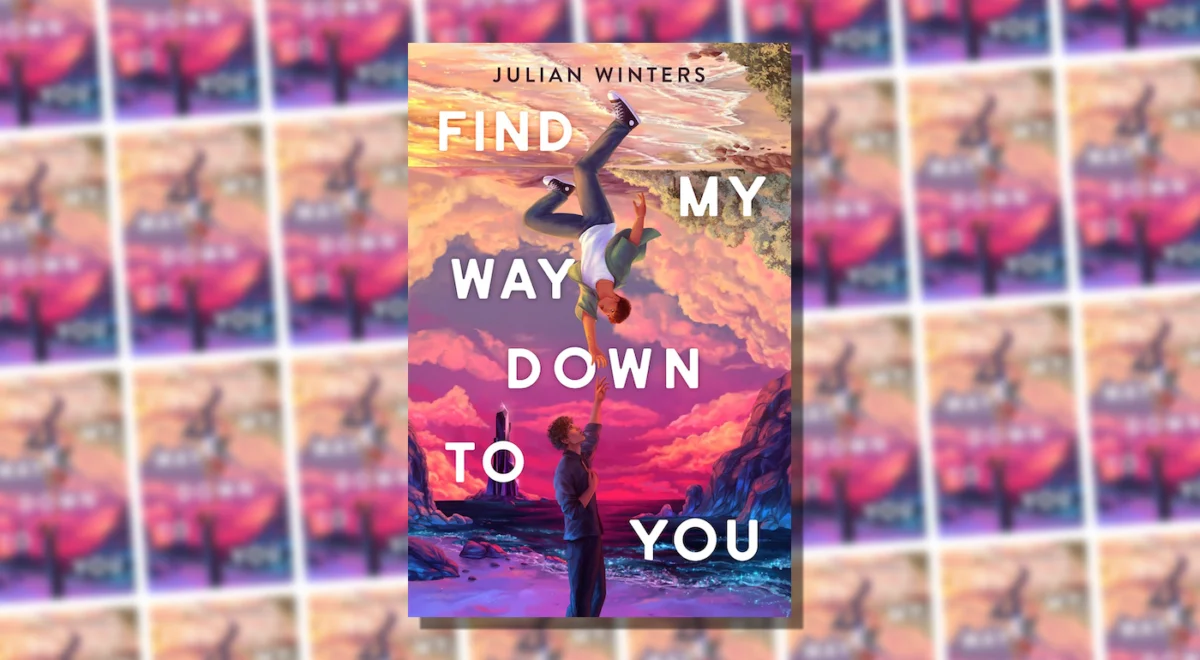
Julian Winters has long established himself as a luminary in the contemporary young adult landscape. His bibliography is a testament to the power of emotional resonance, consistently delivering narratives that act as both "emotional wrecking balls" and profound, soul-warming embraces. While Winters has carved a niche for himself in the spheres of contemporary fiction and adult romance, his latest endeavor, Find My Way Down to You, marks a significant and breathtaking shift. By weaving speculative elements into a full-length YA fantasy debut, Winters explores the geography of grief, the paralysis of survivor’s guilt, and the courage required to unmoor oneself from a past that no longer exists.
The Weight of Memory: The Premise of August Clarke
Death and grief are foundational pillars of the young adult genre. From the classic tropes of lost parental figures to the more modern, introspective explorations of trauma, YA literature often serves as a mirror for the intense, formative losses that define the transition into adulthood. However, Julian Winters manages to navigate this well-trodden territory with a refreshing, raw intensity in his portrayal of August "Auggie" Clarke.
Two years prior to the events of the novel, a sixteen-year-old August and his boyfriend, London, were involved in a devastating car crash. While August emerged from the wreckage, London did not. For the reader, the tragedy is magnified by the stark contrast between London’s vibrant, meticulously planned future—prom, college majors, career trajectories—and the hollowed-out silence of the years that followed. London was the architect of their shared destiny, a role that August willingly, and perhaps too readily, occupied.
Now, at eighteen, August has graduated, but the blueprint for his life has been incinerated. Instead of walking the halls of a university, he finds himself working at a local pizza joint in the coastal enclave of Santa Barbara, California, sharing a cramped apartment with his best friend, Max. The city, usually a vibrant hub of academic ambition and tourism, serves as a stagnant backdrop for August’s internal state. He is trapped, as the narrative aptly describes, in a "grief tar pit," unable to move forward while the ghosts of his past remain ever-present.
Chronology of a Supernatural Awakening
The catalyst for the novel’s shift from contemporary drama to speculative fiction occurs through a series of uncanny encounters that shatter the boundary between the living and the dead.
- The First Encounter: August, in his mundane routine of deliveries, crosses paths with a boy named Cary. At first, it is a simple transaction—a pizza delivered to a table.
- The Second Encounter: The veil is lifted when August witnesses Cary in his true capacity: a "Deathless," an entity tasked with ferrying souls to the underworld, known as Aides.
- The Portal: In a moment of impulsive desperation, August follows Cary through a portal into the afterlife. This transition serves as the novel’s inciting incident, pulling the protagonist out of his physical rut and into a metaphysical realm that mirrors his own internal isolation.
- The Conflict: Within Aides, August catches the attention of Prince Milos, who seeks to retain the mortal in his kingdom. As August attempts to navigate this strange new world in a desperate bid to reach London, his interactions with Cary begin to evolve.
This journey is not merely a quest for closure; it is an exploration of whether one can fall for a person who is, in essence, the embodiment of death, while simultaneously trying to reconcile the memory of a first love.
Supporting Data: The Anatomy of Grief and Survivor’s Guilt
Winters’ greatest strength lies in his unflinching depiction of the psychological toll of survivor’s guilt. August is a character who embodies the "unlikeable" facets of trauma. He is a young man in dire need of professional help, yet he consistently rejects therapy, viewing it as a betrayal of his grief.
His self-imposed isolation is total. He lashes out at his parents and pushes away Max, his last tether to a normal life. By refusing to confront the reality of his loss, August creates a fortress of solitude that, while intended to protect his memories of London, actually rots his ability to engage with the present.
The narrative effectively parallels this with the story of Cary. Through the history of the Deathless and the fractured relationship between Cary and his brother, Prince Milos, Winters provides a mirror for August. It is revealed that the trauma of loss is not exclusive to the living; the dead, or those who walk between worlds, are often just as defined by their attachments and the subsequent strain of their grief. This thematic mirroring elevates the fantasy elements from simple plot devices to psychological metaphors.
Official Critiques: The Fantasy-Reality Dichotomy
While the emotional core of Find My Way Down to You is undeniably robust, the novel is not without its critical fissures. The fantasy world-building, while conceptually fascinating, often feels like a secondary concern to the author.

Critics have noted that the afterlife of Aides, though described with evocative prose, lacks the depth of exploration one might expect from a YA fantasy debut. August’s curiosity, the primary driver for the reader to learn about this new world, is frequently stifled by the characters of the Deathless, who actively prevent him from investigating his surroundings. Furthermore, the revelation regarding August’s ancestry—a plot twist intended to ground him within the fantasy world—often feels "half-baked" and perfunctory, serving to expedite the plot rather than enrich the world-building.
However, these structural weaknesses are largely overshadowed by the novel’s profound thematic success: the deconstruction of the "first love" trope.
Implications: Challenging the "One True Love" Narrative
Perhaps the most significant contribution of Find My Way Down to You is its challenge to the prevailing narrative in young adult fiction regarding first romances. YA literature has a long-standing tendency to romanticize the "unbreakable bond," often implying that the person one dates in high school is the definitive partner for life.
Winters subverts this by forcing August to confront a painful, liberating truth: a first love does not have to be your last, nor does it have to be your defining experience.
For many adolescents, the first major relationship is the center of their universe. It is a period of intense discovery, but it is also a period of profound vulnerability. When that relationship ends—whether through a breakup or, as in August’s case, a tragedy—it can feel as though the future has been permanently erased.
Winters argues that teens can, and should, grow into adults with distinct wants, needs, and dreams that may no longer align with their initial romantic attachments. By showing August that he can move forward and find potential in new connections—even with someone as unconventional as a Deathless—Winters provides a roadmap for his readers. He deconstructs the idea that self-worth must be tethered to a partner, emphasizing that "first" does not equate to "best" or "final."
Conclusion: A New Standard for YA Emotional Fiction
Find My Way Down to You is a testament to Julian Winters’ evolution as a storyteller. By blending the raw, messy reality of survivor’s guilt with the ethereal, high-stakes environment of Greek-inspired mythology, he has created a narrative that resonates on both a visceral and intellectual level.
While the fantasy elements may occasionally falter in their execution, the character work remains impeccable. August Clarke is a flawed, deeply human protagonist whose journey—from the darkness of an absolute, all-consuming grief to the uncertain, trembling light of moving forward—will undoubtedly leave an indelible mark on its audience. For readers looking for a story that dares to peek behind the curtain of "happily ever after" to find the messy, complex truth of human growth, Winters’ latest work is an essential, heart-wrenching read.
As the story draws to a close, readers are left not just with the resolution of a fantasy plot, but with a poignant reminder: the walls we build around our hearts are often the very things that keep the sun from reaching us. Julian Winters has once again proven that he knows exactly how to tug on the heartstrings, and in doing so, he has reminded us all of the strength required to survive the end of one world and the beginning of another.


 Nila Kartika Wati
 Siti Muinah