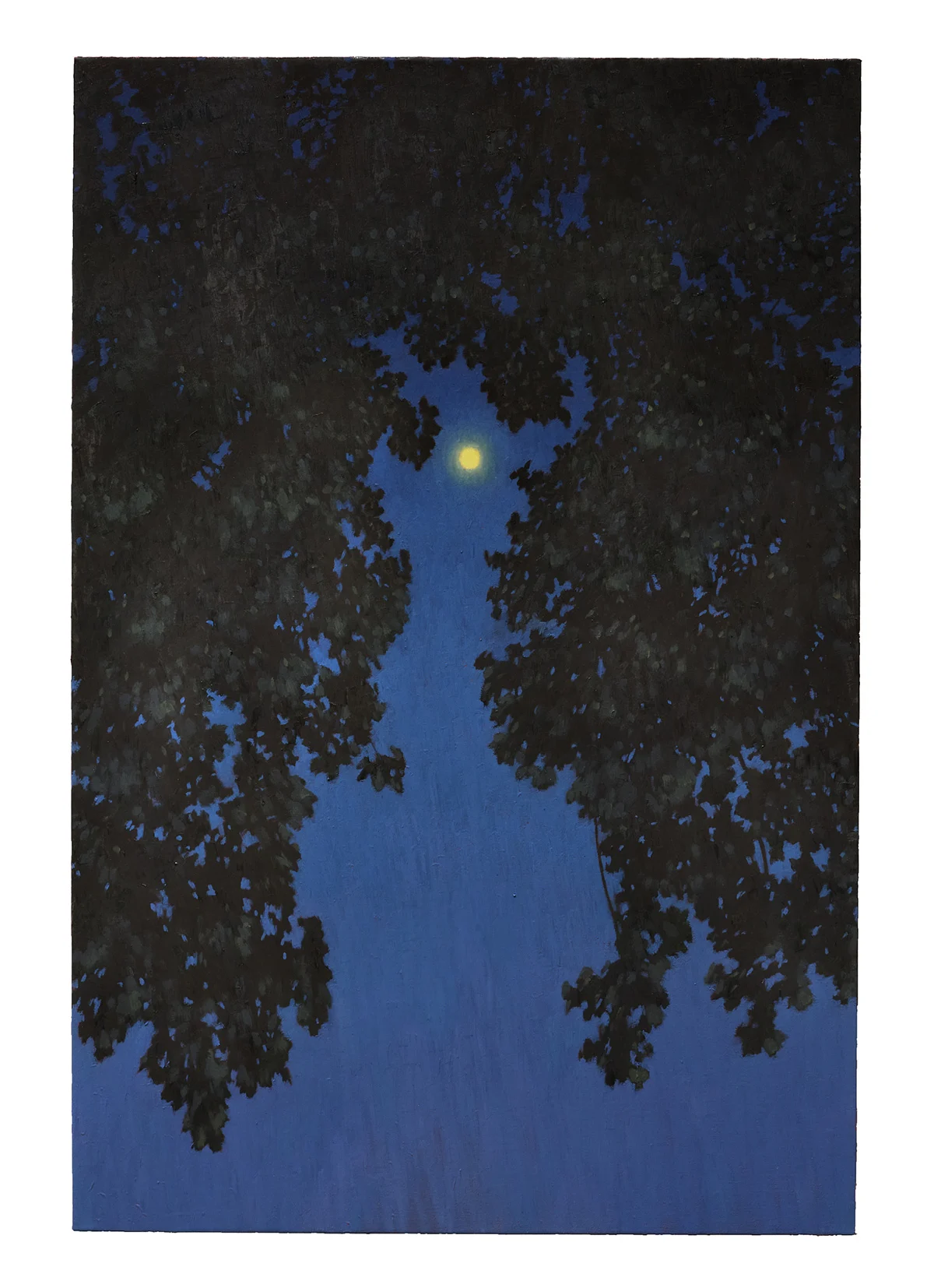
In the quiet, contemplative spaces of contemporary painting, few artists articulate the tension between personal history and the fragility of existence as poignantly as Brooklyn-based painter Xiangjie Rebecca Wu. Her recent body of work, characterized by a haunting blend of realism and symbolism, serves as an archaeological dig into the psyche. By fusing the iconography of millennial Chinese domesticity with the elusive nature of memory, Wu has established herself as a vital new voice in figurative art, one that explores the "palpable fear of insecurity" that defines the modern human experience.
Main Facts: The Art of Fragmented Memory
Xiangjie Rebecca Wu’s practice is rooted in the act of salvage. Her paintings are not merely depictions of scenes; they are reconstructions of "shards" of time—moments that once constituted her identity, only to be scattered by the inevitability of loss and migration.
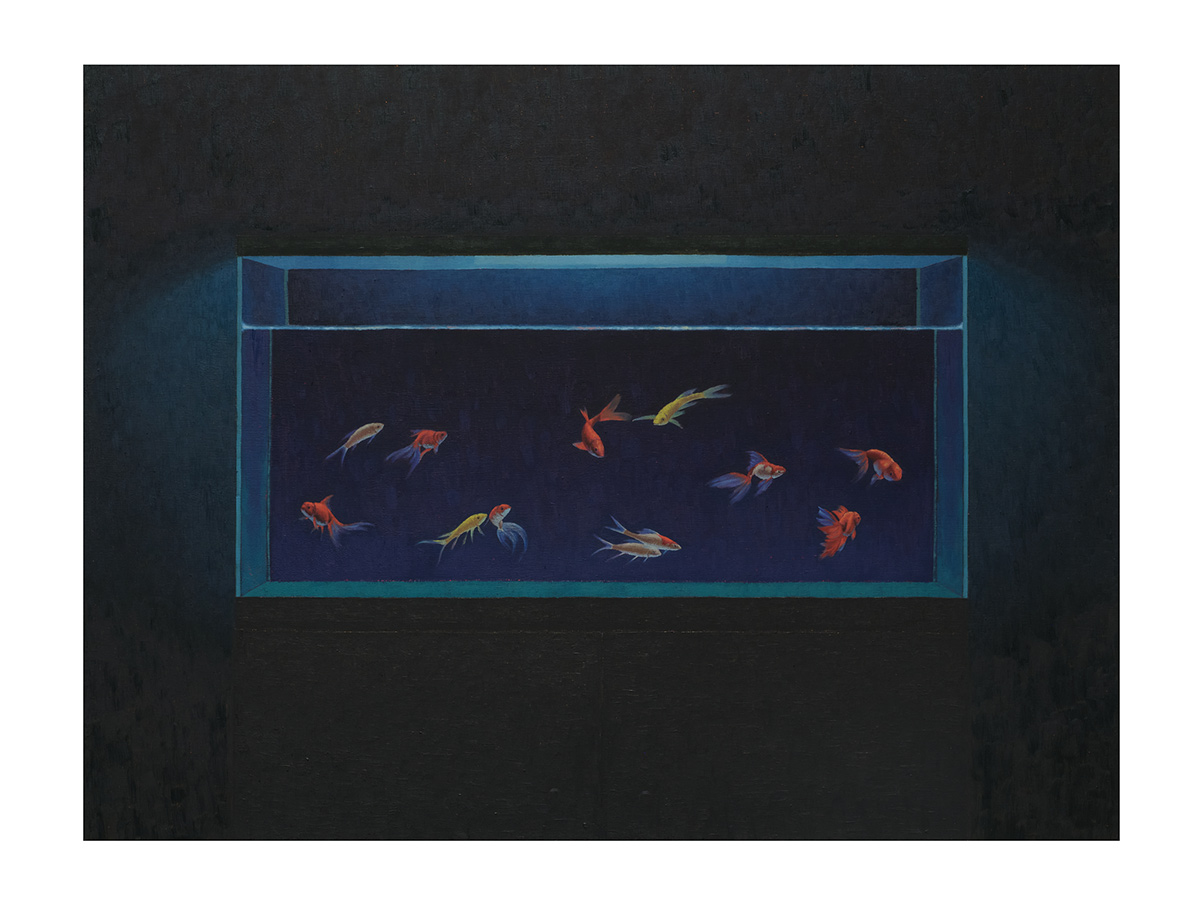
Born in Jiangyin, Jiangsu, China, Wu’s trajectory from her birthplace to the studio landscape of Brooklyn, New York, provides the geographical and emotional context for her work. Her paintings often feature domestic objects and interiors that feel simultaneously familiar and profoundly alien. By elevating still lifes to the status of primary subjects, she infuses inanimate objects with a sense of personhood. These works function as a bridge between the concrete—the physical presence of an object—and the metaphorical—the ghosts of the past that the object represents.
For Wu, the canvas is a sanctuary where she can grapple with the transience of history. Her approach is meditative, an inward journey designed to preserve an awareness of existence within the relentless forward momentum of time.
Chronology: A Path to the Present
Wu’s development as an artist is marked by a rigorous academic foundation that has allowed her to refine her conceptual framework over the last several years.
- Early Roots (Jiangyin, China): The foundational years of Wu’s life in Jiangsu province serve as the primary reservoir for her visual language. The specific cultural aesthetics of "millennial Chinese" spaces—objects, patterns, and architectural quirks—form the core narrative environment of her current work.
- Academic Foundations (2018–2022): Wu attended the College of Wooster, where she pursued a dual BA in Studio Art and Philosophy. This period was instrumental in shaping her intellectual rigor. By studying the philosophy of time, memory, and the self, she laid the groundwork for her artistic inquiries into how we hold onto the past.
- Refinement and Expansion (2022–2024): Upon graduating, Wu relocated to New York to attend the prestigious Pratt Institute. Her MFA studies served as a crucible for her aesthetic style, moving away from purely representative art toward a more nuanced, symbolic figurative style. It was during this period that her brushwork became more intentional, focusing on the tension between beauty and obscurity.
- The Current Phase (2024–Present): Now based in Brooklyn, Wu’s work has reached a new level of emotional maturity. She is currently focused on the "closed narrative environments" of her compositions, which invite viewers to step into a space of shared contemplation regarding their own forgotten histories.
Supporting Data: Themes and Artistic Methodology
The resonance of Wu’s work lies in its balance. In an art market often dominated by maximalism or high-concept digital media, Wu’s return to the tactile nature of oil on canvas offers a grounding force. Her methodology is explicitly documented in her reflections on the painting process:
"In contemplation, I dive deeply into myself," Wu writes. This is not merely a poetic statement; it is a description of her studio practice. Her work operates on several key thematic pillars:
- The Personification of Still Life: Wu treats everyday objects not as stage props, but as entities with their own weight and history. By rendering these items with careful attention to light and shadow, she gives them a presence that feels almost sentient.
- The Vulnerability of History: Wu notes that our relationship to history is "always vulnerable and ephemeral." Her paintings reflect this by leaving edges soft, blurring boundaries between objects, and utilizing a color palette that feels like a faded photograph or a half-recalled dream.
- The Self as a Reassembled Fragment: Her work acts as an act of self-preservation. By painting, she is attempting to coalesce the dissipated parts of her history into a singular image, suspended somewhere between the clarity of the present and the haze of the past.
Official Responses and Critical Reception
While still early in her career, the critical reception of Wu’s work has been characterized by an appreciation for her technical restraint and her ability to evoke a profound sense of melancholy without falling into sentimentality.

Curators and peers alike have noted that Wu’s ability to bridge the gap between "realism and symbolism" is rare. Her work provides a "doorway for contemplation," a phrase she uses to describe the function of her gallery installations. By creating spaces that feel "both familiar and remote," she challenges the viewer to project their own memories onto the canvas, turning a private act of artistic creation into a public dialogue about the nature of human existence.
Critics have also highlighted the importance of her background. The "millennial Chinese" aesthetic she employs is not a mere nostalgic exercise; it is an interrogation of the rapid modernization and cultural shifts that have defined her generation. Her work captures the anxiety of living in a world that is constantly shedding its skin, leaving individuals to scramble to define themselves amidst the debris.
Implications: The Future of Figurative Contemplation
What does the emergence of an artist like Xiangjie Rebecca Wu mean for the broader landscape of contemporary painting?
As we move further into a digital age defined by instant accessibility and the constant erasure of old data, the importance of "salvaging and reassembling" becomes more pronounced. Wu’s work suggests that painting has a unique, perhaps irreplaceable role to play in the 21st century. Unlike digital media, which can be easily edited or deleted, the physical act of painting serves as a permanent record—a marker of existence.
Her work implies that the "palpable fear of insecurity" is not something to be avoided, but something to be interrogated. By sitting with that fear, by documenting it, and by elevating it to a form of beauty, she provides a roadmap for others.
Looking forward, Wu’s trajectory suggests a deepening of these themes. As she continues to explore the intersections of memory and space, it is likely that her work will continue to challenge the boundaries of what is considered "figurative." She is not just painting figures; she is painting the absence of figures, the spaces they once occupied, and the echoes they left behind.
In conclusion, Xiangjie Rebecca Wu represents a sophisticated evolution of the figurative tradition. She moves past the mere representation of the body to the representation of the soul’s internal architecture. For those seeking art that demands patience, reflection, and a willingness to confront the beautiful, fleeting nature of their own pasts, Wu’s work offers a profound, necessary sanctuary. Her practice is a reminder that while the past may be a foreign country, it is the only home we truly carry with us. Through the alchemy of paint, Wu ensures that the fragments we lose along the way are never truly gone; they are simply waiting to be seen.