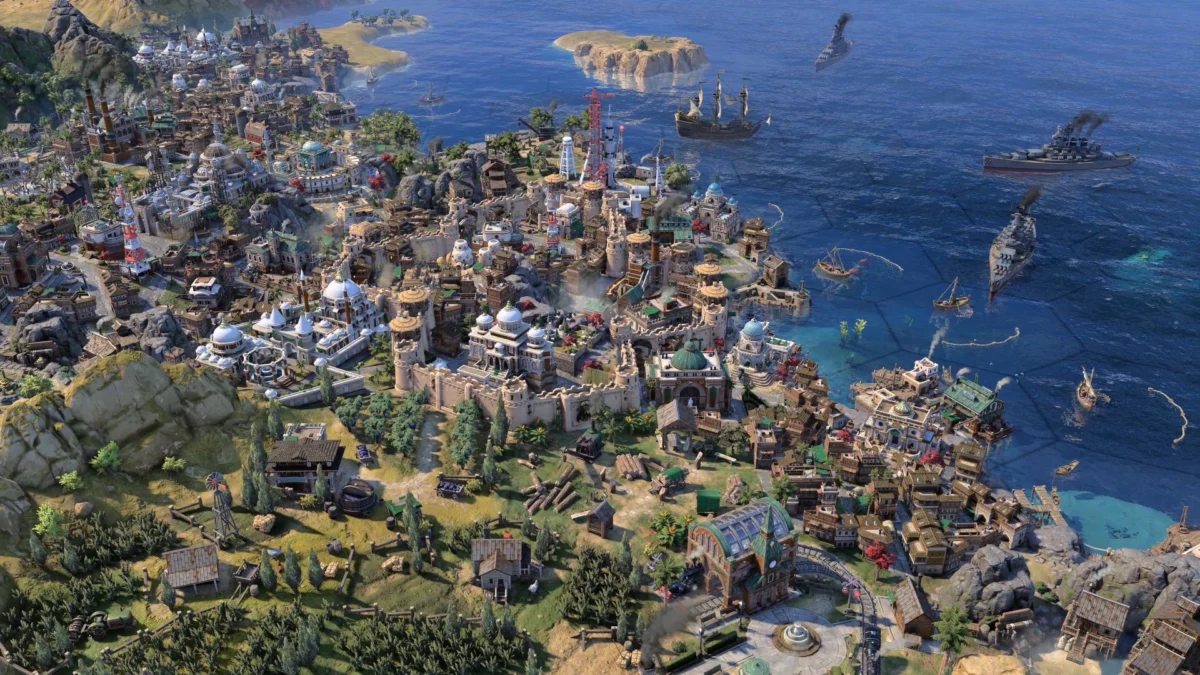
Sid Meier’s Civilization VII is, by any metric, an ambitious undertaking. As the latest iteration of the gold-standard 4X (eXplore, eXpand, eXploit, eXterminate) strategy franchise, it carries the weight of over three decades of legacy. However, as the game inches toward its full release, developer Firaxis Games has been forced to grapple with the increasingly complex intersection of historical representation, modern ethics, and the mechanical constraints of the genre.
In a recent, expansive Q&A session, the studio pulled back the curtain on its internal decision-making processes, offering fans a rare glimpse into how a team of historians and designers balances the "fun" of conquest with the moral gravity of the history they are simulating.
The Evolution of the 20th Century: More Leaders to Come
One of the most immediate concerns for the player base has been the representation of the 20th century. In a game that spans the entirety of human history, the modern era often presents the most significant hurdle regarding legal clearance and cultural sensitivity.
Addressing rumors and community speculation, senior historian Emily at Firaxis confirmed that the roster of 20th-century leaders is not yet complete. "The 20th century was long, and we haven’t fully explored it. Yet," she stated. This response serves as a direct rebuttal to concerns that the studio might be avoiding the complexities of recent history due to the legal minefields surrounding the estates of "relatively recently deceased" public figures.
For fans of the series, this implies that the current launch lineup is merely the tip of the iceberg. The studio’s commitment to expanding the 20th-century roster suggests a desire to provide a more nuanced look at a century defined by rapid technological shifts, total war, and the birth of the globalized modern state.
The Ethics of Selection: Who Makes the Cut?
Perhaps the most difficult question faced by the development team is the selection criteria for historical figures. History is replete with individuals whose contributions to governance, art, or science are inextricably linked to systemic violence or oppression.
When asked how Firaxis navigates the inclusion of controversial figures, senior historian Andrew provided a rigorous, albeit sobering, framework. He articulated a core rule of thumb for the team: "Does the memory of this person still cause harm? Are there movements in this person’s name that actively hurt people today?"
This "harm-reduction" lens is a marked departure from the more celebratory, "Great Man" theory of history that defined earlier titles in the franchise. Andrew contrasted figures like Genghis Khan—a man responsible for immense destruction—with those whose legacies are still actively weaponized today. While Khan is a historical figure whose name is rarely invoked to justify contemporary political violence, there are other figures whose inclusion would serve as a lightning rod for modern-day extremism. By drawing this line, Firaxis is positioning Civilization VII not just as a game, but as an entity that must remain conscious of its cultural footprint.
The 4X Paradox: Colonialism and Game Mechanics
Perhaps the most intellectually stimulating portion of the studio’s communication involved the inherent tension between the "4X" formula and the history of colonial expansion. Critics have long noted that the genre’s foundational loop—planting cities, extracting resources, and expanding borders—mirrors the logic of the colonial projects that have defined the last five centuries of human history.
When asked whether the team considered moving away from a linear, Eurocentric narrative of "progress" in favor of more pluralistic, non-exploitative models, the answer was remarkably candid.
"The honest answer is that there’s a few competing pulls, and a few limitations," Andrew admitted. He explained that a departure from the traditional colonial model would require the creation of an entirely new set of mechanical foundations. To simulate a world based on "prestige, coexistence, and sustainability" rather than "gold, expansion, and exploitation" would necessitate a total architectural overhaul of the game’s systems.
The Mechanical Barrier
The technical reality, as presented by Firaxis, is that the 4X genre is built on a "colonial" engine. The systems of growth, resource acquisition, and competitive expansion are the bedrock upon which Civilization has been built since 1991. To strip those out would be to fundamentally change what a "Civilization game" is.
However, this acknowledgement also highlights the friction between modern sensibilities and legacy game design. As the industry moves toward more inclusive storytelling, the question remains: Can a game that relies on the mechanics of conquest ever truly divorce itself from the historical consequences of that same logic?
Implications for the Future of the Genre
The conversation sparked by Firaxis suggests a turning point for the franchise. By inviting the community into the discussion, the studio is acknowledging that Civilization is no longer just a digital board game; it is a cultural artifact.
1. The Challenge of "Alt-History"
Firaxis’ admission that they are constrained by the "4X" framework is a challenge to the industry. It posits that if players want a truly non-exploitative strategy game, they are asking for a new genre entirely. The studio’s reluctance to make that leap stems from a fear of alienating a core player base that expects a specific, high-intensity strategy experience.
2. A Shift in Historical Tone
The focus on the "harm" caused by the legacy of historical figures indicates a more cautious, research-heavy approach to character inclusion. This is likely to lead to a more diverse, albeit more carefully curated, list of leaders. We are moving away from the era where "Great Leaders" were selected based solely on military conquest and toward a more holistic view of history.
3. Community Engagement as a Shield
By being transparent about the "competing pulls" of game design, Firaxis is attempting to foster a more mature relationship with its audience. Instead of simply presenting a finished product and letting the chips fall, they are explaining the why behind their choices. This transparency is a calculated move to manage expectations, ensuring that players understand the constraints—technical, legal, and ethical—that inform the game’s development.
Conclusion: A Delicate Balance
Sid Meier’s Civilization VII stands at a crossroads. On one side, it must honor the addictive, complex, and deeply satisfying loop of gameplay that has kept the series relevant for decades. On the other, it must face the harsh realities of the history it depicts.
The studio’s recent Q&A reveals that the team is not blind to the ethical minefields of their project. While they may not have all the answers—and while they remain tethered to the mechanical tropes of the 4X genre—the willingness to engage in this discourse is a positive sign.
The game’s ultimate success will not be measured solely by its graphical fidelity or its new gameplay features, but by how successfully it navigates the tension between the "fun" of the 4X experience and the weight of the human history it seeks to simulate. As we look toward the future, one thing is certain: Firaxis is listening, even if the road to a more inclusive, nuanced strategy experience remains long, complicated, and undoubtedly "messy."
For those interested in the full, unvarnished details of the studio’s internal debates, the complete Q&A is available via the official Steam community page. It serves as a necessary read for any fan looking to understand the mechanics of the game as well as the philosophy of the people building it.