

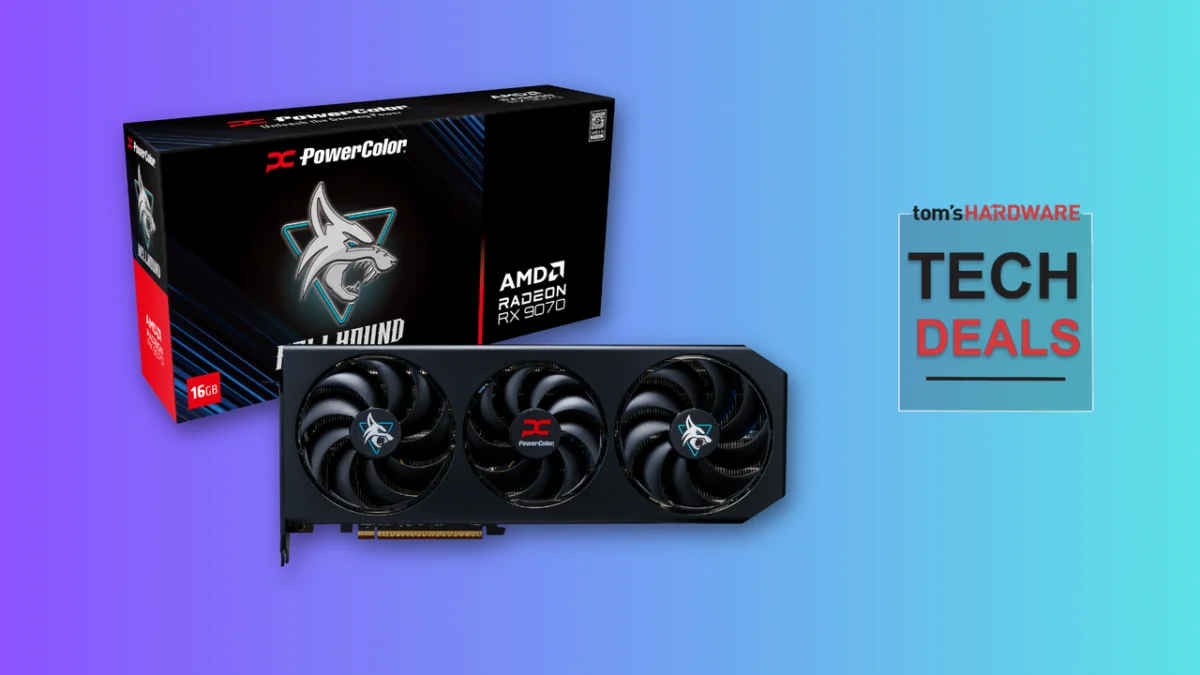
Building a custom PC in the current economic and technological climate has become an exercise in patience and financial maneuvering. As the global AI boom continues to monopolize manufacturing capacity for high-end semiconductors, the ripple effects are being felt acutely by gamers and workstation builders alike. From surging costs for high-speed RAM and NVMe storage to the steady creep of GPU price tags, finding value has become increasingly difficult. However, amidst the market volatility, a significant opportunity has emerged: the PowerColor Hellhound AMD Radeon RX 9070 is currently available on Amazon for $554—a $165 discount from its standard retail price.
Main Facts: The Deal at a Glance
For enthusiasts looking to upgrade their graphical capabilities without breaking the bank, this offer represents one of the most compelling value propositions in the current mid-range segment. The RX 9070, while often overshadowed by its more aggressive "XT" sibling, stands as a formidable contender in the 1440p gaming space.
- Current Sale Price: $554 (via Amazon)
- Total Savings: $165 off MSRP
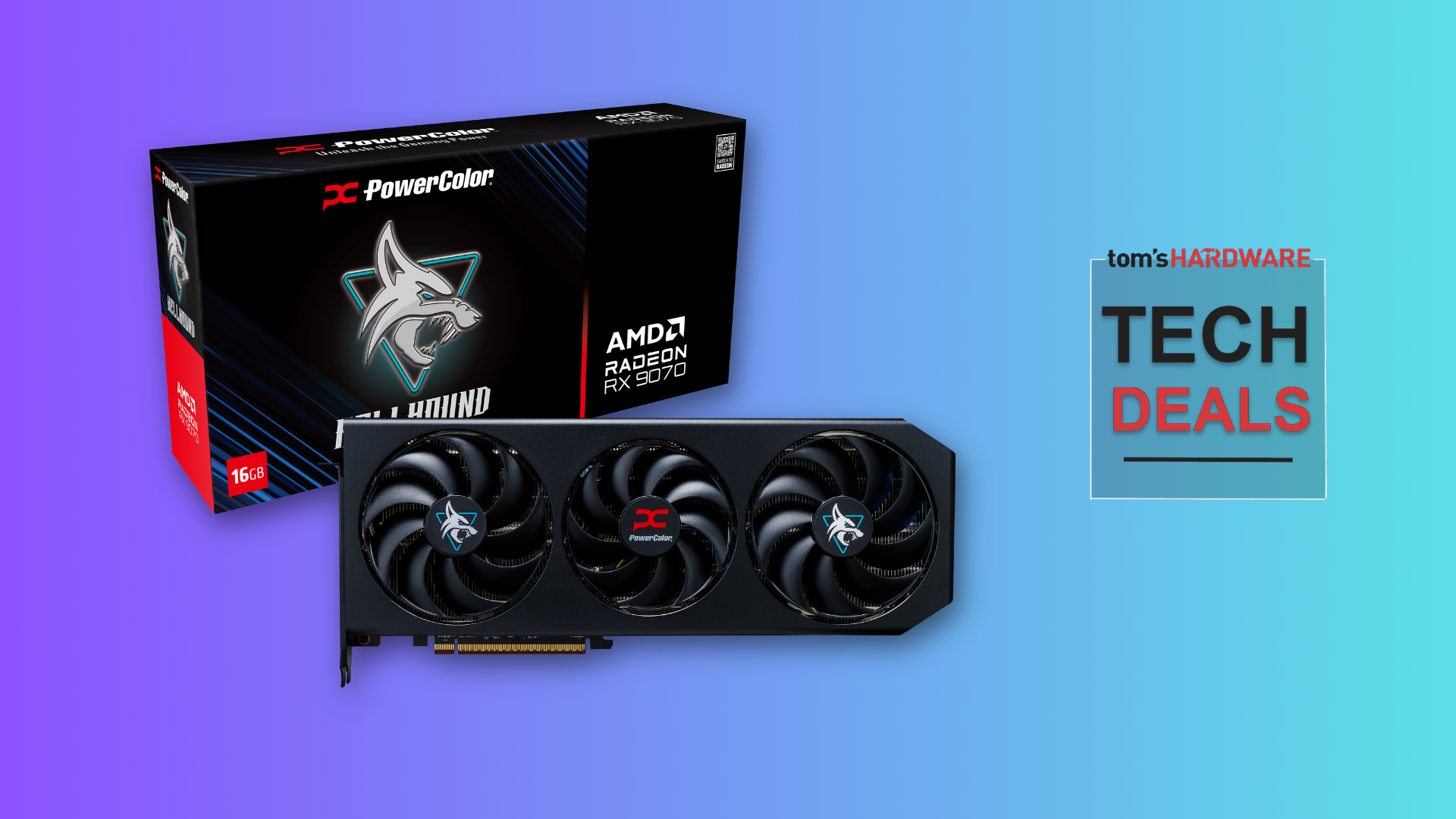
- Model: PowerColor Hellhound AMD Radeon RX 9070
- Key Specs: 56 Compute Units, 16GB GDDR6 VRAM, 256-bit memory bus
- Key Features: Dual BIOS (OC/Silent), 12-layer PCB, PTM7950 thermal interface material
While this may not represent the absolute historic low for the RX 9070, it is currently the most affordable entry point for the card on the market. For those who prioritize raw rasterization performance and reliable 1440p output over the proprietary feature suites of competing brands, this deal is a "must-watch" in a market defined by inventory uncertainty.
The Chronology of the GPU Market Shift
To understand why this deal is significant, one must look at the broader trajectory of the GPU industry over the last 18 months.
Early 2024: The AI Pivot
As the demand for enterprise-grade AI accelerators surged, foundry capacity—specifically at TSMC—became increasingly contested. Manufacturers like AMD and Nvidia shifted significant portions of their wafer allocations toward high-margin data center products, creating a supply bottleneck for consumer-grade silicon.
Mid-2024: The Price Creep
By the summer of 2024, the effects of this supply squeeze began to manifest on retail shelves. Prices for mid-range GPUs, which historically hovered in the $400–$500 range, began to drift upward. The RX 9070 was initially launched as a budget-conscious alternative to the flagship tiers, but consistent demand kept its price sticky, rarely dipping into the "bargain" territory seen with previous-generation cards.
Late 2024 to Present: The "Sale" Window
The recent decline in price to the $554 mark is a rare exception to the prevailing trend. This fluctuation likely stems from a combination of clearing inventory to make room for mid-cycle refreshes and a tactical response to competitive pressure from Nvidia’s RTX 50-series and 40-series price adjustments. For consumers, this window represents a brief, tactical opportunity to secure hardware before potential holiday-season price hikes or further supply-chain disruptions.
Technical Analysis and Performance Metrics
The PowerColor Hellhound RX 9070 is not merely a "good deal" on paper; it is a piece of engineering that punches well above its weight class.
Architecture and Build Quality
PowerColor has prioritized substance over flash with this model. The Hellhound variant skips the ubiquitous RGB lighting in favor of a sleek, minimalist aesthetic that fits well in professional or stealth-focused builds. Beneath the shroud, the card features a 12-layer PCB and an 8+1 phase power design, supported by a 3+2 phase VRM dedicated to the VRAM.
The use of PTM7950—a high-performance phase-change thermal interface material—on the core is a standout inclusion. This material is widely regarded by enthusiasts as superior to traditional thermal paste, ensuring lower operating temperatures and better longevity. Additionally, the dual-BIOS switch allows users to toggle between an overclocked profile for maximum frames or a "silent" profile for noise-sensitive environments.
Rasterization vs. Ray Tracing
In head-to-head testing against contemporary rivals, the RX 9070 demonstrates clear strengths and specific weaknesses:
- Rasterization Dominance: The RX 9070 consistently outperforms the Nvidia RTX 5070 in pure rasterization across all resolutions. It effectively bridges the gap, sitting uncomfortably close to the performance levels of the previous-generation flagship, the RX 7900 XT.
- The Nvidia Comparison: While it edges out the RTX 4070 Ti in most scenarios, it faces a tough challenge against the 4070 Ti Super.
- Ray Tracing Limitations: The story changes when ray tracing is enabled. Despite significant improvements over previous RDNA generations, the RX 9070 still lags behind Nvidia’s equivalent tiers. It generally slots in just below the RTX 4070 Super for ray-traced workloads, suggesting that if your gaming library is heavily reliant on Path Tracing or intense RT effects, the Green Team may still hold an edge.
Implications for the Modern PC Builder
The decision to purchase an RX 9070 at this price point carries several implications for the end-user.
The Software Trade-off
The most significant barrier to entry for many remains the software ecosystem. Nvidia’s DLSS (Deep Learning Super Sampling) and RTX HDR remain proprietary, high-quality solutions that many users consider non-negotiable. AMD’s FSR (FidelityFX Super Resolution) has made strides, but it still struggles to match the image stability and consistency of DLSS in some titles. For users who prioritize "set it and forget it" upscaling, this remains a point of consideration.
Future-Proofing in an Uncertain Market
With 16GB of GDDR6 VRAM, the RX 9070 is well-positioned to handle modern 1440p titles for the next several years. As game textures and assets grow in size, the 16GB capacity provides a buffer that cards with 12GB or less will eventually struggle with. By investing in this card now, builders are essentially purchasing a long-term solution for high-fidelity 1440p gaming that avoids the need for a premature upgrade.
Conclusion: Act Fast
The combination of a $165 discount and the card’s robust build quality makes the PowerColor Hellhound RX 9070 one of the most logical purchases in a market otherwise characterized by inflated costs.
While the "AI boom" continues to make the PC component market a volatile environment, deals like this serve as a reminder that value still exists for those willing to look past the flagship hype. Whether you are building a new system or looking to breathe new life into an aging rig, the RX 9070 at $554 offers a rare blend of performance, build quality, and price efficiency. Given the current instability of supply chains, it is advisable for interested buyers to act quickly before current stock levels are exhausted.
For those seeking a broader overview of the current hardware landscape, check our dedicated resources on Best PC Hardware deals, or explore our specialized guides for SSD and Storage, Gaming Monitors, and CPU components.










No comments yet. Be the first to join the conversation!