

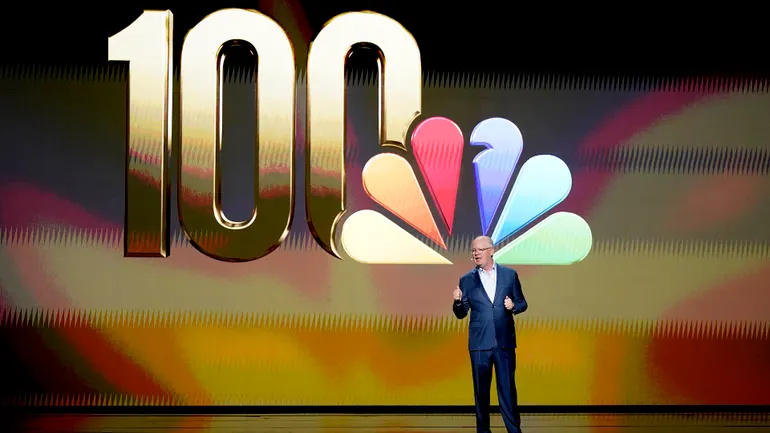
NEW YORK — As the media landscape undergoes a seismic shift characterized by cord-cutting, the fragmentation of audiences, and the relentless rise of streaming, NBCUniversal (NBCU) took to the stage at Radio City Music Hall this week with a bold, defiant message: The "legacy" label is not a weight—it is a superpower.
In a presentation that kicked off the industry’s annual Upfronts—a high-stakes ritual where networks court advertisers for billions in advance commitments—NBCU leaned into its 100-year history. Yet, beneath the glitz of celebrity cameos and musical numbers, the company unveiled a sophisticated, tech-heavy roadmap designed to prove that the traditional television titan is arguably the most agile player in the digital transformation race.
The Core Strategic Pivot: Embracing the "Legacy" Moniker
The Upfront presentation was a masterclass in branding. Opening with a tongue-in-cheek prerecorded skit that featured Mark Marshall, chairman of global advertising and partnerships, getting an "NBC" tattoo, the event set a tone of self-assured humor. However, the substance of the presentation was rooted in a serious strategic shift.
"Some people may think [the legacy media moniker is] insulting, but to us, on our 100th anniversary, our legacy is our greatest competitive advantage," Marshall declared to the crowd of advertisers. "Our legacy is built on evolution, innovation, and a relentless focus on consumer behavior."
This narrative was bolstered by appearances from network stars, including Tina Fey, who leaned into the irony of the occasion. "NBC is doing something that no other network has ever done, a stunt not even a Real Housewife of Beverly Hills has had the audacity to attempt: We are throwing ourselves a huge birthday party so we can sell ads during that birthday party," Fey quipped.
Behind the jokes, the strategy is clear: NBCU is leveraging its massive reach—spanning sports, entertainment, and news—to provide a level of stability and scale that digital-native platforms struggle to replicate.
Chronology of the Presentation: From Spectacle to Strategy
The event was structured to move from the emotional resonance of its programming to the cold, hard efficiency of its advertising technology.
- The Celebration of Content: NBCU highlighted its massive programming slate, which includes high-stakes sports like World Cup coverage on Telemundo and the cultural powerhouse of Bravo’s reality hits. A major announcement included the expansion of its Sunday night sports strategy, moving beyond the NFL to include basketball and baseball, effectively creating a "Sunday Night" ecosystem that keeps viewers locked in across different leagues.
- The Centennial Milestone: Recognizing its 100th year, the network confirmed a variety special scheduled for December 10, which promises to blend music, comedy, and reunions, serving as a massive tentpole for advertisers to align with.
- The Data Dive: The second half of the presentation transitioned into a technical deep dive. Marshall and his team detailed how the network’s advertising stack has evolved from simple spot-buying into an integrated ecosystem of measurement, contextual targeting, and automated "agentic" AI.
- The Future-Forward Vision: The presentation concluded with a look at the "next frontier"—a suite of autonomous AI tools designed to transform how TV inventory is bought and sold.
Supporting Data: Proof in the Performance
NBCU’s pitch is not built on vanity metrics but on proven return on investment (ROI). The company presented concrete evidence that its "Live Total Impact" tool—which retargets live-event viewers across its streaming and linear portfolio—is delivering substantial results.
- State Farm: Reported a 90% incremental lift in insurance quote starts.
- Telecom Sector: Experienced a 40% lift in website visits.
- Consumer Engagement: Search engagement surged across food delivery, QSR, retail, and travel verticals.
Furthermore, the integration of its Performance Insights Hub marks a turning point in industry transparency. By integrating third-party partners like Dynata, EDO, InMarket, IQVIA, iSpot, Kantar, and VideoAmp, NBCU is attempting to solve the "fragmentation problem" that plagues modern media buying.
The addition of Instacart as an exclusive CPG (Consumer Packaged Goods) outcomes partner has been particularly lucrative. The collaboration has driven, on average, a 5.5x return on ad spend, with 51% of those customers being new-to-brand, signaling that NBCU’s content is not just building awareness, but driving tangible, bottom-of-the-funnel conversions.
Official Responses and The AI Revolution
The most significant announcement of the day, however, was the unveiling of NBCU’s "agentic AI" strategy. As the industry grapples with the impact of Artificial Intelligence, NBCU is moving beyond generative content to focus on agentic workflows—AI that can perform tasks, make decisions, and automate the buying process.
"These tools represent the next frontier in the AI revolution," said a company spokesperson. The suite of interoperable AI agents, slated for release at the start of the broadcast year, will handle complex transaction automation and surface real-time intelligence for advertisers, effectively reducing the friction between premium content and performance marketing.
Addressing the Linear/Streaming Divide
Marshall’s presentation was pointed in its critique of current industry standards that prioritize streaming metrics while ignoring linear audiences. "When you look at the premium video marketplace, over 70% of those impressions are still on linear," he noted. "If your current dashboard is only measuring streaming, then you’re missing nearly three-quarters of all ad impressions."
By positioning its new tools as a "unified view," NBCU is effectively telling the market that it is the only safe harbor for advertisers who want to reach a mass audience without sacrificing the data-driven precision they have grown accustomed to in the digital space.
Implications for the Media Landscape
The implications of NBCU’s strategy are far-reaching. By combining its massive cultural footprint with sophisticated, AI-automated advertising infrastructure, NBCU is effectively insulating itself against the "streaming wars" that have eroded the valuation of many other legacy players.
1. The Death of the "Legacy vs. Digital" Dichotomy
NBCU’s success with The Tonight Show Starring Jimmy Fallon provides a roadmap for the rest of the industry. Despite being a format that has existed since 1954, the show has become a social media juggernaut, generating 16 billion views in 2025 alone. As Fallon noted, "We didn’t just survive the digital transition; our show became one of the best examples of how legacy television adapted to it." This proves that content format is less important than content distribution.
2. Contextual AI as the New Standard
The demonstration of a Bounty ad overlay appearing precisely after a fumble in an NFL game highlights the power of NBCU’s forthcoming AI-driven contextual targeting. By Q4, this capability will expand from VOD to live environments, allowing brands to insert themselves into the narrative of the game in real-time. This is a game-changer for brand safety and relevance, moving beyond generic pre-roll ads.
3. The Power of "Unified Measurement"
For years, the advertising industry has suffered from a lack of a single source of truth. By aggregating data from partners like LiveRamp, VideoAmp, and Instacart, NBCU is positioning itself as an essential utility for CMOs. They are no longer just selling airtime; they are selling a high-performance marketing platform that happens to include the world’s most popular television shows.
Conclusion: A Century of Momentum
As the upfronts continue, the industry will be watching closely to see if other networks can match the scale and technical ambition of NBCU’s pitch. The company has made a calculated bet: that in an era of infinite choice, the combination of cultural relevance (the birthday party) and data-driven utility (the agentic AI) is the only way to remain indispensable.
For now, NBCUniversal appears to have successfully reframed its 100-year history not as an anchor, but as a launchpad. As Mark Marshall concluded, "When we talk about the next evolution of NBCUniversal, legacy is not a word we shy away from. It’s our superpower."
Whether this "superpower" will be enough to maintain dominance in an increasingly crowded and digital-first marketplace remains to be seen, but NBCU has undoubtedly set a high bar for the rest of the industry. The message to the ad-buying community is clear: The party is just getting started, and the future of television is looking remarkably like the past—only smarter, faster, and more measurable than ever before.












No comments yet. Be the first to join the conversation!