Rifan Muazin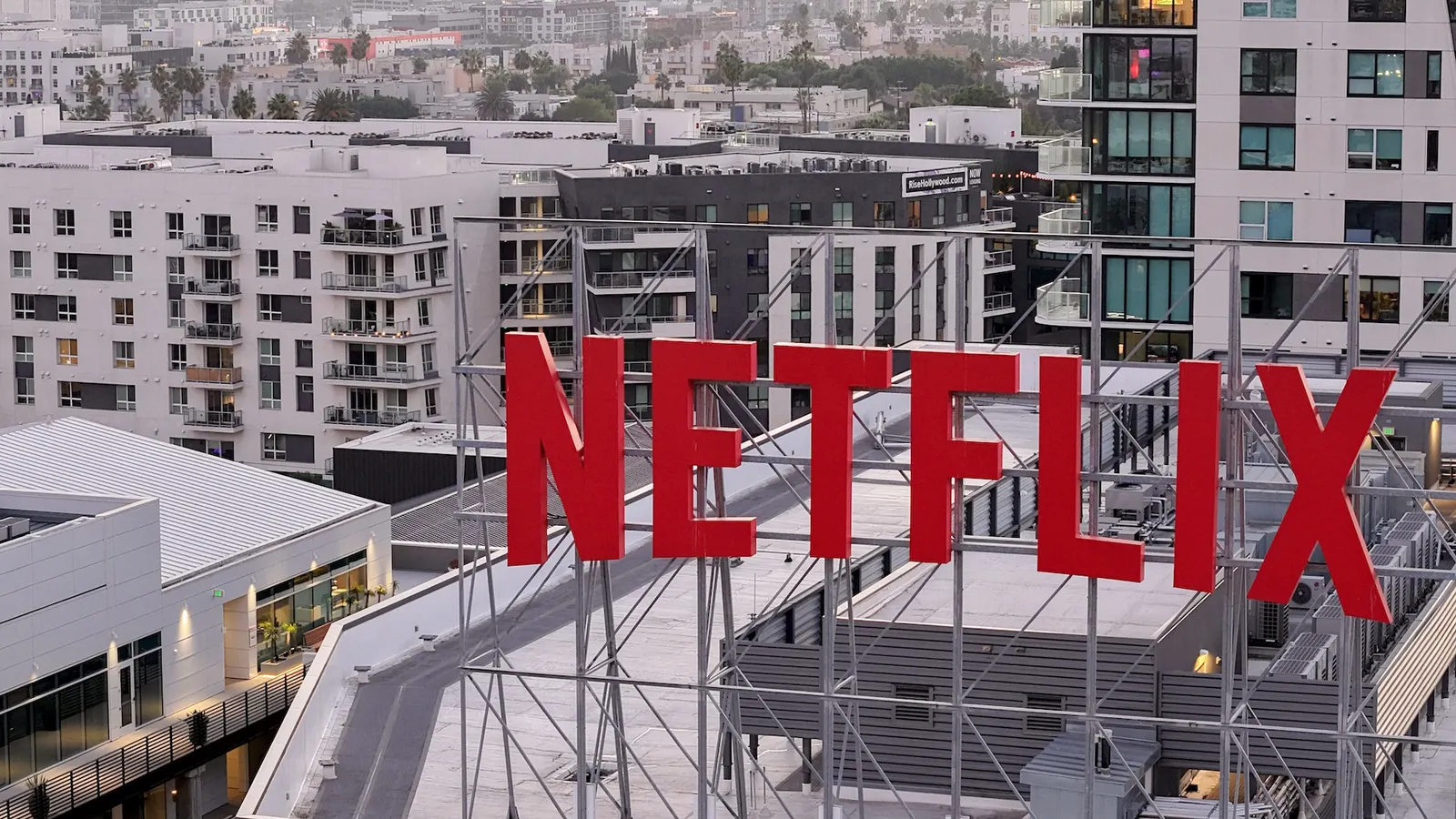
By [Your Name/Journalistic Staff]
Published July 17, 2026
Netflix, the perennial titan of the streaming world, finds itself at a complex crossroads as of the second quarter of 2026. While the company continues to demonstrate robust financial health—boasting a 13% year-over-year revenue increase to $12.6 billion—the narrative surrounding its operational success is being challenged by cooling viewer engagement metrics. As the company leans heavily into live sports and advertising-backed tiers, investors are beginning to ask whether the streamer’s shift in strategy is sacrificing long-term retention for short-term monetization.
The Financial Landscape: Steady Growth Amid Market Skepticism
Netflix’s Q2 2026 performance, released on July 16, painted a picture of a company firing on all cylinders regarding its top-line metrics. The $12.6 billion revenue figure was bolstered by a trifecta of strategic maneuvers: consistent membership growth, tactical pricing adjustments across global regions, and significant momentum within its burgeoning advertising business.
For shareholders, the results appeared to be in line with Wall Street’s consensus projections. However, the market’s reaction was lukewarm, with shares trading downward following the release. This negative sentiment suggests that while the company is hitting its fiscal targets, the internal mechanics of how those dollars are generated—specifically, the health of the subscriber base and their viewing habits—are coming under increased scrutiny. Netflix has already provided guidance for Q3 2026, forecasting a 12% year-over-year revenue increase, signaling confidence that the current growth levers remain sustainable.
Chronology of a Shifting Strategy
The transition from a pure-play subscription video-on-demand (SVOD) service to a diversified media conglomerate has been a multi-year journey for Netflix. To understand the current climate, one must look at the recent timeline of the company’s evolution:
- Late 2025: Netflix set an ambitious goal to reach $3 billion in annual advertising revenue, a milestone the company remains on track to hit. This would represent a near-doubling of its 2025 performance.
- Early 2026: The streamer began intensifying its push into live event programming, securing rights to high-profile sporting events, including the Women’s World Cup and an expanded slate of NFL games.
- Q2 2026: The company moved into the final, high-stakes weeks of U.S. upfront negotiations. This period is critical for the industry, as major advertisers commit billions of dollars to media platforms for the upcoming year.
- July 2026: Earnings call analysts expressed concerns regarding "softer" viewing hours per member and reports of subscribers abandoning shows after a single season.
Supporting Data: The Engagement Gap
The most pressing concern for analysts during the recent earnings call was not the revenue, but the "time spent" metric. Data suggests that while subscribers are paying, they are watching less. Reports, including those from Bloomberg, indicate a trend where viewers are increasingly prone to "churning" through series, dropping off after a show’s first season rather than committing to long-term franchise growth.
Netflix’s management acknowledges this shift but maintains a nuanced perspective. Co-CEO Ted Sarandos defended the platform’s content performance, noting that second-season engagement is "performing well within our bands of expectation." The company suggests that the "one-and-done" trend is an industry-wide phenomenon rather than a platform-specific failure.
Furthermore, there is a measurable gap between the monetization of ad-tier members and the traditional ad-free subscriber base. Netflix is currently working to narrow this gap by:
- Improving Ad-Tech: Building a more sophisticated stack to allow for programmatic buying and better audience targeting.
- Expanding Measurement: Partnering with third-party verification firms to provide advertisers with the granular data they demand.
- Creative Integration: Utilizing bespoke campaigns, such as those for Genesis and Mike’s Hard Lemonade in the series The Hawk, to make ads feel like a native part of the entertainment experience.
Official Responses: The Leadership Perspective
During the earnings call, Co-CEOs Greg Peters and Ted Sarandos faced a barrage of questions regarding these engagement trends. Greg Peters was particularly vocal about the company’s strategy to improve unit economics.
"We’re making it easier for folks to transact with us," Peters stated. "Those all drive demand. They drive competitiveness. That yields increased fill rates. Those improvements are really the bulk of the opportunity we have to improve unit performance and monetization for the next few years."

Regarding the concern that live events are cannibalizing "viewing hours," Peters offered a strategic defense. He argued that live content serves a different purpose than scripted dramas. While scripted shows are designed to keep users on the platform for hours on end, live events act as "acquisition and promotion engines." They generate massive "fandom," drive ad revenue, and create cultural relevance, even if the raw number of hours watched during a live match is lower than a binge-watched television series.
Implications for the Future of Streaming
The implications of Netflix’s current trajectory are significant for both the streamer and its competitors.
The Sports Overload
Netflix’s pivot toward live sports places it in direct competition with traditional broadcast networks and other tech giants like Amazon. With Amazon having recently closed its own upfront negotiations with year-over-year growth, the market for premium sports ad inventory is tighter than ever. Netflix’s ability to leverage its massive, global database to offer more precise targeting than traditional TV could be its "secret weapon" in this space.
The Monetization Tug-of-War
The shift toward advertising is not just a secondary revenue stream; it is now the core growth engine for the next three years. However, the company must balance this with its "standard" ad-free tier. If the ad-supported tier becomes too intrusive, or if the content quality dips due to an over-reliance on live events, Netflix risks alienating the core user base that built the company’s reputation.
The "Engagement" Metric
The industry is moving away from purely measuring "total subscribers" toward measuring "quality of engagement." If Netflix cannot reverse the trend of decreasing viewing hours, it may find it harder to justify the price hikes that have historically powered its revenue growth. The company’s focus on integrating brands into the storytelling process—as seen in The Hawk—is a clear signal that they are looking to create a "sticky" ecosystem where advertising is not seen as an interruption, but as an enhancement to the content.

Conclusion
As Netflix enters the second half of 2026, the company is undeniably profitable and strategically repositioned for an advertising-heavy future. However, the "softer" engagement numbers serve as a cautionary tale. The challenge for Sarandos, Peters, and the rest of the leadership team is to prove that the migration to live events and ad-supported tiers can coexist with the long-form, high-quality storytelling that made Netflix the industry leader.
For now, investors remain cautious, watching to see if the $3 billion ad revenue target will be enough to offset the potential long-term risks associated with changing viewer habits. One thing is clear: the era of "streaming for streaming’s sake" is over, replaced by a high-stakes battle for efficiency, data, and the ever-elusive, finite resource of viewer attention.


 Asep Darmawan
 Nana Muazin