

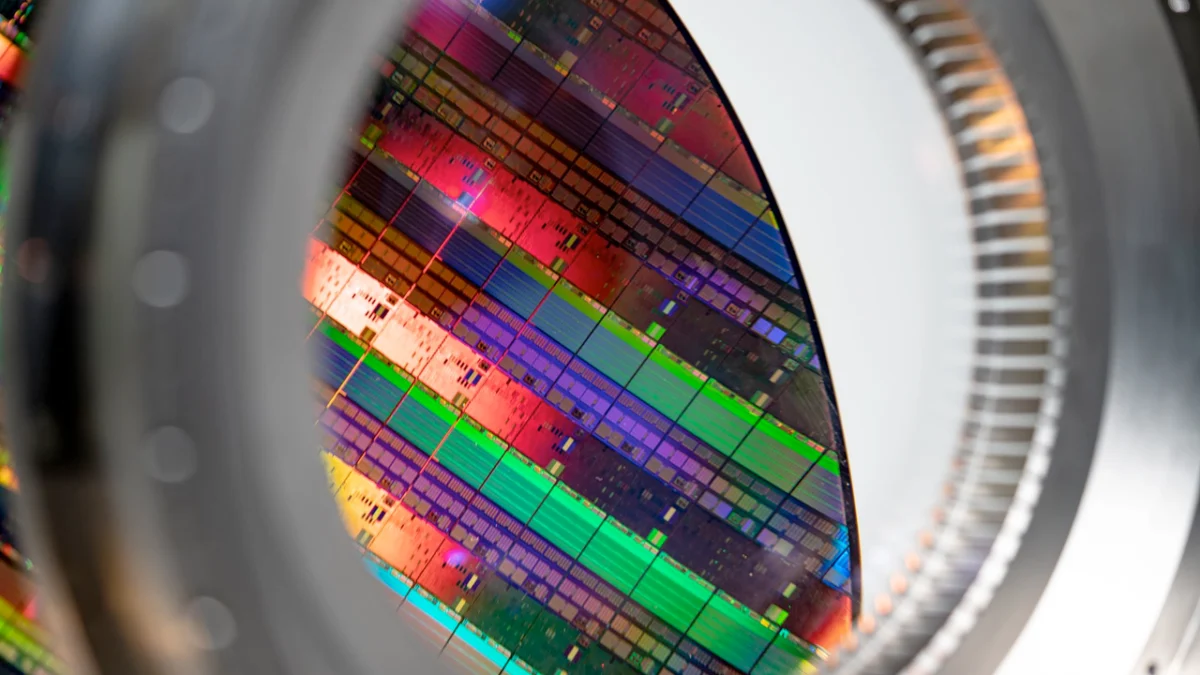
In the high-stakes world of semiconductor manufacturing, the architecture of the future is built upon the precision of lithography machines. For over a decade, the Dutch firm ASML has reigned supreme, effectively monopolizing the most advanced segments of the industry. However, a significant shift is brewing in the Japanese tech sector. Nikon, once a titan of the lithography market, is mounting a strategic comeback, signaling its intent to challenge ASML’s dominance by leveraging a aggressive pricing strategy and a renewed focus on Argon Fluoride (ArF) immersion technology.
Yasuhiro Ohmura, who stepped into the role of President and CEO of Nikon in April, has publicly outlined a roadmap to recapture market share. By offering high-performance, cost-effective ArF tools, Nikon aims to provide chipmakers—particularly those in the U.S. and Asia—with a viable alternative to the Dutch giant’s ubiquitous equipment.
The State of Play: A Market Divided
To understand the gravity of Nikon’s move, one must first recognize the structure of the current market. ASML controls more than 80% of the lithography sector. Its monopoly is most ironclad in the realm of Extreme Ultraviolet (EUV) lithography—a technology so complex that it is essential for the production of the world’s most advanced 3nm and 2nm processors.
Nikon, having made the strategic decision to exit the race for EUV development in 2008, currently operates in the Deep Ultraviolet (DUV) space. While EUV grabs the headlines, the reality of semiconductor fabrication is that a massive volume of "patterning steps," even on cutting-edge 3nm chips, still relies on ArF immersion systems. These machines are the workhorses of the industry, and they carry a hefty price tag—often averaging $82.5 million per unit.
Nikon’s pitch is simple: provide the necessary precision for mature and near-mature node manufacturing at a lower total cost of ownership. For chipmakers facing the massive capital expenditure (CapEx) required to build modern fabs, the promise of a lower-cost, reliable alternative is an attractive proposition.
A Chronology of Decline and Renewal
Nikon’s current position is the result of a long, often difficult journey.
- The Early Dominance: Decades ago, Nikon was the undisputed leader in stepper and scanner technology. Companies like Intel relied heavily on Nikon’s engineering, with Intel accounting for as much as 80% of the Japanese firm’s ArF orders at its peak.
- The 2008 Strategic Pivot: In a decision that remains debated in industry circles, Nikon opted to withdraw from the development of EUV technology. This allowed ASML to consolidate its R&D and eventually secure a near-total lock on the next generation of chip fabrication.
- The Lean Years: Nikon’s lithography business has struggled significantly in recent years. For the fiscal year ending in March 2024, the company shipped only 11 ArF systems. Even more concerning, the first three quarters of the 2025 fiscal year saw zero shipments of these systems, according to industry analysis firm TrendForce.
- The Fiscal Crisis: These operational struggles culminated in a record-breaking net loss of 86 billion yen (approximately $540 million) for the year ended March 2024. The loss was compounded by a struggling metal 3D printing unit and a cooling market for high-end optical equipment.
- The New Era (2025 and Beyond): Under CEO Yasuhiro Ohmura, the company is attempting a "back to basics" approach. By narrowing the business focus to core competencies—cameras and semiconductor equipment—Nikon is attempting to stabilize its balance sheet while simultaneously funding a new, competitive ArF platform set to launch in fiscal 2028.
The Data Behind the Strategy
The demand for lithography equipment is currently surging, fueled by the global artificial intelligence (AI) boom. As hyperscalers and chip designers scramble to increase capacity, the existing supply chain for tools is under immense strain.

ASML currently faces an enormous backlog—recently reported at approximately €38.8 billion. In 2025 alone, the company shipped 48 EUV systems and 131 immersion DUV systems. This volume is staggering, but it has created a "bottleneck effect" that has left many chip manufacturers waiting years for equipment.
Ohmura’s argument is that the industry’s reliance on a single, dominant supplier is inherently risky. By positioning Nikon as the "second source," the company is not necessarily trying to replace ASML, but rather to insert itself into the supply chain as a risk-mitigation partner. If a major foundry can secure a Nikon machine for a lower price and a shorter lead time than an ASML equivalent, the economic logic for adoption becomes difficult to ignore.
Official Responses and Strategic Intent
In his interview with Nikkei Asia, CEO Yasuhiro Ohmura emphasized that the company is already in active discussions with several major chipmakers across Asia and the United States. These talks, according to Ohmura, are "nearing purchase orders."
Nikon’s competitive edge, according to the CEO, lies in its vertical integration. "We manufacture many parts in-house, giving us an advantage in cost competition," Ohmura noted. By controlling more of the manufacturing process internally, Nikon believes it can insulate itself from the inflationary pressures that have pushed the price of lithography tools into the stratosphere.
Furthermore, the upcoming platform—scheduled for a 2028 release—is designed specifically for compatibility with existing ASML-dominated fabs. This is a critical tactical decision: if Nikon can ensure its machines can "plug and play" into an environment built around ASML tools, it lowers the barrier to entry for potential clients who are currently locked into the Dutch firm’s ecosystem.
Implications for the Semiconductor Industry
The potential success of Nikon’s strategy carries significant implications for the global semiconductor landscape.
1. Pricing and Supply Chain Resilience
If Nikon succeeds in gaining a foothold, it could introduce a deflationary pressure on lithography equipment pricing. A healthy, competitive duopoly is generally viewed as beneficial for the broader industry, as it prevents the stagnation that can arise from a singular monopoly.
2. The "Second Source" Movement
Chipmakers have historically been cautious about diversifying suppliers for critical fabrication tools because of the risk of integration issues and software incompatibility. However, the sheer cost of building a modern fab (now frequently exceeding $20 billion) is forcing companies to look for cost-saving measures. If Nikon can prove that its tools are not just cheaper, but also reliable and easy to integrate, we may see a shift in procurement strategy across the industry.
3. Intel’s Changing Role
The relationship between Nikon and Intel is a cautionary tale of how quickly market dynamics can shift. Once the bedrock of Nikon’s revenue, Intel’s current internal manufacturing struggles and shifts in procurement strategy have left a vacuum in Nikon’s order book. Whether Nikon can win back the favor of a company like Intel—or whether it must look to newer, high-growth foundries—remains the multi-billion-dollar question.
4. Regulatory and Geopolitical Factors
It is impossible to ignore the geopolitical backdrop of the semiconductor industry. With the U.S. and its allies implementing strict export controls on advanced chipmaking equipment to China, companies like Nikon and ASML must navigate a complex regulatory minefield. Nikon’s strategy of selling "less advanced" but essential ArF tools may be viewed differently by regulators than ASML’s advanced EUV systems, potentially offering Nikon a unique regulatory pathway to expand its market share in regions where ASML’s most advanced tech is restricted.
Conclusion: A Long Road Ahead
Nikon’s goal of reclaiming its status as a top-tier lithography provider is, by any measure, an uphill battle. The company is fighting a competitor that has spent fifteen years perfecting its R&D, its software ecosystem, and its customer service support.
Price alone is rarely enough to disrupt a market as deeply entrenched as semiconductor manufacturing. Nikon will need to demonstrate that its upcoming 2028 platform offers not just cost savings, but superior reliability, ease of integration, and a clear path to future scaling.
For the industry, however, the emergence of a credible challenger is a positive development. As the AI bubble continues to demand ever-higher quantities of silicon, the ability to source lithography tools from multiple, competing vendors may prove to be the difference between a stalled industry and one that can keep pace with the world’s insatiable hunger for processing power. Whether Nikon can translate its heritage of optical excellence into a modern, cost-competitive manufacturing force remains the most compelling narrative in the hardware sector today.












No comments yet. Be the first to join the conversation!