

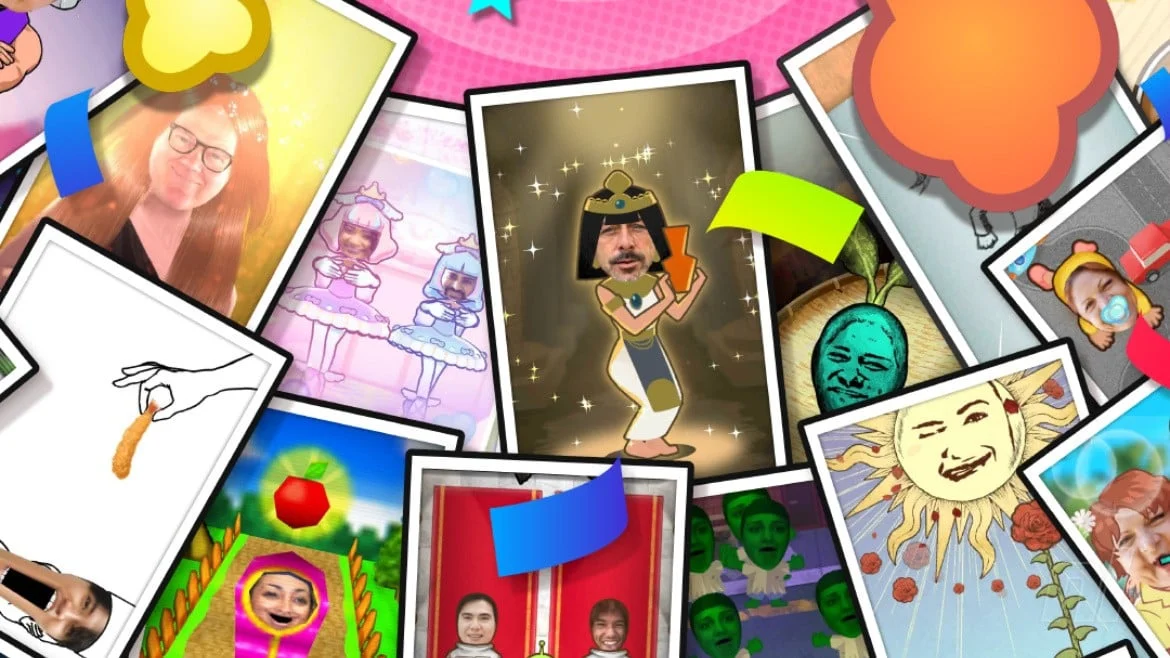
Nintendo has once again ventured into the mobile gaming arena with the surprise launch of "Pictonico!", an innovative and quirky application now available on both iOS and Android platforms. The game, characterized by its fast-paced, surreal minigames that utilize personal photographs, has quickly garnered attention, sparking curiosity and immediate engagement from players eager to explore its unique premise.
A Playful Palette of Personal Pixels
At its core, Pictonico! presents players with a series of rapid-fire challenges that demand quick reflexes and a touch of creative improvisation. Drawing a distinct parallel to the beloved "WarioWare" series, known for its equally eccentric and time-sensitive microgames, Pictonico! tasks users with manipulating their own photos to complete absurd objectives. Imagine your favorite selfie suddenly needing to devour a virtual kebab, delicately lick a lollipop, or get its digital hair thoroughly lathered. These are the kinds of whimsical scenarios players can expect to encounter, all under the ticking clock of a rapidly depleting timer.
The initial free offering of Pictonico! provides a taste of this peculiar gameplay, featuring three distinct minigames. While this serves as an accessible entry point, players seeking a more extensive experience can unlock an additional 80 challenges through two purchasable "Volume Packs." This tiered approach to content delivery is a common strategy in the mobile gaming market, aiming to attract a broad audience with a free base game while offering deeper engagement for those willing to invest further.
Early impressions suggest a generally positive reception, with players appreciating the novel concept and the lighthearted, often humorous, outcomes. However, some have voiced a desire for more substantial free content, finding the initial three minigames to be somewhat restrictive. Nintendo Life is currently dedicating more time to thoroughly evaluate the game’s mechanics, depth, and overall value proposition, with a comprehensive review anticipated in the near future. In the interim, the publication has initiated a poll to gauge immediate player sentiment and encourages detailed feedback in the comments section, fostering a community-driven discussion around this new mobile endeavor.
The Genesis of a Quirky Concept: A Look Back at Nintendo’s Mobile Forays
Nintendo’s journey into the mobile gaming landscape has been a strategic, albeit sometimes cautious, evolution. The company, historically renowned for its dedicated gaming hardware, initially approached the mobile market with a degree of reservation, prioritizing the preservation of its core gaming experiences. However, as the mobile gaming industry continued to mature and dominate global entertainment, Nintendo began to recognize the potential for reaching a wider audience and fostering new avenues for its intellectual properties.
The first significant steps were taken with the introduction of titles like "Miitomo," a social application that allowed users to create Mii avatars and interact in a virtual space. This was followed by the more traditional gaming offerings such as "Super Mario Run," which brought the iconic plumber to smartphones in a side-scrolling adventure, and "Fire Emblem Heroes," a strategy RPG that has proven to be a considerable commercial success. Each of these releases represented a distinct approach to mobile gaming, from social interaction to classic genre adaptations.
The development and subsequent release of "Pictonico!" signal Nintendo’s continued willingness to experiment with unconventional gameplay mechanics on mobile. The "WarioWare" inspiration is particularly noteworthy, as this series has always thrived on its ability to deliver novel and often bizarre gameplay concepts in bite-sized chunks. This suggests a deliberate strategy to leverage Nintendo’s rich history of creative game design and apply it to the unique constraints and opportunities presented by the mobile platform. The very nature of Pictonico!, utilizing personal photos as its core interactive element, points towards a desire to create a deeply personal and shareable gaming experience, a key characteristic of successful mobile applications.
The decision to launch "Pictonico!" as a surprise app, without extensive prior marketing campaigns, further underscores Nintendo’s experimental approach. This method allows the company to gauge player reception organically and iterate on the game’s features based on real-world engagement. It also creates a sense of excitement and discovery for players who stumble upon the app, fostering a more organic buzz.

Unpacking the Gameplay Mechanics: A Deep Dive into Pictonico!’s Interactive Canvas
The ingenuity of "Pictonico!" lies in its deceptively simple yet engaging core gameplay loop. Players are presented with a personal photograph from their device’s gallery, which then becomes the central subject of a series of rapid-fire minigames. The objective is to interact with the chosen photo in a specific way, dictated by the on-screen instructions, within a strict time limit.
For instance, one minigame might require the player to "feed" the subject of their photo a virtual kebab. This could involve using their finger to drag and drop a kebab object onto the person’s mouth or a designated area of the image. Another minigame might challenge the player to "lick a lollipop," potentially requiring a swiping motion across the screen to simulate the action. The "get its hair nice and lathered up" minigame could involve a circular swiping motion to apply virtual shampoo.
The success of these interactions hinges on the player’s ability to quickly interpret the instructions and execute the corresponding touch gestures. The "WarioWare" influence is palpable here, with the emphasis on speed, precision, and an element of delightful absurdity. The game cleverly uses the player’s own photos, injecting a personal connection that elevates the experience beyond a generic minigame collection. Seeing one’s own friends, family, or even pets subjected to these comical digital scenarios adds a layer of amusement and shareability.
The progression within "Pictonico!" is structured around these minigames. As mentioned, the free version offers three distinct challenges. These are likely designed to showcase the variety of interactions and the underlying technology. The "Volume Packs" then expand this repertoire significantly, introducing a wider array of actions and potentially more complex scenarios. This tiered content model is a standard practice in mobile gaming, allowing developers to monetize their creations while providing a free entry point for curious players. The success of this model for "Pictonico!" will likely depend on the perceived value and variety offered within the paid content.
Furthermore, the game’s interface and control scheme are designed for intuitive use on touchscreens. Simple tap, drag, and swipe gestures are the primary means of interaction, making it accessible to a broad range of players regardless of their prior gaming experience. The visual presentation, while not detailed in the provided text, is expected to align with Nintendo’s characteristic polish and vibrant aesthetic, even in a mobile application. The focus on quick, satisfying interactions suggests that the game prioritizes immediate fun and replayability over deep narrative or complex strategy.
Player Reception and Initial Data: A Glimpse into Early Engagement
The immediate availability of "Pictonico!" on major mobile platforms has spurred a wave of player engagement, with initial reactions and feedback beginning to surface across social media and gaming forums. The "surprise app" nature of its launch has undoubtedly contributed to a sense of discovery, encouraging players to download and experiment with the title as soon as they become aware of its existence.
Early sentiment appears to be a mixture of amusement and curiosity, largely driven by the game’s unique premise. Many players have expressed delight at the quirky nature of the minigames and the novelty of using their personal photos in such a humorous context. Screenshots and short video clips showcasing players’ photos being subjected to the game’s absurd challenges have begun circulating, often accompanied by laughter and expressions of surprise. This organic sharing is a strong indicator of the game’s potential for virality within social networks.
However, as is often the case with new mobile releases, some players have begun to articulate specific points of feedback. The most frequently cited observation pertains to the limited scope of the free content. While the three initial minigames serve as a functional introduction, a segment of the player base has expressed a desire for more variety or extended gameplay within the free tier. This sentiment suggests that the perceived value of the free experience might be a crucial factor in converting free players into paying customers for the "Volume Packs."

Data from app stores, while not yet comprehensively available, will be crucial in understanding the download numbers, user retention rates, and in-app purchase conversion rates for "Pictonico!". These metrics will provide a more concrete understanding of the game’s commercial performance and its ability to capture a significant share of the mobile gaming market. Nintendo’s internal analytics will undoubtedly be closely monitoring these figures to inform future updates and potential expansions of the game.
The poll initiated by Nintendo Life serves as a valuable tool for gathering immediate, quantifiable player opinions. The results of such polls, combined with qualitative feedback from comment sections, will offer a nuanced picture of player satisfaction and highlight areas where the game might be excelling or falling short of expectations. The willingness of the publication to solicit and analyze this feedback demonstrates a commitment to understanding the player’s perspective, a crucial element in the success of any interactive entertainment product.
Official Statements and Future Outlook: Nintendo’s Mobile Ambitions
As of the initial launch, Nintendo has maintained its characteristic measured approach to public commentary regarding "Pictonico!". The company has not issued extensive press releases detailing the game’s development philosophy or long-term vision. This silence is not uncommon for Nintendo, which often prefers to let its products speak for themselves and gauge player reception before making grand pronouncements. However, the very act of releasing "Pictonico!" on both major mobile platforms signifies a continued commitment to exploring the mobile gaming space.
The "surprise app" launch strategy suggests a desire to foster organic growth and authentic player engagement. Instead of relying on a pre-launch marketing blitz, Nintendo appears to be entrusting the game’s appeal to its unique gameplay and the inherent shareability of its concept. This approach can sometimes lead to a more dedicated and engaged player base, as users feel they have "discovered" the game rather than being overtly sold on it.
Looking ahead, the success of "Pictonico!" will likely hinge on Nintendo’s ability to iterate and expand upon the core experience. The "Volume Packs" represent the immediate monetization strategy, but sustained engagement will require ongoing updates, potentially new minigames, and perhaps even community-driven features. The possibility of integrating "Pictonico!" with other Nintendo services or franchises, while speculative at this stage, cannot be entirely ruled out given Nintendo’s interconnected ecosystem.
The company’s broader mobile strategy has evolved over time, shifting from a cautious exploration to a more confident integration of its beloved IPs into the mobile market. Titles like "Animal Crossing: Pocket Camp" and the aforementioned "Fire Emblem Heroes" have demonstrated Nintendo’s capacity to create successful and enduring mobile titles. "Pictonico!" represents a divergence from these more traditional genres, leaning into a more experimental and potentially niche appeal.
The implications of "Pictonico!’s" performance extend beyond its immediate commercial success. Its reception will provide valuable data for Nintendo’s mobile development teams, informing future decisions about gameplay mechanics, monetization models, and the types of experiences that resonate with a mobile audience. If "Pictonico!" proves to be a hit, it could pave the way for further exploration of unconventional and photo-centric gameplay on mobile. Conversely, if it struggles to gain traction, it might signal a need for Nintendo to re-evaluate its approach to more experimental mobile titles. Regardless of its ultimate trajectory, "Pictonico!" stands as a testament to Nintendo’s ongoing willingness to innovate and surprise its player base, even in the ever-evolving landscape of mobile entertainment.












No comments yet. Be the first to join the conversation!