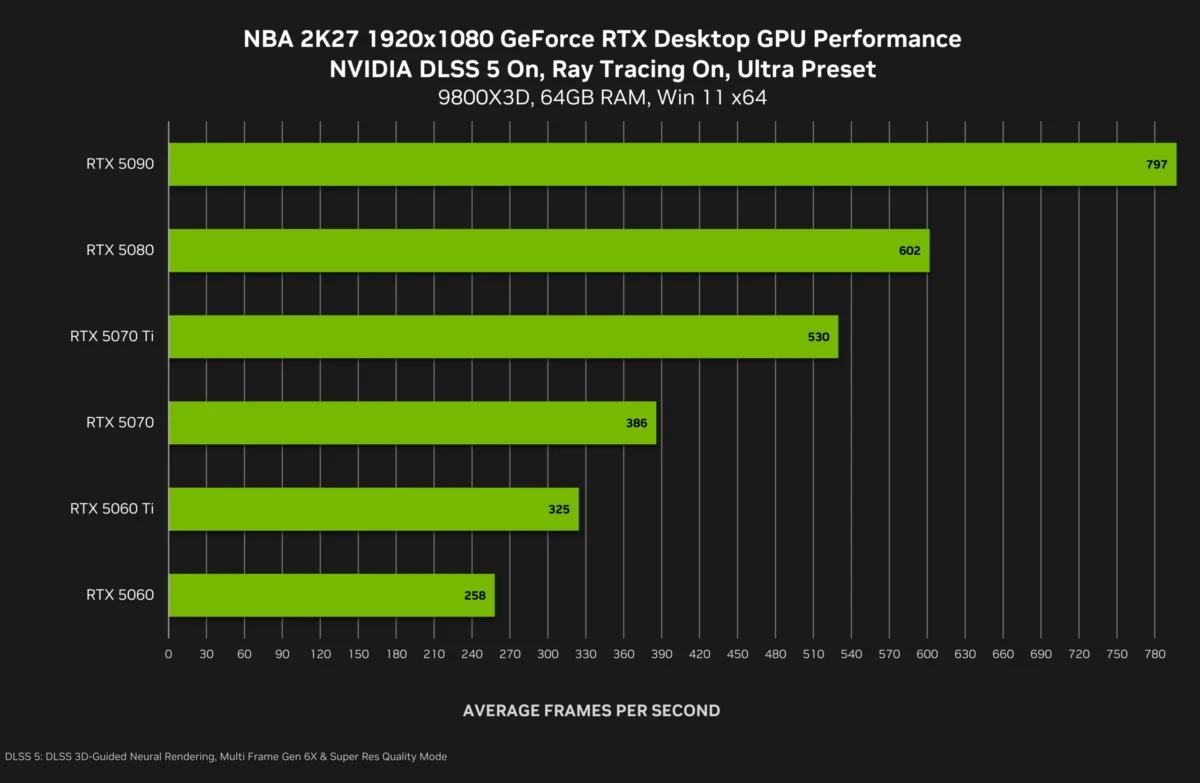
After months of speculation, industry leaks, and intense debate within the enthusiast community, Nvidia has officially confirmed that its next-generation upscaling and image reconstruction technology, DLSS 5, will make its public debut on September 3. The launch, set for 9 p.m. PT, will see the technology integrated into NBA2K27, a title that serves as the inaugural testing ground for what Nvidia describes as "3D-guided Neural Rendering."
This release marks a pivotal moment for graphics technology. While previous iterations of DLSS (Deep Learning Super Sampling) focused primarily on performance gains through AI-based upscaling, DLSS 5 represents a fundamental shift in how games are rendered. By blending traditional, hand-crafted rendering pipelines with generative AI, Nvidia aims to deliver a level of visual fidelity that was previously impossible without exponentially increasing compute costs.
The Chronology of a Controversial Reveal
The road to the launch of DLSS 5 has been anything but smooth. The technology was first teased earlier this year, sparking immediate curiosity and concern regarding its hardware requirements and potential impact on native frame rates.
- March 2024: Nvidia provided a "first look" at DLSS 5 during GTC (GPU Technology Conference). The demonstration showcased the technology’s ability to infer complex lighting, hair physics, and skin texture details in real-time, positioning it as the "GPT moment for graphics."
- Late August 2024: A significant leak occurred when a DLL file associated with DLSS 5 was discovered within the files for NBA2K27. Modders wasted no time, attempting to force the technology into other titles, such as Control. The results were, to put it mildly, volatile. In these early, unoptimized tests, high-end cards like the RTX 5070 Ti saw their frame rates plummet from 71 FPS to a stuttering 35 FPS at 4K resolution.
- September 3, 2024: Official launch day for NBA2K27 integration, bringing the technology to RTX 50-series hardware and GeForce NOW.
Understanding 3D-Guided Neural Rendering
At the core of the controversy and the excitement surrounding DLSS 5 is its underlying architecture. Unlike standard AI upscaling, which essentially "guesses" missing pixels based on lower-resolution inputs, DLSS 5 utilizes 3D-guided Neural Rendering.
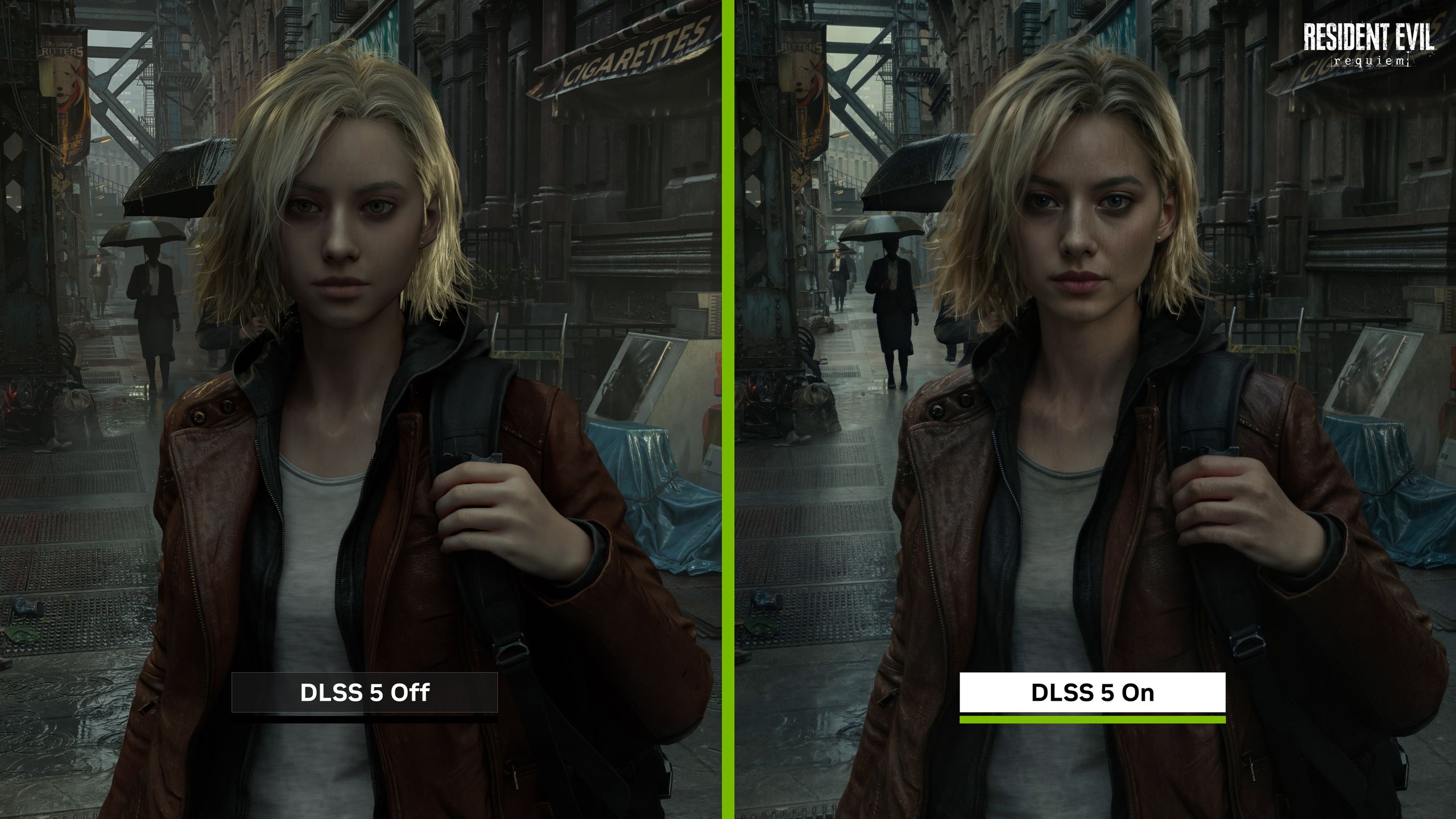
According to Nvidia, the AI model is trained to analyze the game engine’s internal state, including color buffers, motion vectors, and geometry data. By understanding the "intent" of the game engine, the AI can then reconstruct lighting and physical details—such as how light catches individual strands of hair or reflects off the surface of human skin—with a level of precision that transcends traditional rasterization.
Nvidia claims this method preserves the facial geometry of athletes while adding a layer of realism that previously required much more expensive, offline-rendered techniques. However, the reliance on deep integration with game engines means that developers must actively implement support for the feature, rather than it being a "plug-and-play" solution like earlier DLSS versions.
The Performance Cost: A High Price for Realism
The primary criticism leveled against DLSS 5, particularly following the community-led leaks, is its massive performance overhead. In traditional gaming, upscaling technologies are implemented to increase frame rates by reducing the internal rendering resolution. DLSS 5 appears to be doing the opposite in its current state.
Early benchmarks suggest that when DLSS 5 is active, the GPU must work significantly harder to compute the neural layers on top of the base render. This has led to the "performance tax" observed by users—often halving the frame rate in titles where it is forced via unauthorized mods.
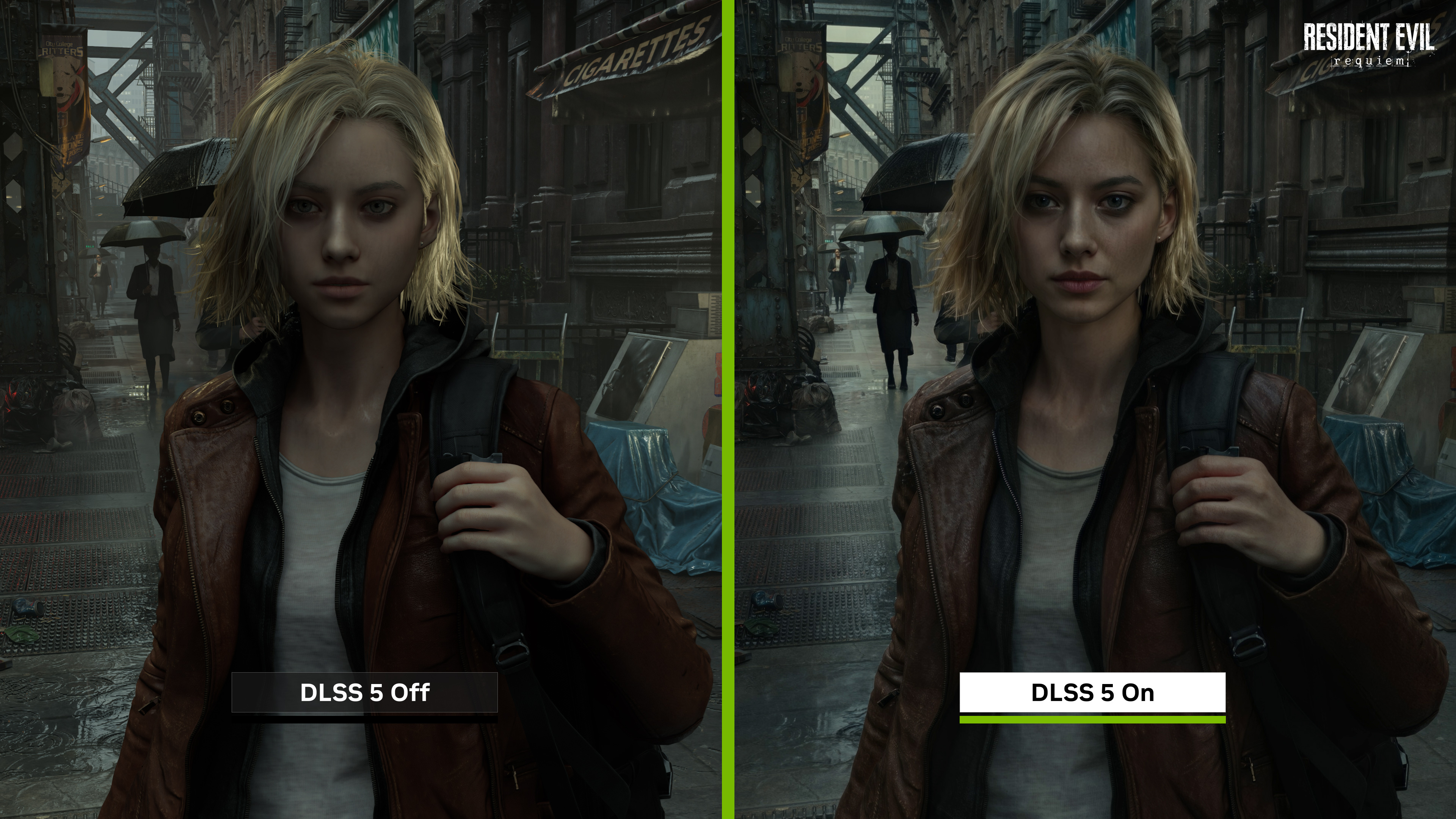
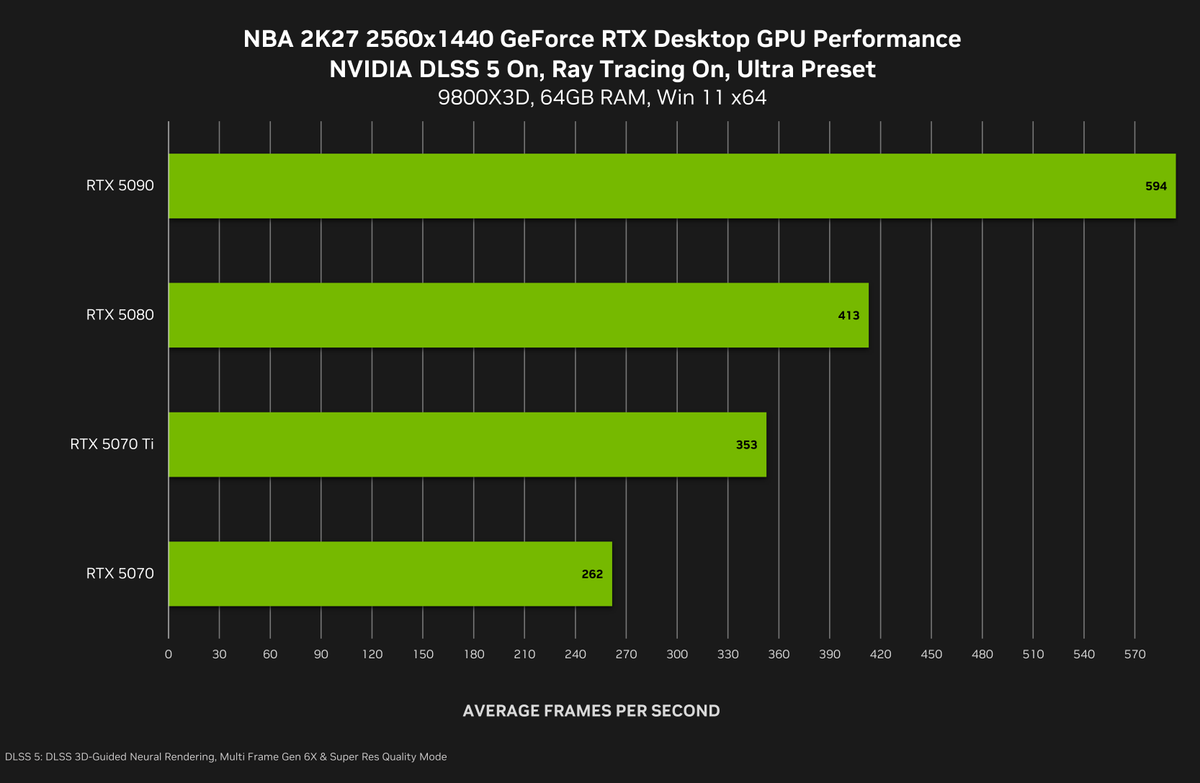
Nvidia’s own in-house benchmarks, released alongside the announcement, attempt to paint a more optimistic picture. However, the company has conspicuously limited its public data to its flagship RTX 5090 and 5080 cards running at 4K. By focusing on the absolute top-tier hardware, Nvidia is likely attempting to mask the performance struggle that lower-end cards would face under the weight of this demanding technology.
Official Responses and Strategic Positioning
Nvidia CEO Jensen Huang has been vocal about the importance of this release, framing it as the inevitable future of digital entertainment. "This is the GPT moment for graphics," Huang noted during the reveal. "We are blending the artistry of game developers with the predictive power of generative AI. This isn’t just about making things look better; it’s about providing artists with a new canvas where they don’t have to choose between performance and visual complexity."
However, the industry response has been more cautious. Critics point out that forcing players to upgrade to the latest RTX 50-series hardware to utilize the feature feels like a calculated move to drive sales, especially given that earlier versions of DLSS were compatible with a much wider range of hardware.
Implications for the Future of PC Gaming
The launch of DLSS 5 has several long-term implications for the hardware and software landscape:

1. The Hardware Divide
By restricting DLSS 5 to the RTX 50-series, Nvidia is creating a sharp divide in its user base. For those who do not wish to upgrade their GPUs every generation, the most cutting-edge visual features will remain out of reach. This has already spurred an active modding scene dedicated to porting the DLLs to RTX 40-series and even older Ampere-based cards. While these mods often result in "horrible" performance, they highlight a consumer demand for broader compatibility.
2. The Shift to AI-Heavy Pipelines
We are entering an era where game development is increasingly reliant on AI to solve visual bottlenecks. If DLSS 5 becomes the industry standard, game developers may begin to rely on AI to "fix" their lighting and textures in real-time, potentially leading to less optimized game builds at the native level. This shift places a massive burden on the GPU to act as both a renderer and a neural processor.
3. Preservation of Creative Control
Nvidia emphasizes that DLSS 5 is designed to "preserve the control artists need for creative expression." The theory is that by keeping the AI tethered to the engine’s metadata, artists can ensure that the "generative" elements don’t hallucinate or drift from the intended art direction. Whether this holds up in complex, open-world environments remains to be seen.
4. The Cloud Advantage
Perhaps the most logical home for DLSS 5 is GeForce NOW. Because cloud servers can be equipped with the latest, most powerful hardware, users who don’t own an RTX 5090 can still experience the "next-gen" visuals via streaming. This could significantly bolster Nvidia’s cloud gaming service, making it the primary gateway for users to experience high-fidelity neural rendering.
Conclusion: A Bold, If Unrefined, Beginning
The launch of DLSS 5 in NBA2K27 is a bold experiment. It is a technology that is clearly in its infancy—demanding, proprietary, and potentially divisive. Yet, the leap in visual fidelity it promises is undeniably impressive. As we look toward the future, the question is not whether AI will play a role in rendering, but how much control gamers are willing to cede to the GPU in exchange for that extra layer of visual polish.
For now, enthusiasts will be watching the September 3 launch closely. The success of DLSS 5 will not be measured by Nvidia’s marketing materials, but by the tangible experience of players—whether the added realism is worth the hit to their frame rates, and whether the technology can truly scale beyond the high-end, top-tier hardware currently required to run it. As the industry pivots toward this "GPT moment," one thing is clear: the way we look at pixels is changing forever.