

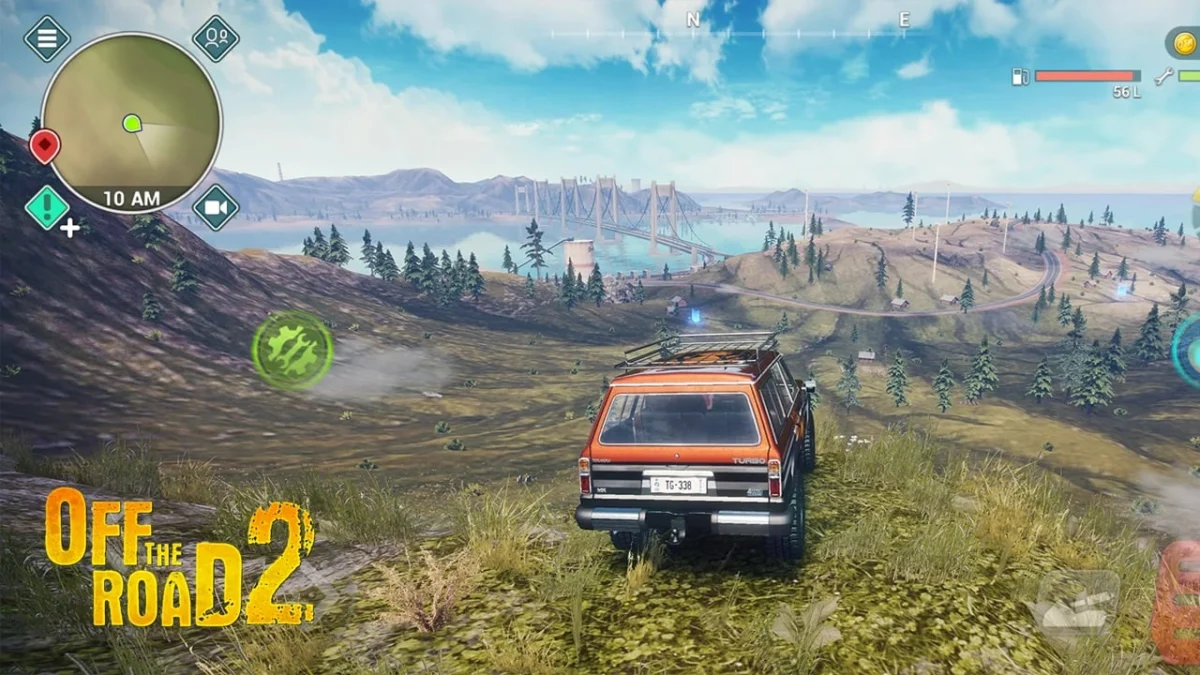
DogByte Games Launches Ambitious Sequel, Expanding Beyond Off-Road Trucks to a Multitude of Vehicles and a Map 30 Times Larger
DogByte Games, a notable developer in the mobile gaming sphere, has officially launched "OTR 2," the highly anticipated sequel to its popular "OTR: Off the Road Car Driving Game." Released on mobile platforms, OTR 2 marks a significant leap forward, transforming the franchise from a focused off-road trucking experience into an expansive, extreme open-world simulator that embraces an astonishing array of vehicles, from high-performance super sports cars and agile helicopters to powerful planes and sleek boats. This ambitious title promises an unparalleled degree of freedom and realism, pushing the boundaries of what mobile gaming can achieve in the simulation genre.
Main Facts
The Grand Unveiling of OTR 2: A New Era of Mobile Simulation
The release of OTR 2 by DogByte Games heralds a new chapter for fans of open-world vehicle simulation on mobile devices. Positioned as an "extreme open-world simulator sequel," OTR 2 builds upon the foundational success of its predecessor, "Off the Road," but dramatically redefines its scope and ambition. The most striking departure from the original is its vastly expanded vehicle roster. Where the first iteration largely centered on rugged off-road trucks and 4x4s, OTR 2 invites players to commandeer an eclectic fleet that now includes super sports cars, versatile helicopters, high-speed planes, and even powerboats, effectively transforming the gameplay experience into a comprehensive multi-vehicle adventure. This diversification ensures that players are not confined to a single mode of transportation or terrain, offering an unprecedented level of exploration and engagement across its newly introduced, gargantuan map. The game’s immediate availability on mobile platforms underscores DogByte Games’ commitment to delivering high-quality, accessible simulation experiences to a broad global audience.
A World Without Limits: The Expansive Map and Diverse Topography
Central to OTR 2’s appeal is its monumental open world. DogByte Games proudly states that the new map is "almost 30 times larger" than that of the original "Off the Road." This isn’t merely an increase in size; it represents a fundamental shift in environmental design and gameplay potential. The map is a masterclass in topographical diversity, seamlessly blending a myriad of landscapes into one cohesive, uninterrupted playing field. Players will navigate through challenging hills and mountains, traverse sprawling highways that stretch into the horizon, conquer intricate off-road trails, and delve into vast, untouched wilderness areas. The promise of "endless roads" and "random hidden stuff" scattered across this immense, seamless environment encourages persistent exploration and discovery. This grand scale ensures that every corner of the map offers unique challenges and opportunities, whether it’s a high-speed chase on asphalt or a gritty climb through muddy terrain, thereby reinforcing the game’s commitment to delivering a truly open and dynamic world.
A Garage Beyond Imagination: An Unprecedented Diverse Vehicle Fleet
The evolution of OTR 2’s vehicle selection is nothing short of astounding, moving far beyond the utilitarian focus of its predecessor. While players can still revel in the visceral thrill of driving rugged 4x4s and heavy-duty trucks, the game introduces an astonishing variety that caters to virtually every vehicular fantasy. High-performance supercars are available for those who crave speed and asphalt-shredding action on the game’s extensive highway network. For aerial adventurers, fighter jets offer exhilarating flight across the entire map, providing a bird’s-eye view and dynamic maneuvering capabilities. Water-based exploration is facilitated by powerful speedboats, allowing players to navigate the game’s expansive oceans and rivers. Furthermore, the inclusion of helicopters and additional planes ensures that no corner of the land, air, or sea remains inaccessible. Each vehicle type is designed not only for aesthetic appeal but also to open up distinct gameplay possibilities, encouraging players to master different control schemes and leverage unique capabilities to traverse the multifaceted world of OTR 2.
Redefining Mobile Realism: Advanced Physics and Damage Systems
DogByte Games has made a bold claim, positioning OTR 2 as featuring "one of the most realistic vehicle simulator systems" available on mobile platforms. While acknowledging the inherent limitations of mobile hardware compared to high-end PCs or consoles, the developers have clearly invested significantly in elevating the level of realism. This commitment is most evident in the game’s sophisticated physics engine. Players will experience phenomena such as "mud physically sticking to tires," a detail that not only enhances visual immersion but also impacts vehicle handling and traction dynamically. Complementing this is a "full vehicle damage system" that goes beyond superficial visual cues, accurately depicting impacts and structural deformations on the player’s ride. This system adds a layer of consequence and strategy to gameplay, as reckless driving can visibly and functionally impair vehicles. For a mobile title, these features represent a substantial achievement, offering a level of tactile feedback and visual fidelity that significantly contributes to the overall immersive experience and sets a new benchmark for mobile simulation games.
Personalization and Progression: In-Depth Customization and Mission Systems
OTR 2 deeply emphasizes player agency and progression through its robust customization and mission systems. A standout feature is the "full Livery Editor," an intuitive tool that empowers players to unleash their creativity by designing custom paint jobs and applying unique decals to their vehicles. This editor allows for a high degree of personalization, enabling players to truly make their vehicles their own. Beyond aesthetics, the game also offers the ability to "tweak performance settings," allowing enthusiasts to fine-tune aspects of their vehicles for optimal performance across different terrains and challenges. Adding to the immersive quality are "fully modelled interiors" and "working vehicle parts," which bring an added layer of detail and authenticity to the driving experience. To provide structure and a sense of purpose, OTR 2 integrates a comprehensive "missions system." Players can engage in various activities, from challenging delivery tasks to other dynamic objectives, earning valuable rewards that fuel further customization, vehicle acquisition, and overall progression within the expansive game world.
Dynamic Environments and Multiplayer Horizons: A Living, Breathing World
The world of OTR 2 is not static; it is a dynamic environment brought to life by a "real-time day and night cycle," which affects visibility, lighting, and atmosphere, adding another layer of immersion. The game’s environments span a breathtaking variety of biomes, including rugged mountains, arid deserts, vast oceans, and intricate highway networks, ensuring that every type of terrain imaginable is present and explorable. This environmental diversity not only offers visual spectacle but also dictates vehicle choice and strategic approach. Beyond solo exploration, OTR 2 extends its reach into social interaction with a robust "multiplayer option." This mode supports "up to 6 players online at once," fostering both competitive and cooperative gameplay. Friends can either engage in exhilarating races, testing their skills against each other, or simply "roam around the open world together in real time," sharing the vast landscape and creating unique experiences. Crucially, DogByte Games has ensured that OTR 2 is "fully playable offline," guaranteeing that players can enjoy the full single-player experience, including driving and exploring the expansive map, without requiring an internet connection. This thoughtful design choice enhances accessibility and ensures uninterrupted enjoyment, regardless of network availability. The official trailers for the game, titled "OTR – Off The Road 2 Release Info & Trail Adventure" and "OFF THE ROAD – OTR 2 Launch Trailer," offer a compelling visual preview of these dynamic features and the sheer scale of the game world.
Chronology
From Humble Beginnings: The Legacy of Off the Road (OTR 1)
The journey to OTR 2 began with its predecessor, "Off the Road – OTR Open World Driving" (often referred to as OTR 1), which first established DogByte Games’ presence in the mobile off-road simulation niche. Released several years prior, OTR 1 carved out a significant following by offering a compelling open-world driving experience focused primarily on 4×4 vehicles, trucks, and ATVs. It distinguished itself with its emphasis on realistic physics, environmental challenges like mud and water, and a sandbox-style approach to exploration. Players were drawn to its freedom, the satisfaction of conquering difficult terrain, and the ability to customize their vehicles. OTR 1’s success wasn’t just about its mechanics; it was about tapping into a desire for unbridled exploration and the thrill of off-road adventure on a mobile device. Its positive reception laid a solid foundation, proving that a market existed for detailed vehicle simulations that extended beyond traditional racing games. The original game’s popularity undoubtedly fueled DogByte Games’ ambition to expand upon its core concepts and address player desires for even greater variety and scale.
The Development Journey: Teasers, Anticipation, and Innovation
The development of OTR 2 was likely a multi-year endeavor, representing a significant undertaking for DogByte Games given the scale of its ambition. While specific public development timelines are often kept under wraps for mobile titles, the leap in features and scope from OTR 1 suggests a meticulous and iterative design process. Anticipation for the sequel began to build among the existing fanbase as early teasers and developer updates hinted at a much larger, more diverse experience. The challenges faced during development would have been considerable: optimizing a map "30 times larger" for mobile hardware, integrating a vastly expanded vehicle roster with unique physics, implementing advanced graphical effects like dynamic mud and detailed damage, and designing a seamless multiplayer experience. DogByte Games would have had to innovate heavily in areas like asset streaming, rendering efficiency, and cross-device performance optimization to deliver a consistent and engaging experience across a wide range of mobile devices. The transition from a truck-focused game to a multi-vehicle simulator also required a complete overhaul of physics engines and control schemes, ensuring that driving a supercar felt distinct from piloting a helicopter. This period of intense development culminated in a game designed to not just meet, but exceed, the expectations set by its successful predecessor.
The Launch and Initial Reception: A New Standard Set
OTR 2 recently made its debut on mobile app stores, marking a pivotal moment for both DogByte Games and the mobile simulation genre. The launch was accompanied by a surge of player interest, driven by the promise of its unprecedented scale and vehicle diversity. Initial player feedback, as gathered from early reviews and community discussions, indicates a generally positive reception. Players are particularly impressed by the sheer size of the map, the visual fidelity of the environments, and the engaging physics system. The expanded vehicle fleet has been a major draw, with many enjoying the freedom to switch between different modes of transport and experience varied gameplay. While a game of this ambition on mobile inevitably faces some minor performance variations across different devices or initial bug reports, the overarching sentiment is one of excitement and appreciation for the level of detail and scope delivered. Compared to its predecessor, OTR 2 has immediately set itself apart by offering a much richer, more immersive, and significantly more diverse experience, establishing a new benchmark for what open-world vehicle simulation can achieve on handheld devices.
Supporting Data
Technical Achievements on Mobile: Engineering a Giant World
The claim of a map "almost 30 times larger" than the original "Off the Road" is a staggering technical achievement for a mobile game. While exact square mileage might vary, this typically translates to hundreds of square kilometers, making it one of the largest open worlds ever seen on mobile. The implications of a "seamless" map on mobile hardware are profound. To avoid excessive loading screens, which can break immersion, DogByte Games likely employs sophisticated asset streaming and level-of-detail (LOD) systems. This means that environmental assets are loaded and unloaded dynamically in the background as the player moves, ensuring a continuous experience without taxing the device’s memory or processing power unnecessarily. The graphics engine, likely a custom solution or heavily modified commercial engine, is optimized for mobile GPUs, allowing for rendering of vast draw distances, dynamic lighting for the day/night cycle, and complex particle effects for mud and water. Achieving stable frame rates across a wide range of devices, from older smartphones to the latest flagships, while maintaining visual quality, is a testament to the developers’ optimization prowess and understanding of mobile hardware limitations and capabilities.
The Physics Engine: A Deep Dive into Realism
OTR 2’s physics engine is a cornerstone of its "realistic vehicle simulator" claim. The "mud physically sticking to tires" is more than a visual gimmick; it suggests a complex interaction model where terrain type directly influences tire friction, vehicle weight, and overall handling. When a vehicle drives through mud, the simulation likely calculates the accumulation of virtual mud on the tire treads, which then affects grip levels, requiring players to adapt their driving style. Similarly, the "full vehicle damage system" extends beyond cosmetic dents. While visual deformations are certainly present and impressive for a mobile title, a truly "full" system would imply functional damage. This could mean engine power reduction, steering misalignment, suspension damage affecting handling, or even wheel detachment after severe impacts. The interaction between different terrains and vehicle physics is crucial; a high-speed supercar, for instance, would exhibit drastically different handling characteristics on a smooth highway versus a rocky off-road trail, highlighting the nuanced programming behind each vehicle type. Furthermore, "working vehicle parts" likely include animated suspensions that articulate over uneven terrain, functional steering mechanisms, and possibly interactive elements like doors or hoods, all contributing to a deeper sense of immersion and mechanical authenticity.
Customization Depth and Player Agency: Beyond Aesthetics
The Livery Editor in OTR 2 offers a significant degree of player agency. It likely provides a multi-layered system for applying decals, allowing players to combine various shapes, patterns, and custom images, alongside an extensive color palette. This enables the creation of intricate designs, from racing stripes to brand logos, fostering a strong sense of personal ownership and expression. The ability to "tweak performance settings" delves deeper into the simulation aspect. Players are likely given control over parameters such as engine tuning (horsepower, torque), suspension stiffness and height, tire compounds (e.g., street, off-road, racing), and gear ratios. These adjustments directly impact how a vehicle performs in different scenarios, allowing players to optimize their rides for specific missions, races, or exploration styles. For example, lowering suspension and stiffening springs would benefit a supercar on a highway, while raising suspension and fitting off-road tires would be crucial for a 4×4 tackling mountainous terrain. The "fully modelled interiors" further enhance immersion, giving players a detailed perspective from the driver’s seat, complete with functional dashboards and responsive controls, reinforcing the feeling of being truly inside the vehicle.
Mission Variety and Progression System: Structured Exploration
OTR 2’s "missions system" is designed to provide both structure and a sense of long-term progression within its vast open world. "Deliveries and other activities" encompass a broad range of objectives. Delivery missions might involve transporting cargo across challenging terrain within a time limit, testing both driving skill and route planning. "Other activities" could include time trials, checkpoint races, scavenger hunts for hidden items, rescue operations requiring specific vehicle types, or even environmental challenges like clearing obstacles. The rewards earned from these missions, typically in-game currency, unlockables, or experience points, are vital for player progression. This currency can be used to purchase new vehicles, upgrade existing ones, or acquire customization options. The experience point system, if implemented, could unlock higher-tier missions, new regions, or special vehicle parts. This structured progression loop ensures that players always have goals to pursue, transforming the open world from a mere sandbox into a dynamic ecosystem where effort leads to tangible rewards and expanded gameplay opportunities, thereby significantly boosting the game’s replayability and player engagement.
Official Responses
DogByte Games’ Vision and Development Philosophy
While direct quotes from DogByte Games regarding OTR 2 are not extensively provided in the original text, the design choices embedded within the game clearly articulate their vision and development philosophy. It is evident that DogByte Games set out to create a mobile simulation experience that pushes the boundaries of scale, diversity, and realism. Their commitment to building a map "30 times larger" and integrating an unprecedented variety of vehicles suggests a desire to offer a truly unconstrained open-world sandbox, where players are limited only by their imagination and skill. The emphasis on features like "mud physically sticking to tires" and a "full vehicle damage system" underscores a philosophy that prioritates immersive realism, aiming to provide a tactile and believable driving experience even on mobile devices.
The developers’ decision to broaden the scope beyond just off-road trucks indicates a strategic move to appeal to a wider audience, transforming the franchise into a more comprehensive vehicle simulator. This approach reflects an understanding of the mobile gaming landscape, where versatility and rich content are key to sustained engagement. It also implies a confidence in the capabilities of modern mobile hardware to render complex environments and physics. DogByte Games appears committed to proving that mobile platforms can host deep, feature-rich simulation titles that traditionally have been the domain of PC or console gaming, making high-quality experiences accessible to millions.
Community Engagement and Future Updates
DogByte Games’ approach to community engagement is crucial for a live-service mobile game like OTR 2. While not explicitly detailed, successful mobile developers typically foster vibrant communities through official social media channels (Facebook, Twitter, Instagram), dedicated forums, and platforms like Discord. These channels serve as vital conduits for player feedback, bug reports, and community interaction. It is highly probable that DogByte Games actively monitors these platforms to gauge player sentiment, identify areas for improvement, and gather suggestions for future content.
Looking beyond the initial launch, the nature of open-world simulation games often dictates a robust post-launch content strategy. It is reasonable to anticipate that DogByte Games has plans for ongoing updates and expansions for OTR 2. These could include the introduction of new vehicles (further expanding the already diverse fleet), additional map areas or expansions to existing regions, new mission types, competitive events, or even entirely new game modes. Addressing any initial bugs or performance inconsistencies reported by the player base would also be a top priority in early patches. A continuous stream of fresh content and responsive developer communication is vital to maintaining player interest, fostering a loyal community, and ensuring the long-term success and longevity of OTR 2 in the competitive mobile gaming market.
Implications
Setting a New Standard for Mobile Open-World Simulators
OTR 2 has the potential to significantly impact the mobile gaming market by setting a new, higher standard for open-world vehicle simulators. Its unprecedented scale, with a map "30 times larger" than its predecessor, combined with an astonishing diversity of vehicles (cars, trucks, planes, helicopters, boats), immediately differentiates it from many existing titles. While mobile platforms have seen impressive open-world games, OTR 2’s specific focus on realistic vehicle physics, detailed damage, and dynamic environments positions it as a leader in its niche. It raises the bar not only for other developers attempting similar feats but also for player expectations regarding content depth and environmental fidelity on mobile. This comprehensive approach could attract a wider audience, drawing in not just traditional off-road enthusiasts but also fans of racing, flight simulation, and general open-world exploration, thereby broadening the appeal of the mobile simulation genre as a whole. Its success could encourage other studios to invest more heavily in ambitious, genre-defining mobile titles.
The Future of Mobile Gaming: Realism and Scale on Handhelds
OTR 2’s achievements in scale and realism offer a compelling glimpse into the future capabilities of modern mobile devices and game development. The fact that a game of this magnitude, with its seamless, vast map and intricate physics systems, can run on a smartphone or tablet underscores the rapid advancements in mobile processor power, GPU capabilities, and memory management. This suggests a continued trend towards more complex, console-like experiences becoming increasingly viable on mobile platforms. OTR 2 demonstrates that developers are finding innovative ways to balance graphical fidelity, performance, and accessibility, delivering rich experiences without compromising on the handheld nature of mobile gaming. It challenges the perception that mobile games are inherently less deep or visually inferior to their PC/console counterparts, pointing towards a future where the lines between gaming platforms continue to blur, offering players high-quality, immersive experiences wherever they go.
Player Experience and Longevity: A Recipe for Replayability
The blend of extensive single-player exploration, a diverse mission system, and real-time multiplayer interaction is a potent recipe for OTR 2’s replayability and long-term appeal. Players can choose their own adventure, whether it’s methodically completing deliveries, engaging in competitive races with friends, or simply discovering hidden secrets in the vast wilderness. This freedom of choice, coupled with the ability to switch between vastly different vehicle types, ensures that gameplay rarely feels repetitive. The significance of offline playability cannot be overstated in today’s increasingly connected world; it offers unparalleled convenience, allowing players to enjoy the game even without an internet connection, making it an ideal companion for commutes or travel. Furthermore, the robust customization options and progression system provide continuous goals, encouraging players to invest time in upgrading their fleet and mastering various driving and piloting techniques. If DogByte Games maintains a consistent flow of updates and community engagement, OTR 2 has the potential to cultivate a dedicated player base and enjoy a long, vibrant lifespan in the mobile gaming ecosystem.
Economic Impact and Monetization Model
While the article does not explicitly detail OTR 2’s monetization model, based on its availability on the Google Play Store and common mobile gaming practices, it is likely a free-to-play (F2P) title supported by in-app purchases (IAPs). This model allows for broad accessibility, attracting a large initial player base. The in-app purchases would typically revolve around accelerating progression (e.g., buying in-game currency), unlocking premium vehicles, or acquiring cosmetic customization items. The success of this model hinges on a delicate balance: offering compelling content for free players while providing desirable, non-intrusive incentives for those willing to spend. If implemented thoughtfully, OTR 2’s extensive content, vehicle variety, and customization options provide ample opportunities for fair monetization that enhances, rather than detracts from, the player experience. A successful launch and sustained engagement could significantly bolster DogByte Games’ portfolio and market position, cementing their reputation as a leading developer of ambitious mobile simulation titles.
OTR 2 represents a landmark achievement for DogByte Games, delivering an extreme open-world vehicle simulator that redefines expectations for mobile gaming. Its colossal map, diverse vehicle roster, and commitment to realism promise an unparalleled experience for players seeking freedom, exploration, and visceral driving action on their handheld devices.
Curious to experience the vast world of OTR 2 for yourself? Take a look at the thrilling launch trailers below to glimpse the diverse environments and dynamic gameplay awaiting you.
OTR – Off The Road 2 Release Info & Trail Adventure
OFF THE ROAD – OTR 2 Launch Trailer
You can download OTR 2 now and embark on your ultimate open-world adventure on the Google Play Store.
Also, for more exciting mobile gaming news, read our article on Brutal Retro FPS Warhammer 40,000: Boltgun Boom.











No comments yet. Be the first to join the conversation!