For twenty-five years, Alienware has stood as a polarizing, iconic, and undeniably influential pillar in the high-performance computing landscape. From its humble beginnings as a boutique enthusiast builder to its current status as a Dell-owned titan, the brand has consistently sought to define the aesthetic and performance standards of the gaming PC. Today, as the company celebrates its silver anniversary, it is looking forward by looking back at its most recognizable lineage: the Aurora.
In commemoration of its 25th birthday, Alienware has unveiled a reimagined flagship desktop, signaling a maturation of its industrial design language. While the company is hosting a commemorative Twitch stream to mark the occasion, the technical details of this new iteration have already set the enthusiast community abuzz.
Main Facts: The New Aurora Paradigm
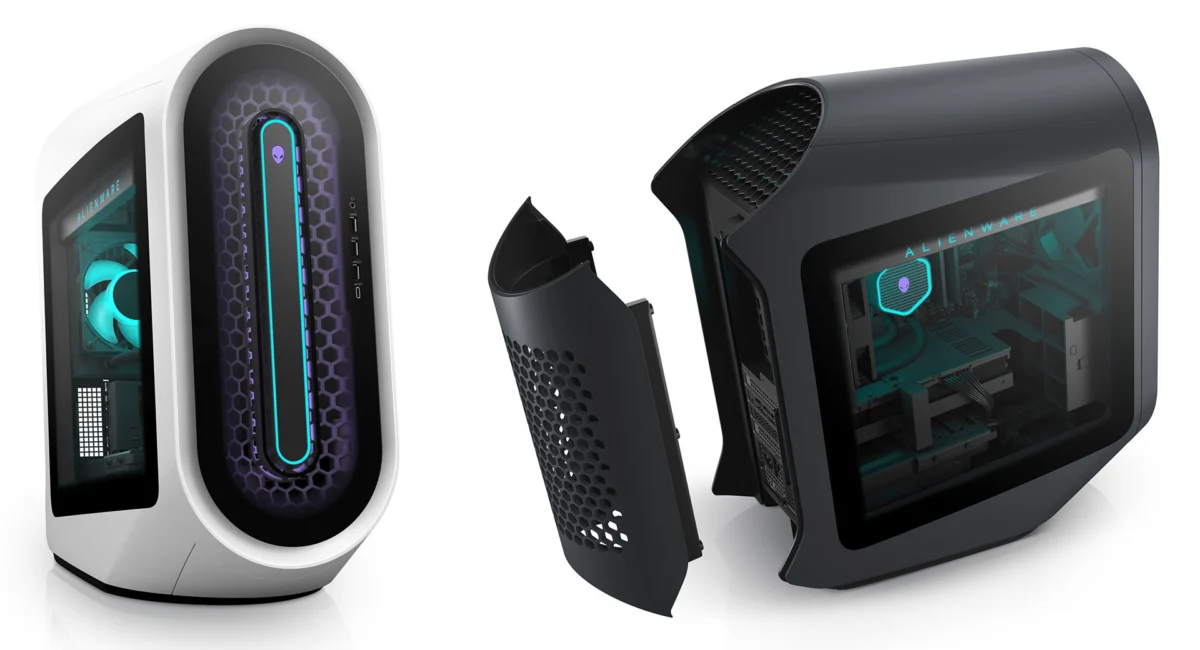
The centerpiece of Alienware’s anniversary announcement is a wholesale revision of the Aurora desktop chassis. While the company has remained somewhat guarded regarding the full technical specifications—likely waiting for the latest silicon from Intel and AMD to hit the market—the structural changes are significant.
The new Aurora design is characterized by a "plumper," more voluminous footprint. Alienware claims the internal chassis volume is approximately 50 percent greater than that of the previous Aurora R12 model. This increase in internal real estate is not merely for aesthetic bravado; it is a direct response to the thermal and space requirements of modern, power-hungry components.
Key features of the updated chassis include:
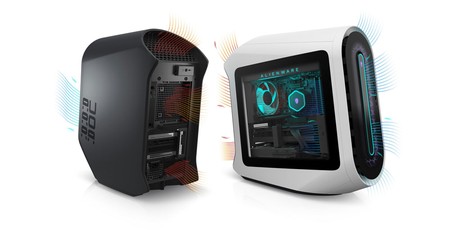
- Enhanced Thermal Management: A focus on improved airflow, featuring a standard configuration of two 120mm fans (intake and exhaust), with high-end configurations supporting up to four fans and liquid cooling loops.
- Aesthetic Customization: An optional transparent left-side panel, allowing users to showcase internal LED lighting and meticulous cable management.
- The "eSports" Rear Cover: An optional, magnetic rear cable cover designed to conceal ports and cabling, providing a clean, minimalist aesthetic—a feature aimed specifically at competitive environments where the rear of the PC is often visible to audiences.
- Tool-less Architecture: A commitment to ease of serviceability, ensuring that internal upgrades remain accessible for the end-user.
Chronology: From ALX to the Present
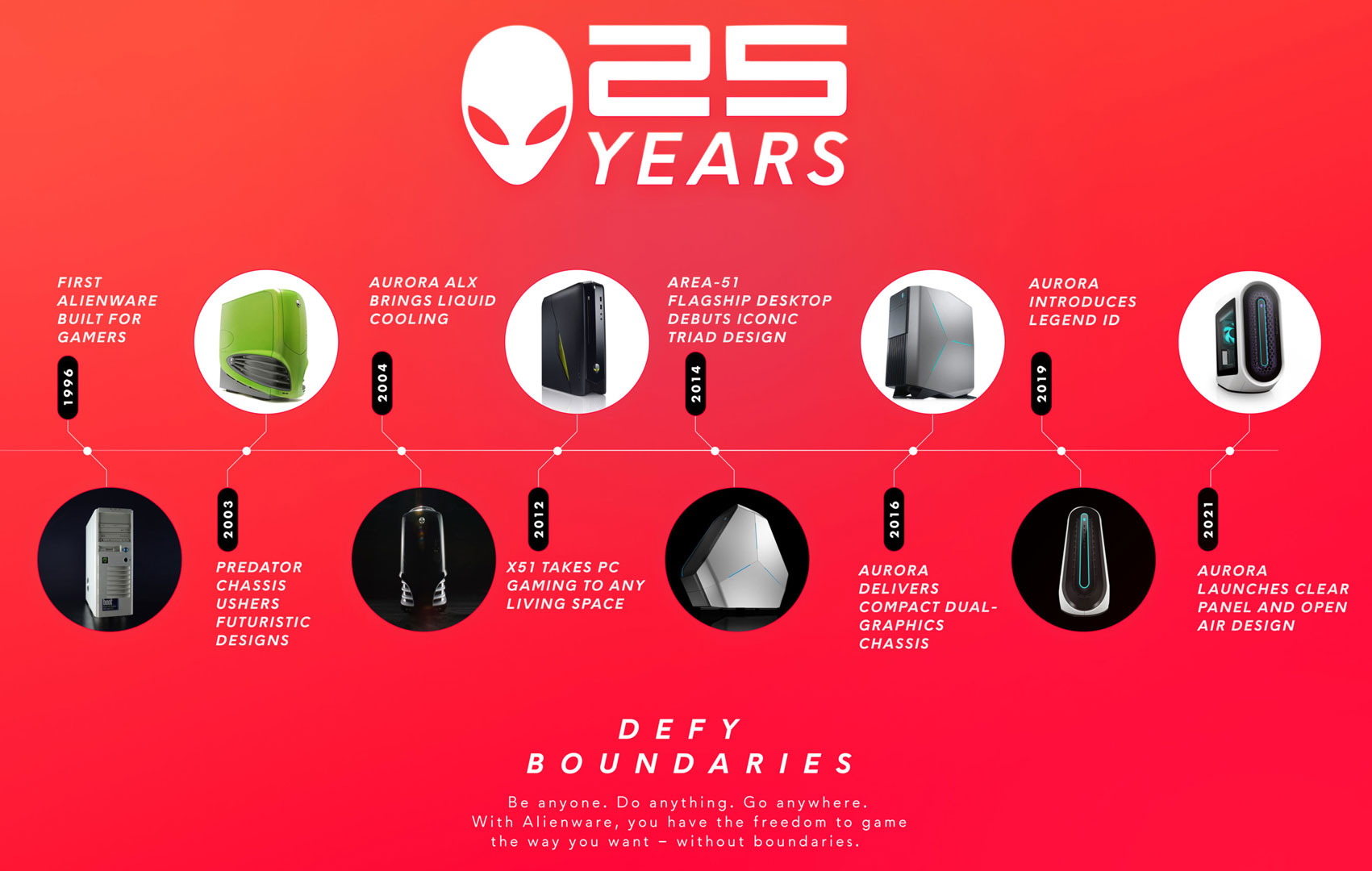
To understand the magnitude of this redesign, one must look at the historical trajectory of Alienware’s desktop division. For over a decade, the Aurora has been the brand’s flagship, but the design philosophy has shifted wildly since its inception.
The Early Era (2000–2010)
In the mid-2000s, Alienware was defined by its aggressive, almost alien-inspired industrial design. Models like the Aurora ALX were heavy, imposing, and utilized complex, motorized mechanical vents that felt like something out of a science fiction film. These were the "glory days" of the boutique era, where form and function were treated as equally vital, often resulting in massive, heavy-duty steel towers.
The Dell Acquisition and Standardization (2010–2020)
Following its acquisition by Dell, the brand underwent a shift toward more streamlined, scalable production. The Aurora shifted from the monolithic towers of the mid-2000s to a more compact, proprietary chassis design. While this improved accessibility for the average consumer, critics often pointed to thermal limitations and proprietary motherboard layouts that restricted aftermarket upgrades. The R-series of the Aurora became a staple of the mainstream pre-built market, but it frequently struggled with airflow constraints due to its confined space.
The 25th Anniversary Pivot (2021)
The new chassis represents a "return to form" of sorts. By increasing the internal volume, Alienware is finally addressing the decade-long criticism that its systems were too cramped for modern, high-TDP GPUs and CPUs. This marks a transition from the restrictive, space-saving designs of the late 2010s to a more performance-first, airflow-oriented architecture.
Supporting Data: Efficiency and Performance Metrics
Alienware’s internal testing provides a compelling argument for the shift in chassis dimensions. By optimizing the internal layout, the company reports substantial improvements in both acoustics and thermal performance.
Acoustic Performance
In a gaming environment, noise pollution from high-RPM fans is a constant frustration. Alienware reports that the new chassis is up to 16 percent quieter during idle states and up to 9 percent quieter during intensive, sustained workloads. This is attributed to the larger chassis, which allows for larger, slower-spinning fans to move the same volume of air as smaller, high-velocity fans.
Thermal Efficiency and Gaming Throughput
The most significant metric provided by Alienware is a 5 percent increase in gaming performance compared to the previous generation, assuming identical internal components. This performance delta is entirely due to improved thermal headroom. By preventing thermal throttling—where the CPU or GPU lowers its clock speed to avoid overheating—the new chassis allows high-end components to maintain their "boost" frequencies for longer durations.
Component Compatibility
While full specs are currently under wraps, Alienware has confirmed the new Aurora will support up to an NVIDIA GeForce RTX 3090. The move to a larger chassis suggests a future-proofing strategy, accommodating the massive cooling solutions required by modern high-wattage hardware.
Official Responses and Strategic Intent
Alienware’s strategy appears to be a two-pronged approach: satisfy the demand for high-performance, enthusiast-grade hardware while maintaining the "brand identity" that made them a household name in the early 2000s.
During the press briefing, representatives emphasized that the new Aurora is designed for the "future of gaming." By focusing on the "Lunar Light" and "Dark Side of the Moon" color schemes, the company is doubling down on its signature monochromatic, futuristic aesthetic.
Regarding the "eSports" rear cover, the company noted that this was a specific request from their professional partners. In the world of competitive gaming, where setups are often broadcast on streams, the unsightly "rat’s nest" of cables behind a PC is a detriment to the professional presentation of a stage. By introducing a magnetic, tool-less cover, Alienware is effectively treating the PC as a piece of stage furniture rather than just a functional box.
Implications: The Future of Pre-Built PCs
The unveiling of this new Aurora has several broader implications for the PC gaming industry.
The End of the "Cramped Case" Era
For years, the pre-built market has favored compact, proprietary cases to save on shipping costs and shelf space. Alienware’s decision to increase its chassis size by 50 percent is a tacit admission that the industry has hit a wall regarding cooling density. As CPUs and GPUs consume more power and output more heat, the physics of airflow can no longer be ignored. This could signal a trend where other major manufacturers follow suit, moving away from cramped, proprietary small-form-factor cases back toward more spacious, standard-compliant designs.
The "Boutique" Appeal in a Mass-Market World
By including transparent side panels and internal lighting, Alienware is acknowledging that the modern gaming PC is as much a fashion statement as it is a tool. The "PC Master Race" demographic values the ability to see the components they have paid for. The shift toward a design that showcases cable management suggests that Alienware is attempting to compete not just with other pre-built manufacturers, but with the custom-builder market.
Challenges Ahead
Despite the positive metrics, questions remain. Enthusiasts will be looking closely at the motherboard and power supply configurations. If these components remain proprietary—meaning they cannot be replaced with standard parts from the retail market—the "upgradability" of the machine will still be in question. While the chassis is larger, the true test of this machine’s longevity will be whether an owner can swap out the motherboard or power supply in three years when the next generation of hardware arrives.
Conclusion: A Legacy Reaffirmed
Alienware’s 25th anniversary marks a crossroads. The brand has evolved from a niche boutique to a global juggernaut, and this new Aurora represents a synthesis of those two worlds. It is a machine designed to be mass-produced, yet it carries the DNA of the original, high-performance towers that first put the brand on the map.
As we await the full reveal of the internal specifications later this year, the industry will be watching to see if Alienware can balance the demands of the enthusiast—who wants freedom and performance—with the needs of the consumer, who wants reliability and style. If the thermal and acoustic data provided by the company holds up in real-world testing, the new Aurora could well be the most significant update to the line in a decade, setting a new, larger standard for the next 25 years of Alienware history.