

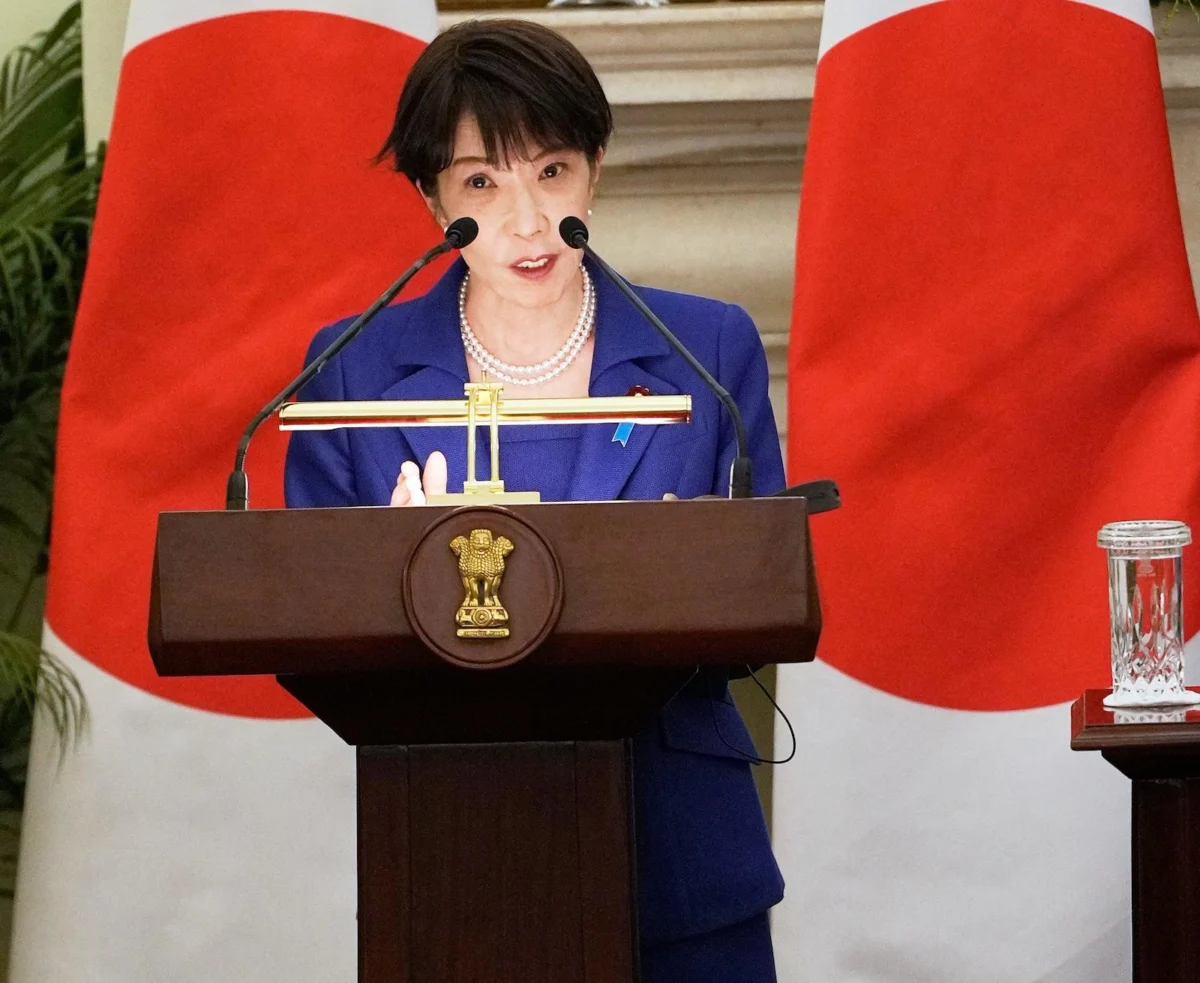
Executive Summary: A Calculated Retreat
Prime Minister Sanae Takaichi has been forced to navigate a precarious political landscape, ultimately opting to shelve a contentious proposal to slash 45 proportional representation seats from the House of Representatives. The decision follows an unprecedented, unified boycott by opposition parties—a maneuver that effectively paralyzed the Diet. While the move provides a momentary reprieve for the opposition, it has exposed deep fissures in the government’s legislative strategy and raised fundamental questions regarding the longevity of Takaichi’s current parliamentary approach.
The crisis stems from a bill that would have significantly altered the composition of Japan’s lower house. Takaichi, seeking to honor a pact with her junior coalition partner, the Japan Innovation Party (JIP), found herself caught between fulfilling her political promises and maintaining the operational functionality of the Diet. As public pressure mounts for the government to address the escalating costs of inflation and the looming economic risks posed by geopolitical instability in the Middle East, the spectacle of parliamentary obstructionism has left both the ruling Liberal Democratic Party (LDP) and the opposition coalition vulnerable to public backlash.
Chronology: The Road to Gridlock
The tension began in the wake of the LDP’s sweeping electoral victory this past February. Emboldened by a clear mandate, Takaichi sought to streamline her policy agenda. However, the introduction of the seat-reduction bill acted as a catalyst for a rare moment of solidarity among disparate opposition groups.
- February: The LDP secures a decisive win in the general election, winning 248 of the 289 single-seat districts. The administration begins discussions with the JIP regarding electoral reform.
- Early Spring: Negotiations over the proportional representation (PR) cuts intensify. The JIP, seeking to exert influence, ties its legislative support for the government to this specific reform.
- June: Kyodo News polling reveals a public deeply divided on the issue, with 49.1% of respondents opposing the urgency of the bill against 46.1% in favor.
- Mid-Session: Faced with a total legislative standstill, opposition parties launch a synchronized boycott. They argue that the bill is a direct assault on the democratic representation of smaller parties.
- Late Session: Prime Minister Takaichi announces the shelving of the bill to restore order to the Diet, acknowledging that the legislative package had become "unworkable."
Supporting Data: The Arithmetic of Survival
The core of the opposition’s resistance lies in simple, cold mathematics. The proposed reduction of 45 seats from the current 176 PR slots would disproportionately impact the opposition’s footprint in the lower house, while barely touching the LDP’s dominant majority.
Parliamentary Composition Analysis
The LDP’s current dominance relies heavily on its 248 single-seat district wins. In contrast, the smaller parties—the Centrist Reform Alliance, the Democratic Party for the People (DPP), and the Sanseito party—rely heavily on the proportional representation system for their very existence.
- LDP: 67 seats via PR.
- Centrist Reform Alliance: 42 of their 49 seats (85.7%) are derived from PR.
- Democratic Party for the People: 20 of their 28 seats (71.4%) are derived from PR.
- Sanseito: 100% of their 15 seats are derived from PR.
As Professor Masato Kamikubo of Ritsumeikan University noted, "Refusal to debate the bill was the sole tactic left… it is a question of whether the opposition could continue to exist." For these parties, the legislation was not merely a matter of policy disagreement; it was an existential threat. By stalling the bill, they effectively ensured their survival, but at the cost of being painted as obstructionists by the ruling party.
Official Responses and Political Rhetoric
The fallout from the boycott has been characterized by sharp accusations from both sides of the aisle. The LDP has utilized its platform to frame the boycott as a dereliction of duty. "Outmoded and not fulfilling the people’s expectations," remarked one senior LDP lawmaker, echoing a common sentiment among the ruling coalition that the opposition is prioritizing its own survival over national stability.
Conversely, opposition leaders remain steadfast in their critique of Takaichi’s governance style. DPP head Yuichiro Tamaki, who had previously been seen as a potential partner for cross-aisle cooperation, has become increasingly vocal about the lack of communication from the Prime Minister’s office. Tamaki recently declared that there is "no prospect" of his party joining a broader coalition if the current high-handed approach to parliamentary affairs persists.
Within the LDP, the internal mood is equally complicated. Junichi Ishii, a prominent figure in the upper house and a known skeptic of Takaichi’s leadership, provided a thinly veiled critique of the Prime Minister’s style. "A long-running government will become possible if it can engage seriously with the opposition," Ishii stated. His comments signal that even within the ranks of the LDP, there is a growing recognition that Takaichi’s reliance on the JIP—and her disregard for broader consensus—may be a strategic liability.
Implications: The High Cost of Coalition Dependency
The recent events have exposed the fragility of Takaichi’s governing model. By tying her agenda so closely to the JIP, she has effectively alienated the DPP and other parties that might otherwise have been willing to cooperate on economic or social legislation.
The "JIP Trap"
Analysts argue that the JIP’s insistence on the seat-cut bill may have been a calculated maneuver to isolate the LDP from other potential allies. By forcing Takaichi to adopt a position that made her the natural enemy of the rest of the opposition, the JIP has successfully made itself indispensable to the Prime Minister. However, this "indispensability" comes with a cost: if the LDP becomes too reliant on the JIP, it loses the flexibility to build wider consensus, making it susceptible to the very gridlock that occurred during the recent session.
The Public Perception Gap
While politicians debate the mechanics of the Diet, the Japanese public remains focused on the economy. With inflation rising and regional tensions in the Middle East threatening energy and commodity supplies, the public has little patience for procedural warfare. The opposition’s boycott, while effective in the short term, carries the long-term risk of validating the LDP’s narrative that they are "unfit to govern."
Future Legislative Prospects
Looking ahead, the Prime Minister faces a challenging road. To successfully pass legislation in the House of Councillors, where the ruling coalition lacks a majority, she must mend fences with parties like the DPP or face continued obstruction. However, her recent reliance on the JIP has created a "poisoned well" scenario.
As Tadashi Mori of Aichi Gakuin University posits, "If the LDP can’t secure the DPP’s cooperation and instead becomes too reliant on the JIP to get bills passed, it will make governing much harder." The path forward requires a pivot: Takaichi must transition from a "take it or leave it" style of leadership to a more nuanced, collaborative approach if she intends to secure her policy legacy.
Conclusion
The shelving of the seat-cut bill is more than a mere legislative withdrawal; it is a symptom of a deeper political dysfunction. Prime Minister Takaichi now finds herself at a crossroads. She can continue to pursue a narrow coalition strategy that guarantees loyalty from the JIP but risks total paralysis when faced with a unified opposition, or she can seek a broader, more inclusive path that might sacrifice her immediate legislative objectives for long-term stability.
For now, the opposition has bought themselves time. However, the electorate remains skeptical of all sides, watching closely to see whether their leaders will address the pressing economic realities of the day or return to the familiar, self-serving theater of the Diet. The success of the Takaichi administration will ultimately depend not on how many seats are cut or preserved, but on whether the government can prove that it is capable of managing the nation’s affairs in a way that serves the public interest above party survival.











