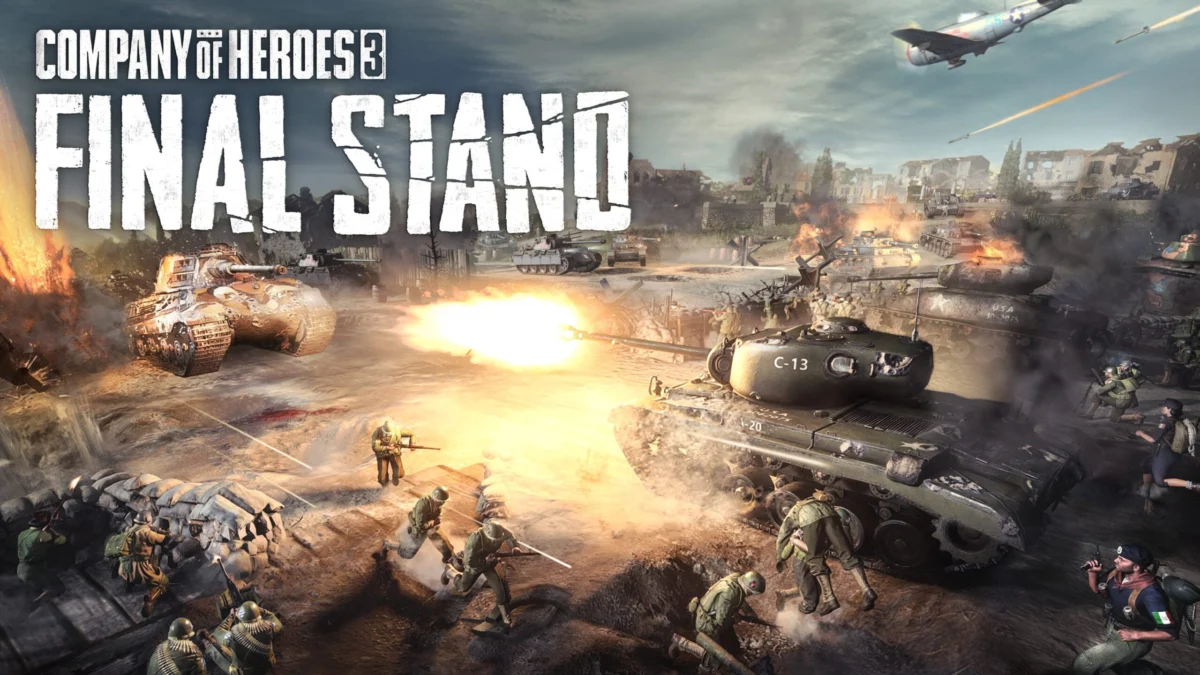
Vancouver, Canada – July 2, 2024 – Relic Entertainment, the acclaimed studio behind some of the most enduring real-time strategy (RTS) titles, has officially announced Company of Heroes 3: Final Stand. This highly anticipated title marks a significant departure from the series’ traditional campaign-driven narrative, introducing a standalone roguelite wave-defense experience meticulously crafted for both solo and cooperative play. Set to launch on PC via Steam on July 29, Final Stand promises to infuse the strategic depth and tactical intensity of Company of Heroes with the dynamic, unpredictable nature of the roguelite genre, inviting both seasoned veterans and new players to make their ultimate stand against overwhelming odds.
The announcement positions Company of Heroes 3: Final Stand not merely as an expansion, but as an accessible entry point into the revered tactical universe, requiring no prior ownership of Company of Heroes titles. This strategic decision by Relic Entertainment underscores a clear intent to broaden the franchise’s appeal, leveraging contemporary gaming trends while retaining the core essence that has defined Company of Heroes for nearly two decades. Players are poised to engage in fast-paced, escalating encounters against a diverse array of enemy waves, punctuated by intimidating boss encounters and dynamic battlefield events, all within a robust roguelite progression system designed for endless replayability.
A New Chapter for Company of Heroes: Relic Entertainment Unveils ‘Final Stand’
Relic Entertainment’s reveal of Company of Heroes 3: Final Stand represents a bold evolution for the venerable RTS franchise. Departing from the historical campaigns and multiplayer skirmishes that have been its hallmark, Final Stand embraces a standalone roguelite wave-defense format. This new direction is designed to deliver a highly replayable experience, challenging players to construct layered defenses and make real-time tactical decisions against increasingly formidable adversaries. The game is slated for a global release on PC through Steam on July 29, promising a fresh perspective on the World War II battlefields.
Standalone Roguelite Wave-Defense Experience
At its core, Company of Heroes 3: Final Stand offers an all-new, self-contained wave-defense mode. Players will find themselves commanding a battlegroup, tasked with surviving against relentless waves of enemy forces. The "roguelite" designation is critical here, indicating a blend of permanent progression between runs and randomized elements within each playthrough. This ensures that every session feels unique, forcing players to adapt their strategies on the fly. The experience is designed for both individual challenge and cooperative enjoyment, allowing friends to team up and face the onslaught together. This genre shift aims to provide a different kind of strategic satisfaction, emphasizing defensive planning, resource management under pressure, and dynamic tactical execution, rather than the grand operational maneuvers of the main series.
PC Launch Set for July 29th
The decision to launch exclusively on PC via Steam on July 29th aligns with the franchise’s traditional platform and player base. Steam, as a premier digital distribution platform, offers a vast audience and robust infrastructure for game launches, community interaction, and ongoing support. The release date places Final Stand in a competitive summer window, but its unique blend of established RTS mechanics and popular roguelite elements is likely to carve out its own niche. The anticipation is palpable within the RTS community, eager to see how Relic’s expertise in tactical combat translates into this new, high-stakes survival format.
The Road to ‘Final Stand’: A Chronology of Innovation
Relic Entertainment has a storied history in the real-time strategy genre, marked by groundbreaking titles that have consistently pushed the boundaries of tactical gameplay. The journey to Company of Heroes 3: Final Stand is rooted in this legacy, showcasing the studio’s willingness to innovate and adapt.
Relic Entertainment’s Legacy in Real-Time Strategy
Founded in 1997, Relic Entertainment quickly established itself as a titan in the RTS space. Their early successes with Homeworld (1999) captivated players with its innovative 3D space combat and compelling narrative. This was followed by the equally influential Warhammer 40,000: Dawn of War series, which introduced a more tactical, squad-based approach to RTS, emphasizing cover systems and dynamic combat. These titles solidified Relic’s reputation for deep strategic gameplay, impactful unit abilities, and a high degree of visual fidelity. Their ability to translate complex tactical concepts into intuitive and engaging gameplay loops became their hallmark, setting high expectations for every subsequent release.
Evolution of the Company of Heroes Franchise
The Company of Heroes franchise, first launched in 2006, represented a pinnacle of Relic’s design philosophy. Set during World War II, Company of Heroes revolutionized the RTS genre with its groundbreaking Essence Engine, destructible environments, and a focus on squad-based tactics rather than mass unit production. Players were immersed in the gritty realities of combat, where cover, flanking maneuvers, and combined arms strategies were paramount. The critical acclaim and commercial success of the original Company of Heroes led to expansions and a sequel, Company of Heroes 2 (2013), which further refined the formula with new fronts and factions. The series consistently offered a compelling blend of historical authenticity and engaging strategic depth, fostering a dedicated global fanbase.
Company of Heroes 3 and Post-Launch Trajectory
Company of Heroes 3, released in February 2023, continued this legacy by taking players to the Mediterranean and North African theaters. It introduced a dynamic campaign map, allowing for more strategic choices beyond individual battles, and brought new factions and mechanics to the forefront. While it received a generally positive reception, like any complex RTS title, it also faced community feedback regarding balance, performance, and feature implementation. Relic Entertainment has been committed to post-launch support for Company of Heroes 3, releasing numerous patches, balance adjustments, and content updates to address player concerns and enhance the overall experience. This ongoing commitment to refining their flagship title demonstrates Relic’s dedication to its player base and the long-term health of the franchise.
The Strategic Pivot to a Standalone Experience
The announcement of Company of Heroes 3: Final Stand as a standalone title, distinct from the main game’s traditional offerings, signals a strategic pivot for Relic Entertainment. This move can be interpreted as a response to several factors:
- Market Trends: The roguelite genre has experienced a massive surge in popularity, lauded for its replayability, incremental progression, and satisfying challenge loops. Integrating these elements into an established RTS framework could attract a broader audience.
- Player Feedback: While traditional RTS campaigns are cherished, there’s a growing appetite for more bite-sized, highly replayable experiences that don’t demand a significant time commitment for a full campaign playthrough.
- IP Expansion: Creating a standalone spin-off allows Relic to experiment with new gameplay mechanics and modes without fundamentally altering the core identity of the main Company of Heroes 3 experience. It offers a fresh way to engage with the beloved WWII setting and unit rosters.
- Accessibility: By not requiring ownership of previous Company of Heroes titles, Final Stand significantly lowers the barrier to entry for potential new players who might be intimidated by a deep-seated RTS series but are drawn to the roguelite format.
This strategic decision reflects a forward-thinking approach to franchise management, seeking to innovate and diversify within the competitive gaming landscape.
Deep Dive into ‘Final Stand’: Supporting Data and Gameplay Mechanics
Company of Heroes 3: Final Stand is poised to deliver a fresh, intense, and highly replayable experience by merging the tactical brilliance of the series with the compelling loop of roguelite design. The details revealed through its Steam page illuminate a meticulously crafted game system.
The Roguelite Wave-Defense Paradigm
The choice of a roguelite wave-defense format is a calculated one, leveraging the inherent strengths of RTS mechanics while injecting a layer of unpredictability and long-term engagement. Wave-defense scenarios are a natural fit for RTS, demanding efficient resource allocation, strategic placement of defenses, and real-time tactical adjustments. The "roguelite" aspect elevates this by ensuring that no two runs are identical. This genre has proven incredibly popular with titles like Slay the Spire, Hades, and Vampire Survivors, which thrive on procedural generation, powerful temporary upgrades, and persistent meta-progression. For Final Stand, this means players will not only need to master the core combat but also learn to adapt their battlegroup composition and strategy based on randomized choices presented during a run. This constant need for adaptation is a key driver of replayability and strategic depth, preventing gameplay from becoming stale.
Core Gameplay Loop: Command, Adapt, Survive
The fundamental gameplay loop revolves around commanding a battlegroup to survive increasingly difficult waves of enemy forces. This core premise is familiar to wave-defense enthusiasts, but Final Stand promises to infuse it with the distinctive tactical flavor of Company of Heroes.
Escalating Enemy Waves and Dynamic Battlefield Events
Players will face 12 increasingly difficult rounds, each presenting a fresh challenge. "Escalating waves" in the context of Company of Heroes implies not just an increase in enemy numbers, but a sophisticated evolution of enemy composition. Early waves might feature basic infantry, while later waves could introduce armored vehicles, specialized units, and even air support, forcing players to diversify their defenses and counter specific threats. Furthermore, "dynamic battlefield events" are a crucial addition, injecting unpredictability into each run. These could range from sudden weather changes impacting visibility or unit movement, to unexpected flanking maneuvers by enemy forces, or even environmental hazards that reshape the combat zone. Such events demand quick thinking and on-the-fly tactical adjustments, ensuring that players cannot simply rely on pre-set strategies.
The Threat of Powerful Bosses
Beyond the standard waves, Final Stand will feature "intimidating bosses." These are likely to be unique, high-health, and high-damage enemy units or formations that require specific counter-tactics to overcome. Unlike regular units, bosses typically have unique abilities or attack patterns that players must learn and exploit. This adds a dramatic punctuation to certain rounds, serving as a significant skill check and forcing players to conserve powerful abilities or units for these climactic encounters. The introduction of bosses further diversifies the gameplay, preventing the wave-defense from becoming a monotonous grind.
Unpacking the Roguelite Progression System
The roguelite progression system is perhaps the most exciting and differentiating feature of Final Stand, offering both immediate tactical choices and long-term strategic development.
Per-Run Customization: Randomized Units and Abilities
After each successfully defended wave, players will be presented with a choice of "randomized units or abilities that persist for the duration of the run." This is the heart of the roguelite experience. Imagine choosing between a squad of elite Rangers, an anti-tank gun, or a powerful artillery strike ability. These choices allow players to dynamically build their battlegroup and tailor their capabilities to the current challenges or a desired playstyle. One run might see a player focus on heavy armor, another on entrenched infantry, and a third on aggressive flanking. The randomized nature ensures that players cannot simply follow a rigid build order, promoting experimentation and adaptive thinking. This system directly addresses the desire for high replayability, as the optimal choices will vary significantly from one playthrough to the next.
Persistent Meta-Progression: Faction-Specific Trees and Perks
Beyond the in-run choices, Final Stand incorporates "persistent upgrades like powerful perks and unique abilities" that are unlocked between runs. These upgrades are tied to "faction-specific progression trees," meaning that investing time into a particular faction will yield permanent benefits that fundamentally alter how that faction plays. For example, one faction might unlock a perk that grants all infantry units increased sight range, while another might gain access to a unique heavy tank or a powerful doctrine ability. This meta-progression provides a compelling reason for continued engagement, encouraging players to master different factions and experiment with various build paths. It ensures that even failed runs contribute to overall progress, making each attempt feel meaningful and driving the player towards higher levels of mastery and more challenging difficulties.
Solo and Cooperative Play: A Dual Experience
Final Stand is designed to cater to both solitary strategists and those who prefer to fight alongside comrades. Solo play offers a pure test of individual skill, decision-making, and tactical prowess, allowing players to fully immerse themselves in the challenge without external coordination. Cooperative play, however, opens up new strategic possibilities. Teammates can coordinate their unit selections, establish complementary defensive lines, and combine powerful abilities to overcome threats that would be insurmountable alone. This social aspect adds another layer of enjoyment and replayability, fostering teamwork and shared victories.
Accessibility and Inclusivity: No Prior Ownership Required
A crucial element of Final Stand‘s design is its independence from previous Company of Heroes titles. "This standalone experience does not require you to own any previous Company of Heroes titles," makes it incredibly accessible. This decision is vital for attracting new players who might be interested in the roguelite genre or the tactical wave-defense concept but have never delved into the deep lore and complex mechanics of a full-fledged RTS series. It provides a low-barrier entry point, allowing new players to "jump straight into the action and have fun," while still offering the familiar depth and challenge that long-time fans expect.
Technical Presentation: Trailer and Visuals
The announcement was accompanied by an official trailer, offering a tantalizing glimpse into the game’s dynamic combat, diverse units, and the visual fidelity expected from a Relic Entertainment title. Screenshots released concurrently showcase the detailed environments, unit models, and the intensity of the battlefield, reaffirming that Final Stand will retain the high production values associated with the Company of Heroes brand. These visual elements are crucial in building initial excitement and conveying the game’s atmosphere and gameplay promise.
Official Vision and Developer Insights
While direct quotes from Relic Entertainment executives are not provided in the initial announcement, the detailed Steam page copy offers significant insight into the developers’ vision and design philosophy for Company of Heroes 3: Final Stand. The "About" and "Key Features" sections effectively serve as an official statement of intent, outlining what players can expect and why certain design choices were made.
Relic’s Design Philosophy for ‘Final Stand’
Relic Entertainment’s core philosophy for Final Stand appears to be centered on three pillars: Replayability, Accessibility, and Strategic Depth.
The emphasis on "thrilling, highly-replayable Company of Heroes gameplay" clearly highlights replayability as a primary design goal. This is achieved through the roguelite mechanics, randomized choices, and persistent progression. The developers understand that for a wave-defense game to succeed, players must feel a constant pull to return, experiment, and improve.
Accessibility is addressed directly by making Final Stand a standalone title. This removes the barrier of entry for newcomers, indicating Relic’s desire to expand the franchise’s reach beyond its existing loyal fanbase. It suggests a belief that the core tactical loop of Company of Heroes can appeal to a broader audience when presented in a more focused, less intimidating format.
Finally, strategic depth remains paramount. The descriptions of "layered defenses," "escalating enemy waves," "intimidating bosses," and "dynamic battlefield events" all point to a game that demands thoughtful planning and tactical execution. The "Deep Roguelite Progression" with "faction-specific progression trees" further reinforces this, implying a complex meta-game where players will continuously refine their strategies and master different playstyles.
Balancing Familiarity with Novelty
The language used on the Steam page carefully balances the promise of new experiences with the assurance of retaining the "classic Company of Heroes feeling." Phrases like "captures the classic Company of Heroes feeling of those pivotal moments" are designed to reassure long-time fans that despite the genre shift, the core tactical identity of the series – emphasizing "preparation, adaptability, and decisive command" – remains intact. This approach is crucial for innovation within a beloved franchise. Relic is not abandoning its roots but rather exploring new avenues to present its signature gameplay, ensuring that the blend of realism, tactical combat, and intense decision-making that defines CoH is preserved within the new roguelite structure.
The Promise of Replayability and Strategic Depth
The explicit mention of "ensuring that no two playthroughs feel the same" and "encouraging experimentation, long-term mastery, and repeat play at higher levels" directly communicates Relic’s commitment to delivering a rich, long-lasting experience. This promise is supported by the detailed explanation of both in-run randomized progression and between-run persistent upgrades. The developers are clearly banking on the inherent drive of players to optimize builds, climb leaderboards (if applicable), and fully explore the strategic possibilities offered by the various factions and upgrade paths. This design philosophy aims to provide continuous engagement and a sense of growing power and skill with each successive run.
Broader Implications: ‘Final Stand’s’ Impact on Relic, CoH, and the RTS Genre
The announcement of Company of Heroes 3: Final Stand carries significant implications, not only for Relic Entertainment and the Company of Heroes franchise but potentially for the broader real-time strategy genre. It represents a calculated move that could redefine expectations for how established RTS IPs can evolve.
Strategic Diversification for Relic Entertainment
For Relic Entertainment, Final Stand is a clear strategic move towards diversification. While the studio has a rich history in traditional RTS, the gaming market is constantly shifting. By embracing the roguelite wave-defense format, Relic is tapping into a highly popular genre that emphasizes replayability and accessible bursts of gameplay. This could help stabilize revenue streams, attract new talent, and demonstrate the studio’s adaptability beyond its core offerings. It also serves as a testing ground for new mechanics and monetization strategies (though none have been announced), allowing them to gather valuable data on player engagement with a different kind of RTS experience. This diversification mitigates the risks associated with relying solely on large-scale, traditional RTS releases, which often have longer development cycles and higher production costs.
Expanding the Company of Heroes Universe
Final Stand significantly expands the Company of Heroes universe in terms of gameplay style. Historically, the franchise has been defined by its narrative campaigns and competitive multiplayer skirmishes. This new standalone roguelite mode introduces an entirely new way to experience the tactical combat of WWII. It demonstrates that the core mechanics – unit positioning, cover systems, combined arms, and tactical abilities – are robust enough to support diverse game modes. This expansion of the IP’s scope could pave the way for future spin-offs or experimental modes, keeping the franchise fresh and relevant for years to come. It also allows for creative freedom in level design and enemy encounters, potentially exploring scenarios that wouldn’t fit neatly into a historical campaign.
A Potential Blueprint for RTS Innovation
The blend of traditional RTS with roguelite elements in Final Stand could serve as a blueprint for innovation within the RTS genre. For years, the RTS landscape has seen various attempts to evolve, from MOBA-like structures to grand strategy hybrids. The roguelite approach offers a compelling solution to some of the genre’s challenges, particularly in terms of replayability and accessibility. By providing randomized elements and persistent progression, Final Stand could inspire other RTS developers to experiment with similar hybrid models, moving beyond the traditional campaign/skirmish dichotomy. If successful, it could signal a new wave of RTS titles that offer deep strategic play in more digestible, infinitely repeatable formats, appealing to a broader audience without sacrificing complexity.
What This Means for the Player Community
For the existing Company of Heroes community, Final Stand offers a fresh and exciting challenge. It provides a new avenue to utilize their tactical skills and knowledge of CoH units in a dynamic, unpredictable environment. The cooperative aspect will undoubtedly foster community engagement, as players share strategies, build compositions, and coordinate their defenses. For new players, the standalone nature and roguelite hook offer an enticing entry point, potentially converting them into fans of the wider Company of Heroes franchise. The emphasis on "experimentation" and "long-term mastery" will appeal to players who enjoy optimizing builds and pushing their limits, fostering a competitive and collaborative meta-game around high scores and efficient strategies.
Future Prospects and Community Engagement
The success of Company of Heroes 3: Final Stand could open doors for future content, including new factions, maps, enemy types, or even additional roguelite modes. Relic Entertainment has a strong track record of post-launch support, and if Final Stand resonates with players, it’s reasonable to expect ongoing development. Community engagement will be crucial, with players likely providing feedback on balance, new features, and desired content. The game’s design, with its emphasis on replayability and progression, lends itself well to continuous updates and expansions, ensuring a long and vibrant lifespan for this exciting new chapter in the Company of Heroes saga.
As July 29th approaches, the gaming world eagerly awaits the opportunity to make their "final stand" in this innovative blend of classic RTS tactics and modern roguelite dynamism. Relic Entertainment’s latest venture promises to be a pivotal moment for the Company of Heroes franchise, potentially setting a new standard for strategic gaming in the years to come. Players are encouraged to visit the official Steam page for Company of Heroes 3: Final Stand to learn more, add it to their wishlists, and prepare for the ultimate test of tactical survival.