

The global entertainment landscape is currently navigating a period of unprecedented volatility. Beset by systemic budget cuts, talent shortages, and a radical shift in consumption habits, the animation industry—historically a pillar of creative stability—has found itself in the eye of the storm. Yet, as industry leaders gather in the coastal city of Le Havre for the annual Unifrance Rendez-vous, the mood is one of defiant optimism. For French production houses, distributors, and sales agents, the prevailing sentiment is that animation is not merely surviving the fiscal winter but is poised for a significant structural evolution.
The State of the Industry: A New Strategic Paradigm
The challenges facing the sector are undeniable. As capital becomes more expensive and streaming platforms shift their focus from aggressive growth to profitability, production companies are being forced to rethink their entire operational model.
Marie Lassalle, Director of Global Partnerships and New Business at Mediawan Kids & Family, characterizes the current climate as a crucible for innovation. "Sure, the market is pushing the entire sector to be more selective and to diversify its models—including international co-productions, multi-source financing, and an earlier consideration of rights—but the answer cannot be solely economic," Lassalle asserts. "French creatives must continue to prioritize their core strengths: unique visual universes, specialized expertise, and a refusal to compromise on creative integrity."
This sentiment is echoed by peers across the French animation ecosystem. The shift is no longer just about cutting costs; it is about smarter allocation of resources. The industry is moving away from the "volume-at-all-costs" era of the mid-2010s toward a more sustainable, curated approach where intellectual property (IP) is treated as a long-term asset rather than a disposable commodity.
Chronology of a Shift: From Linear to Digital-First
The evolution of French animation can be traced through the changing strategies of its key players over the last decade.
- 2015–2018: The Golden Age of Linear Expansion. During this period, French animation houses like Xilam and Mediawan solidified their international presence by securing massive output deals with major linear broadcasters and early streaming giants. Franchises like Oggy and the Cockroaches dominated global airwaves.
- 2019–2022: The Streaming Surge. As platforms like Netflix and Disney+ pivoted to animation, French studios adapted, producing high-budget, high-concept series. The industry focused on "global-first" content, aiming to satisfy audiences from Paris to Tokyo.
- 2023–2024: The Correction. Rising interest rates and a cooling of subscription video-on-demand (SVOD) spending led to a contraction. Studios began consolidating, focusing on internal efficiency and "transmedia" development.
- 2025–Present: The Hybrid Era. The current market is defined by a "best of both worlds" approach: leveraging linear prestige for credibility while utilizing digital-first, social-media-driven distribution to capture younger, fragmented audiences.
Supporting Data: Why Animation Still Commands Attention
Despite the contraction in the broader entertainment sector, animation remains a high-performing category. According to recent market analysis, animation consistently ranks as one of the most-watched genres on YouTube and various streaming platforms. Unlike live-action content, which can suffer from rapid aging or cultural specificity, high-quality animation possesses a "timelessness" that makes it ideal for library exploitation.

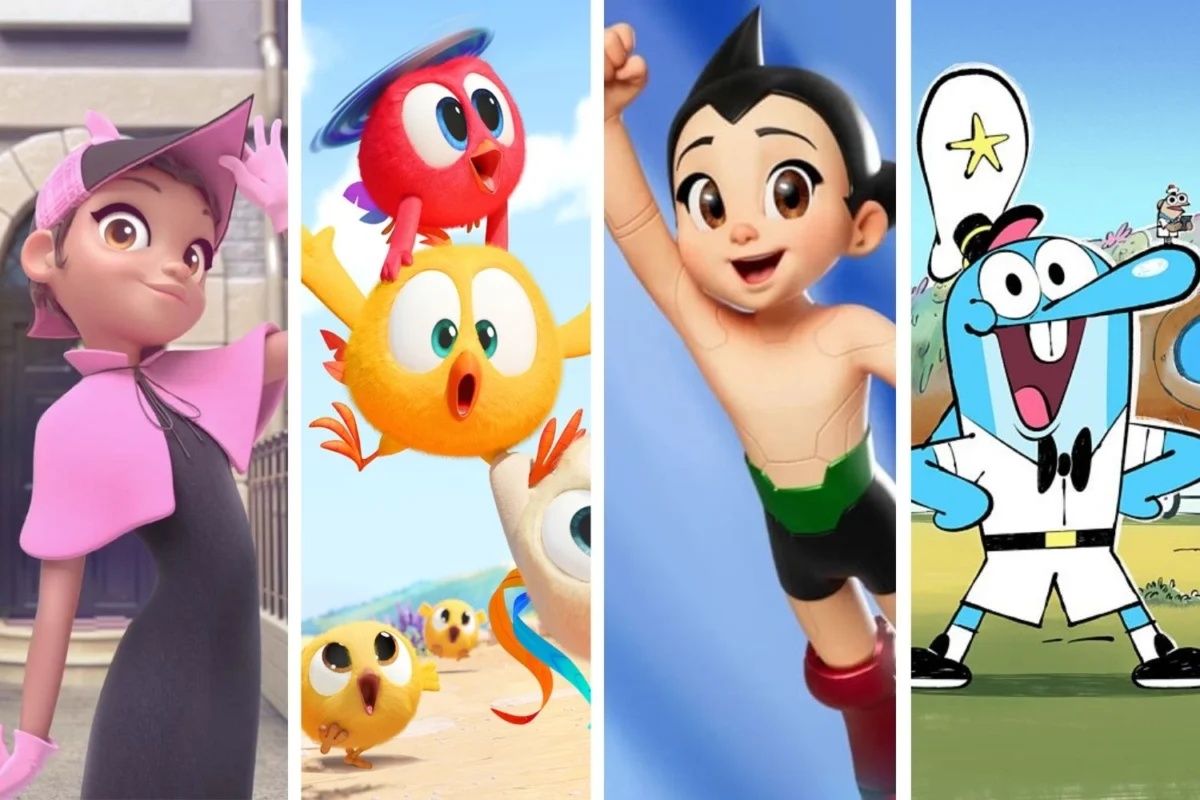
For companies like Xilam, this demand is the engine of their growth. Safaa Benazzouz, EVP of Distribution at Xilam, notes that the company’s portfolio is built on a dual foundation: "We rely on legacy franchises like Zig & Sharko and Oggy and the Cockroaches, which continue to sell worldwide, while simultaneously investing in fresh, high-impact original IPs like Piggy Builders and our new comedy series, Submarine Jim."
The digital-driven distribution strategy is not just an alternative; it is a primary driver of revenue. Benazzouz points to the spin-off series Chickies as a prime example. "Derived from our YouTube hit Where’s Chicky?, which has garnered billions of views, this project proves that a digital-native IP can successfully bridge the gap to traditional formats. Today, a successful IP requires a cohesive strategy that integrates linear television, streaming, and social-first digital exposure."
Official Responses and Strategic Pillars
The Power of Collaborative IP
At the Unifrance Rendez-vous, Mediawan is showcasing Witch Detectives, a 26-episode 3D series. The project is a masterclass in the "co-production as risk mitigation" strategy. By partnering with Toonz Media Group and securing early commitments from major broadcasters like TF1, Super RTL, the BBC, and Rai, Mediawan has de-risked the production while ensuring a guaranteed, multi-territory footprint. This is the new blueprint for high-end European animation: pan-European cooperation that maintains a distinctly French creative "flavor."
The Multi-Generational Strategy
A significant trend identified by industry leaders is the move toward "co-viewing." Content that appeals to both children and parents is seeing longer lifespans and better monetization. Lassalle notes, "At Mediawan, we look for projects with multiple layers of interpretation. We want content that is accessible to the child but also intellectually engaging for the parent."
This is clearly reflected in the upcoming Astro Boy reboot, slated for 2027. By reviving a legendary property through a collaboration between Mediawan’s Method Animation, Shibuya International, and Tezuka Productions, the studio is tapping into the nostalgia of the 1980s and 90s. This "cross-generational" bridge allows the series to be an instant hit with parents, who then introduce it to their children, creating a self-sustaining audience base.
Transmedia and Digital-First Growth
The industry is also moving away from a "TV-first" mentality. With the upcoming development of Pocket Champs—a video game IP with over 72 million players—Mediawan is leaning into a transmedia strategy. By launching on YouTube first in 2027, the company aims to cultivate a community before ever touching a traditional television screen. This "audience-first" approach is becoming the gold standard for companies looking to survive the current market squeeze.

Implications for the Future: A More Resilient Ecosystem
The implications of these shifts are profound. The French animation industry is emerging from this period of budget cuts not weaker, but more agile. By diversifying revenue streams—moving from purely licensing models to merchandising, digital-first growth, and long-term IP management—studios are building a more robust financial future.
Furthermore, the rise of collaborative platforms like "Wonderland Junior TV" demonstrates a shift in how French content is positioned in the United States and abroad. By creating a dedicated, reliable, and family-friendly destination, European studios are taking control of their distribution channels rather than relying solely on the whims of third-party aggregators.
As Safaa Benazzouz concludes, the future belongs to those who can balance high editorial standards with operational flexibility. "In terms of sales, we need a strong variety of formats. High-quality production, matched with character-driven new IPs that feature original design and strong humor, is what will continue to make our programming stand out in an increasingly crowded global market."
The consensus at the Le Havre gathering is clear: while the challenges of the current economy are real, the enduring demand for high-quality, creatively ambitious animation ensures that French studios will remain vital players on the world stage. By blending the heritage of classic animation with the cutting-edge strategies of the digital age, the industry is not just waiting for the storm to pass—it is building a new, more durable structure to weather whatever the future holds.










